Concentrated Tedium: Oscar Season

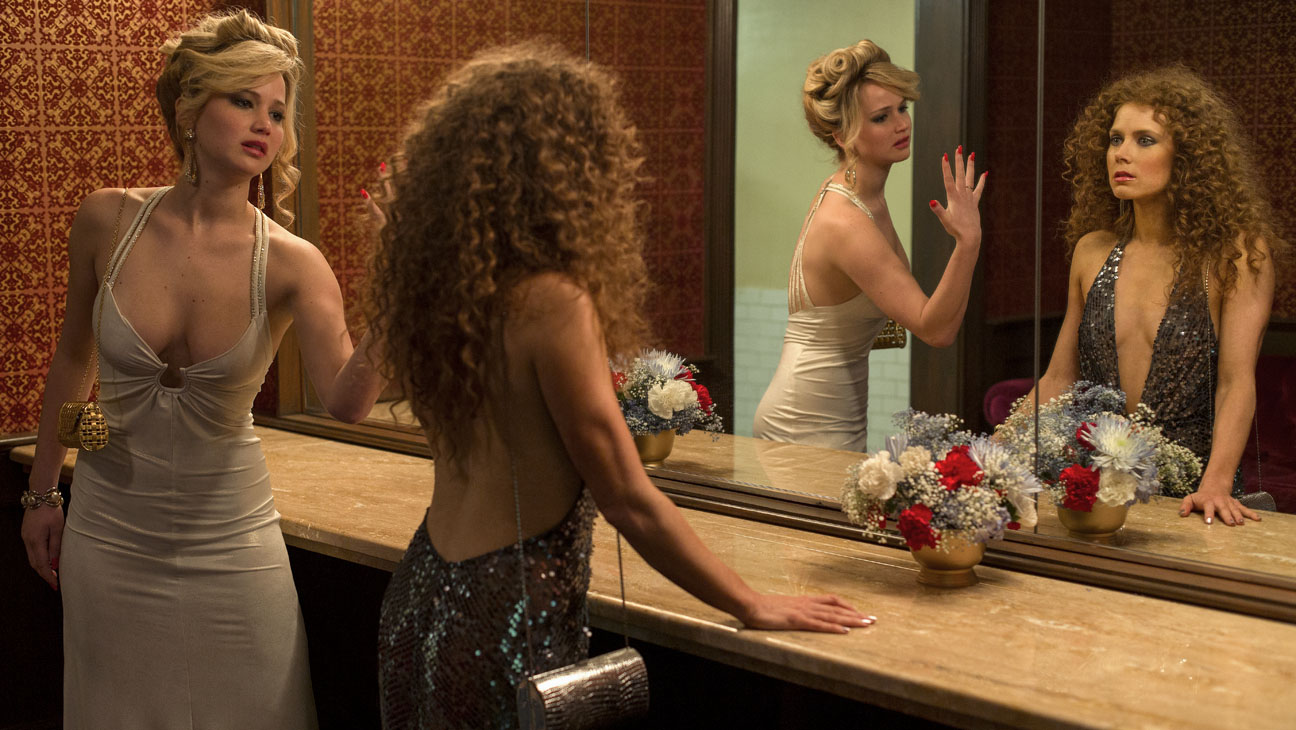
Better as melodrama: American Hustle

Better as melodrama: American Hustle

Oscar season is upon us, and with it a vague understanding of what should constitute ‘quality’ in the world of popular entertainment. Perhaps I’m only echoing the sentiments of some kind of sneering elitist minority – if I do in fact ‘echo’ anyone’s sentiments other than my own – but this year’s crop of Academy Award nominees continues to promote an anemic form of storytelling that values telegraphed ‘messages’ and finely-wrought decorative flourishes over exciting, nuanced storytelling.

(Side-note: I like how the internet has made the Oscars into a fully-formed international spectacle. It always was, of course; the imperialist nature of American cinema has always been a part of its DNA. But now the boundaries of news and broadcasting that had in the past created at least an illusion of distance between us and the Oscars is completely gone… but here’s hoping that the running commentary that is the internet will at least give way to a more questioning attitude to the Academy’s choices – and I don’t just mean incessant complaints about how your favourite film was snubbed or short-changed.)

Out of the 2013/14 Oscar superstars I’ve seen – although we’re all privy to internet commentary about the films before/soon after they’re in US/UK cinema, Malta still gets plenty of films far too late – there has been only one that has genuinely touched me as a genuine piece of storytelling worthy of awards.

That film is Spike Jonze’s Her. It’s a joyous confluence of style and substance, working on an outlandish, sci-fi-lite concept that is executed with great sensitivity to the nature of relationships, a keen visual style – it’s a masterclass in worldbuilding through micro details – and genuinely affecting performances.

Martin Scorcese’s The Wolf of Wall Street was also not bad – though it’s relentless approach leaves no room for subtlety. But Scorcese at least allows himself – or, thanks to his now-vaunted and hard-earned reputation, is allowed – a vitality and brashness that is free of political correctness. Leonardo DiCaprio’s Jordan Belfort is a monster, but you may worry that some audience members will admire his voracious, unapologetic drive to shore up MORE MORE MORE and consume MORE MORE MORE. But then, why would you worry? That’s not your job. It shouldn’t be. Let the work do its work.

But the Oscars rarely cater for this kind of thing – art that really says what it needs to say with true creativity and verve. You’d think Steve McQueen’s 12 Years a Slave is a raw example of what I’m looking for… but watching the relentless churn of suffering unspool before you with apparently no unifying narrative force behind it, it just begins to look threadbare – a litany of abuse left to play out on autopilot.

American Hustle is similarly directionless. Each scene of David O. Russell’s story of  cross and double-cross strains to give the audience some goodies (a line of zesty dialogue, sexual frisson, an ACTOR moment) but it never builds to a satisfying whole. It’s a Frankenstein’s monster made of derivative moments from both Scorcese and Paul Thomas Anderson’s back catalogue.

It’s like it was sent to the Academy in a marked envelope: ‘HERE’S WHAT I THOUGHT YOU MIGHT LIKE’.

*

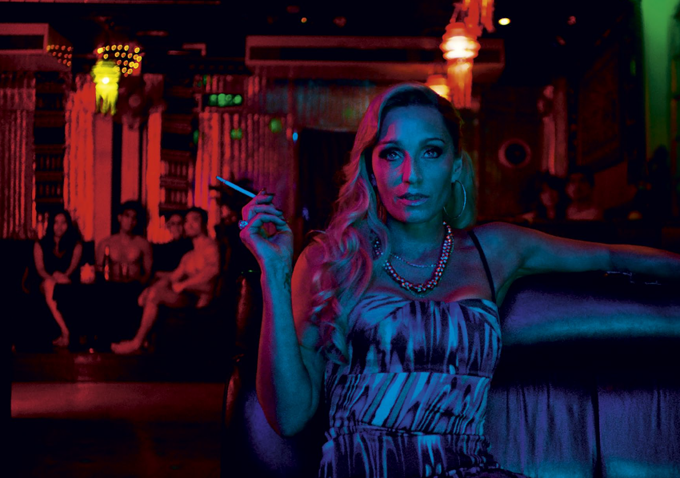
Yes, this is a hint.

These deadening things just make me think, “art is elsewhere”. Even, “fun is elsewhere”. In my next post – up tomorrow – I’ll entertain the idea that the grotesque is what could save us from this complacent rut.

(Yes, the picture is a hint.)

Filmkrant – Slow Criticism – Wither Europe?

slow6

Thanks to the miracle that is the internet, I was given the opportunity to contribute to Filmkrant’s critical round-up of the European continent’s cinematic produce, where I was asked to focus – of course – on the Maltese Islands.

The project appealed to me because contributors weren’t expected to scrounge around for hard facts and statistics, or trot out iron-clad opinions. Instead, they were hoping to create a collection of ‘slow criticism’ pieces, which would hopefully offer up a more ephemeral and intimate glimpse of European cinema.
To quote the magazine’s editorial:

‘We weren’t looking for facts & figures, for economics & industry, but for a snapshot, some instantaneous, and haphazard exposure, an examination of the cinematic pulse, a shipwrecked treasure from the tidelines, a message from the fault lines of history and the trenches of life. We asked them to be foreign correspondents in their own countries, travelling ambassadors in the realm of cinephilia, to lend us their ears and eyes and hearts and other senses to become the intelligences of this weird and wonderful beast that is Europe.’

Click here the editorial and links to all contributions.

Click here for my contribution on Malta.

LISTEN: Podcasts of the Year

Over the past couple of weeks, I was reminded of just how important it is to remain humble and nice no matter what.

At Malta Comic Con 2013, I met some truly great and highly accomplished international comic book creators, and as luck (and the efforts of the great Kenneth Scicluna) would have it, I also scored the opportunity to interview Joshua Oppenheimer, the award-winning documentary director of The Act of Killing – arguably the most important film of our generation (with Mr Oppenheimer’s kind permission, I will be reproducing our conversation in full on this blog very soon).

Both of these encounters flew in the face of certain notions we tend to hold about successful and/or famous people: that they’ll look down on anyone not in their position, or that they’re brusque and difficult.

These artists were both on top of their game and very, very polite and accommodating people to boot: which made me chuckle privately to myself as I thought of the pompous figures I’ve met in my time who hadn’t accomplished half as much but still felt the need to peacock about (and having grown up in Malta, the ‘big fish in a small pond’ syndrome is very pervasive).

One of the people I met at the Comic Con was Chris Thompson, the man behind the Pop Culture Hound podcast – a mainstay of discussion on all things comic book related. And because he’s such a nice guy, I’ll open this haphazard list of great podcasts I’ve listened to over the past year (so far) with one of his offerings.

1. Pop Culture Hound Ep. 66: Alan Moore and Lance Parkin

Magic Words

With the help of the Prince Charles Cinema in London, Chris Thompson’s Pop Culture Hound podcast delivers this conversation between comic book luminary and literary magus Alan Moore and his biographer Lance Parkin for all those who couldn’t be present for it on the night.

It’s worth a listen for anyone interested in Alan Moore’s work (obviously) but also for those who care about art and the future of humanity beyond our immediate physical and financial concerns. If that sounds a bit lofty well, it’s because it is. Moore was never one to pull his punches and neither was he ever cagey about embracing ideas that may veer away from the norm (and, perhaps, dangerously into ‘loony’ territory).

This recent conversation is a heartening reminder that the Moore we know and love is very much alive and kicking and that, despite his general grumpiness about the contemporary cultural climate of the world, he always has something magical – the word is not incidental – to offer up to his listeners that will refresh their outlook and inspire them.

2. The History of Byzantium Ep. 15: Justinian

Justinian I

I came to this one a little late and frankly, I’m a bit miffed – I had been hunting around for a podcast on this very subject for quite a while. It’s a period I’m interested in particularly because it concerns the development of my country of origin – Serbia – while following on from another podcast I used to listen to with relish – Mike Duncan’s excellent The History of Rome.

Host Robin Pierson openly acknowledges that this podcast follows on the heels of The History of Rome both in form and in content – delivering a comprehensive sweep of the period in 20-30 minute chunks.

I haven’t reached all that far into this podcast just yet, but I’m enjoying it very much so far. I’ve chosen the episode dedicated to Emperor Justinian because, as Pierson says, his is a life packed with incident, and is I think in many ways representative of the kind of conflicts that characterised the Byzantine age.

3. Lightspeed Magazine Podcast: A Fine Show on the Abyssal Plain by Karin Tidbeck

Jagannath

One of the reasons I really got into podcasts was because they offered the possibility to enjoy short fiction while ‘on the go’, and in a way that preserves some of that time honoured by sadly fading format of oral storytelling.

Lightspeed Magazine – offering a selection of science fiction and fantasy fiction compiled by master editor John Joseph Adams – is a great venue for varied, colourful work, and Tidbeck’s story is a fine example of how genre fiction can be made to do some great things if the writer in question is a brave, playful and emotionally honest one. I keep coming back to this poignant story about a theatre troupe performing to seemingly nobody, especially because it’s so sensitively narrated by Kelley Catey in its podcast version.

4. VICE Podcast: Interview with Nicolas Winding Refn

Only God Forgives

The Danish filmmaker Nicolas Winding Refn (Drive, Only God Forgives) is one of my favourite directors.

His most recent film, Only God Forgives, suffered something of a drubbing at the hands of the critics (and, from what I can tell, a bemused shrug on the part of the general moviegoing audience), but to me it only reaffirmed his alchemical mix of lush visuals, unflinching brutality and his masterful employment of archetypal figures.

So it’s hardly surprising that I enjoyed listening to this expansive interview, which apart from picking apart the engine behind Only God Forgives, draws parallels to some of his previous films – particularly Valhalla Rising, a Viking-era thriller starring Mads Mikkelsen which is reminiscent of both Werner Herzog’s work and Apocalypse now – a cocktail I can’t resist.

And how about you? Any good podcasts you’ve heard recently?

Fighting fire with Fire: Hunger Games & Creativity 101

Hearts and minds: Jennifer Lawrence and Josh Hutcherson.

Watching the second instalment of the Hunger Games film franchise was a curious experience, more so than the original.

I’m not familiar with the Suzanne Collins source novels, so I’m coming into the series free of any expectations. What struck me more than anything this time around was the sheer extent with which the franchise appears to be playing a have-your-cake-and-eat-it-too game with its viewers.

It’s a critique of our entertainment structures, of course: the idea of kids forced into televised gladiatorial combat is disturbingly close to what we see on reality television.

But there’s thrills and enjoyment to be had in watching our protagonists attempting to survive.

I’m feeling generous, so I’ll say this is actually a reminder of how good, compelling stories should be about that immersive experience: about riveting your attention, thematic paradoxes be damned. Stories aren’t uni-directional messages. The good ones have a capacity of altering their shape in whichever way they deem is best for their survival.

Often, they’ll latch onto classic predecessors. In the case of Catching Fire, Francis Lawrence made a very wise decision in this regard. He channelled one of the most vaunted, enduring ‘middle chapters’ from sci-fi/fantasy: The Empire Strikes Back.

Come the end of Catching Fire – mild spoilers ahead – the ‘rebellion’ is dispersed, and our heroine has been physically compromised (see: Luke sans hand). Worse, her partner-in-justice has been captured (see: Carbonite Han Solo).

But apart from this narrative puzzle-arrangement, a pervasive darkness is also allowed to settle over the entire film – the feeling that things have to get worse before they can get better.

There’s no dictum, no Creativity 101 cliché I like more than ‘Whatever Works’. Zeitgeist-prodding satire married with classic Joseph Campbell/Star Wars riffs definitely works for Catching Fire.

I wonder how much of this is deliberate; a strategic narrative positioning for maximum effect. A film adaptation, I suspect, would be more invested in that kind of thing – particularly a film adaptation of this size and financial girth.

But from my own experiences of writing fiction, I know that it’s virtually impossible to remember what your original ingredients were. Once the stew starts to simmer, it all tends to coalesce into one colour.

Again, only if the story is good. Only if you’re being honest, if you’re letting – or training – yourself to tell the story as consistently as you can, if you’re giving it all the attention it needs. Only if you’re using the right ingredients, at the right time.