Run by my friend Antoine Cassar, ‘Le Monde’ is a truly dynamic, multicultural and multilingual publication that takes a creative approach to migration, borders and human rights. Do give it a look.
I’ve just finished a draft of a short story which deals, obliquely, with my perception of the spaces I’ve lived and brought up in. Spaces I’ve inhabited – sometimes more vividly in memory than in reality.
Having been born in Serbia but raised in Malta – taking long summer trips to my native country while I was a kid – I’ve always had a tenuous relationship with the very idea of place, and how you’re supposed to, or not supposed to, belong to the places you’ve been put into.
This intimate (let’s call it ‘subconscious’) tension was further compounded by real-world concerns (read: I only acquired Maltese citizenship early last year, by which time I had been living in Malta for a healthy 19 years), which allowed plenty of time for subtle neuroses on the matter to germinate at the back of my head.
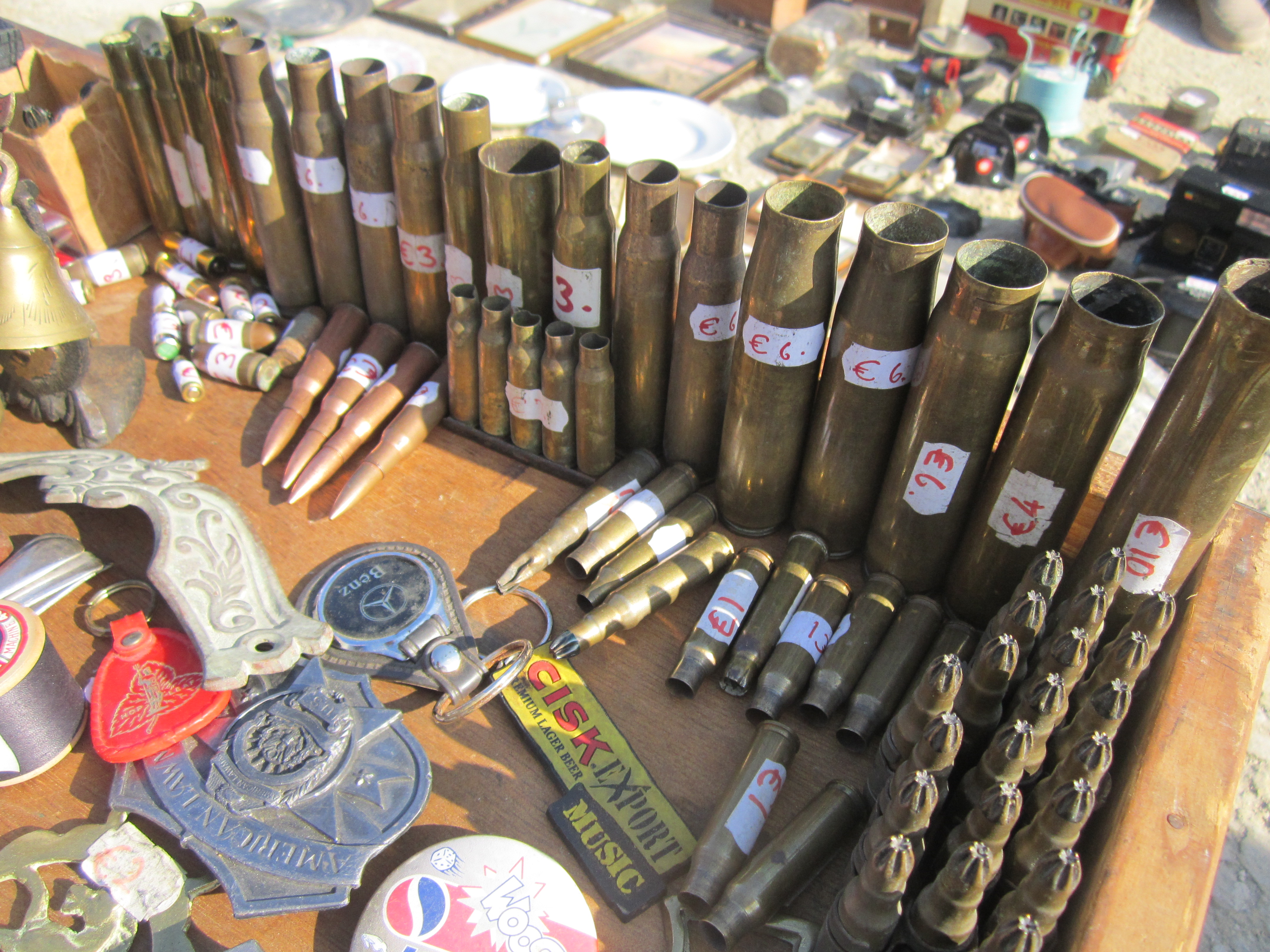
Not subtle: shells for sale
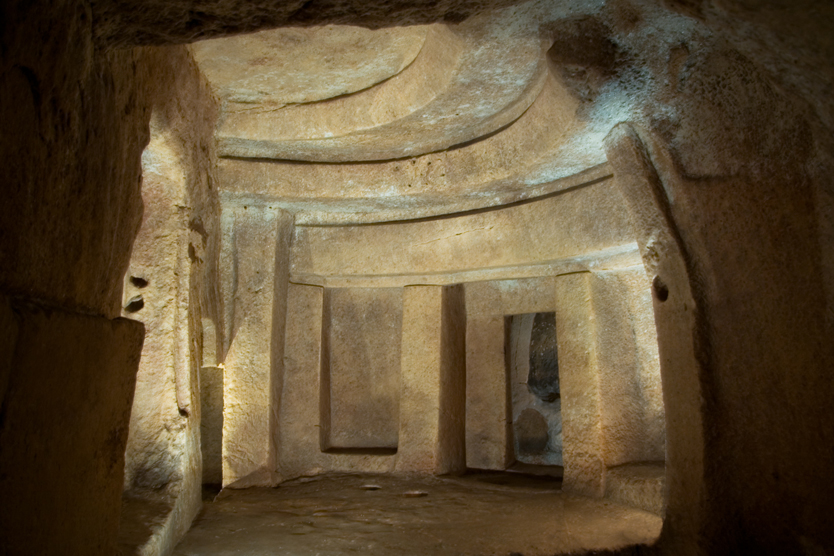
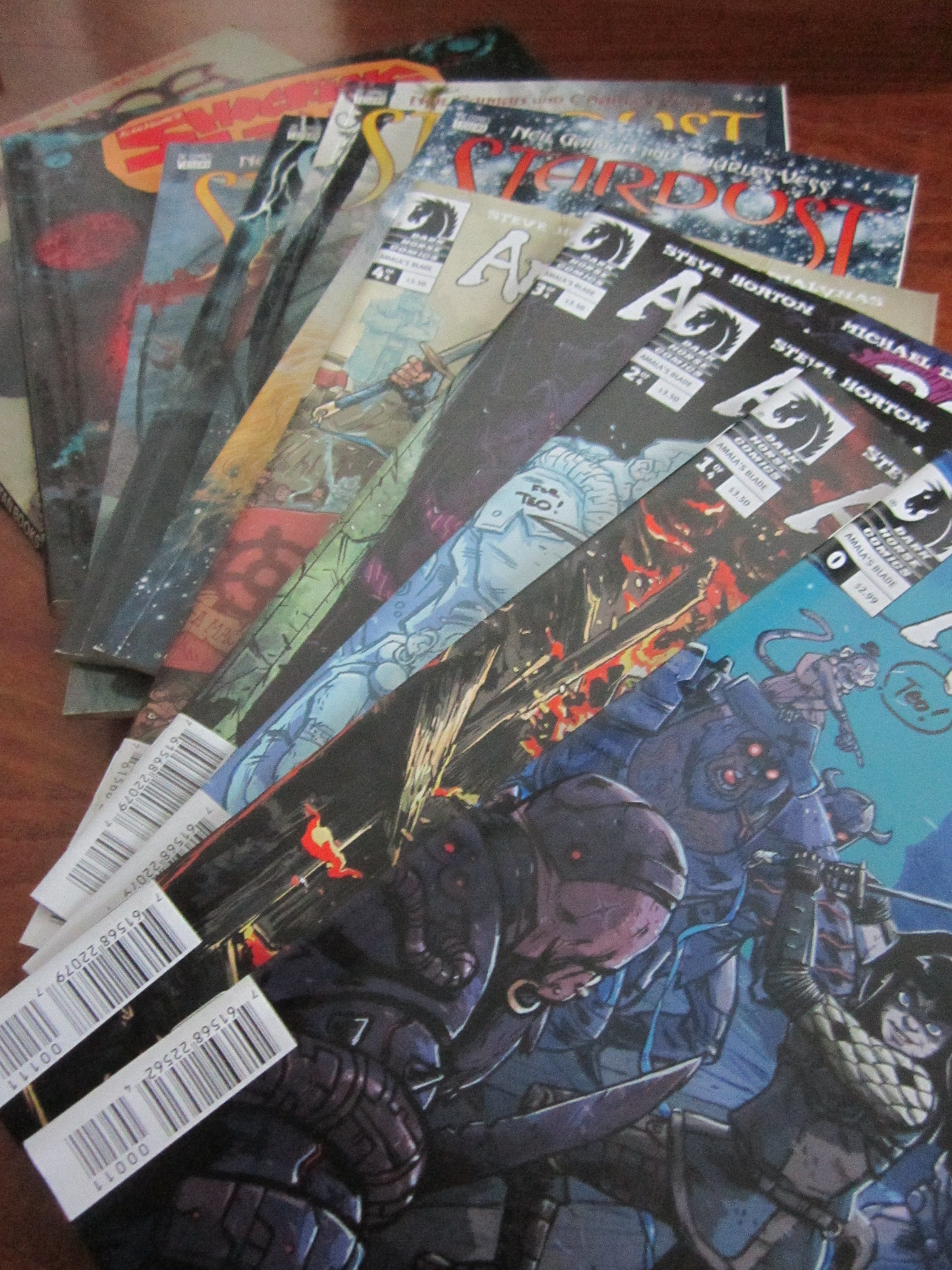
In what turned out to be quite an idyllic Sunday, I paid a visit to both the Birgu flea market and the Hypogeum of Hal Saflieni. The day was a happy one for some obvious reasons. My haul from Birgu was substantial and special while also being cheap – ‘General Correspondence’ book dated 1922-1925 for the same price (€1) as Savage Sword of Conan #40? Yes please – and the journey to the ancient underground burial site was by turns calming and inspiring.
It’s one thing to encounter a taken-for-granted idea in the ether, but it’s quite another to see it alive in the real world. The Birgu market, an eviscerated sprawl of unwanted collectibles for the most part, is rich in telltale signs of Malta’s former British conquest.
One of my proudest purchases from there is a wonderfully un-PC book called Around the Empire: a guidebook on the parts of the world which then fell under British rule, “so that our schoolboys will know that they don’t form part of a country, but an empire.”
Look, it’s Casual Orientalism everybody!
This time I snagged an edition ‘The Wide World’ (dated December 1945), which is packed with charmingly illustrated exploits of British soldiers enduring hardship and adventure in ‘exotic’ places like India and South America. And neither is it a coincidence, I think, that histories of Windsor Castle (and some of its most notable occupants over the centuries) were very thick on the (Birgu football) ground.
Going to the Hypogeum right after the flea market was slightly surreal, because unless you count farming settlers from what would eventually become Sicily and surrounding parts of Italy, this was a glimpse of Malta long before any real colonisation took place.
These smoothly-hewn caverns cancel out all thought of propaganda and nationalistic paraphernalia – British or otherwise – and they invite a mystery that can be filled with whatever you wish.
This was partly my goal when I was writing ‘Two’ – to connect with something that feels intrinsically Maltese without infecting it with any received notions and romantic jingo. But there’s only so much drama you can wrench out of yellow rock, no matter how ancient. At some point, you have to bring yourself into the picture. And that’s when the real journey can begin.
Over the past couple of weeks, I was reminded of just how important it is to remain humble and nice no matter what.
At Malta Comic Con 2013, I met some truly great and highly accomplished international comic book creators, and as luck (and the efforts of the great Kenneth Scicluna) would have it, I also scored the opportunity to interview Joshua Oppenheimer, the award-winning documentary director of The Act of Killing – arguably the most important film of our generation (with Mr Oppenheimer’s kind permission, I will be reproducing our conversation in full on this blog very soon).
Both of these encounters flew in the face of certain notions we tend to hold about successful and/or famous people: that they’ll look down on anyone not in their position, or that they’re brusque and difficult.
These artists were both on top of their game and very, very polite and accommodating people to boot: which made me chuckle privately to myself as I thought of the pompous figures I’ve met in my time who hadn’t accomplished half as much but still felt the need to peacock about (and having grown up in Malta, the ‘big fish in a small pond’ syndrome is very pervasive).
One of the people I met at the Comic Con was Chris Thompson, the man behind the Pop Culture Hound podcast – a mainstay of discussion on all things comic book related. And because he’s such a nice guy, I’ll open this haphazard list of great podcasts I’ve listened to over the past year (so far) with one of his offerings.
With the help of the Prince Charles Cinema in London, Chris Thompson’s Pop Culture Hound podcast delivers this conversation between comic book luminary and literary magus Alan Moore and his biographer Lance Parkin for all those who couldn’t be present for it on the night.
It’s worth a listen for anyone interested in Alan Moore’s work (obviously) but also for those who care about art and the future of humanity beyond our immediate physical and financial concerns. If that sounds a bit lofty well, it’s because it is. Moore was never one to pull his punches and neither was he ever cagey about embracing ideas that may veer away from the norm (and, perhaps, dangerously into ‘loony’ territory).
This recent conversation is a heartening reminder that the Moore we know and love is very much alive and kicking and that, despite his general grumpiness about the contemporary cultural climate of the world, he always has something magical – the word is not incidental – to offer up to his listeners that will refresh their outlook and inspire them.
I came to this one a little late and frankly, I’m a bit miffed – I had been hunting around for a podcast on this very subject for quite a while. It’s a period I’m interested in particularly because it concerns the development of my country of origin – Serbia – while following on from another podcast I used to listen to with relish – Mike Duncan’s excellent The History of Rome.
Host Robin Pierson openly acknowledges that this podcast follows on the heels of The History of Rome both in form and in content – delivering a comprehensive sweep of the period in 20-30 minute chunks.
I haven’t reached all that far into this podcast just yet, but I’m enjoying it very much so far. I’ve chosen the episode dedicated to Emperor Justinian because, as Pierson says, his is a life packed with incident, and is I think in many ways representative of the kind of conflicts that characterised the Byzantine age.
One of the reasons I really got into podcasts was because they offered the possibility to enjoy short fiction while ‘on the go’, and in a way that preserves some of that time honoured by sadly fading format of oral storytelling.
Lightspeed Magazine – offering a selection of science fiction and fantasy fiction compiled by master editor John Joseph Adams – is a great venue for varied, colourful work, and Tidbeck’s story is a fine example of how genre fiction can be made to do some great things if the writer in question is a brave, playful and emotionally honest one. I keep coming back to this poignant story about a theatre troupe performing to seemingly nobody, especially because it’s so sensitively narrated by Kelley Catey in its podcast version.
The Danish filmmaker Nicolas Winding Refn (Drive, Only God Forgives) is one of my favourite directors.
His most recent film, Only God Forgives, suffered something of a drubbing at the hands of the critics (and, from what I can tell, a bemused shrug on the part of the general moviegoing audience), but to me it only reaffirmed his alchemical mix of lush visuals, unflinching brutality and his masterful employment of archetypal figures.
So it’s hardly surprising that I enjoyed listening to this expansive interview, which apart from picking apart the engine behind Only God Forgives, draws parallels to some of his previous films – particularly Valhalla Rising, a Viking-era thriller starring Mads Mikkelsen which is reminiscent of both Werner Herzog’s work and Apocalypse now – a cocktail I can’t resist.
And how about you? Any good podcasts you’ve heard recently?
An inspiring weekend can make all the difference to your creative biorhythms, and I’m pleased to report that last weekend was one of them.
Maybe it’s the psychological glut caused by competitions like Nanowrimo (to say nothing of Movember) and its awkward position as the penultimate month of the year, but this November in particular felt a bit strange to me.
I was less and less keen to go out – preferring to stay indoors and – supposedly – tinker away at various creative projects (being human beings yourselves, I’m pretty sure you can tell how this ended up most of the time).
So I began to hope that the end of November would prove to be something of a release, and that December would make for a nice fresh start.
With the Malta Comic Con in town over November 30 and December 1, it seemed like a fair enough assumption to make, and I’m glad I was proven right.
The ‘Con, having been around since 2009, has been growing in reputation and quality with each passing year, and I certainly felt this year’s edition was an ‘upgrade’. Not just because big-name creators were once again in attendance – The Walking Dead’s Charlie Adlard, Game of Thrones storyboard artist William Simpson and ‘Lucifer’ writer Mike Carey being just a small fraction of them – but also because the attendees appeared to be as enthusiastic about the experience as the organisers.
It’s a motley gathering, as any ‘Con should be, I think: there’s those who come to tastefully sample the wares on display and those who make a beeline to the venue, foaming at the mouth because they’ll get to share breathing space with some of their favourite creators.
(All despite the rain: an important caveat considering the Maltese’s often hysterial attitude to the falling-water-from-the-skies phenomenon.)
Also, rain in Malta often means… rainbow!
Cosplay, previously something of a halting sight at this particular ‘Con, was very well represented this year: I was often intimidated by stampeding groups of anime-inspired characters, while other costumes were so well-crafted that they came close to resembling the ‘real thing’ (be that Batman antagonist Bane or Jack Sparrow… and yes, I realise that ‘real thing’ may be a poor choice of words here).
There was a healthy mixture of ages and social groups among the attendees too – a polar opposite to the cliqueish exhibition culture that often asserts itself at other art events – often at the very same venue where the ‘Con itself was held (Valletta’s St James Cavalier). But the difference is not just down to the attendees.
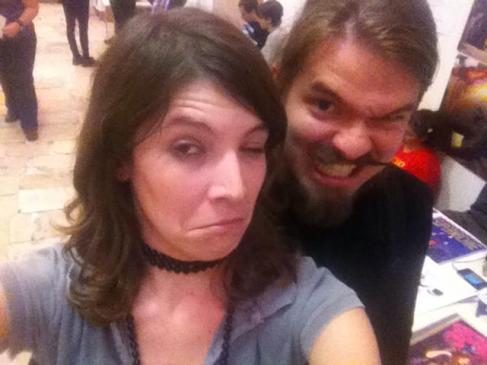
Crazy artists (Widdershins, left) and their editors (myself, right) were also present.
Comic book fandom, by its very nature, foments a completely unpretentious appreciation of art. Instead of self-conscious fawning, you get entirely unselfconscious gushing.
(Though a visit by Prime Minister Joseph Muscat was a heartening reminder that the ‘Con’s reputation as a quality, audience-grabbing event is growing, I’m afraid he fails to win the Coolest Official On Show Award. That honour would have to go to US Ambassador Gina Abercrombie-Winstanely, who enthusiastically did the rounds while wearing a Star Trek shirt.)
But there were quiet moments amidst the madness too, and I was lucky enough to sit in for one of them. Giving a reading of his upcoming novel The Girl With All The Gifts, Mike Carey also took time to answer questions from the intimate group that had gathered at St James’ Music Room for the occasion.
Preach, Mr Carey.
The genre-hopping British writer spoke, among other things, about the differences between prose fiction and writing for serialised comic books, and something he said resonated with me due to a kinda-secret project I’m working on at the moment.
Read: not that secret at all. (Credit: Widdershins/Nel Pace)
Speaking about the way comics are structured as stories, Carey said that “you can’t do it scene by scene”.
That mulling over period is essential when it comes to planning a sustained piece of fiction – more so when it’s a more dramatically ‘tactile’ thing – when it’s a story delivered in conjunction with a visual element, like a comic book, a film or a play.
It’s something I’ve rather enjoyed doing over the past day, aided by a purchase from yet another inspiring event held in tandem with the ‘Con – Patches Market. The notebook shown below – courtesy of the ever-brilliant, ever-meticulous Sarah of The Secret Rose – has been serving as a repository of notes, ideas and in-character psychological rationalisation towards a project that will only be coming into full fruition next year.
Cockbook. Hihi.
It’s a thoroughly unromantic thing – Wordworth: “we murder to dissect” – but I find it necessary. It’s one of the many things that writing ‘Two’ has taught me… and it was a long process, one which started during a particular November, some four years ago…
Hearts and minds: Jennifer Lawrence and Josh Hutcherson.
Watching the second instalment of the Hunger Games film franchise was a curious experience, more so than the original.
I’m not familiar with the Suzanne Collins source novels, so I’m coming into the series free of any expectations. What struck me more than anything this time around was the sheer extent with which the franchise appears to be playing a have-your-cake-and-eat-it-too game with its viewers.
It’s a critique of our entertainment structures, of course: the idea of kids forced into televised gladiatorial combat is disturbingly close to what we see on reality television.
But there’s thrills and enjoyment to be had in watching our protagonists attempting to survive.
I’m feeling generous, so I’ll say this is actually a reminder of how good, compelling stories should be about that immersive experience: about riveting your attention, thematic paradoxes be damned. Stories aren’t uni-directional messages. The good ones have a capacity of altering their shape in whichever way they deem is best for their survival.
Often, they’ll latch onto classic predecessors. In the case of Catching Fire, Francis Lawrence made a very wise decision in this regard. He channelled one of the most vaunted, enduring ‘middle chapters’ from sci-fi/fantasy: The Empire Strikes Back.
Come the end of Catching Fire – mild spoilers ahead – the ‘rebellion’ is dispersed, and our heroine has been physically compromised (see: Luke sans hand). Worse, her partner-in-justice has been captured (see: Carbonite Han Solo).
But apart from this narrative puzzle-arrangement, a pervasive darkness is also allowed to settle over the entire film – the feeling that things have to get worse before they can get better.
There’s no dictum, no Creativity 101 cliché I like more than ‘Whatever Works’. Zeitgeist-prodding satire married with classic Joseph Campbell/Star Wars riffs definitely works for Catching Fire.
I wonder how much of this is deliberate; a strategic narrative positioning for maximum effect. A film adaptation, I suspect, would be more invested in that kind of thing – particularly a film adaptation of this size and financial girth.
But from my own experiences of writing fiction, I know that it’s virtually impossible to remember what your original ingredients were. Once the stew starts to simmer, it all tends to coalesce into one colour.
Again, only if the story is good. Only if you’re being honest, if you’re letting – or training – yourself to tell the story as consistently as you can, if you’re giving it all the attention it needs. Only if you’re using the right ingredients, at the right time.
Working 12-hour shifts at the newspaper gives the night a particular edge, after it’s all over and you slump back home.
The exhaustion is expected, implicit even. But your sleep can’t be blissful: you’re too tired to shower, your brain is stuffed with news stories, with reams of digital copy the likes of which you’ve seen over and over again, week in and week out.
But there’s something democratising about this feeling. All glamour is stripped away after the 11pm mark hits, and you still find yourself at the office. At your desk, midway through a story, or waiting for a report to come in.
When you’re that tired, you should be sleeping. But if you’re deprived of sleep at that juncture, the dream world will seep through regardless. The belt that holds sleeping and waking is unbuckled, and just like that – while still firmly seated at your desk – you’re floating.
That same strange concentration, that same pinching together of thoughts and feelings happens, sometimes, when I write. My novel was probably borne out of just such a moment, and for all the necessary slogging, such moments are what I keep coming back for. What you keep coming back for.
But what you keep coming back to work for is something else entirely.
Which is to say, I need to make more of a habit of jotting things down. Lord knows how many of these fugue states have gone to waste clicking away on Facebook while waiting for a story to be wired in.
What I remember: Reading The Stranger at Sixth Form. Hating the sterile Everyman edition I found at the school library. Loving the equally austere but slightly more stylish silver-grey Penguin edition, with the footsteps in the sand.
He was a softer version of Nietzsche, to me. Nietzsche pummeled me. Camus let me in. I could see his philosophy working, somehow: absurdism felt both sexier and more managable than nihilism – or raging anti-nihlism… guess it depends who you ask.
It’s his short stories that remain etched in my memory. I’ll never re-read The Myth of Sisyphus. I doubt I’ll ever re-read The Stranger or The Plague either. But The Exile and the Kingdom felt friendlier… more humane than anything I’d ever encountered from his oeuvre. The sweeping intellectual make-up of ‘Sisyphus’ and The Plague; the blunt, macho minimalism of The Stranger… there’s none of that in The Exile and the Kingdom.
The fact that someone so intellectually flinty and sharp could allow themselves sentimentality to seep through; the fact that he showed himself to be artistic, to be open to occasional, experimental bouts of emotion in prose…
It was to be the last time I engaged with Camus, but it felt like a good way to round off the relationship. (Of course I could still get into his writing again, of course I could dip into the books every now and then and still derive pleasure for them. But what I mean is that the ‘phase’, the fevered season of devouring them wholesale, was gone.)
Feeling the pull away from the core of his work, I moved on to Camus but took some of the absurd with me. I’d like to think it’s still with me, anyway. The scepticism of any definite moral or philosophical impositions. The framing of human endeavour against something ultimately unpredictable, but not necessarily malevolent or cold. Acknowledging our passion as something fiery and real and justified in every way, even if we’re not sure where it all comes from, and where it’s all going…
This could all just be projecting. My memory of Camus’ work and its implications could be faulty (and, of course, it could be that I never quite grasped if fully in the first place). But that’s what I remember when I think back on it.
A solitary figure – alone but not lonely. The world spinning on regardless, and you jumping on the carousel.
I would never have expected to rediscover a dormant love for prog-inflected psychedelic rock, much less for it to become the soundtrack to my writing marathons, but here we are.
While my teenage sister was out on the town rocking a Wednesday Addams get-up (her ‘bff’ went as Morticia so they stalked the small island nightlife scene with old-school-goth panache), I had no Halloween party to go to.
That’s a lie, actually: I could have very easily – and very lazily – donned my stock Dracula cape and multi-purpose 18th century broach, waxed my moustache and tagged along with my younger sibling, to revisit the local rock club for some Halloween fun, as well as a healthy dollop of nostalgia.
But in what is probably another sign that I’m getting old before my time, I opted to stay in to read instead. Fridays are hard work for me anyway – so that there’s a distinctly non-Halloweeny sense of dread looming over every Thursday evening.
The reading was as ritualistic as I could make it though, so some sense of commemoration was kept. I indulged in Edgar Allan Poe’s ‘The Masque of the Red Death‘ for umpteenth time; it’s a story that I keep returning to for its visceral and visual impact, but would you believe that I have yet to fully conjure up an image of Prospero’s castle in my head? Maybe that’s why I keep returning to it.
The fact that Gabriel Byrne did a brilliant reading of it some years back helps too, of course:
After I was done, I got the urge to revisit what is probably one of my favourite literary tributes of all time: Laird Barron‘s ‘Strappado’, published in the Ellen Datlow anthology Poe, released in commemoration of the macabre master’s 200th anniversary. It’s a glorious mash-up of both ‘Masque’ and ‘The Cask of Amontillado‘ – probably my second-favourite of Poe’s stories, and updates their most horrifying elements in a way that makes my skin crawl.
Though Lovecraft – my second choice for the evening’s reading – is perhaps more vulnerable to this than Poe due to his stylistic excesses, the visual furniture and 19th century narration that fuels Poe’s tales can sometimes soften their impact (if not all that substantially). Barron’s story doesn’t have this problem. I don’t want to write a detailed crit of it – I like it too much anyway – but do check out the anthology if you can, it’s got a few other gems in store.
My reading of HP Lovecraft’s ‘He‘ was cut short by my drooping eyelids. However, I returned to it after a ranging storm woke me from my slumber… which I appreciated for providing some holiday-appropriate mood, if nothing else. But the story is truly one of Lovecraft’s lesser works, any terror undermined by its ridiculous antagonist and the logorrithic miasma that works much better in the Cthulhu stories than it does here.
Re-reading can be far more pleasurable and rewarding than reading something for the first time. It has the ability to etch stories in you like incantations, like prayers that remind you of who you are. If the stories and the storm congeal into something meaningful for my writing, that would be truly great.









 Soft Disturbances