Ecstasy of influence: Bowie via Manson

Marilyn Manson - Mechanical Animals (1998)

I first got to know about Elmore Leonard through Quentin Tarantino – on that note, Tarantino introduced me to a whole raft of pop culture curios – and I started digging into Norse mythology after Marvel Comics planted a seed in my brain thanks to their version of Thor.

Lovecraft swam into my purview during my teenage years – though I would delve into his stories much later, again – motivated by this initial, delayed spur – through the likes of Metallica and Cradle of Filth, and Lord Dunsany I read after finding out that actually, both Lovecraft and my former literary hero JRR Tolkien were influenced by him.

One of the joys of delving into the DNA of your favourite creative people is finding out, once you crack that shell, what lies beneath. Everyone is influenced by someone else, and this hall of mirrors is what arguably characterises our relentlessly postmodern age. (Should that be post-post-postmodern? I’m not an English undergrad anymore, which frankly means I’m past caring.)

In the case of the late David Bowie, it was Marilyn Manson who did it for me – specifically, the Marilyn Manson of the androgynous Mechanical Animals era.

Now of course, I had known who Bowie was long before my friend Herman loaned me a bootleg tape of the said Manson album (come to that, I of course knew who Manson was before that talismanic tape too). Family lore has it that my aunt and father went out to buy the latest Bowie LP to reach Serbia during a respite from the hospital as my mother was getting ready to give birth to me, even – and I’m sure that same record was spun in my presence after I eventually popped out into the world on that fateful May day in 1985.

But I think I first started to gain an understanding of what Bowie was “about” thanks to Manson’s very deliberate and openly acknowledged cribbing from Bowie during that comparatively brief chapter in “the God of Fuck’s” career.

I wouldn’t really be able to talk about the technical make-up of the songs in Mechanical Animals, so I doubt that I’d be able to construct much of a formal argument in favour of why these songs ‘worked’ on me the way they did.

But neither was it a case of being transfixed by the superficial aspects of Manson’s project, dazzling and sort-of* subversive as they may have been in the pop-culture mainstream at the time. And I say this at the risk of discounting just how mind-blowing it was to me to watch Manson’s performance of The Beautiful People – taken from Antichrist Superstar, the album previous to Mechanical Animals – at the MTV Video Music Awards back in 1997 (I was twelve). It still gives me a thrill of sadistic pleasure to remember the cut-aways to the likes of Sean Combs apparently scandalized by Manson’s bare-bottomed, fascist-attired attack on MTV glamour culture. The hypocrisy of someone like Combs taking apparent offense at Manson still strikes me as telling, in a “gotcha” kind of way.

But Mechanical Animals was certainly a ‘softer’ beast, and its immersive qualities are what seduced me. Beyond the obvious, catchy charms of The Dope Show and I Don’t Like the Drugs (But the Drugs Like Me), songs like The Last Day on Earth and my personal favourite, Coma White, transported me somewhere alien but strangely calming.

The electronic wash that characterises the album still gives me a sense of something cold but meditative, and it’s all helped along by the androgynous surrogate – ‘Omega’ – that Manson created for the purpose of the album. As I would later learn, creating an artistic persona, particularly an androgynous one of this kind, was cribbed from Bowie, who admittedly trumps Manson on this front – not only because he ‘got their first’ but also because he had a far clearer vision about when to adopt these personalities and when to drop them**.

But at the time, it introduced me to the concept of, well, the concept album. Not only that, but the concept album as propped up by an invented personality the performer deliberately took on. In short, the idea of music as storytelling, which has resonated with me ever since.

It’s this echo of Bowie that I’ve carried with me ever since. Of course I’ve listened to Bowie since that time too, though not, I must admit, with the kind of visceral fan-like fervour the teenage me bestowed upon Marilyn Manson.

That’s another thing about influences. You can be introduced to artists askance. Simply put, it wouldn’t have made much sense to me to force myself to listen to Bowie at the time. I was into hard rock and heavy metal, and Manson was a more palatable jumping point into the Bowie milieu for me at that point. This is, of course, the problem with recommending essential works to people with the kind of evangelical zeal we reserve for the very best. We tend to forget that everyone’s on their own journey, and telling them that you HAVE to read/watch/listen to this at that point in their life makes little sense.

If you’re meant to reach it, you’ll reach it. In the meantime you can follow the breadcrumbs you recognise.

*I think I opted for ‘sort-of’ partly because I know Bowie did all this before

**Manson’s dithering post-Holywood career is a testament to this… compare it to how Bowie, despite some flailing years of his own, remained so much in control that he even recorded a final album as a farewell

We Need to Talk About Genre | Individuality vs Community

Argument: We divide fiction up in genres because of our chronic fear of loneliness.

I’m invested in this question, which is evidenced by my foolhardy effort to write a parallel-narrative novella incorporating both the fairy tale idiom and the very ‘real’ world, as well as my attempt at getting at what that multi-faceted mongrel genre ‘the New Weird’ is all about for a Master’s dissertation.

But first, some (recent) observations on the matter from more articulate and well-versed people than myself.

*

  1. Ursula K. Le Guin’s speech at this year’s National Book Awards

“I rejoice at accepting [the award] for, and sharing it with, all the writers who were excluded from literature for so long, my fellow authors of fantasy and science fiction—writers of the imagination, who for the last 50 years watched the beautiful rewards go to the so-called realists.

“I think hard times are coming when we will be wanting the voices of writers who can see alternatives to how we live now and can see through our fear-stricken society and its obsessive technologies to other ways of being, and even imagine some real grounds for hope. We will need writers who can remember freedom. Poets, visionaries—the realists of a larger reality.”


  1.  ‘A Better Way to Think About Genre’ by Joshua Rothman (New Yorker)
Northrop Frye

Northrop Frye

“It’s tempting to think that we might do without these kinds of distinctions altogether. Why not just let books be books? The thing is that genre doesn’t have to be vexing. It can be illuminating. It can be useful for writers and readers to think in terms of groups and traditions. And a good genre system—a system that really fits reality—can help us see the traditions in which we’re already, unconsciously, immersed. As it happens, there is such a system: it was invented by the Canadian literary critic Northrop Frye, and laid out in his 1957 masterwork, Anatomy of Criticism.”

  1.  The Real Mr. Difficult, or Why Cthulhu Threatens to Destroy the Canon, Self-Interested Literary Essayists, and the Universe Itself. Finally. by Nick Mamatas (Los Angeles Review of Books)
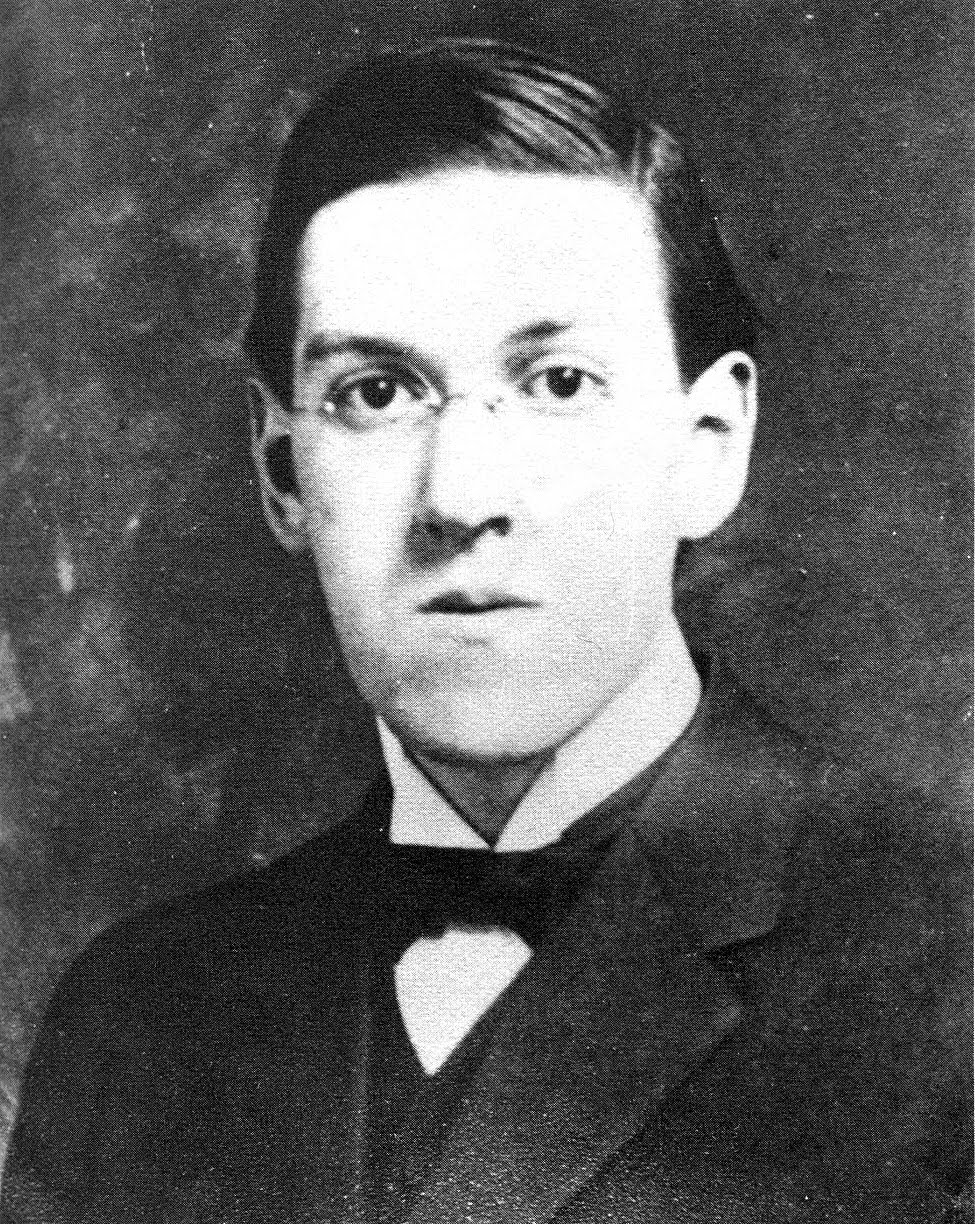
A young HP Lovecraft

A young HP Lovecraft

“Lovecraft’s quality is obscured by his difficulty, and his difficulty is obscured by his popularity. If Lovecraft isn’t seen as a difficult writer, it is because of the pulp idiom in which he worked. [Jonathan] Franzen points to college as the place where people are made to read difficult books, but Lovecraft is an adolescent fascination. Lovecraft demands the careful attention that only a teen boy with little else to do – no high school romances, no sports practice – can muster. Lovecraft’s pulp provenance, and early spike by Edmund Wilson, kept Lovecraft’s work from being taken seriously. Only over the past twenty years, with reprint volumes via Penguin Classics and Library of America, with champions such as Michel Houellebecq and Reza Negarestani has Lovecraft earned a place in what we used to call the canon (while making quotation marks in the air with our fingers, notch).”

*

These are all problems that have been burning at my brain in some form of another for as long as I can remember (slight exaggeration, but it certainly feels that way). Because I take this very seriously for whatever reason – friends and family who know me intimately can feel free to psychoanalyze away – I’m driven to find an evolutionary root to our need to divide up literature into genres, and then argue about it endlessly.

Cards on the table: if I’m a follower of any critical school on this front at all, I’m a follower of Frye’s. His organic view of genre both suits my needs as a writer and provides me with an inclusive argument about genre that, ostensibly, short-circuits going-nowhere binary arguments on the issue. Also, there’s a pervasive paradox in the way I process this whole thing: I hate the idea of genre as segregation, but I don’t want us to do away with recognizing genres, because there’s an aesthetic pleasure in picking out what belongs to which tradition.

That Edgar Allan Poe influenced Lovecraft who in turn influenced Ridley Scott and Stuart Gordon and Caitlin R. Kiernan and Nick Mamatas and Cradle of Filth and countless others, and that the details stolen from Lovecraft by each of these artists are traceable to Lovecraft but still distinct, and that this intertextual richness evokes a kind of hopeful reminder of the prodigious human imagination, as it stretches across generations.

But on a more universal note, I will suggest that genre stems from a combined need for both INDIVIDUALITY and COMMUNITY. In this pantomime debate between the ‘literary mainstream’ and the ‘genre community’, the literary side is ‘clubby’ in the original sense of the word: the domain of an elite that gatekeeps itself into a privileged minority, with all the attendant ‘real world’ social implications of that.

While the ‘genre’ community, on the other hand, is seen as a regressive ‘cult’ circle that turns its back on the ‘real world’ in favour of a vacuum-sealed aesthetic that often favours the tried and tested over any attempts at current social commentary or formal innovation (perhaps the Pre-Raphaelite Brotherhood is an iconic example).

But this perception – the pantomime is very much a perception – is made doubly complicated by the fact that we’re discussing works of art here. Leaving aside value judgements of the individual works of art in question, the reason why the genre debate will never settle into a peaceful resolution is because we’re asking the works of individuals to answer to the needs of a community, however large and nebulous this community may be.

There will always be mavericks, trailblazers, and ‘exceptions to the rule’. But even declaring that the mavericks are all that you like places you in a double bind: each maverick will have their influences, and in each influence – much like Lovecraft’s fish-god mongrels from Innsmouth – lies a genetic code that can’t be denied, and which ties back to a tradition.

Traditions are what genre is built on, and tradition will be something not even the most opaque of ‘literary’ fiction would be able to deny… strain as it might for originality and freedom from market constraints and critical labels.

We all want to be ourselves, but none of us want to be lonely.

READ RELATED: Getting it Ass-Backwards: The Genre Binary at LonCon

Monstrous Indulgences | Guillermo del Toro’s Cabinet of Curiosities


Guillermo del Toro's Cabinet of Curiosities

This volume may be the epitome of indulgence, and the tone of Marc Scott Zicree, Guillermo del Toro’s interviewer – and effective co-writer in this endeavour – can come across as a bit sycophantic at times.

But really, a ‘cabinet of curiosities’ can’t help but be a gloriously indulgent exercise, and you don’t come here to read a sober dissection of del Toro’s life and filmography.

No, you come here to luxuriate in what is probably the ultimate ‘behind the scenes’ look into Del Toro’s oeuvre, as presented in a gorgeous coffee table edition crammed with photographs and studded with mini-essays by Del Toro’s friends and collaborators (the book is framed by tributes from James Cameron and Tom Cruise, respectively).

The book introduces us to Del Toro’s eclectic imaginative landscape with a bit of a tour of Bleak House – his second home and studio, which gives the book its organising principle, as the house itself is something of a cabinet of curiosities writ large – more than just a working space, it is arguably also the geeky man cave to end all geeky man caves.

Bleak House


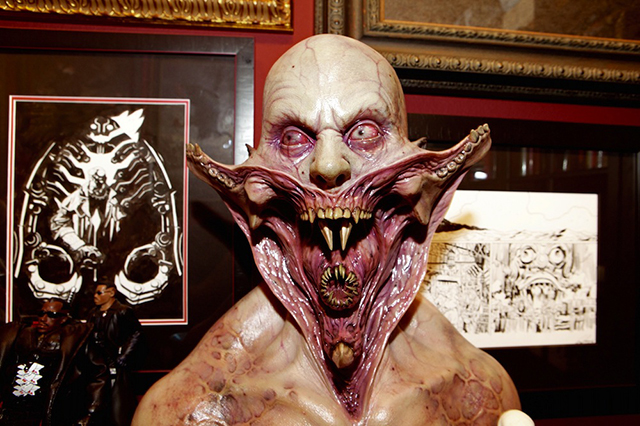
Stuffed with original art and sculptures (some of them taking an extravagant bent, like the statue of Boris Karloff getting the final touches of his Frankenstein make-up done), each room in the house is themed around a particular genre or artistic milieu – like the ‘Steampunk Room’, the ‘Manga Room’…

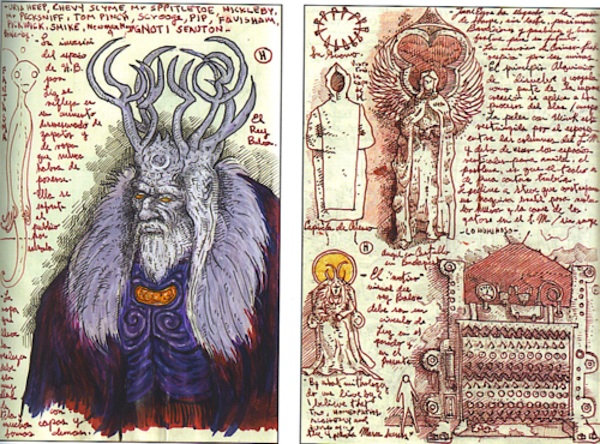
But above all, the ‘cabinet’ is really about del Toro’s colourful and frenzied notebooks, which the director has been keeping from the beginning of his career and which reveal the inner workings of his genre-melding chiaroscuro parables, from Cronos through the Hellboys and Pacific Rim.

Guillermo del Toro's notebooks

The pages of the notebooks reproduced in the book often have a drawing at the centre – usually a portrait shot of a character in one of del Toro’s films, or a close-up of some grotesque prop or monster – which would be surrounded by (multi-lingua) marginalia. These notes will probably be the most pleasant discovery for a del Toro fan as they leaf through the book, revealing, as they do, the inner workings of the writer-director’s mind, often as he’s tackling and trying to figure out several projects at the same time: practical concerns (about props, costumes and loose story threads) jostle alongside philosophical musings and personal anecdotes.

Reaper statue from Blade II

As an extra, readers also get a glimpse into projects of del Toro’s that never came to fruition – an easy pitfall for a filmmaker with a tendency to multitask various media and juggle a number of projects at any given time.

The most prominent – or at least, the most recent and infamous – of these is of course del Toro’s – ultimately thwarted – adaptation of HP Lovecraft’s At the Mountains of Madness.

That project might just see the light of day, however, as del Toro recently announced that he’s cool with going for a PG-13 rated version of his film, under the wing of his recent collaborators Legendary Pictures (insisting on an R-rating proved to be the deal-breaker with the film’s previous studio-home-to-be, Universal).

But even before this announcement – which arrived some months after The Cabinet of Curiosities hit the shelves – hope already burned for a renewal of the project. “While this project we were so passionate about didn’t work out the first time round, I know that it’s going to happen one day,” Tom Cruise, who was set to star in At the Mountains of Madness (alongside Del Toro regular Ron Pearlman) writes in the Afterword to the ‘Cabinet’.

“Why? Because Guillermo will never stop creating, no matter what. He will keep at it against all odds. And when it finally happens, it will be infused with all the things that make a Guillermo del Toro movie so distinct and unforgettable: images, emotions, vistas, and characters that no one else creates.”

Inspiration | Mad Magus Artist Documentaries

Moebius' Arzach

Moebius’ Arzach

Call it glorified procrastination (then again, what isn’t?) or a genuine pursuit of inspiration, but there are few things I love more than watching documentaries about creators I admire.

The release of Jodorowsky’s Dune (which my friend Marco incidentally nattered about on recently over at Schlock Magazine), coupled with the sad passing of HR Giger, made me think of this again, so I thought I’d compile a list of some of my favourites – all of which are thankfully available online.

I know I’ll be returning to this list every now and then for an inspiration top-up. Feel free to suggest any others I may have missed.

In Search of Moebius

The Mindscape of Alan Moore

Lovecraft: Fear of the Unknown

H.R. Giger Revealed

*

Incidentally, did some more nattering of my own, this time into the ears of the protean Maltese lifestyle web-hub, Malta Inside Out.

Valletta Walk: The rock and sea, your only companions

“He said that the geometry of the dream-place he saw was abnormal, non-Euclidean, and loathsomely redolent of spheres and dimensions apart from ours.” – HP Lovecraft, ‘The Call of Cthulhu’

Marsamxett 1

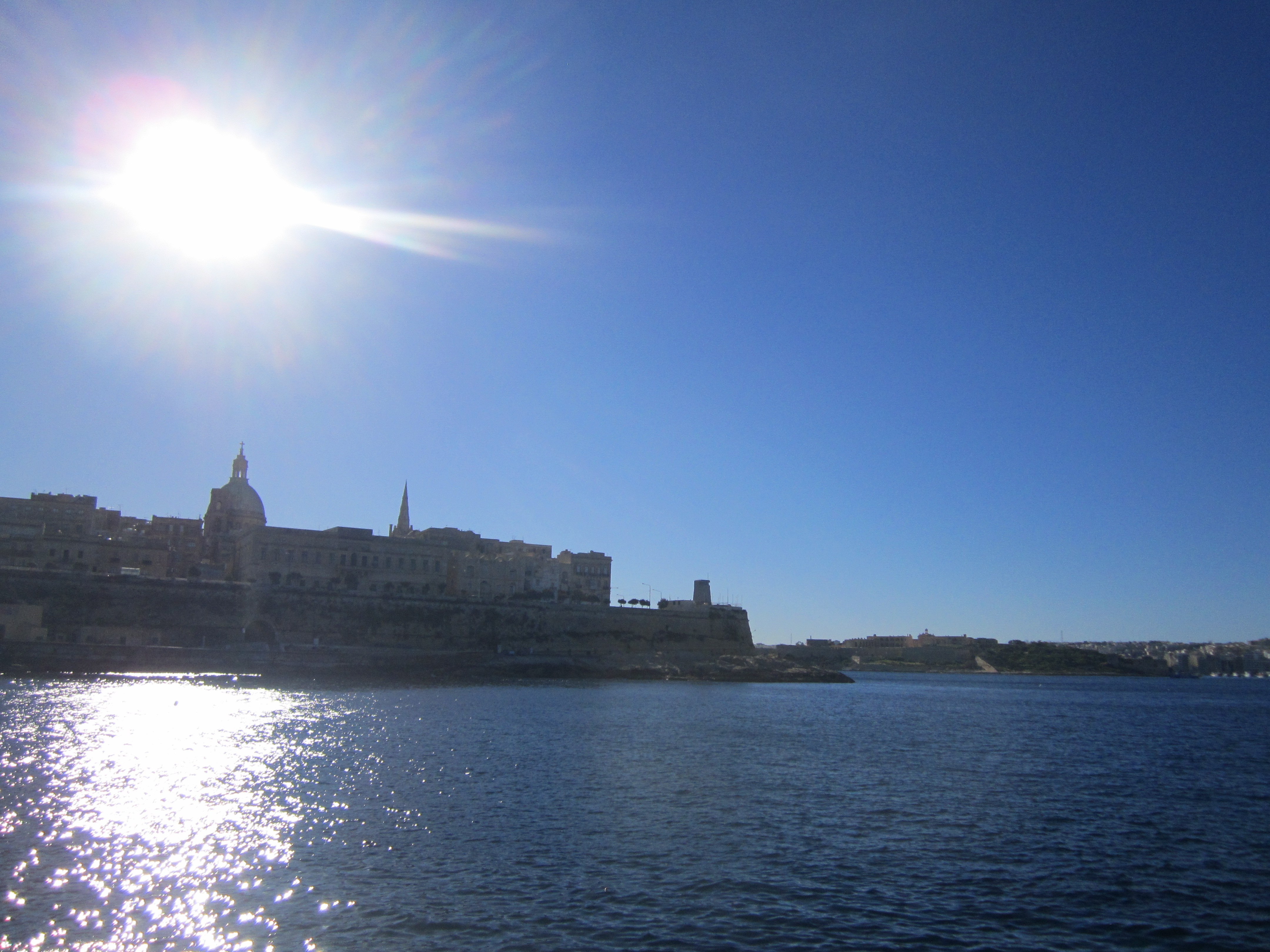
Perhaps it’s not exactly loathsome, but there is something non-Euclidian about this place. It’s a place that fascinates me and yet, I don’t even know its name. A resident of the city told me that it probably falls under the Marsamxett Harbour, but he didn’t sound certain enough for my liking.

Marsamxett 2

The sea-and-weather beaten soft stone shaped in undulating, irregular bumps and curves. The remains of metal features, structures, now so completely rusted they look more like rancid fauna than a man-made imposition on the landscape.

Marsamxett 3

The man-made features that do retain a discernible function – the staircases connecting the the haphazard, treacherous space – are almost a parody of themselves. The entire area is so precarious that you feel stairs shouldn’t be there in the first place – walking through it shouldn’t be encouraged.

Marsamxett 4

Then there’s a kind of stone clearing; there comes a point when there are no longer any bridges or staircases, and you can get a level, clear view of the sea.

But this is only partly true, because the last staircase you see is also the largest one in the whole place. And the most obsolete. It stands like an obelisk, though it’s pinnacle is now boarded up by a iron gate (it’s new, as far as I know, but at a distance it looks thin, brittle). It amplifies its uselessness by simply being there – standing proudly to signify nothing.

Marsamxett 5

Around the staircase, another inviting paradox. The place is both anonymous and open. It faces the sea, and from a certain vantage point – i.e., its neighbour across the sea, Sliema’s Tigne – it is the most exposed part of the entire city.

But in truth, it’s so removed from the rest of the city that it provides a quiet, strange sanctuary. Perhaps this is why it’s a favourite spot for fashion photo shoots. It has a disquieting, undisturbed glamour. Or maybe its draw is that it’s one of the few places by the sea that more or less guarantees isolation. Logic: the droves that crowd to the sea at the first sign of decent weather aren’t going to brave this treacherous terrain so eagerly.

Marsamxett 6

But although the place is finally open – going by just this one snapshot, you’d be hard-pressed to distinguish the area from Sliema’s ever-popular Surfside – it remains treacherous. Even if there are no longer any cramped, suspiciously sturdy stone staircases to make your way through, the rock here is entirely exposed to the sea, and the visitor is forced to negotiate through puddles now. Puddles that are really little ponds – the liquid inside them the dark green of fairy tale illustrations, where frog princes dwell. (Imagine slipping, now. Imagine falling on your back – the city where humans mill about to either side of you but so far, far away.)

These pods sometimes grow – they widen; not just puddles dotting the rock but a space big enough for a daring spirit to swim in.

Marsamxett 7

Turn a corner and find a shanty town; green doors caked with dirt and chipped with age, a family around a formica table, the patriarch with a blood-red bald head and hands flaked with a dazzling coat of white hairs. You imagine his fingers to be chapped, leathery like the rest of his skin.

Marsamxett 8

The water assumes the shape of a canal now. Below the shanty town it’s an emerald green, almost as if to mirror the doors. And on it float bread crusts – ten of them, then around twenty and then thirty, before they thin out to two or three as you walk on. There are no fish to disintegrate them, at least not now.

The cramped shanty town contrasts with its mirroring view. The sea opposite is a vast gulf framed by another mirror image: Valletta and Sliema sit at either side of your peripheral vision, as if ready for a duel.

Marsamxett 9

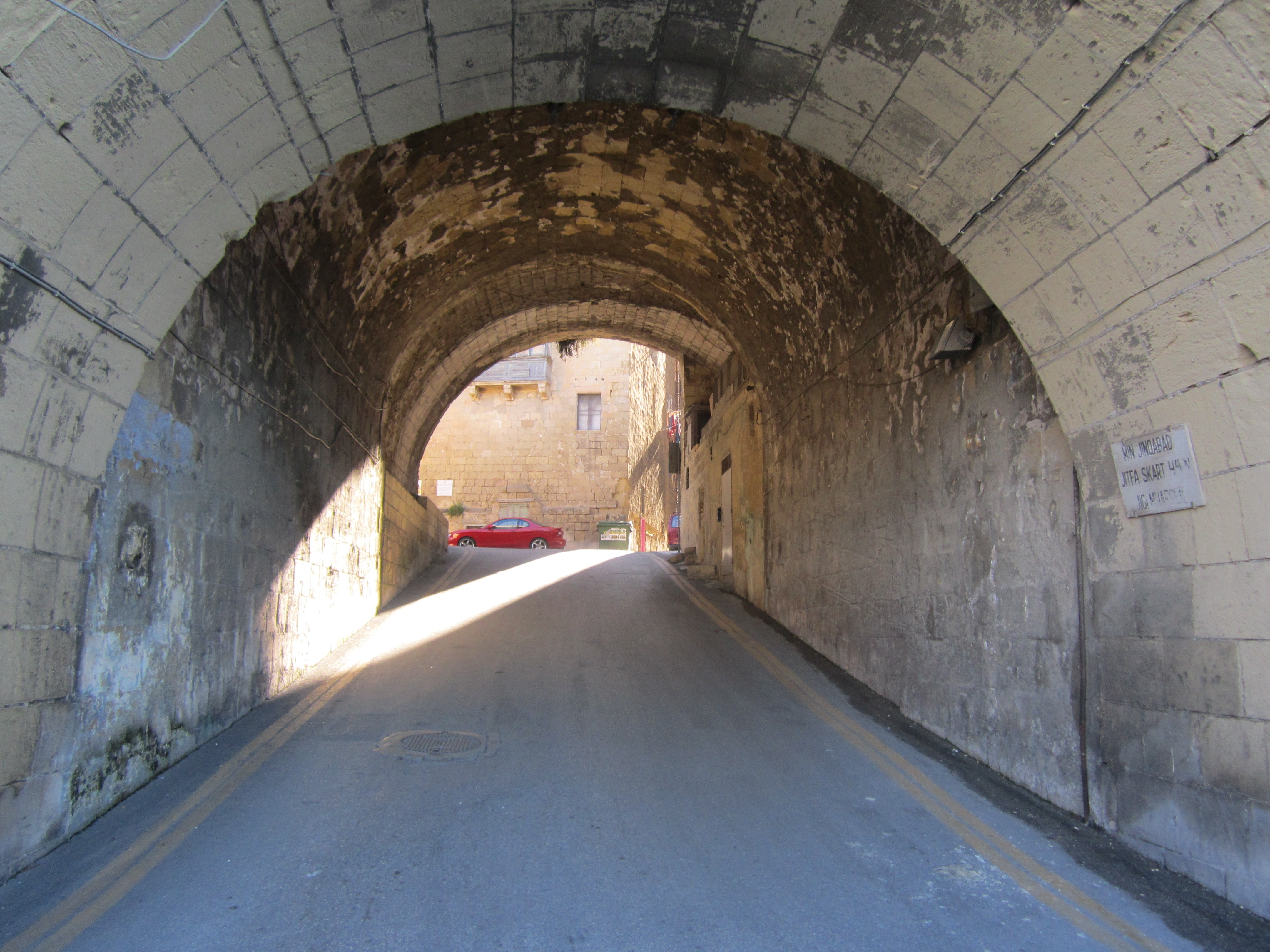
And then you walk under a tunnel, and what was wide is now thin again (the city’s familiar grid. You knew this interruption to its structure couldn’t last). You pass through this rounded maw of brick and you find yourself assaulted by fruit flies and saints: a commemorative collection of holy pictures stuck together, with an artificial candle standing vigil. The fruitflies are as multiple as dust mites.

You’re back in the city, and the only way forward is uphill.

Marsamxett 10

The Quiet Halloween Mind-Feast

While my teenage sister was out on the town rocking a Wednesday Addams get-up (her ‘bff’ went as Morticia so they stalked the small island nightlife scene with old-school-goth panache), I had no Halloween party to go to.

That’s a lie, actually: I could have very easily – and very lazily – donned my stock Dracula cape and multi-purpose 18th century broach, waxed my moustache and tagged along with my younger sibling, to revisit the local rock club for some Halloween fun, as well as a healthy dollop of nostalgia.

But in what is probably another sign that I’m getting old before my time, I opted to stay in to read instead. Fridays are hard work for me anyway – so that there’s a distinctly non-Halloweeny sense of dread looming over every Thursday evening.

The reading was as ritualistic as I could make it though, so some sense of commemoration was kept. I indulged in Edgar Allan Poe’s ‘The Masque of the Red Death‘ for umpteenth time; it’s a story that I keep returning to for its visceral and visual impact, but would you believe that I have yet to fully conjure up an image of Prospero’s castle in my head? Maybe that’s why I keep returning to it.

The fact that Gabriel Byrne did a brilliant reading of it some years back helps too, of course:

After I was done, I got the urge to revisit what is probably one of my favourite literary tributes of all time: Laird Barron‘s ‘Strappado’, published in the Ellen Datlow anthology Poe, released in commemoration of the macabre master’s 200th anniversary. It’s a glorious mash-up of both ‘Masque’ and ‘The Cask of Amontillado‘ – probably my second-favourite of Poe’s stories, and updates their most horrifying elements in a way that makes my skin crawl.

Though Lovecraft – my second choice for the evening’s reading – is perhaps more vulnerable to this than Poe due to his stylistic excesses, the visual furniture and 19th century narration that fuels Poe’s tales can sometimes soften their impact (if not all that substantially). Barron’s story doesn’t have this problem. I don’t want to write a detailed crit of it – I like it too much anyway – but do check out the anthology if you can, it’s got a few other gems in store.

My reading of HP Lovecraft’s ‘He‘ was cut short by my drooping eyelids. However, I returned to it after a ranging storm woke me from my slumber… which I appreciated for providing some holiday-appropriate mood, if nothing else. But the story is truly one of Lovecraft’s lesser works, any terror undermined by its ridiculous antagonist and the logorrithic miasma that works much better in the Cthulhu stories than it does here.

Re-reading can be far more pleasurable and rewarding than reading something for the first time. It has the ability to etch stories in you like incantations, like prayers that remind you of who you are. If the stories and the storm congeal into something meaningful for my writing, that would be truly great.