Haunted Out of Life | Perfection by Vincenzo Latronico

The central couple of Vincenzo Latronico’s fourth novel Perfection –– translated into English by Sophie Hughes and published by Fitzcarraldo Editions — are living the digital nomad dream c. 2015 when we first meet them: crafting brand identities, catalogues and interfaces for trendy businesses, having successfully uprooted themselves from an unspecified Southern European country of origin to build a new life in Berlin.

That much of the novel centres on their outward success — which only appears to require minor upkeep — is the key to its own triumph as an insidious but blistering satire of the white, middle class and now variously mobile zeitgeist.

Novels like Perfection are judgemental rather than satirical in the broader and more creatively energetic interpretation of that genre, but it’s Latronico’s unsentimental sharpness that makes it into something more than just a pained litany of complaints against a generalised — and generational — mass of people, one so keen for individualised gratification that they come out on the other end of that equation.

Anna and Tom are so thoroughly homogenised in their curated desires that Latronico almost always refers to them as a collective unit. The rare moments where this device is broken are also rare moments of rupture for the couple, but which scan as a relief for us. Could this be the point where some genuine self-awareness can creep in? Or at the very least, a shifting of gears, a recalibration?

The recalibration does come, as it happens, but in the end, only results in repetition. A relocation from Berlin — never fully a committed separation, more of a sabbatical — for more of the same in Lisbon, or Sicily. There is a parasitic dimension to these movements… which has of course become something of a truism in discussions around the phenomenon of 21st century gentrification. This is probably among the more caustic of Latronico’s landmines, cousins and variants of which are dotted all throughout the short, sharp sliver of a novel: the idea that Anna and Tom’s actual job is to serve as worker-ants in an ongoing gentrification project, all the while believing they are in fact agents of an unprecedented form of self-actualisation.

Their labour alienation reaches an apex that previous generations were at least spared from dreading: they are alienated from work they’re not even aware they’re engaged in executing. (Latronico shrewdly articulates the couple’s own arm’s length awareness of gentrification: they respond to it much in the same way that an unrepentant smoker shrugs off the threat of cancer, and anyway — they reassure themselves that they are never bona fide gentrifiers).

Latronico’s minimalism doesn’t allow for interiority, but this is what lends the novel its merciless hammer-drop. The whole novel essentially one long arc of a braining hammer, so it’s a mercy that it’s so short, lest byways of specificity and complexity upend its ‘perfect’ journey. We may wish for Anna and Tom to be rendered with more psychological complexity. Indeed, experiencing them as separate human beings would be a decent enough start.

But psychological realism would run the risk of scuppering the social and cultural realism that Latronico is going for here. There are numerous ways in which either Anna or Tom would be able to justify their lifestyle and its attendant ambitions through psychological byways, through reappropriated therapy-speak… because the neoliberal status quo has made a bedfellow out of all this, the closest equivalent we have to a spiritual resting point.

So in choosing to merely observe their motions through spare, unsentimental prose, we see just how oblivious their drive is; how the constant push towards the comforts of good taste for its own sake merely leads to hollow replication — an addiction whose cure can be indefinitely deferred because its damage is not so readily apparent.

This is how we are haunted out of life.

*

Reading Perfection brought to mind the Gen X variant of the ‘state of our time’ novels that I’d devour in my late teens and early twenties: choice cuts from Douglas Coupland, Bret Easton Ellis, Chuck Palahniuk, Irvine Welsh and the like. These writers were either hailed or reviled as often-gratuitous purveyors of their generation’s excesses: rubbing our faces in its nihilism and emptiness for the sheer sadistic — if not subversive — thrill of doing so.

But there was an undercurrent to my reading that I felt but never quite confronted, but I’m ready to confront it now because Perfection brought it bubbling back up and, I guess, I find myself in a less insecure space than that jittering post-teen used to occupy while thumbing through these books in between breaks and on buses while attending Sixth Form.

This is a deeply moral work. If not a spiritual one.

The hollowness it depicts is also a call to action. Of course, articulating it as such would break the spell of the shimmering, sharp minimalism of the work — would introduce that crucial element of earnest humanity into what is otherwise a mini-opus of ‘perfect’ cynicism.

But that is precisely how Latronico — and the previous writers I’ve mentioned, at their best — operates.

The status quo wants us to believe that Anna and Tom are the ultimate aspirational figures. Latronico spends upwards of 100 pages convincingly arguing otherwise.
Film Reviews | Local Respite and Arthouse Oxygen After These Bloody Blockbusters

I’ve waited for the reviews to form a satisfyingly diverse cluster before putting this together, as it’s been an interesting couple of months at the movies. But here they are; some of my recent pieces of film criticism for MaltaToday, liberally cherry-picked and in no particular order.

Which is, of course, a total lie. Cherry-picking implies selection, and selection implies intention, which implies order of some kind.

In this case, we’ve see a few glittering diamonds in the rough just about rising up for air in an atmosphere suffused by entertaining, but equally suffocating, blockbuster fare.

***

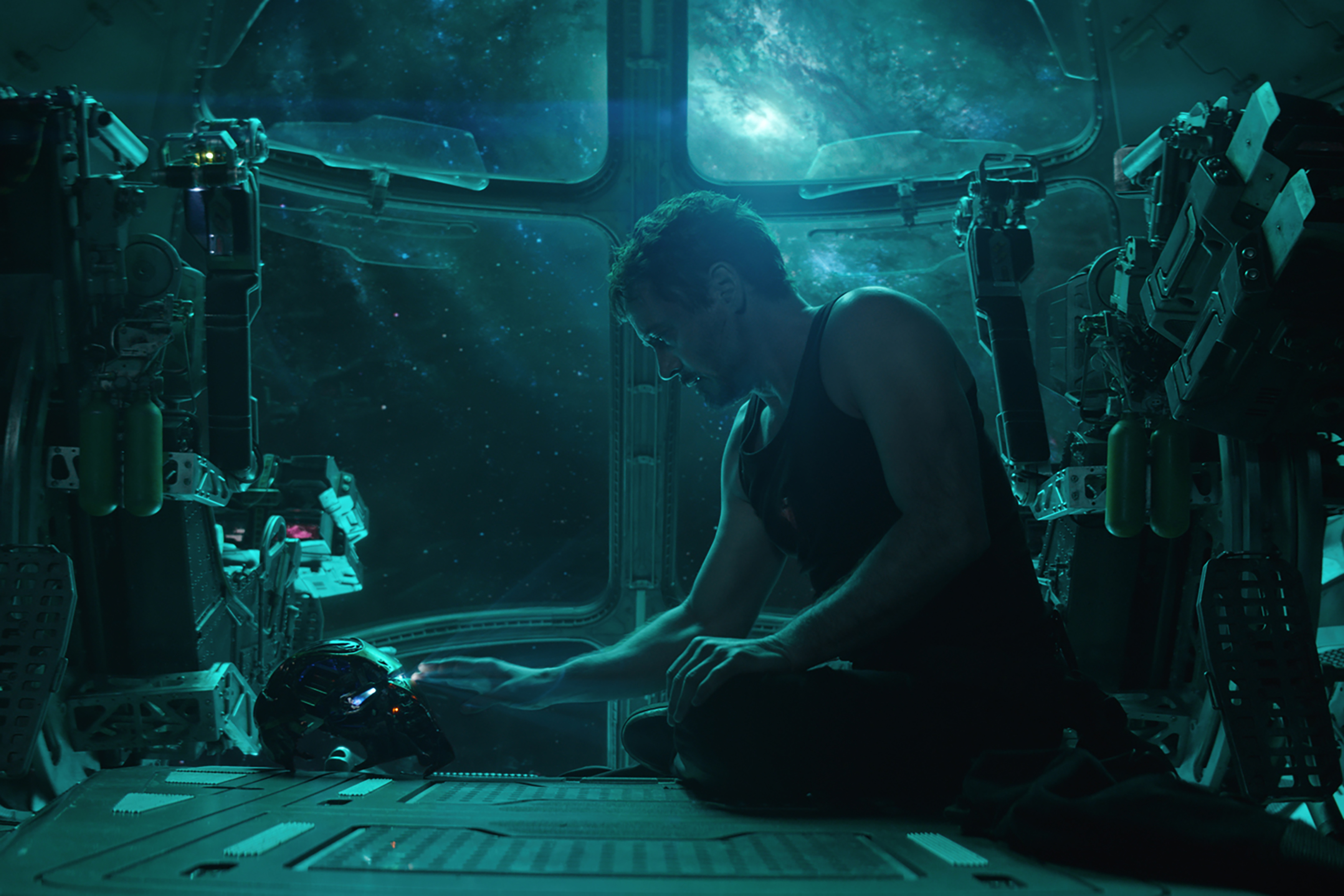
The Inevitable Epic: Avengers – Endgame 

null

“Though an epic send-off may have felt like a foregone conclusion Marvel Studio’s unprecedentedly long-running superhero saga, the mammoth achievement that’s ensued is certainly no casual fluke. Carefully calibrated to give each character and sub-plot their due while never short-changing its emotional content, Avengers: Endgame gives itself the licence of sizeable running time to tell a story that is part dirge, part mind-bending time travelling heist and part meditation on friendship and power. The cinematic landscape may have been changed by these colourfully-clad supermen and women in debatable ways, but the byzantine byways of its interconnected stories clicking so satisfyingly together is certainly no mean feat.”

Click here to read the full review

Note: Check out a more ambitious, expansive and crazier foray into superhero-media criticism in this article, which I was graciously invited to pen for Isles of the Left

The Vicious Familiar: Us 

Us

“More ambitious and tighter than his barnstorming Get Out in equal measure, Jordan Peele’s second stab at film-making may have some rips at its seams, but in the long run makes for a thrilling feature with something to say. Satisfyingly structured and laced with nuggets of ambiguity that will burrow through the brain, it’s offers a full-bodied experience of genre cinema that feels sorely needed in a landscape oversaturated with superheroes and remakes.”

Click here to read the full review

Third Time Bloody: John Wick: Chapter 3 – Parabellum

Keanu Reeves stars as 'John Wick' in JOHN WICK: CHAPTER 3 - PARABELLUM.

“Expanding on its world with a tightly-focused and clever simplicity that allows more than ample room for its trademark bloodbath-balletics to shine through, the third installment of the little action franchise that could continues to plough its way through the competition with violent, witty elan. A satisfying ride from start to finish, Reeves and Stahelski’s baby has grown up and taken the world by storm, while betraying zero signs of franchise fatigue so far.”

Click here to read the full review

Local Flavour: Limestone Cowboy

Limestone Cowboy

“Though lacking polish in certain areas and never quite managing to resist the temptation to stuff every frame with ‘local colour’, Limestone Cowboy remains an engaging and effective dramedy that successfully alchemises quirky Maltese mores into a feature of universal appeal.”

Click here to read the full review

Too Good For This World: Happy As Lazzaro

Happy As Lazzaro

“While offering an unflinching and deeply upsetting gaze into the unequal power structures of capitalism both past and present, Happy as Lazzaro also manages to be a rich and rewarding fable, limned with a magical glow that keeps cynicism and hopelessness at bay. Mixing in a team of first-time actors and non-professionals with established names, Alice Rohrwacher creates something of a minor miracle, which is likely to remain resonant for years to come.”

Click here to read the full review

***

Coming up: Reviews of Vox Lux (dir. Brady Corbet) and Beats (dir. Brian Welsh). Check out my Facebook, Twitter and Instagram avatars for updates on reviews and other projects


Malta Mediterranean Literature Festival 2018 |Literary Intersections at Fort Manoel

To say that I’m deeply honoured to have been invited to participate in the 13th edition of the Malta Mediterranean Literature Festival is something of an understatement. While I can’t claim to have attended every single edition of the event, organised by local literary NGO Inizjamed, with the help of a number of crucial satellite bodies and initiatives, I certainly have fond memories of it which go way back.

I’ve covered the festival for MaltaToday back when it was still the “day job”, and you can check out some interviews on that score here and here. As it happens, the festival had also hosted one of my favourite writers, Marina Warner, and her conversation with Prof Gloria Lauri-Lucente during the festival’s 2015 edition was sensitive and illuminating, so much so that I took to Soft Disturbances to muse about it.

It is a festival put together with care, taste and conscientiousness, bringing together as it does local and international writers while boasting an unwavering political commitment that feels particularly urgent at this point in time.

I also get the impression that meeting and hanging out with the eclectic mix of writers who form part of this year’s edition — and which hail from countries as varied as Turkey, Iraq, Iceland and beyond — will be rather fun indeed.

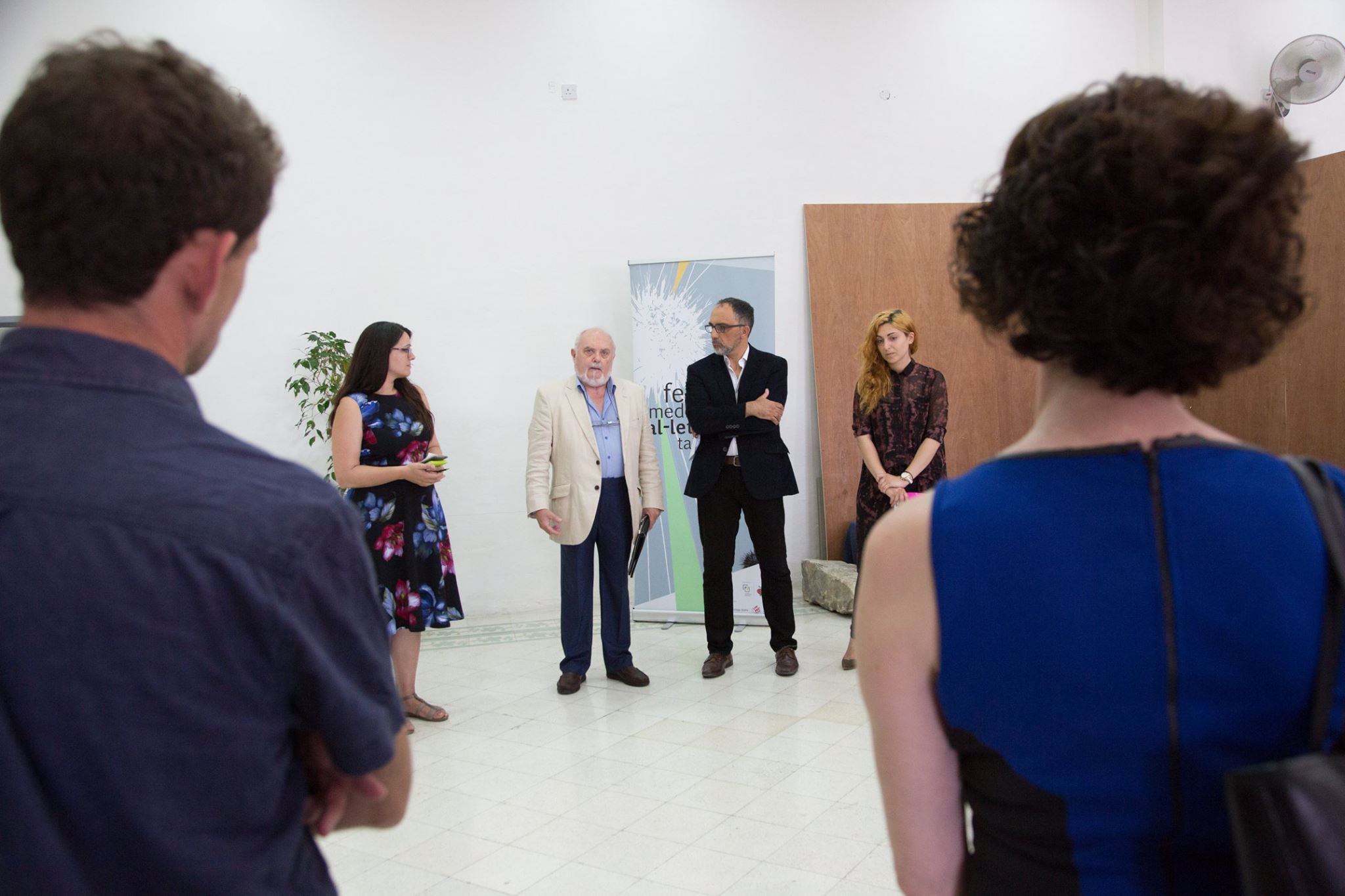
mmlf 2018 press conf

Press conference announcing the festival – Studio Solipsis, Rabat – July 11

This year’s edition of the festival will be taking place at Fort Manoel in Manoel Island, Gzira on August 23, 24 and 25. I am slated to present my work on the second night, and will also be participating in the following festival pre-events:

August 17 – ‘Building a Story‘ – Gozo (VENUE TBC) – 10:00 to 12:00

This presentation will use the Reljic’s recent work — both already-published and currently in progress — to explore how stories in different media can be constructed. Taking this proposition somewhat literally, Reljic will speak about how locating the right tools and devices for a given story helps to make the narrative more robust and coherent, and keeps writer’s block and other crises at bay.

Follow the event on Facebook

August 19 – ‘Losing my Space‘ – Malta Society of Arts, Valletta – 20:00 to 22:00

Moderator: Immanuel Mifsud
Participants: Roger West, Arjan Hut and Teodor Reljic

Nature has always been the focus of literature, a source of renewal, spiritual, pure. The relation of authors with nature has changed because our landscapes and seascapes have changed, but nature remains a source of inspiration and concern, a concern transfixed by agony. How does the lack of natural environment and open spaces translate to literature? How do we write trees and fields when trees and fields are no longer? How do we write the colour of the changing sea? Our space and light are being stolen by buildings that reach for the sky. How does literature deal with this daylight robbery? How does it document our struggle for space?

Follow the event on Facebook

*

The participating writers for this year’s edition of the festival are:

Juana Adcock (Mexico/UK) | Clare Azzopardi (Malta) | Massimo Barilla (Italy) | Asli Erdogan (Turkey) | Jean-Rémi Gandon (France) | Arjan Hut (Ljouwert, Netherlands) | Laia López Manrique (Spain) | Caldon Mercieca (Malta) | Teodor Reljić (Malta) | Philip Sciberras (Malta) | Sjón (Iceland) | Ali Thareb (Babel, Iraq)

For more information and the full programme, click here

Follow the event on Facebook