Hard-Won Agency: Hot Milk (Deborah Levy, 2016; Rebecca Lenkienwicz, 2025)

We all begin from a place of idiocy when tackling family trauma.

This is largely because very few of us can hit the ‘pause’ button on life and explore our damage at our leisure, taking our time with our healing journey and tending to each scar with the requisite care and tenderness.

Like death, trauma is one of the few instances of the ungraspable numinous we still encounter at an alarmingly regular rate in our otherwise secularised existence; it’s slippery and hard to categorise, and you cannot pin it down and name it like Adam was instructed to do when first placed on earth.

And even though we’re popularly guided to apply a cause-and-effect template to trauma (‘I am like this because X happened to me when I was young’), the ghostly after-effects will still linger, and will not be sucked into ectoplasm boxes any time soon. So we can’t analyse. We can’t sit down to calmly pore over things. Still babes in the woods. Still dumb to what came before and what will come next.

Which is why I appreciated Deborah Levy’s Hot Milk: a wry, caustic treatment of trauma and how it seeps down into a mother-daughter relationship, zooming in particularly at a volatile time in both Rose (mother) and Sofia’s (daughter) lives, during which they arguably attempt to undertake what I’ve described above: hitting pause on life so that Rose – but only Rose – may finally heal her ailment (inability to walk) for good.

***

The mixed reception to both the novel – I get a feeling that most people viewed its Booker Prize shortlisting as a perfunctory gesture, riding on Levy’s reputation – and now Rebecca Lenkienwicz’s film adaptation is likely down to a number of factors.

Characters rendered in oblique psychological brush strokes – at times incomplete at best, insufferable at worst. A loaded narrative proposition which never tips into melodrama but offers us little by way of conventional catharsis either. The dangling promise of a queer sub-plot which in the end makes no attempt to say anything politically significant about such an arrangement…

And so on.

I do agree that the novel is somewhat slight, and that other writers would have perhaps filled out the story with a more generous well-spring of empathy towards our characters, particularly the leading female triumvirate that leads the show: Sofia, Rose and Ingrid – the enigmatic, bandana-sporting seamstress who, in the film, appears to Sofia like valkyric vision: astride a horse on the hot Spanish beach: unlikely, unpredictable and ultimately, affected to a fault and hardly the safety raft Sofia needs. But we should all learn to take work on its own terms, and the gaps that both Levy and Lenkienwicz leave out are spaces where discomfort and tension is allowed to grow.

It’s the same tension that grows mushroom-like out of the idiocy of our own thwarted attempts at understanding just what’s wrong with us.

***

Rose has been paraplegic for as long as her aspiring anthropologist daughter can remember, and when we meet them they have temporarily relocated to Almería from London to pursue a last-ditch attempt at treating this ailment for good: enlisting the costly and unconventional services of Dr Gomez, whose methods have more in common with a version of talk therapy than anything resembling a hard medical approach.

Sofia is her mother’s keeper, and has been for a long time. (Her Greek father Christos is out the picture – having flown the coop back to Athens years ago; he now has a baby daughter by his “child bride”). She is prematurely bitter as a result, and her training as an anthropologist only serves to widen the scope of her pain. Crucially, however, this default mode – the paralysing cycle of familial duty and a stalled approach to her academic development – leads to no breakthroughs.

It’s a recipe for an endlessly deferred existence; a purgatory made even more deeply manifest by their stay at the scorching Spanish seaside. Because Rose isn’t keen on solutions either – Lenkienwicz adds a ghost of trauma to keep the clock ticking there too – and finds comfort in endless deferral.

Which is where the matter of tackling trauma by employing agency gets particularly tricky.

***

The most significant coup of the film adaptation is arguably its casting. For all that Emma Mackey supposedly came in late in the day – our screening in Malta was happily accompanied by a surprise Q&A from the film’s co-producer, Christine Langan, who revealed as much – there is something inevitable to the Sex Education star flexing her dramatic muscles here: effectively, she builds on the easy charm of that show by depicting another sensitive and intellectually curious young woman in, however, a far more sombre and mercurial key.

Fiona Shaw makes for an equally obvious fit for Rose: the veteran actress knows her way around that toxic mix of haughty entitlement and whiny dependence and understands that it’s part and parcel of how she wields her power over her daughter.

And I’d be hard-pressed to imagine anyone other than the prolific and dependably luminous Vicky Krieps in the role of Ingrid. Sofia is swept along, and so are we. At least we are at first, until her accumulated deceptions – and the underbelly which animates them – chip away at the implication that she is here to create a welcome oasis of bliss for Sofia.

On this subject, I also have a bone to pick with some of the ripples emerging from the critical consensus on the film, both in mainstream publications and online commentary, namely that Ingrid is yet another example of a ‘manic pixie dream girl’ trope.

In many ways, she is. And that is precisely the point. Ingrid is clearly someone who has internalised, and weaponised, her status as something that could be construed as a real-life manic pixie. But as the story progresses, we see that crumble right before our eyes, and we follow Sofia closely on that journey of realisation.

Like Rose, Ingrid shapes her entire identity around her inability to cope with the defining traumatic incident of her life. She knows it happened and what it implies, but she’s either unable or unwilling to process it, so she gilds and embellishes a persona out of the elisions and deviations she takes to avoid confronting things head on (her being a seamstress feels apt, here).

In the middle of it all is Sofia – whose coping mechanism is neither aggressive self-pity (Rose) or promiscuous hedonism (Ingrid) but repression. In this way, she becomes the perfect bedrock on which both Rose and Ingrid can vent their fears, desires and complaints, assuming that Sofia will stick around to absorb it all.

In fact, Sofia’s troubled and troubling pursuit of agency is the true ticking clock of the narrative, and it’s a strand that resonates deeply, particularly with those among us who have been forced to become parents to their own from a young age.

***

You could say that my parents were a mix of both Rose and Ingrid. Charmingly bohemian and easy to love among the social circle they frequented, they were also inept at managing their own emotional landscapes and taking the temperature of their kids’ true needs. Ridiculously young immigrant parents going at it alone with only nominal support (and at a long distance) from the extended family, and relying on badly-managed improv and reheated cliches to ensure we somehow stayed alive.

It’s no wonder that they took any complaint as an affront. That keeping the peace was top priority. We all took pride in not shouting, even if a good row would’ve released energy that would remain suppressed, set to do poisonous damage many years down the line.

Following a stroke, my mother was left in a coma for ten years; the stroke occurred just a few months before my own father suffered his first, which he survived, only to suffer a fatal one a decade and a bit later… largely the result of unheeded medical advice and the same, Rose-adjacent refusal to comprehend that eternal passivity and dependence on others cannot be a permanent life goal.

As such, I very much identify with Sofia’s default setting: keeping the peace by keeping mum. I felt the ripples of damage her repression causes, and I sympathised with her falling for Ingrid: this is an image of who you want to be – a free spirit; ironically, in my case, the same projection of bohemian freedom modelled by my parents in life.

Watching Hot Milk in 2025, after the fallout of losing both my parents, I’m beginning to understand why I’ve always been drawn to coming-of-age stories, of which this is a finely wrought and arthouse ready reminder (none of the tropey, self-help-booky Hollywood takes on that sub-genre here). I found kindred spirits in these retreating protagonists, but also the hope of some kind of release when they finally gain the confidence to break out of the vicious cycle which defines them.

In a weird way, this is aspirational fiction for me. And Sofia’s small wins – working up the courage to steal a fish from the market; liberating a noisy neighbours’ dog from its cruel confinement atop a sun-baked rooftop – feel as they are presented: welcome irruptions of healthy transgression, the promise that you can change things around.

That agency is more than just a myth.

Camilla & Castillo | Engaging with Clare Azzopardi

To say that my adoptive home country is going through some turbulent stuff right now would be the understatement of an already-overstated century, but that doesn’t mean that wallowing in the chaotic morass is in any way productive or desirable… addictive as it may be.

Irreconcilable paradoxes and hastily grasped-at truths and half-truths are often the hallmark of great fiction, for the very reason that they tend to bug and scare us most of the time. This is where writers (and artists of every ilk) can actually step in to do some undeniable Good Work that affects Society at Large. By giving these ambiguities a thorough airing, they can allow us to point at our condition and feel truly ‘seen’.

Clare Azzopardi‘s latest novel Castillo is many things, but at its root is a desire to express the ever-relevant – and now, sadly, even topical – helplessness we feel when faced with endemic corruption and apparently sanctified violence. Amanda Barbara seeks out her estranged mother following the death of the father who raised her, only to learn that the matriarch was errant as well as absent: almost off-hand, she confesses to committing two murders a couple of decades ago and feels not a little bit of guilt about her actions.

Castillo by Clare Azzopardi

The real twist in the tale in many ways is the involvement of Cathy ‘K.’ Penza, also recently deceased and by all accounts the ‘cool aunt’ figure for Amanda… not least thanks to her side-career as the celebrated writer behind the ‘Castillo’ crime novels, extracts from which Azzopardi regales us with in interspersed chapters that deftly and joyfully display a masterful grasp of cross-genre pastiche.

It’s not just because of the novels-within-a-novel device – though this may be the most explicit manifestation of this strand of Azzopardi’s many talents – but with Castillo, Clare Azzopardi once again proves herself as one of the most engaging and full-rounded authors in the local sphere.

A novel about gender, motherhood, the reverberating and unresolved echoes of political violence past, Castillo always remains very much a detective novel through and through, albeit one with a ‘twist’, relegating the conventional cloak-and-dagger and noir trappings to the embedded fictional detective, but leaving plenty of work for Amanda to do.

This, to my mind, is the true strength of Azzopardi’s novel: never once does she drop the ball, never once does she forget to do the necessary TLC that ensures this aesthetic cohesion that makes the novel such a solidly held-together experience. The ‘Castillo’ chapters aren’t just a clever garnish, they are firmly rooted to it all. The spectre of violence made manifest. If journalism is the first draft of history, the detective is its first archaeologist, digging up bones marked with streaks of fresh flesh.

Here’s hoping Castillo is translated thick, wide and fast.

***

Some shameless self-promotion now, though not unrelated to the author under discussion. Last year, we’ve had the privilege of adapting a short story by Clare Azzopardi into a short film, and we brought in a landmark work by Joseph Sheridan Le Fanu to help along.

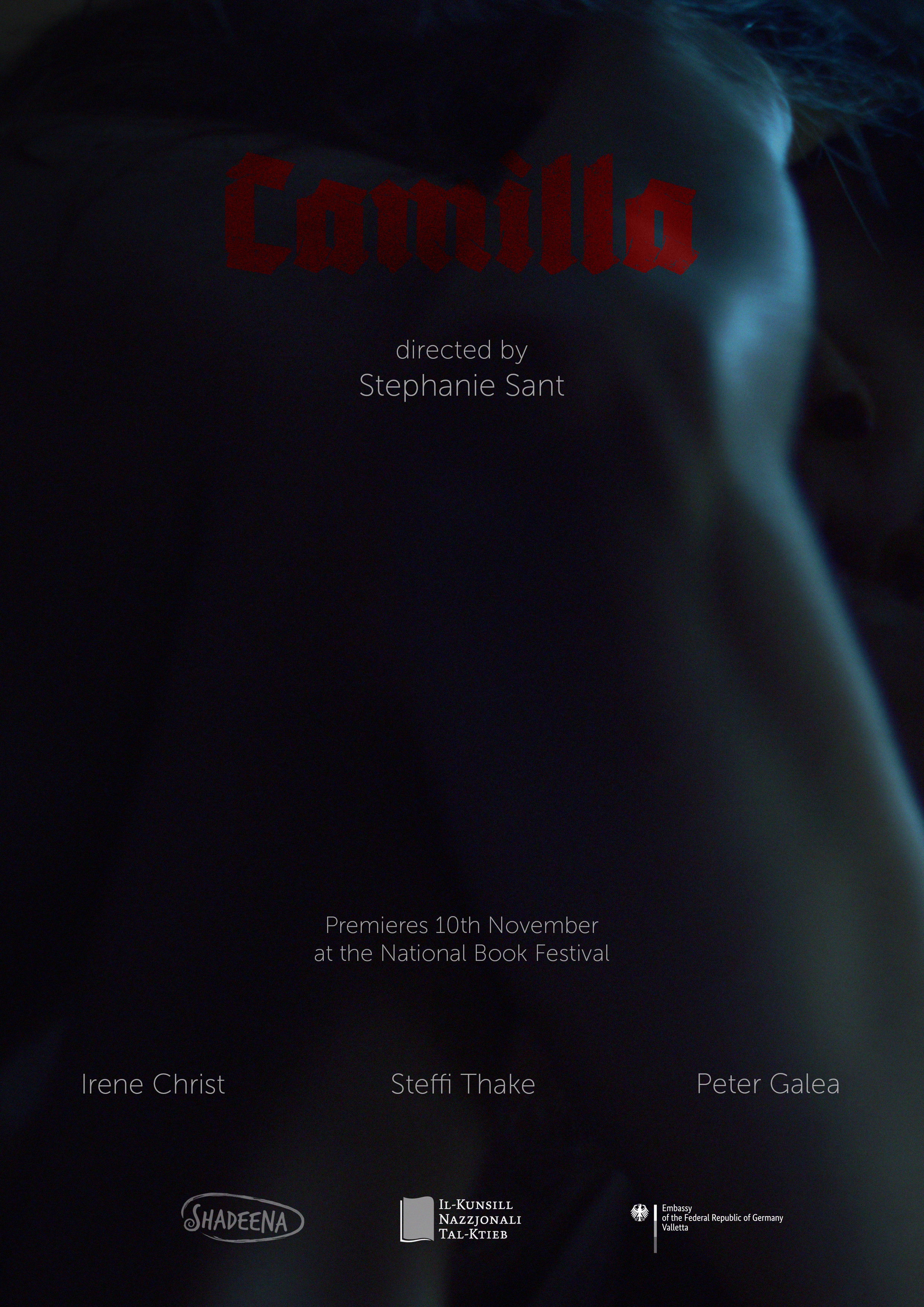
Camilla_Poster_004

Camilla‘ was co-written by its director Stephanie Sant and myself, produced by Martin Bonnici of Shadeena Entertainment and made possible thanks to the National Book Council (Malta), after it won its Short Film Contest in 2018. The source material is taken from Azzopardi’s award-winning, female-centered anthology Kulhadd Halla Isem Warajh, and in adapting the story I did a bit of archaeology of my own, calling up Laura from Le Fanu’s ‘Carmilla’ to serve as an audience stand-in and ultimately, protagonist, in the interest of keeping the enigma at the root of the titular character intact.

Both roles were played with sensitivity, grace and quiet potency by Steffi Thake and Irene Christ, and I couldn’t be happier with the end result.

‘Camilla’ is now free for all to see on YouTube, and I hope you enjoy it.

Updates | Camilla at Malta Comic Con & Losing [Our] Space on YouTube

My last update was about the Malta Mediterranean Literature Festival (MMLF), and this one is sort of about that too. We took a quick trip up to the in-laws soon after the event ended and got something of a breather from this stuffy, overcrowded and practically air-less island. It’s a trip that usually lasts quite a bit longer and is sometimes undertaken in different countries… whatever it takes to escape the July-August swelter of Malta.

The weather is still insufferable, the tourists and AirBnB-ers still crowd us and sometimes bar us from getting a proper night’s sleep, but on the whole — I say this with figurative fingers firmly crossed — it all seems to be thinning out, with the evenings even regaling us with the odd breeze to sleep through every now and then.

It’s a reminder that easier times should be just about ahead, and exciting ones too. It may be the flavour of pumpkin spice latte or crunchy leaves that announces the onset of Autumn pleasures to some… I’m just grateful for a mellowing out of the general atmosphere. But coupled with the fact that yes, Halloween (and horror) is also something I enjoy indulging in quite a bit, there’s very geeky pleasures to be had during autumn on our island too.

But, first things first

*

Losing My Space‘ – round-table discussion and MMLF pre-event – now on YouTube

Losing My Space Giola Cassar

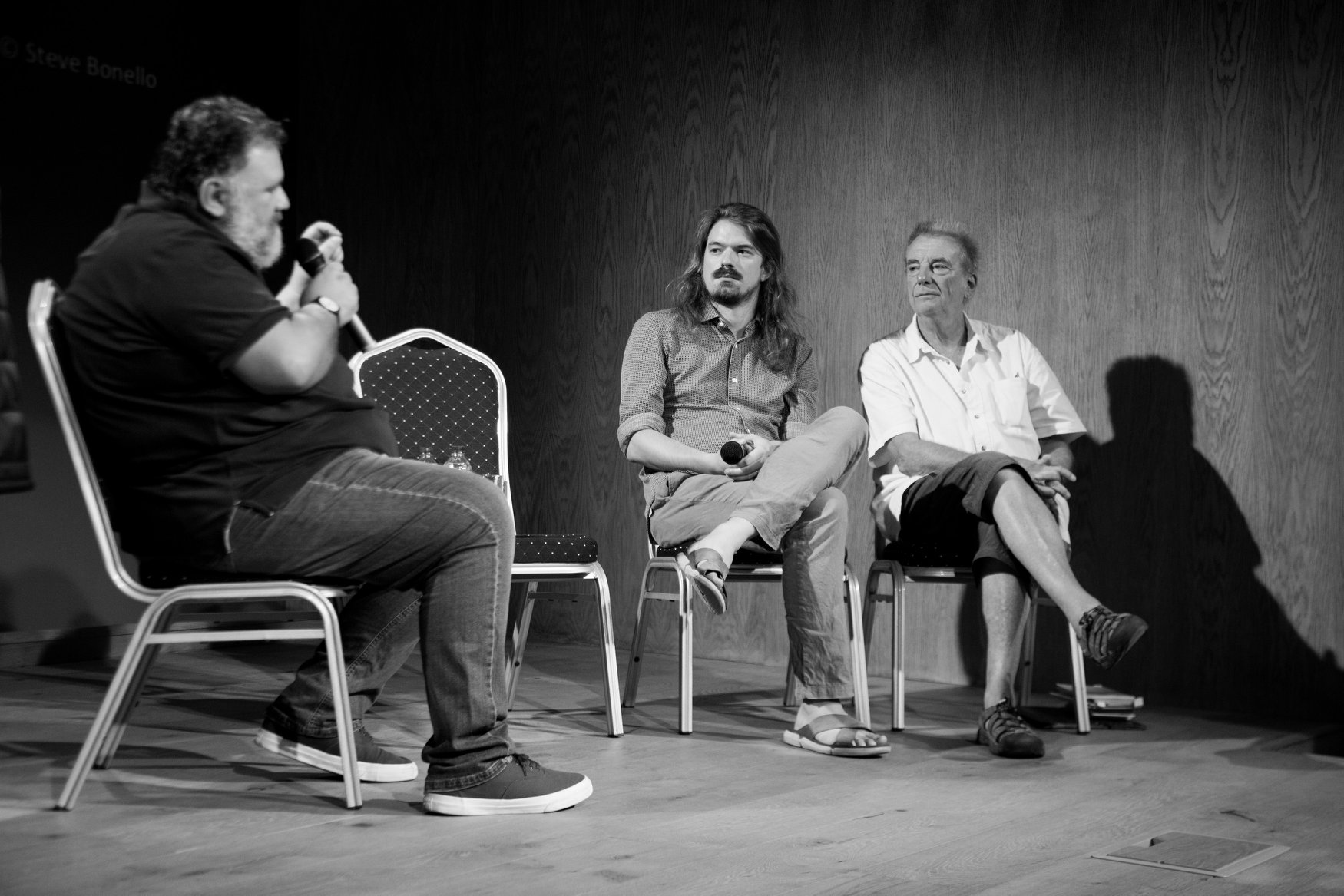
Losing My Space‘. Moderated by Immanuel Mifsud (far left) and featuring Teodor Reljic and Roger West. Photo by Giola Cassar for Inizjamed

Taking place on August 19, Losing My Space was a well-attended and well-received discussion on just what writing can possibly do in the face of pervasive environmental devastation and urban/corporate overdevlopment, and in a lot of ways ushered in the Festival itself, because the ensuing discussion — undertaken by poet Roger West and myself and moderated by established Maltese author Immanuel Mifsud — reflected both the festival’s artistic sensitivity and political urgency.

But the warmth and wit of the audience is also a bit part of that experience, and I thought it was reflected with an apposite grace here. Either way, you can now see for yourself on YouTube. Be sure to also check out the Festival’s other big — bigger, even — round-table pre-event, ‘Writing Fragile‘. Kudos to Inizjamed for being so efficient with putting these recordings up — it’s a great way to ensure both outreach and posterity as well as, once again, prolonging the wonderful experience at the heart of this event.

*

Creating the Maltese Gothic: ‘Camilla’ at Malta Comic Con

IMG_20180804_192349

Happily, one of my favourite annual appointments on the island will be just-about coinciding with Halloween this year, as the Malta Comic Con gets bumped up a month ahead of its usual December slot to take place on November 3 and 4 this year at the MFCC in Ta’ Qali.

Apart from sharing a table with my very talented sister-in-law (I’ll be the guy peddling prose books); I’ll also be delivering a talk on ‘Camilla’ with the project’s co-writer and director Stephanie Sant, on November 3 at 15:00.

This would be just a week or so shy of the short film’s official premiere at the Malta Book Festival on November 10. Find out more about the event here; and click here to learn more about the project — a work of Gothic horror that adapts a short story by one of Malta’s leading literary voices by injecting it with a bit of Sheridan Le Fanu.


Camilla Interview on the Times of Malta

Something really nice has happened this year. We get to make a stylish and LGBTIQ-friendly Maltese vampire film and screen it at one of the most long-standing and generously attended events of the local cultural calendar.

What I’m talking about is ‘Camilla‘, a project that just got some fresh media attention in the Times of Malta. It is also a project that blends one of the most exciting voices of Maltese literature with the legacy of Joseph Sheridan Le Fanu’s foundational text of vampire fiction, Carmilla.

‘Camilla’ is a short story written by Clare Azzopardi and forming part of her anthology Kulħadd Ħalla Isem Warajh — an award-winning collection released by Merlin Publishers in 2014.

It is the story of the enigmatic titular character, who has made a home in the bustling Maltese village of Naxxar — an Italian aristocrat of sorts (we suspect), spurned by a lover and left to write beautiful epitaphs for the local dead.

Capture

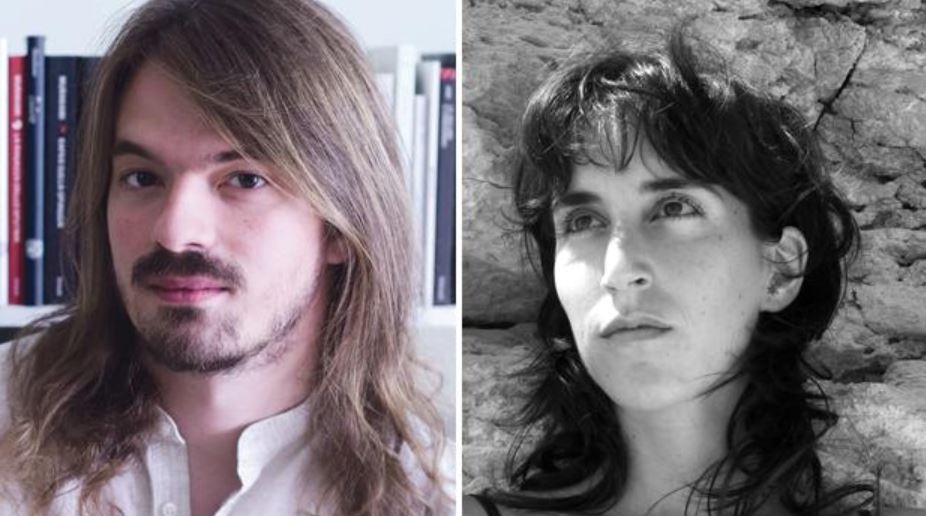
Stephanie Sant (right, in case you were wondering) and myself chat to the Times of Malta about ‘Camilla’ — along with our producer Martin Bonnici. Click here to read the interview.

My good friend and collaborator Martin Bonnici first approached me about adapting a short story for the purposes of entering into an annual contest put up by the National Book Council. Co-writer Stephanie Sant came on board soon enough, along with the rest of the team at Shadeena and a number of cool collaborators. Actresses Irene Christ and Steffi Thake got on board too, and we managed to score the funds on our second try.

Filming starts in a couple of weeks’ time, and I can’t be more excited to see the outcome, while wishing Stephanie and co. the best of luck as they amble around the locations for a rapid-fire shoot under the scorching early-August sun.

Meanwhile, Stephanie, Martin and myself have been interviewed by Stephanie Fsadni over at the Times of Malta on the project, so hop on over there to get the full lowdown on how it all happened and how we’re approaching it.

‘Camilla’ is made possible with the help of the National Book Council (Malta), and is produced by Shadeena Entertainment. It will be screened on November 10 at the Mediterranean Conference Centre, Valletta as part of this year’s edition of the Malta Book Festival