Perfunctory Epic: The Rings of Power, Season 2 (Amazon Prime)

DISCLAIMER: Here be spoilers.

Like most nerds of my generation – lapsed or otherwise and to varying degrees of commitment and intensity – I cling hard to the pure memories of my earliest viewings of Peter Jackson’s The Lord of the Rings trilogy.

While the books weren’t childhood favourites – I was knee-deep in Marvel comics up until my early teens – I did bone up on them while the films were still in the early stages of pre-production, goaded on by another close friend who would move back to Canada with his family before we would get a chance to see them in the Maltese cinemas together.

But there were other friends who would’ve filled the gap in the meantime, some of whom I was, by this point, playing Dungeons and Dragons with.

So in my mind, this period now forms a mash-up of time where a store of fantasy imagery was taking root in my ‘mind palace’, which would serve as a source of comfort and self-identification for years to come… in many ways it still serves that function to this very day, albeit in somewhat altered form.

I’m thinking about all of this after finally having caught up with the second season of The Rings of Power – Amazon Prime’s bid to secure their own Game of Thrones franchise by pre-committing to five seasons of the thing and even launching a reserve long-form adaptation in the form of The Wheel of Time should this one go bust.

Charlie Vickers as Sauron and Charles Edwards as Celebrimbor

This cynicism seeps through the operation and, unfortunately, I feel it’s particularly evident in this second season, which toggles in a perfunctory fashion from one of the many sub-plots to another, the only real connective tissue being the long-game machinations of Sauron (Charlie Vickers): here a svelte Machiavellian figure whose Season One disguise as sea-faring lone wolf ‘Halbrand’ pulled the wool under the eyes of none other than Galadriel (Morfydd Clark) herself.

(In Halbrand-mode, he could’ve easily fronted one of those neo-Britpop acts… there’s something disarming in the image of Galadriel bopping to Kasabian.)

The thing is, I was quite chill about The Rings of Power when it first appeared. Unlike many others, apparently, I was willing to give Season One a chance, with its slow burn and trickle of ‘new’ characters and fill-in-the-blanks exercises riffing on the sketches of lore the showrunners and their writers had to work with.

It felt, at the very least, the start of something that could grow into an organic story with its own heartbeat… and Galadriel-as-fundamentalist struck me as a bold-enough narrative choice which, I suspected, would yield some interesting detours further down the pike.

But, hand on heart, I can’t quite say that the second season is exactly rewarding my investment on this front. Where we previously had a gorgeously photographed and put together spark of potential, now we have that, only with the potential snuffed out in favour of a flattening and overstretched story that is really just a set of fan-fictiony vignettes ticking off boxes, all scattered across disparate geographical locations on Tolkien’s famously vast and detailed map of Middle Earth.

It’s yet another reminder of how the magic we associate with fantasy literature in particular – that thrill of immersion all too often written off as simply ‘escapist’ – has very little to do with by-the-numbers tropes and settings and everything to with an innate poetry that speaks to a wider yearning.

The yearning for a world which is more mysterious and more alive, where traveling means discovery, danger and difference and where transcendence can be mapped out and understood but never replicated in rote human terms.

But replication is so ingrained in pop culture now. In a sense, it is its only real faith. The belief that for something to work – for something to even be conceived – it needs to have worked before, and on a massive scale.

Rory Kinnear as Tom Bombadil

You can of course imagine that such an approach doesn’t do too well when attempting the kind of fay whimsy that is very much part of Tolkien’s fictional universe, no matter what the more macho strands of the fandom would have you believe.

It’s why the sequences with not-(yet)Gandalf and his duo of not-Hobbit buddies are the dullest in the show, and why Rory Kinnear’s Tom Bombadil, while certainly a welcome presence on screen after being infamously excised from the Jackson trilogy, feels just like another placeholder mentor figure – a wizard whose only USP is a higher quotient of chill than his counterparts – instead of a baffling and refreshingly unexplained spirit of sylvan inevitability.

Perhaps this is why The Rings of Power is at its best when zooming in on still-human-shaped Sauron and his horrifically ingenious acts of arts-and-crafts based gaslighting. Let’s face it, it’s the all-too-human cruelties on lurid display that helped Game of Thrones nab a healthy swathe of the non-nerd audience, because this is stuff that soap operas are made of and as long as we want power, sex and exist among people who desire the same, the electric charge of it will never cease to appeal.

So it’s clear that the showrunners are confident in their abilities to tighten the noose around poor Celebrimbor(Charles Edwards)’s neck, as Sauron – disguised as the outwardly benign jewellery savant Annatar – makes good on his moniker as the Great Deceiver, and how.

For all that the show is littered with instances of orcs, giant spiders and other gory creatures whose mere presence is meant to trigger our gag reflex, none of them can hold a candle to the gross yet precise – precisely so gross because it’s so precise – way in which Sauron ingratiates himself into Celebrimbor’s workshop (really, the seat of this craftsman-monarch’s very kingdom). I don’t remember feeling this disgusted by a TV character since the John Paul (aka ‘The Prick’) from the first season of Bad Sisters.

Leon Wadham as Kemen

This is just about the only instance of genuine emotional frisson we’re allowed to feel during the season, where we’re allowed to wince and hiss at displays of moral callousness because how else are we gonna react? Same goes Kemen (Leon Wadham), the PG-13 Joffrey of the show: nepo-baby son to the scheming aspirant to the Númenórean throne and the custodian of the most smoothly slappable faces this side of Westernesse. (Thankfully, it’s a face that *does* get slapped once or twice already, though we’re meant to understand that his true comeuppance is yet to come and given how padded out the show is, this’ll be a case of delayed gratification for the Ages).

But there’s an elevated flip-side to all this. Namely, that Celebrimbor’s rise and fall constitutes a decent stab at a Greek-style tragedy. But this is the kind of stuff we’ve internalised a long time ago and now keep regurgitating with ease… and arguably, the real lasting value of Tolkien’s work lies in how he decided to side-step the otherwise ubiquitous Hellenic legacy in favour of the knottier and gnarlier brambles of Beowulf and the Norse Sagas.

Of course, you can never go home. (This is true of the denizens of Eregion in more ways than one, after Sauron’s done with them). Nobody’s asking a new show to try and rekindle the same magic we felt when we first read The Lord of the Rings or watched the Peter Jackson adaptations. (And if they are, they really should reconsider what they expect from their pop culture artifacts.)

My suggestion? Pick up The King of Elfland’s Daughter by Lord Dunsany. It’s a good deal shorter than both The Lord of the Rings – slimmer than any of its three books, actually – and you’ll likely work through it even quicker than you would sitting through this latest season of That Second Age Show.

It’s the kind of book that Tom Bombadil would’ve written, because Bombadil understands the world and its denizens better than they understand themselves, and can sing a story that still remains a song.

Book Reviews | Ancient Gods, Fallen Angels and Other Dissolute Beings Awaiting the End of the World

I’ve stopped logging my reading into Goodreads, mainly because I felt it was gamifying the experience for me far too much, and this really not the kind of headspace I want to be in when considering what I Wish to Read, what I’m Currently Reading and what I’ve just Finished Reading.

IMG_20190303_170633.jpg

As with most pseudo-social and insidiously easy-to-use interfaces, the Goodreads model only appears to respect the fluid ebb and flow that characterises the reading experience for most people. But in actual fact, asking us to list and show off our reading is just another way of adding undue pressure and exhibitionism over something that should be experienced in the deep inner recesses of our mind.

So rather than ‘clocking in’ – an even better term than logging in, I think, implying an employee-like schedule/adherence to the gods of social media – I thought I’d chat a little bit about some of the books I’ve recently enjoyed, in a way that’s hopefully more germane to the intuitive and flowing pleasure that reading them implies.

Mythos by Stephen Fry

Screenshot (3 Mar 2019 17_33_51)

Perhaps opting to go for the audio route with this one was the best decision I could possibly make, as Stephen Fry’s self-narrated jaunt across the annals of Greek mythology is delivered in the lilting, bordering-on-placid notes that make him such a becalming yet enriching presence for many.

As regards the content itself, the tales are of course unbeatable in their timelessness, though Fry’s expansive approach is friendly and accessible, even if it risks ending up on the wrong side of avuncluar some of the time.

Much has been made of Mythos being published roughly around the same time as Neil Gaiman’s Norse Mythology, and the comparison illustrates precisely what I mean: where Gaiman retells key episodes from Nordic myth in lean, seductive cuts of self-contained story, Fry plays the encyclopedic know-it-all card. Not content to simply give us the stories, he will emphasise the linguistic and cultural strands that characterise the gods and personages that populate the myths.

It makes for a far ‘baggier’ affair than what Gaiman has to offer in his shoring up of the deities from up north, but it’s no less entertaining for it, and Fry made for an amiable companion during my self-administered work commute.

A History of Heavy Metal by Andrew O’Neill

IMG_20190303_170646

While I did not go for the audiobook route when it came to this hilarious and unputdownable trip across a music genre that defined me as a young man (it was a chance find at a local bookstore — quite rare, given that Malta is rapidly becoming swallowed up by a giant chain on that front), O’Neill’s voice quickly burrowed its way into my brain.

Unapologetically subjective (“Whitesnake can fuck off”) and in no way a conventionally authoritative, sober historical tome, it nonetheless reads like an impassioned and thoroughly lived-in love letter to an expansive, beguiling and often problematic musical genre whose intensity is often impossible to recapture in any other medium.

And that’s just it: a sober analysis would not have passed muster — it would have failed to capture the knotted, abrasive wall of sound that characterises that amorphous term, ‘metal’*. O’Neill is our man for the job. A black magic-practicing stand-up comedian who is also the vocalist and guitarist for the Victorian-themed hardcore punk band The Men That Will Not Be Blamed for Nothing. Can you really think of anyone else able to take up that mantle with the requisite amount of jagged style and grace?

The book made me ‘LOL irl’ in a way that only the likes of Terry Pratchett have done for me in the past, and it was also a contributing factor to me saying ‘fuck yeah!’ when a couple of friends suggested we go see Slayer in Glasgow on a month’s notice. Never underestimate the power of literature to influence impressionable young minds, folks.

Lucifer: Princeps by Peter Grey

IMG_20190303_170719

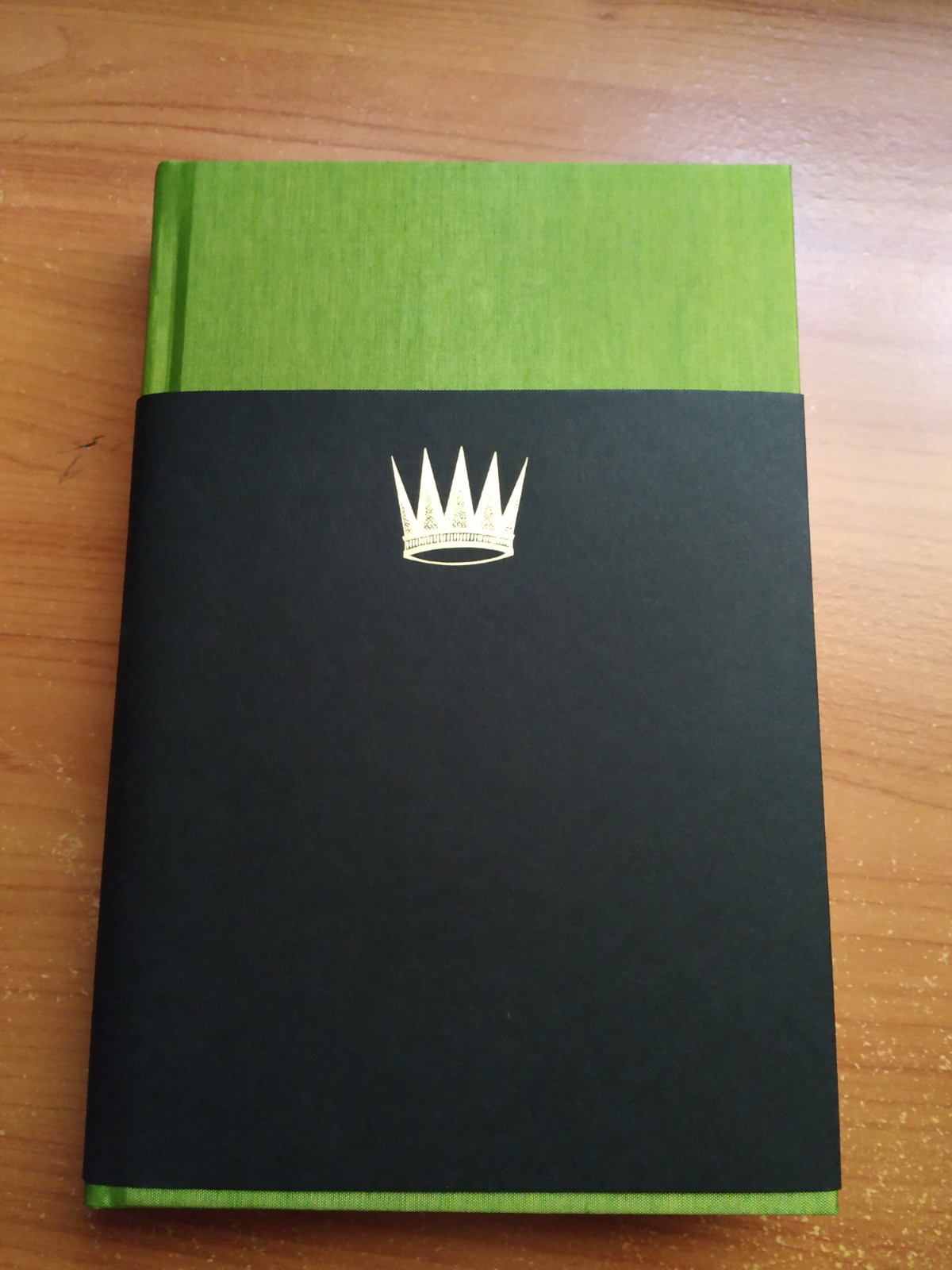
While Lucifer may feature heavily in all things (or at least, most things) metal, Peter Grey’s careful and thorough exploration of the evolution of the figure we’ve come to know as Lucifer sternly discourages any such shallow appropriation. Published in a gorgeous edition from Scarlet Imprint (which Grey runs with his partner Alkistis Dimech), Lucifer: Princeps is a beguiling and not-easy read, cleaving close to Biblical sources in an attempt to closely trace the most significant instances of the Lucifer figure, in what also serves as a preamble volume for Grey’s upcoming, Lucifer: Praxis.

With scholarly precision and an impatience for romanticised reimaginings of Lucifer and all he stands for, neither is Grey dismissive of the figure he considers to be the repository of Western witchcraft. Instead, as he writes in the introductory chapter (aptly titled ‘A History of Error), “My aim is to be effective in sorcery, rather than be ensorcelled”.

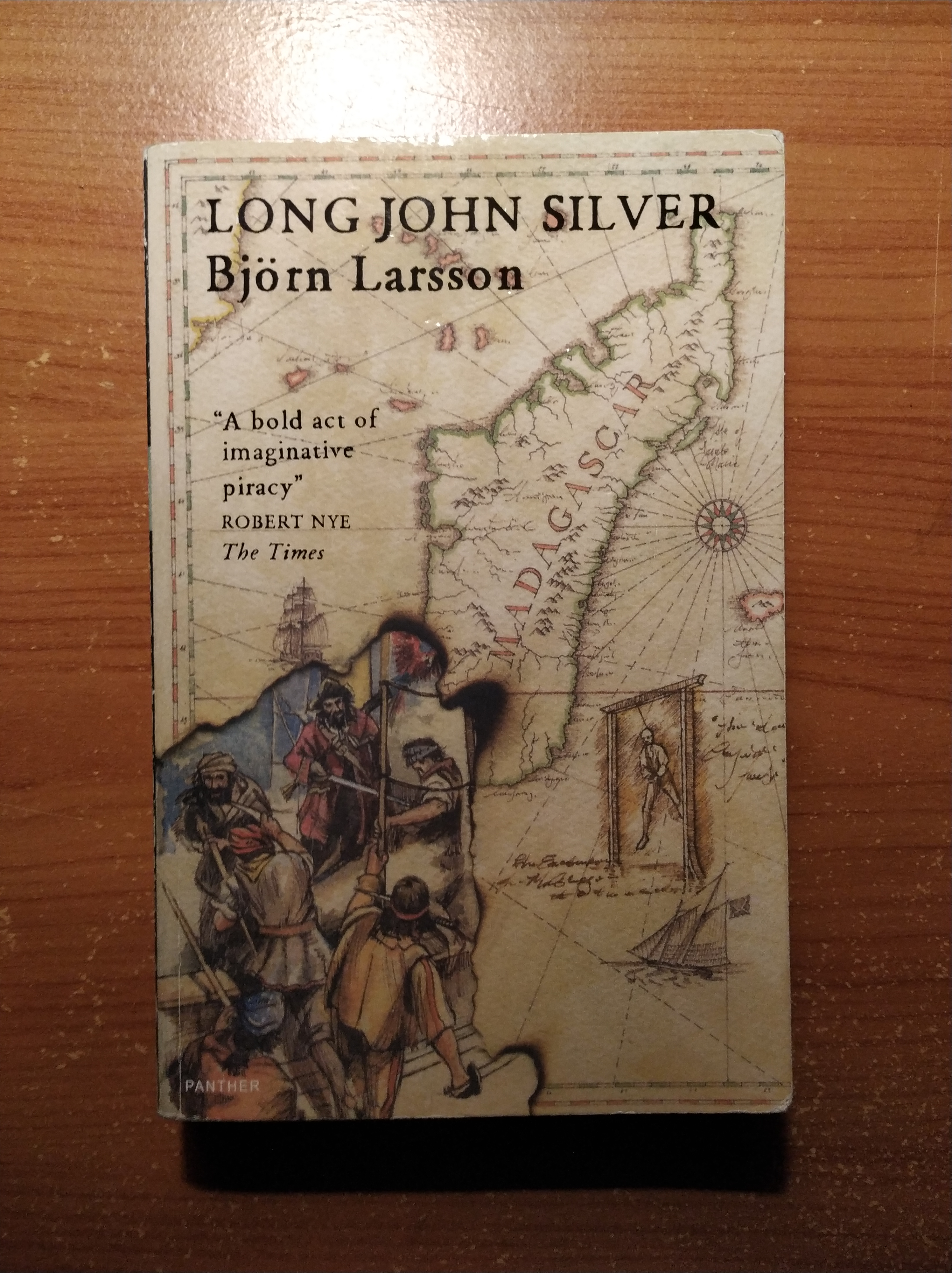
Long John Silver by Björn Larsson

long john use this

A life of itinerant freedom has always held a fascination for me, mainly because it represented a brighter flip-side to the many limitations otherwise imposed on a former ‘third country national’ such as myself. So of course, I will be magnetically drawn towards pirate narratives, and Larsson’s novel, which I found in a gorgeous bookstore in Rome after having Googled it as Black Sails withdrawal kicked in, provided that… and more.

Indeed, this novel may have been published in the early nineties, but its gritty revisionism is closer to the spirit of something like Black Sails — and the plethora of unapologetically violent anti-hero narratives that populate the crates of contemporary ‘prestige TV’ — while also using a seductive first-person narration to draw us into the story of Long John Silver, both before and after the events of Treasure Island.

In fact, the true genius of Larsson’s book is not its apt emulation of old-school adventure literature, and neither is it his evocative and often disturbing ‘maturation’ of the same (the slave ship segments don’t make for an easy read, for one thing, but this only helps Silver rise in our estimation: he is a no-bullshit narrator, at the very least). It is that Larsson’s Silver plays the same trick he played on young Jim Hawkins. He gets you on his side.

The Cabin at the End of the World by Paul Tremblay

IMG_20190303_170706

Ever since his twisty, layered, rich and creepily satisfying fourth novel A Head Full of Ghosts, Paul Tremblay has been on top of the list of writers to read for horror fans of all stripes, down from little old me and up to the likes of Stephen King himself.

The Cabin at the End of the World strips down his approach from the formally ambitious acrobatics of ‘Ghosts’ and is even more close-hewn and minimal than its immediate predecessor, The Disappearance at Devil’s Creek (which shows up in a sneaky cameo, an Easter Egg for true Tremblay fans).

Telling the increasingly harrowing story of a small family whose vacation at a remote rural cabin is cut short by a group of seemingly ‘well-meaning’ cultists, Tremblay’s latest initially reads like a screenplay, with his present-tense sentences flitting perspective from one character to another while maintaining a fluid third-person narration throughout.

It’s a shrewd formal choice that fits both the apocalyptic ticking clock that characterises the story — a looming axe that’s about to drop  (or is it?) — that generates both basic suspense while providing a rich fount of thematically-relevant ambiguity. But what really impressed me is that in the end, it actually feels less like a film than a harrowing stage play: something Sarah Kane or Philip Ridley could have written.

The limited setting and cast of characters makes it so: there’s something classically Greek about how this all pans out — all in real time, and forcing us to ask hard questions to ourselves, and our culture at large.

***

If you enjoyed these mini book reviews, please consider buying my own novel, Two. It’s a coming-of-age story set in Malta that blends realism and fantasy, and it has been described as “dreamy, and poetic and often exquisite“. Find out more about it here.

***

*Though I humbly put forward the ‘Thor vs Surtur‘ scene at the beginning of Thor: Ragnarok (2017), set to Led Zeppelin’s ‘Immigrant Song’, as a pretty apposite distillation of what metal at its best should be all about.