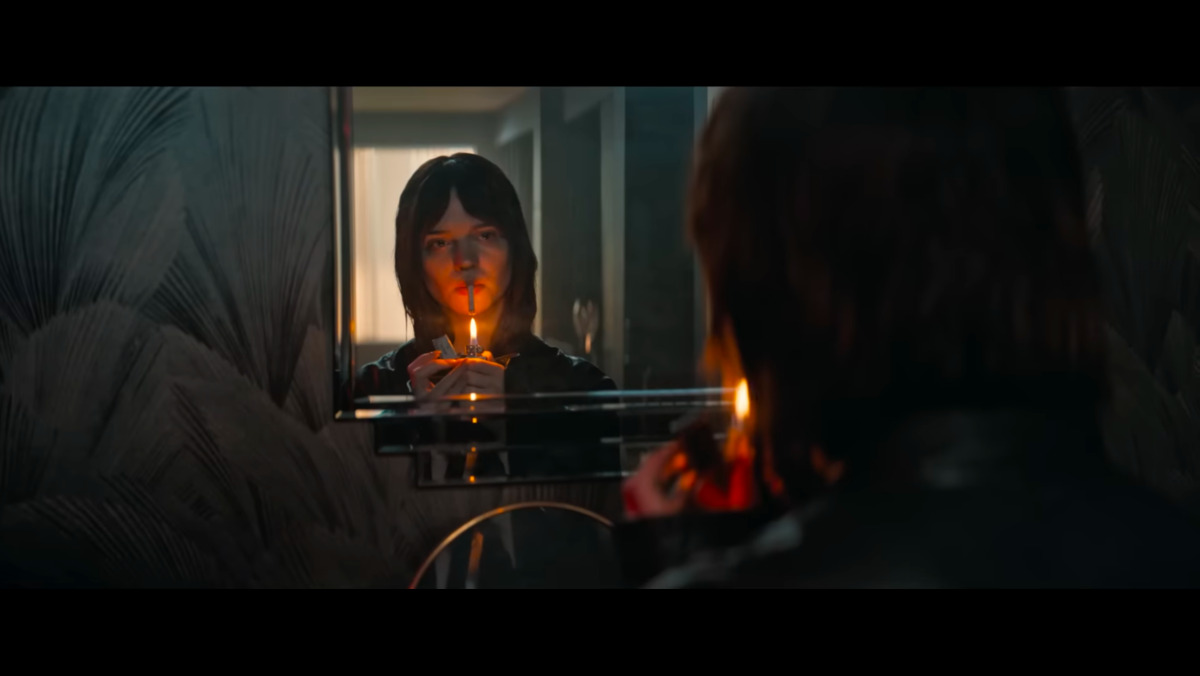
The real pleasure of Nicolas Winding Refn’s work for me lies in the mere spectacle of watching someone go for broke so beautifully.
And it’s no accident that we’re talking about someone who literally lived out that metaphor: we owe the Pusher sequels to him going into debt and desperately having to recoup expenses.
Her Private Hell was hated by plenty for all the obvious and usual reasons: it is indulgent, the dialogue is stilted to the point of being laughable, the plot is paper-thin and largely incoherent, and its melange of genres and aesthetics is pitched as primarily fetishistic, rather than being narratively functional in any way.
And he’s been mocked by even one of my favourite film critics for saying that this is a film that AI could never make, particularly when the result is something so easily mockable so as to be equally easy to dismiss outright, to the point that you’d take any slop over what ‘NWR’ is offering this time around.
But it is this very brazenness that runs counter to the algorithm. The deliberate evasion of what constitutes ‘good’ and ‘proper’ taste; of what counts as sleek and digestible storytelling, is in itself a statement these days. Taken as such, it sounds like damning with faint praise. You could just as easily say that Chuck Norris movies from the ’80s are more worthwhile cultural experience because you can luxuriate in the hints of film grain that still mark their analog nature; away from green-screens and excessively focus-grouped approaches.
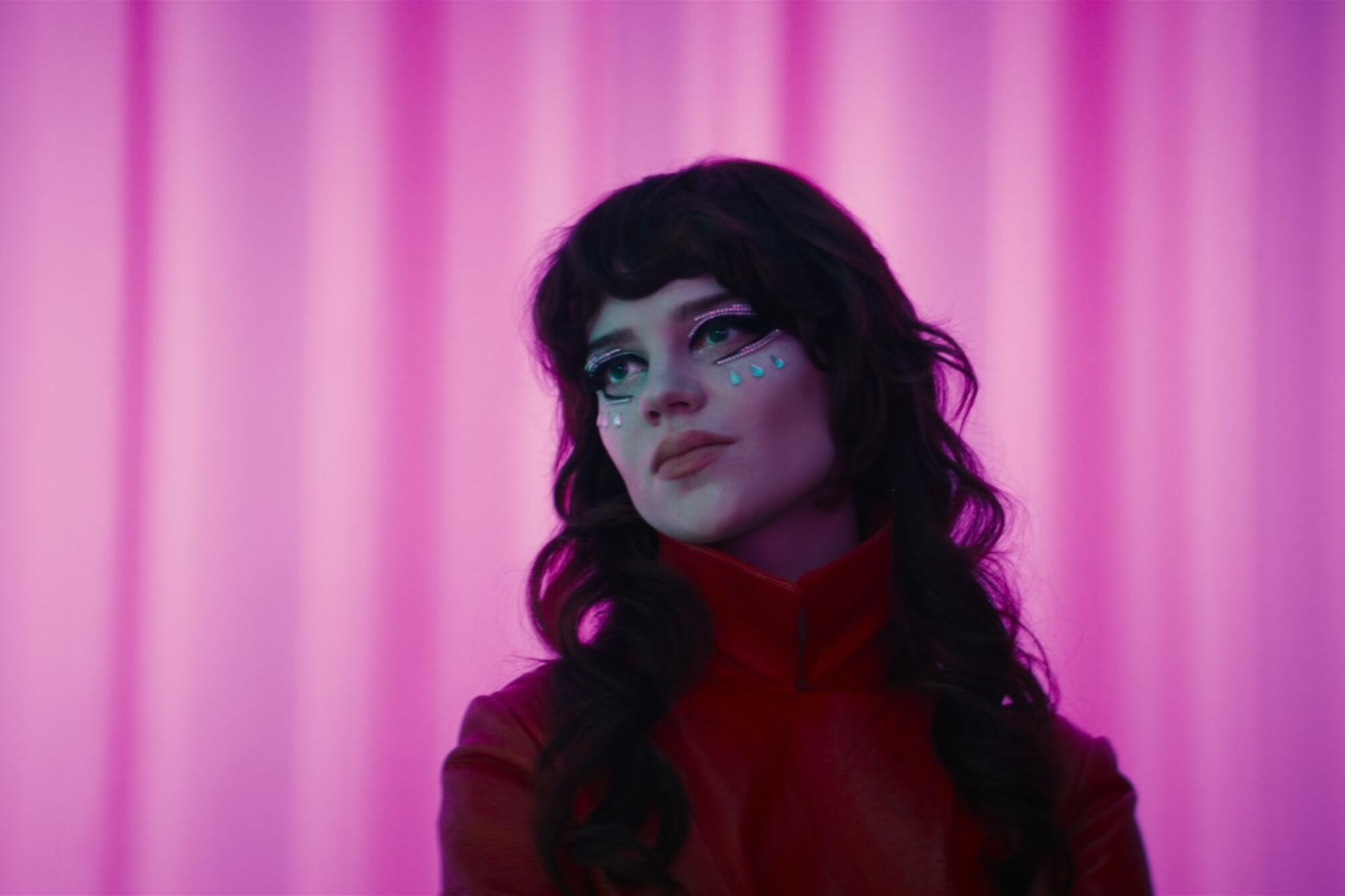
What really makes Refn’s ‘late’ period so intoxicating, though, is that he exists in a plane that is merely a single swerve away from just that kind of homogenisation. The naked artificiality of Her Private Hell, compounded further by a setting that skates across sci-fi dystopia, post-war Japan and an actual alien planet on a set that may or may not have merged with the core ‘reality’ of the film anyway, in some ways makes it vulnerable to the kind of digital copy-paste experiences we’ve been trained to see as not only normal, but even entirely acceptable by the Marvel Cinematic Universe-induced status quo.
And in some ways, we could argue that Refn had at least partly succumbed to the lure of the mainstream midway through his career, when Drive truly announced this Danish auteur to the world, and gifted him with a Hollywood leading man collaborator in Ryan Gosling, who would bravely and gamely play against the expectations set up in the previous film in the subsequent Only God Forgives; an anti-hero’s journey if there ever was one.
That Refn didn’t simply coast along with the low-hanging fruit that was doubtlessly offered to him after Drive will scan as regrettable to those who appreciated the marriage of his stylistic excesses with the tight plotting offered by that film’s source material, and a script by the reliable Iranian-British journeyman Hossein Amini.
But do we really want to live like this?
Do we really want to measure out our filmgoing and film-watching experiences as if we’re counting calories, ensuring a correct ratio of one element to another, and scoffing through any idea of excess?
Naturally, we are all moved by some ingrained and often shadowy forces within us that dictate our priorities. There’s probably good evolutionary reasons for why we value ‘substance’ over ‘style’, but there’s also a thrill in stepping outside of that binary and seeing what else is out there.

Her Private Hell positions three of the most striking humans in Hollywood right now – Sophie Thatcher, Havana Rose Liu and Charles Melton – into a freewheeling world that exists as a dream dictated by someone who loves the outer reaches of genre cinema, and who is using the financial goodwill he has accumulated not to merely replicate what works, but to open up further reaches inspired by those weird subconscious wrigglings that were likely responsible for the original genre mainstays that have now become staid.
Rather than being incoherent, its plot is as porous as its characters, and their apparent archetypal flatness exists for us to have as transportive an experience as viewers as they do, navigating this misted land in search of loved ones and in fear of a boogeyman whose wrath, alas, may offer the kind of contradictory delights that Jane Schoenbrun also gave voice to in the equally unapologetic exploration of the dark libidinal pull of genre cinema, Teenage Sex and Death at Camp Miasma.
My own shadowy forces led me to take pen to paper the morning after I sat down to finally watch Her Private Hell. Because the film reminded me that all art is ultimately porous and that any categories are assigned after the fact.
If NWR is willing to be embarrassed by desire, what’s stopping the rest of us nobodies?