Jane Schoenbrun’s debut novel Public Access Afterworld felt, strangely, like the most mainstream experience of their work so far to me, largely because while the content of the story is as mind- and world-bending as ever, the style with which it’s delivered is slick and straightforward; redolent of a page-turning thriller.
It reminded me of Catherynne M. Valente’s bit of of advice for writers keen to delve into experimental work (delivered in Jeff VanderMeer’s Wonderbook): “My rule of thumb is that given Plot, Structure, and Style, one of them has to tap out and play for Team Mundane”.
Which is to say that the 600-page tome is probably about as close as we’re going to get to a bona fide Schoenbrun blockbuster, and it was hardly surprising to learn that it began life as an attempt at a TV series.
Public Access Afterworld is populated by a rag-tag gathering of inter-generational outcasts thrown into a struggle between super-rich tech bros and the chthonic force that lies at the root of all television entertainment. It’s a time-hopping mammoth; jumping from the present day down to the 80s and even post-war America, but with crucial interludes happening during 2009: a year which Schoebrun seems to suggest marks a clear demarcation point between the time we coexisted with technology in a hybrid partnership, and our complete surrender to the digital.
Despite its bulk, the novel is actually a pretty breezy, action-packed work that in some ways feels like a gleeful, joyously expanded treatment for a TV series… as it turns out it in fact very much is. Schoenbrun may still occupy a fringe space in contemporary pop-culture (even if they’ve now pulled Gillian Anderson into a co-starring role in their latest feature film), but I’d imagine they’re also highly conversant and agile in movie-pitch speak and habits: the art of slicing and dicing a story to fit a digestible format is a skill that any filmmaker must at least learn to navigate, even if they may refuse to imbibe and internalise it entirely.
The story is kaleidoscopic and Schoenbrun’s depiction of what counts as reality is fluid and sinuous as ever, but its method of delivery is unabashedly propulsive.
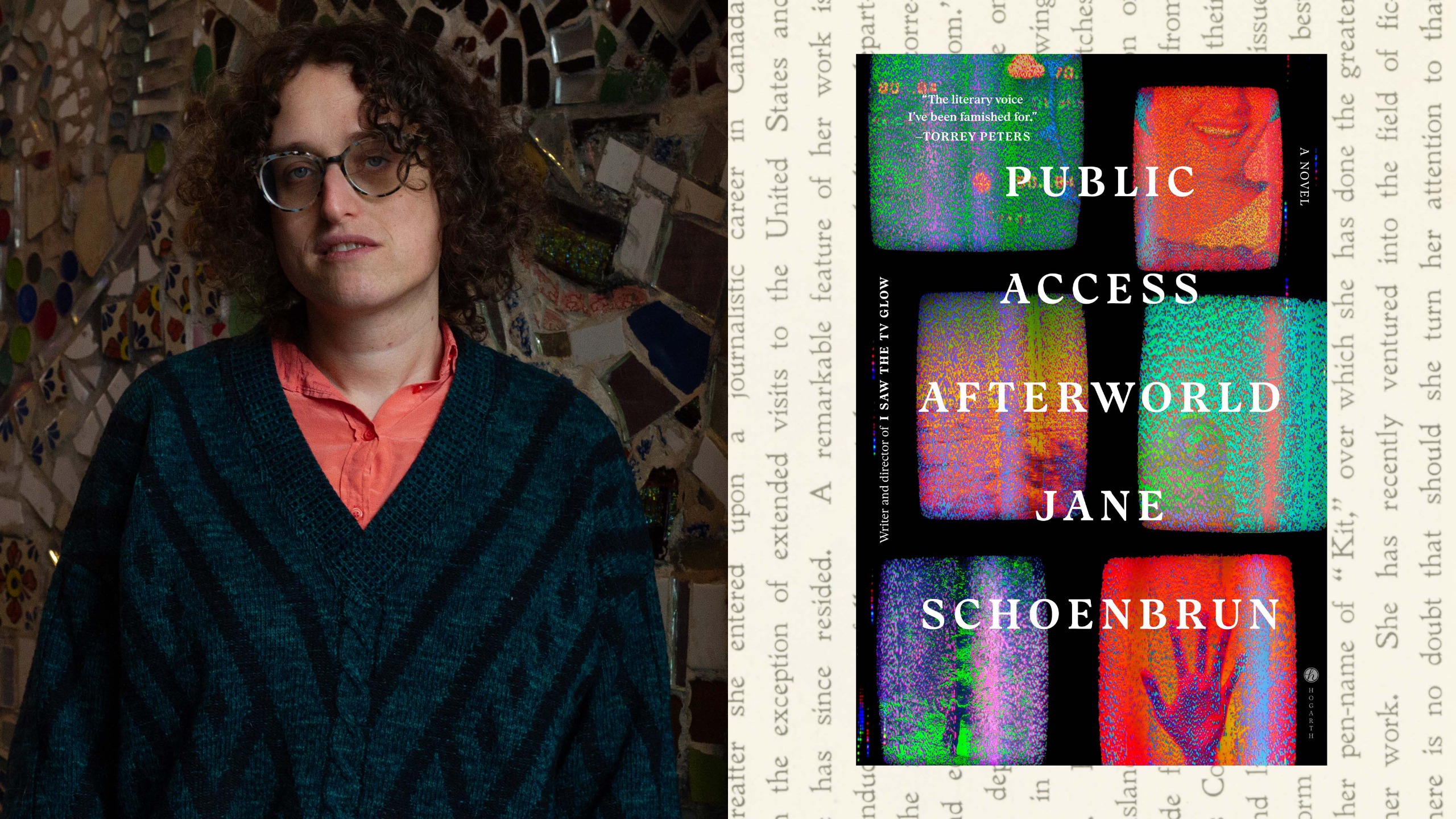
One wonders what this would look like as a TV or film series, but the more you read the closer you’re likely to come to the realisation that this has already happened in your head: Schoenburn has succeeded in capturing overstimulated overwhelm that such media inspires in us, and they’ve done it by tapping into the most analog of storytelling platforms they’ve attempted so far.
Because as I tried to tell them in a nervous, mumbled and rambling observation during a Q&A session following a screening of I Saw the TV Glow, their films tend to be magic spells brought to life: their disparate elements – of media collage, of the sheer strangeness of their story elements and construction – standing in for the rabbit’s foot and eye of newt a witch would otherwise throw in a bubbling cauldron.
In many ways, Schoenbrun is the first, and likely unwitting and accidental, prophet of the millennial generation: we who saw the seams rippling through the world, where the media in which we gazed for entertainment and guidance tore itself apart and spawned something entirely new, and all the more engulfing.
And while their films make for rooted-and-rooting rituals to activate our imagination into that long-neglected queer space, where we see the media landscape for the hypnotic yet viscous, fluid source of enchantment, escape and domination, Public Access Afterworld runs off into wider vistas with nary an apology or pause for breath.
Like a shark. Like Jaws. The first proper blockbuster, in the way we understand them to be now.
And it’s not over yet. More books are coming. Because they can’t help but do otherwise.

