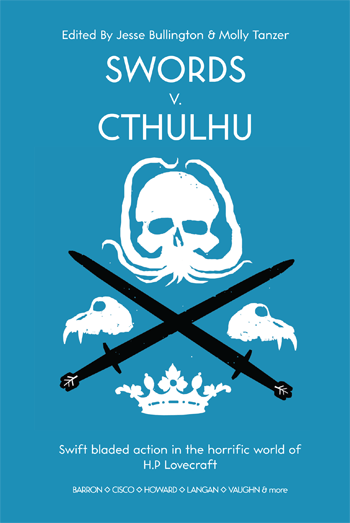
As outlined in an earlier post, in the coming weeks I will be dedicating an entry to each story in the upcoming anthology Swords v Cthulhu, edited by Molly Tanzer and Jesse Bullington and published by Stone Skin Press. My reviewing method will be peppered with the cultural associations that each of these stories inspire. These will be presented with no excuse, apology or editorial justification.
The Lady of Shalott by Carrie Vaughn
For obvious reasons, this particular story folds in very nicely with my approach to Tanzer and Bullington’s anthology, what with it singnaling a literary antecedent in its very title.
The Lady of Shalott was always something of a frustrating poem to me, for the reasons those of you familiar with it might imagine; namely, Lancelot’s shockingly dismissive final glance at the titular — and cursed — protagonist:
She has a lovely face;
God in his mercy gave her grace,
The Lady of Shalott
But like a lot of Tennyson’s work, the poem holds an irresistible charm, and I don’t think it’s accidental that genre writers and genre fans in particular continue to latch onto his brand of grandiose aestheticism.
Inflected as it is with the same Victorian mores and neuroses that continue to foment shows like Penny Dreadful, the finely sculpted drama of a lot of his work speaks to an archetypal space that – being Victorian and not, say, from Ancient Greece – also feels strangely close to our own world in its anxiety about ‘modernity’ and its desire to find pure, cloistered spaces where precious and beautiful things can flourish.
“I Am Half-Sick of Shadows”, Said The Lady of Shalott by John Willam Waterhouse
Well, what Vaughn does is lift a giant, eldritch and bloody middle finger to all of that, and in ways that are entirely justified — and also, it must be said, all the more entertaining for it — she makes us feel ashamed for indulging in the kind of unreconstructed misogyny and jingoism that unfortunately forms the backbone of a lot of the work of the Victorian era.
But first, she immerses us into the world of the doomed Lady of Shalott with a thorough care for the artificial universe she is encased in. Her enclosure is her curse, but there is a great dignity in her work too. She weaves her loom with the kind of dedication that any self-respecting artist would apply to their life’s work. This is a silent, private dignity that the vainglorious Lancelots of this world cannot begin to understand.
As Vaughn moves to deliver the story to its conclusion, we dread the activation of the curse, but we also know it to be inevitable. Only… this time around, it won’t be just the Lady of Shalott that pays the price for Lancelot’s pursuit of spoils and glory.
In a Lovecraftian universe, that’s about as comforting as things get.
As outlined in an earlier post, in the coming weeks I will be dedicating an entry to each story in the upcoming anthology Swords v Cthulhu, edited by Molly Tanzer and Jesse Bullington and published by Stone Skin Press. My reviewing method will be peppered with the cultural associations that each of these stories inspire. These will be presented with no excuse, apology or editorial justification.
‘Non Omnis Moriar (Not All Of Me Will Die): A Sequel to H.P. Lovecraft’s The Very Old Folk’ by Michael Cisco
What makes Michael Cisco an interesting writer is his insane imagination. I’ve yet to encounter a contemporary author who can construct stranger props and plots, and who commits to the weirdness of his worlds with such febrile intensity.
But what makes him a great writer is his ability to do this while maintaining a clinically precise literary style. The end result often ends up being deliciously jarring, as the strange events and characters that populate his stories and novels are delivered to us in the most sober language possible. Imagine if your best friend sidles up to you at a cafe one day, vomits a goblin baby into your glass, and when you look up to him with a shocked expression on your face, he or she darts back with, “So?”
Alas, it’s the latter that’s more in evidence with this particular story, which continues where H.P. Lovecraft’s ‘The Very Old Folk’ left off to present us with something in the vein of the ‘lost Roman legion’ sub-genre.
But given the expected and obvious connection to Lovecraft – a writer Cisco has plenty of time for, even as a literary critic – as well as Cisco’s own vaunted position in the field of weird fiction, the strangeness, comparatively minimal as it may be, is both strong and lingering.
Starting off with an evocative description of a missing body – without any gore, Cisco immediately creates unease through the corpse’s absence – the story proceeds by pitting our stolid and otherwise entirely rational protagonists into an increasingly strange landscape. With supreme confidence, Cisco ensures that it’s the final sentences of the story that deliver their Lovecraftian punch.
What it reminds me of
The ‘lost legion’ genre is of course the obvious signpost here, though I’m not sure how exactly Lovecraft and Cisco’s own boys tally historically with perennial legends such as the Spanish Ninth Legion.
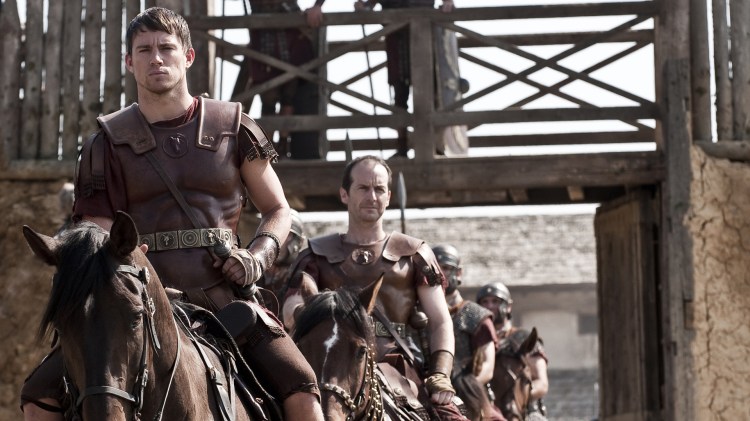
Channing Tatum and Denis O’Hare in The Eagle (2011)
It’s somewhat unfortunate that my most recent memory of these films is marred by the Channing Tatum-starring The Eagle: a yawn-inducing attempt at capturing the broad appeal of something like Gladiator that fell straight on its face.
But more felicitous associations aren’t too far behind, as the pulpy and unambitious Centurion– from the dependable Neil Marshall and starring the as-yet untested Michael Fassbender – plays on the same theme with far more violent aplomb.
Michael Fassbender and Olga Kurylenko in Centurion (2010)
And a particular scene – I won’t give more away – actually brought to mind one of my favourite films of all time, Nicolas Winding Refn’s Valhalla Rising: the sublime terror of surrendering to an ‘alien’ people in this final scene.
When Molly Tanzer, author of fun books likeVermilion and The Pleasure Merchant, asked me to review Swords v Cthulhu, the upcoming anthology she’s put together with Jesse Bullington, I was more than happy to do so… given that the book, released in July, has been on my to-buy list more or less since it was first announced.
Apart from being an avid fan of Tanzer’s fiction, I was also charmed by Bullington’s earlier anthology, Letters to Lovecraft — also released from Stone Skin Press, who with the ‘Swords’ anthology continue playing on a motif begun with their successful 2012 release, Shotguns v Cthulhu.
But because I know there’s lots of fun to be had when Tanzer and Bullington, shameless pastiche artists both, are given full reign over a project, I decided to go about my own review in the same spirit of referential collage.
So in the coming days, weeks, months — however long it takes for this project to unspool, anyway — I will be dedicating a post to each story. But apart from dedicating a couple of paragraphs to the analysis of each piece, I will also give full vent to the cultural free-association that they inspire: be it other prose, films, art or music. You may, if you wish, think of it as an exercise of ‘The Ecstasy of Influence‘.
We will begin with Michael Cisco’s chilly and precise ‘Non Omnis Moriar (Not All Of Me Will Die): A Sequel to H.P. Lovecraft’s The Very Old Folk‘. Stay tuned.
The fight of the century? Hardly. Loving Batfleck’s chunky digs though.
Batman v Superman: Dawn of Justice was, to my eyes, clumsy and misguidedly grandiloquent as its chunky title would suggest. And while there’s no love lost between me and Zack Snyder – much to his pained consternation, I’m sure – I didn’t go into the film as a hater, and wanted to enjoy it as, at least, the kind of omnishambles mess of the Jupiter Ascending ilk.
Alas, the film was a plethora of missed opportunities for fun and games because it was clearly all about setting up a future franchise to compete with Marvel’s already far-advanced “shared universe”, and while the film got a lot of flack for being joyless due to Snyder’s continued efforts to ape Christopher Nolan’s billions-raking reinvention of Batman, I think the real reason it felt bereft of the adrenaline jolt of pulpy fun was that it wasn’t in fact allowed to be pulp because it needed to do double-duty in setting up DC’s response to the Marvel behemoth, asap.
Gerður Kristný • Photo by Þórdís Ágústsdóttir
Gerður Kristný told me quite a few interesting things, but perhaps the most striking are the following:
“The original meaning of the word stupid (‘heimskur’) in Icelandic refers to the one that is always at home (‘heim’). People believed it would bring wisdom to leave your island and travel. We still believe so.”
“Coming from a country not many people know gives you opportunity to reinvent yourself, make up stories about yourself and your country.”
There was also some stuff about the Icelandic landscape and the island’s much vaunted literary culture – and what I loved is that no bubbles were burst in my conception of what looks to be a truly magical place, which I hope I’ll get to visit some day soon.
Colin Clive, Elsa Lanchester, Boris Karloff and Ernest Thesinger in Bride of Frankenstein (dir. James Whale)
“The only woman’s body I had studied, with ever-increasing apprehension, was the lame body of my mother, and I had felt pressed, threatened by that image, and still feared that it would suddenly impose itself on mine. That day, instead, I saw clearly the mothers of the old neighborhood. They were nervous, they were acquiescent. They were silent, with tight lips and stooping shoulders, or they yelled terrible insults at the children who harassed them. Extremely thin, with hollow eyes and cheeks, or with broad behinds, swollen ankles, heavy chests, they lugged shopping bags and small children who clung to their skirts and wanted to be picked up. And, good God, they were ten, at most twenty years older than me. Yet they appeared to have lost those feminine qualities that were so important to us girls and that we accentuated with clothes, with makeup. They had been consumed by the bodies of husbands, fathers, brothers, whom they ultimately came to resemble, because of their labors or the arrival of old age, of illness. When did that transformation begin? With housework? With pregnancies? With beatings? Would Lila be misshapen like Nunzia? Would Fernando leap from her delicate face, would her elegant walk become Rino’s, legs wide, arms pushed out by his chest? And would my body, too, one day be ruined by the emergence of not only my mother’s body, but my father’s? And would all that I was learning at school dissolve, would the neighborhood prevail again, the cadences, the manners, everything be confounded in a black mire, Anaximander and my father, Folgore and Don Achille, valences and the ponds, aorists, Hesiod, and the insolent vulgar language of the Solaras, as, over the millenniums, had happened to the chaotic, debased city itself?” – Elena Ferrante (trans. Ann Goldstein)
Having slogged three years to write a debut novel – that’s really a novella – I’m finding myself more and more drawn to collaboration as a default mode of planning for and engaging in future projects.
It’s partly to do with wanting a fresh start – Two was revelatory and educational to write, but also a fearful trudge with no apparent end in sight (personal matters which coloured the narrative itself, and others that didn’t, further cast a shadow on the experience).
But it’s also simply down to that alchemy of opportunity and the desire to experiment with different forms. As is the same with most of my generational colleagues – I suppose – experiencing fiction was always a multi-media experience for me: what with cartoons, comics, video games, cinema and literature usually existing side-by-side, and even more so now that ‘media convergence’ is such a blatant aspect of everyday life that even the term itself sounds redundant.
A comic book project of mine is currently on the rocks, but some TV/film based stuff might just take off. Either way, the process of creation for each of these things was markedly different to what I experienced with the novel.
Brewing largely in my head throughout its three-year conception period, Two was as obstinate and unwieldy a draft of novel that you can imagine – perhaps more true than ever in this case, with a parallel narrative structure defining its contours.
The new projects, on the other hand, are being put together in an atmosphere of constant dialogue – quite literally, plot points and character beats are drafted in conversation (with a whiteboard and marker never too far behind).
I’m finding it to be a great way of busting out of the warrens of endless possibility on the one hand, crippling self-doubt on the other, which tend to characterise the pitfalls of writing prose fiction from scratch. Collaboration both gets you out of your own head to enjoy some fresh air, and forces you to ‘make your case’ to another person at every turn.
Discovering the joys of structure mechanisms for storytelling is also something of a revolution for me. Again, like most people I know – or know of – I was initially sceptical of applying any form of overt structure to any piece of fiction I write a priori. For the usual reasons, of course: takes the fun out of it, ruins spontaneity, etc. Breaking out of that prejudice and exploring these options is proving to be far more liberating that I’d previously thought. But that’s something I’d like to talk about further in a future blog.
French president François Hollande characterised the November 13 Paris attacks as an ‘act of war’
“The war is up there on the island, where we’re going to meet it, but there’s no war there, nor could there be. War is dreamlike, but war IS a dream… Where is the war? In the guns and helmets and uniforms? Is it in the rock from which the ore to make the gun was mined, the grass that fed the sheep whose wool went into the uniform, or the sun that lights the battlefield? Not impossible to escape but it tethers as unsubstantially, as lightly, as a dream, the odds binding me inside. I go on with it; I’m not bound like a prisoner, but like a sleeper. Two men meet, and one will give his life for the other, or they will each try to kill the other, while the day is still blandly unfolding around them. The violence I’ve already seen has been as random and abrupt as a dream, always ending in death that seems only to become more and more impossible. I always know that I’m no more than one sharp breath from waking. It’s a breath I can never manage.” – Michael Cisco
Marina Warner in conversation with Gloria Lauri-Lucente, Valletta, 29 August 2015. Photo by Virginia Monteforte
One of my most eagerly anticipated events of the year is the Malta Mediterranean Literature Festival – a multilingual gathering of authors and poets set up by the Inizjamed literary NGO, which has been steadily growing in stature over the past few years, boasting an admirable array of foreign guests on its CV while allowing local authors to showcase their work on equal footing.
Thanks to the efforts of lecturer, poet and Inizjamed head honcho Adrian Grima and his many collaborators – not least the helping hand of various local institutions – the festival is a balm against parochialism in the local sphere, as it accommodates not only the (often self-crowed) local contingent, and neither is it limited to ‘special guests’ from the expected English-speaking regions. Rather, and true to its name, it’s a refreshing gathering of writerly talents from all over the Mediterranean.
But at the risk of being criminally reductive to this year’s line-up – which included among its ranks the Booker shortlisted Libyan novelist Hisham Matar and the rousing Palestinian Egyptian poet Tamim Barghouti – I have to confess that the main attraction for me was the participation of Marina Warner – author and mythographer extraordinaire, and a consistent intellectual inspiration for me over the past few years.
Warner’s presence certainly felt like the cherry on the Festival’s cake, and having a writer of this stature on board this time around was certainly apt, given that this year also marks its tenth anniversary.
But Warner would have been a good fit for the festival either way. Though ostensibly British, the former academic, fiction writer and myth-and-fairy tale authority boasts Italian family connections, and a childhood spent in Cairo. Her recent book Stranger Magic is a study of The Thousand and One Nights, and the author doesn’t shy away from addressing the cosmopolitan sweep of the snowballing, multifaceted and latterly controversial collection of folktales of the ‘Orient’.
And in her conversation with Deputy Dean of the Faculty of Arts, University of Malta Prof. Gloria Lauri Lucente – which capped off this year’s edition of the Festival – Warner’s sensitivity to the various cultural networks found within the Mediterranean was fully borne out. But more than anything else, it was a pleasure to witness these two great women discuss both the universal and the personal as it pertains to Warner’s work – from the enduring global appeal of fairy tales, to Warner’s upcoming short story collection Fly Away Home, which taps into her experience of growing up in Cairo.
Once again showcasing her organic, interdisciplinary grasp on cultural studies, when asked why fairy tales continue to fascinate us, Warner went for a musical metaphor.
“I like to think of fairy tales as a tune,” she told Lucente. “You know the tune, I know the tune – we remember it, we can play it – it isn’t confined.” Fairy tales, Warner went on to say, suggest a kind of “lingua franca” for yearning and inquiry. “And stories are vessels for very difficult inquiries.”
Just as Stranger Magic was a sensible and considered riposte to Edward Said’s monumental critical characterization of ‘Orientalism’ – an articulation of how exoticised Western projections of the ‘East’ and the ‘Orient’ serve to facilitate cultural dominance – so Warner encourages us to not dismiss the significance of fairy tales simply because the bulk of them offer seemingly pat endings whose function is to ‘console’.
For in offering alternatives and pathways for the imagination, fairy tales can be emancipatory. In terms of their phenomenological dimension – and while stressing that she doesn’t encourage total escapism and delusion and that she remains an adherent of the Enlightenment project – Warner reminds us that, “the mind’s eye that imagines a mermaid on the shore, and that simply witnesses, and then remembers, a fisherman catching dolphin fish, is the same place.”
Marina Warner reads from ‘Fly Away Home’. Valletta, 29 August 2015. Photo by Virginia Monteforte
A discussion on the rift between fiction and non-fiction was another topic – also poignantly tackled by Barghouti on the first night of the festival – which allowed Warner to point out how, far from serving as a distraction from social and political strife, fiction can provide an additional leeway for discourse, especially in countries where those freedoms are otherwise suppressed.
“People are now using novels to do all sorts of things. There is censorship in so many places in the world, that fiction offers some sort of shelter.” But fiction has yet another, more subtle advantage.
“With fiction, unlike in essays, you don’t have to ‘make up your own mind’. And I do find it much more satisfying.”
But as if to illustrate Hisham Matar’s point on the previous night – that while our freedom to reinvent our cultural, social and professional identities in the modern world is a great thing, we shouldn’t forget that we remain privy to historical currents beyond our control – Warner was candid about a key motivation for her wide-ranging work.
Unlike, say, Hisham Matar himself – whose father was abducted by the Libyan regime and whose ultimate fate remains a mystery to the author and his family – Warner’s upbringing remained relatively comfortable.
“I came from a background of petite bourgeois colonialists,” she told Lucente to disarming laughter. “So I always felt like I had to make some kind of reckoning. And this has been my spur.”
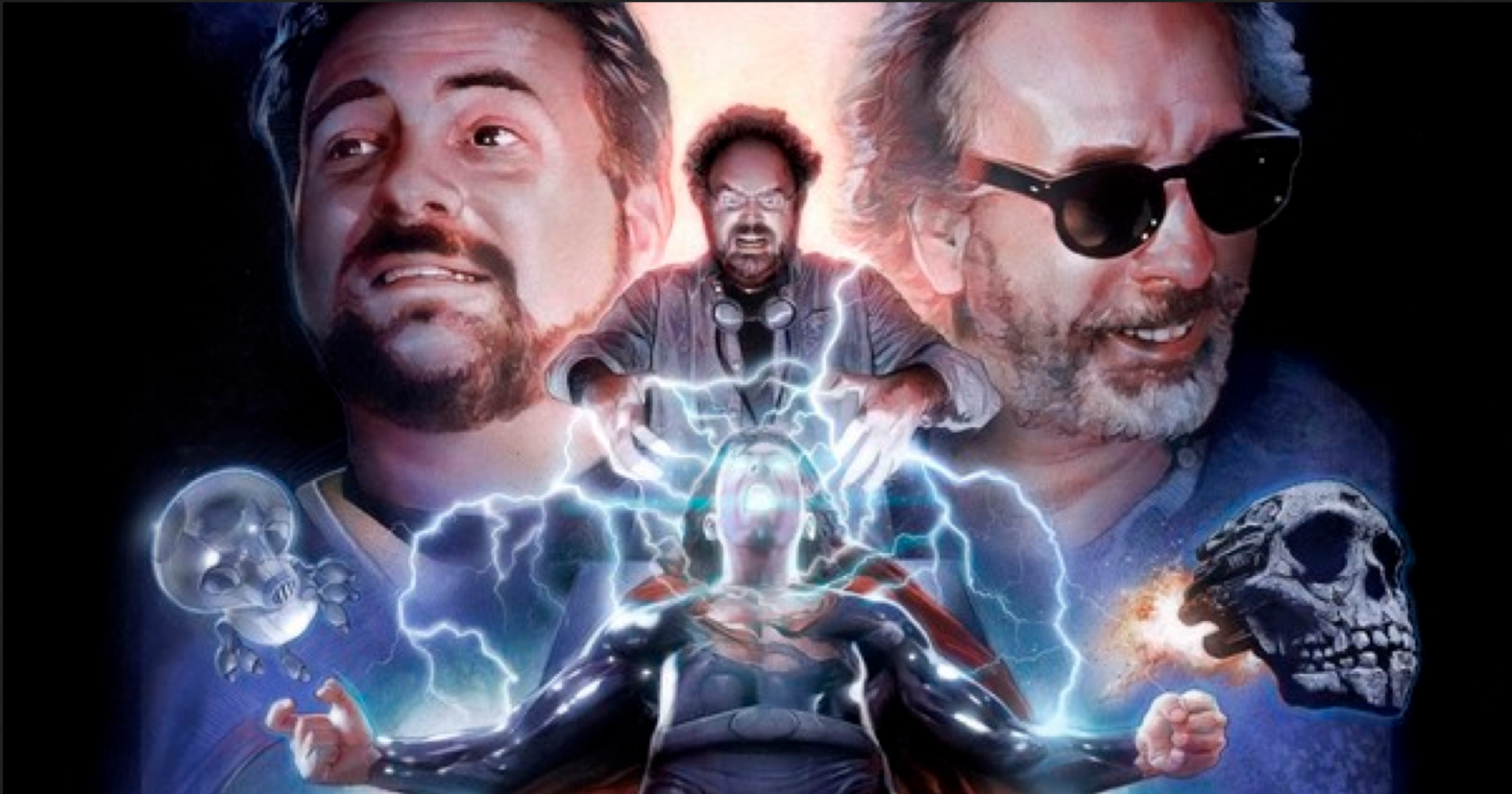
The practically back-to-back release of three documentaries about films that never ended up being made makes for quite the wistful (and geeky) movie marathon, but it’s also a great exercise for the imagination and a jumping-off point for other artists to maybe get inspired to do something similar.
I’m talking, of course, about the trifecta made up of Jodorowksy’s Dune, Lost Soul and most recently The Death of Superman Lives. With ‘Dune’ being the most intriguing and richest of the bunch, it’s also garnered the most attention so far, in large part thanks to the charismatic, loquacious presence of its central protagonist, the cult Chilean director Alejandro Jodorowsky, as well as the totemic reputation of another key cook in the abortive Dune broth – pioneering French comic book artist Jean Giraud, aka Moebius.
Frank Pavich’s film sets the tone for this strand of documentary, balancing industry gossip with insights into the artistic process, and so feeding our curiosity from two different angles. We get to hear about ‘Jodo’ wrangling with studio execs, convincing the likes of Salvador Dali, Orson Welles and Pink Floyd to join what was already becoming a movable feast of a film.
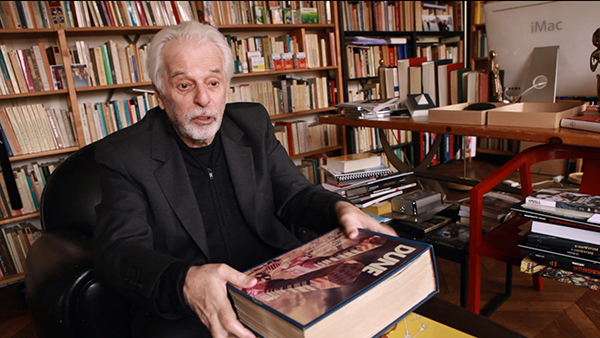
Alejandro Jodorowsky, seen here with the totemic book of storyboards for Dune
But by dint of the fact that Moebius had completed the storyboards for the film long before the film went into (ultimately doomed) production, Pavich’s film also has the luxury of being the most visually arresting of the three films we’re discussing here, giving us a presumably accurate approximation of what Jodoroswky’s film may have looked like.
Jodorowsky’s Dune is also, perhaps, the most ‘culturally significant’ film of the three, because the fallout of the project then paved the way for likes of HR Giger and Dan O’Bannon to assert their influence on that other sci-fi behemoth – Ridley Scott’s Alien – to say nothing of how the would-be Dune’s reputation had a ripple effect that helped give rise to the likes of Star Wars.
Though all of the three projects were ultimately felled by a common enemy – film studios getting cold feet over what were essentially sprawling, avant-garde projects – this predicament is felt most keenly in Lost Soul, directed by David Gregory and charting the demise of director Richard Stanley’s attempt to make The Island of Dr Moreau.
Concept art for Richard Stanley’s The Island of Dr Moreau
Eventually released in 1996 thanks to the efforts of a new director, John Frankenheimer, the Marlon Brando-starring stinker had a far more interesting – read: disastrous – behind-the-scenes story, owing in no small part to its exotic Australian location. Being the most ‘advanced’ project of three – for whatever it’s worth, the film was actually completed – its make-up is slightly different to that of Jodorowsky’s Dune or The Death of Superman Lives… but only to a point.
We’re here to lament the loss of Stanley’s proposed visionary take on HG Wells’s classic novel, the film suggests, and the fact that a bastardized version was sent to die to the theaters is irrelevant – if anything, it’s yet another twist of the knife.
Lost Soul is mostly talking heads and some piecemeal archive footage – there’s a disappointing scarcity of concept art on display – but its narrative does boast a universally appealing backbone: the tragic story of a misunderstood eccentric crushed by bean-counting and nervous executives (there’s a more tenuous connection too – Stanley can also be counted among the talking heads in Jodorowsky’s Dune).
Richard Stanley, holding the Dog Man mask he used to sneak his way onto the set of The Island of Dr Moreau after he was fired
Though Jodorowsky is hardly the pinnacle of well-adjusted normality, and though would-be director of Superman Lives Tim Burton has built a career out of marketing himself as an ‘outsider’, it’s only Stanley who comes across as the true eccentric of the bunch. Dressed all in black and sporting a hat at all times, a believer in the power of witchcraft (as bolstered and made somewhat more intellectually palatable by his background as an anthropologist), Stanley arrives to the project with plenty of interesting things to say, and a passion to lend a relevant, contemporary spin on Wells’s story while fully respecting its historical and intellectual history.
Things are, of course, not as black and white as all that, and what also emerges is how unsuited Stanley was for such a large scale project. Fresh off cult hits Hardware and Dust Devil, Stanley was a stranger to big studio films and hardly inspired confidence on set – refusing to have meetings and clearly not being comfortable with the demands of such a production.
To say nothing of dealing with the egos of the likes of Val Kilmer, whose fee ballooned the budget to ridiculous proportions, putting further pressure on an already strained shoot (to say nothing of the fact that he had reduced shooting days, and acted like a complete dick on set).
Still, the documentary suggests that Stanley had a healthy clutch of supporters, and that even the film’s producers were sympathetic to his overall aims and wanted what was best for the film.
Actress Fairuza Balk, who found a kindred bohemian spirit in Stanley, comes across as his most impassioned defender in Gregory’s film, and her immediate reaction to Stanley being eventually fired from the production makes for a hilarious anecdote.
By contrast to the two other films, The Death of Superman Lives is a conversation with high-powered industry individuals who, despite the project never getting off the ground (hur hur) remained comfortable in their careers and weathered this (very expensive) storm in the end.
Whereas Stanley went into exile after being fired from ‘Moreau’ – first in Australia, then to the Montsegur commune in France – Tim Burton was allowed to continue his career in the rarefied atmosphere of Hollywood virtually unimpeded… although, as one-time screenwriter for the project Wesley Strick tellingly suggests, he hasn’t scaled the heights of its potential ever since.
Directed and narrated by Jon Schnepp – who is seen chatting to all of the interviewees – the partially Kickstarter-funded documentary has a rough-around-the-edges feel to it.
Sound quality fluctuates throughout and a disproportionate amount of the running time is dedicated to the costume Nic Cage would have worn for the film – perhaps betraying the ‘fanboy’ nature of Schnepp’s project (where dwelling on seemingly superficial accoutrements becomes a matter of cultish fetishisation).
But barring Nic Cage – whose presence is nonetheless felt through the use of now-totemic archive footage of costume fittings – Schnepp manages to assemble all of they key players involved in the cancelled production to have their say (on this point he gets one over ‘Lost Soul’, in which the absence of Kilmer and fellow actors David Thewlis and Ron Pearlman is keenly felt).
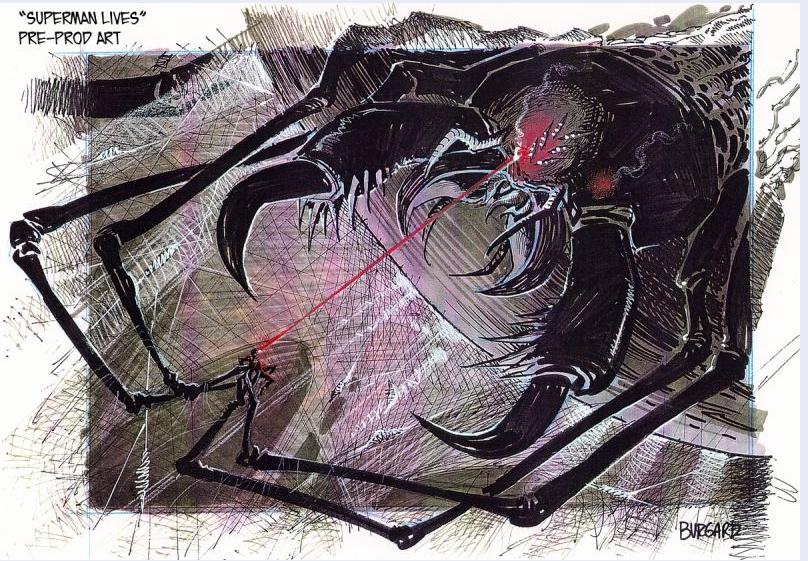
Giant spider! Pre-production concept art for Superman Lives
If nothing else, the film is a treasure trove of concept art. The jump to a high-budget production of this kind from Dune and ‘Moreau’ is made all the more evident by just how many varied talents were brought in to help bring Burton’s vision to life, and Schnepp succeeds in bringing the wild, colorful panoply into relief.
But for better or for worse – and despite a somewhat woozy presence from Burton himself – the key attraction remains producer Jon Peters. A former hairdresser with claims to bona fide street cred (at one point he tells Schnepp he was in “five hundred fights”), he comes across as a well-meaning nuisance at best, a bully at worst. He’s a fervent believer in the project but clearly also the product of the deluded Hollywood machine; 20 percent substance and 80 percent bullshit.
Tales of wondrous projects squashed by the machinery of ‘reality’, these films give breathing space to a pop culture landscape rapidly losing any heterogeneity in the name of financial security.
Perhaps they’re also a by-product of the internet age, in which nothing remains hidden for long, and where film fans become pseudo-historians and archivists by proxy. Whatever the case, I hope that they end up serving as cautionary tales above all, rather than just harmless curiosities.
Insinuations of plagiarism aren’t exactly what I’m after, or even interested in, to be honest. The line in question recalls a particular passage from the Quran anyway, and we can extrapolate all sorts of symbolic readings in relation to this, and in both books.
What’s creepy is that I nabbed both books at a campus book sale, on the very same day.
As Borges as you like, but also a reminder of the kind of delightful randomness that sometimes comes out of buying books ‘old school’.









 Soft Disturbances