This volume may be the epitome of indulgence, and the tone of Marc Scott Zicree, Guillermo del Toro’s interviewer – and effective co-writer in this endeavour – can come across as a bit sycophantic at times.
But really, a ‘cabinet of curiosities’ can’t help but be a gloriously indulgent exercise, and you don’t come here to read a sober dissection of del Toro’s life and filmography.
No, you come here to luxuriate in what is probably the ultimate ‘behind the scenes’ look into Del Toro’s oeuvre, as presented in a gorgeous coffee table edition crammed with photographs and studded with mini-essays by Del Toro’s friends and collaborators (the book is framed by tributes from James Cameron and Tom Cruise, respectively).
The book introduces us to Del Toro’s eclectic imaginative landscape with a bit of a tour of Bleak House – his second home and studio, which gives the book its organising principle, as the house itself is something of a cabinet of curiosities writ large – more than just a working space, it is arguably also the geeky man cave to end all geeky man caves.
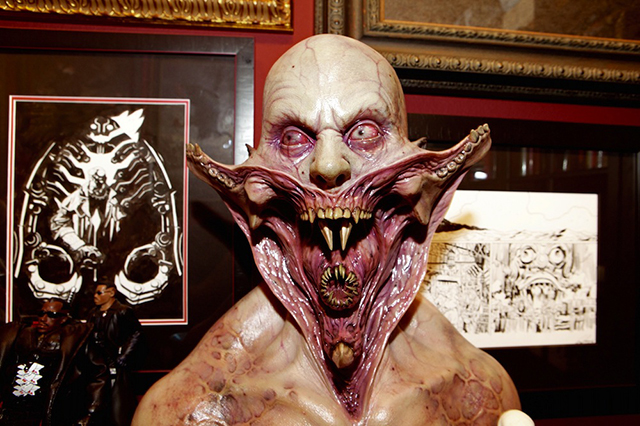
Stuffed with original art and sculptures (some of them taking an extravagant bent, like the statue of Boris Karloff getting the final touches of his Frankenstein make-up done), each room in the house is themed around a particular genre or artistic milieu – like the ‘Steampunk Room’, the ‘Manga Room’…
But above all, the ‘cabinet’ is really about del Toro’s colourful and frenzied notebooks, which the director has been keeping from the beginning of his career and which reveal the inner workings of his genre-melding chiaroscuro parables, from Cronos through the Hellboys and Pacific Rim.
The pages of the notebooks reproduced in the book often have a drawing at the centre – usually a portrait shot of a character in one of del Toro’s films, or a close-up of some grotesque prop or monster – which would be surrounded by (multi-lingua) marginalia. These notes will probably be the most pleasant discovery for a del Toro fan as they leaf through the book, revealing, as they do, the inner workings of the writer-director’s mind, often as he’s tackling and trying to figure out several projects at the same time: practical concerns (about props, costumes and loose story threads) jostle alongside philosophical musings and personal anecdotes.
As an extra, readers also get a glimpse into projects of del Toro’s that never came to fruition – an easy pitfall for a filmmaker with a tendency to multitask various media and juggle a number of projects at any given time.
The most prominent – or at least, the most recent and infamous – of these is of course del Toro’s – ultimately thwarted – adaptation of HP Lovecraft’s At the Mountains of Madness.
That project might just see the light of day, however, as del Toro recently announced that he’s cool with going for a PG-13 rated version of his film, under the wing of his recent collaborators Legendary Pictures (insisting on an R-rating proved to be the deal-breaker with the film’s previous studio-home-to-be, Universal).
But even before this announcement – which arrived some months after The Cabinet of Curiosities hit the shelves – hope already burned for a renewal of the project. “While this project we were so passionate about didn’t work out the first time round, I know that it’s going to happen one day,” Tom Cruise, who was set to star in At the Mountains of Madness (alongside Del Toro regular Ron Pearlman) writes in the Afterword to the ‘Cabinet’.
“Why? Because Guillermo will never stop creating, no matter what. He will keep at it against all odds. And when it finally happens, it will be infused with all the things that make a Guillermo del Toro movie so distinct and unforgettable: images, emotions, vistas, and characters that no one else creates.”
Peter Stromare in Fargo (1996). The foot belongs to Steve Buscemi’s character
“The only jarring note [in Fargo] is the unnecessary pandering to the horror crowd – a remnant of the Evil Dead days – when Buscemi is being fed into the mechanical wood chipper, although we only see some of his leg sticking out of it. To illustrate how props in films can take on talismanic properties, the wood-chipper, owned by Milo Durben, a Delano farmer who acted as dolly grip on the film, had its own float in the 1996 Delano Fourth of July parade and was in the window of Dayton’s store in downtown Minneapolis as part of a movie display. Milo and his wife have continued to use the machine to chip wood on their farm, presumably now cleansed of bits of Buscemi.” – Ronald Bergan
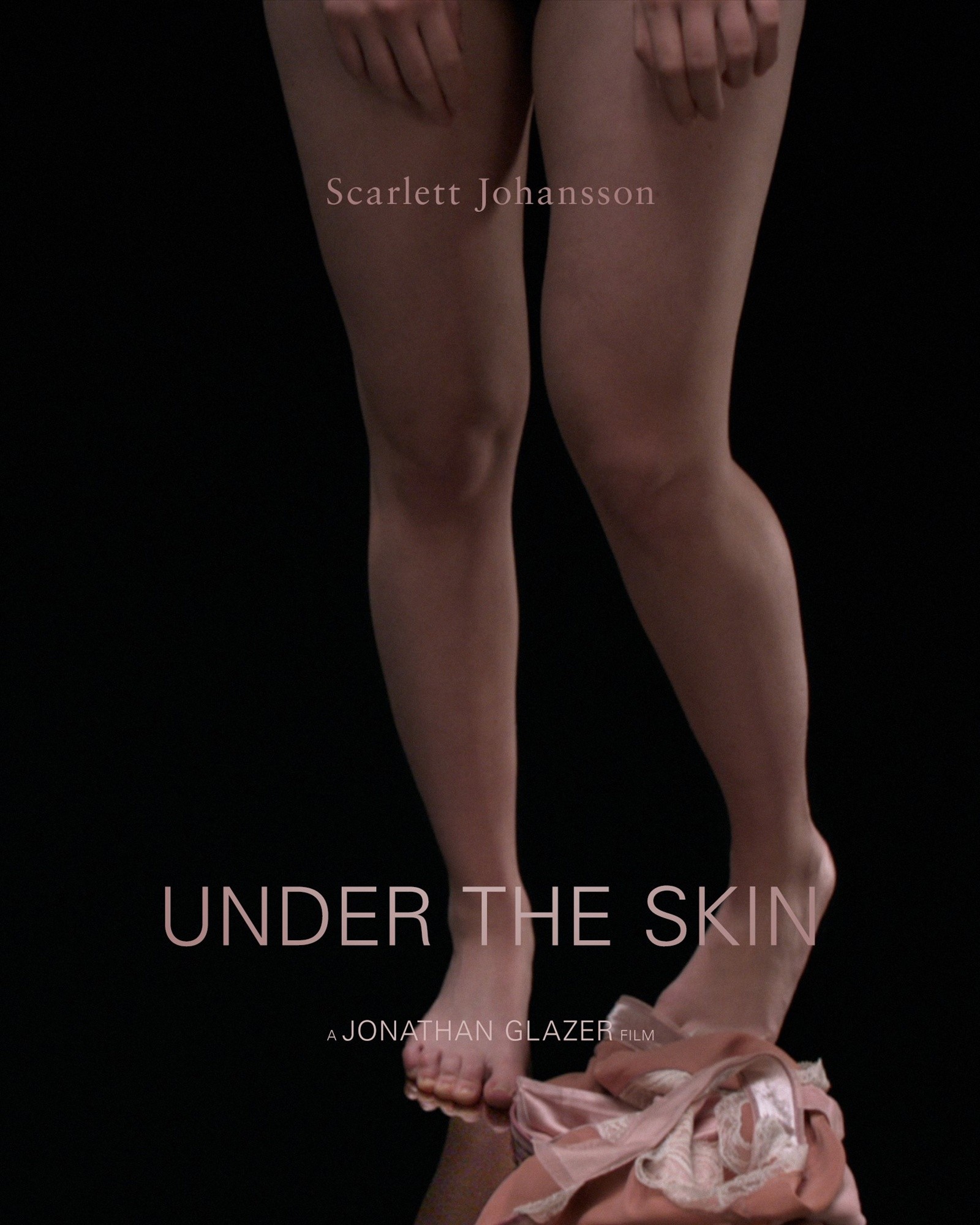
If Lars von Trier’s Nymphomaniac implores us to “forget about love“, then Jonathan Glazer’s acid-sharp body-snatcher thriller Under the Skin seems to be asking us to forget about sex too, at least “as we know it”, both in real life and movie convention.
Adapting Michael Faber’s novel of the same name, Glazer casts Scarlett Johansson as a woman on a mission to seduce and kill as many male Glaswegians as she can manage, working on the orders of what appears to be an unsavory research team of some kind (whether they’re aliens or just morally bereft scientists is never really spelled out in the film itself).
Beyond that, however, the audience is as much in the dark as Scarlett’s victims (the protagonist is never named), and this is the key to the film’s appeal: a journey through complete emotional disconnect which seems to suggest that something may just be developing around its edges.
Species it certainly ain’t, but is it just an art house variant of the cheap slasher film?
Throughout the film’s first half – which I would perhaps somewhat paradoxically argue is its strongest – one is tempted to answer “yes” to that question. Though devoid of cheap thrills and ultimately meandering – and therefore non-sensational – in how it presents the predator-prey encounters, Glazer knows how to calibrate our response to imminent menace, and his finely-tuned aesthetic sense is exploited for terror wonderfully here.
Playing into – rather than playing up – Johansson’s status as a Hollywood sex icon, Glazer derives both suspense and humour from the central conceit (ScarJo cruising for men).
A key scene, which takes place on a beach, will probably be among the most-discussed segments of the film. Actually not spurned by an ostensibly sexual encounter, it’s a depiction of complete callousness that cuts to the bone, with our (alien or otherwise) protagonists looking on impassively as tragedy unfolds right in front of them.
The scene is also another example of Glazer’s calculated vision. It’s a mathematical arrangement of unpleasant details: crashing waves over a dangerously rocky beach, a thwarted rescue, a screaming child left behind. Genuinely gripping, or just well-curated contrivance? It really is up to you to decide, and I think that a film which exists on such finely-tuned polarities is worth exploring.
That said, its second half is substantially weaker. A plot development is allowed, which – perhaps necessarily, perhaps not – deflates some of the tension and attempts to wrestle with themes that deserve a full film in their own right, not the tail-end of one.
But that an aura of mystery is maintained throughout can certainly be appreciated, and in developing the idiosyncratic atmosphere of the film, Glazer owes much to composer Mica Levi, whose score is by turns minimal and overwhelming (the signature tune bursts in almost as if it’s been snuck out of an Italian ‘giallo’).
But it’s Johansson, of course, who turns out to be his bravest and most consistently compelling collaborator. The Guardian’s Leo Robson used “prick her and she doesn’t bleed” to describe her performance, and I won’t bother trying for a more economical or apt descriptor. This isn’t a wooden performance masquerading as ‘laconic’ or ‘depressed’; this really is a consistent, stark display of non-being.
Though Faber’s (and now Glazer’s) story is at its core an old one – think Frankenstein, better still, think Pinocchio – Glazer is to be commended for going full-bore against that most comfortable of narrative short-hands: making characters and situations ‘relatable’.
Chilly and immersive in a way that can only be fully experienced on the big screen, Under the Skin is a sinister blank canvas. What you see most definitely not what you get. Or is it?
Scarlett Johansson is dropped into Glasgow dressed as any other woman and ready to be picked up by the nearest gentlemen. Jonathan Glazer, the director, follows her with a string of hidden cameras, and turns the street into a theatre. A fiction about desire, the object of wonder, and that pale extraordinary woman with red lips who just happens to take a fancy to the passer by.
*
Good news: my adoptive country will be getting to see the Scarlett Johansson-starring, Jonathan Glazer-directed Under the Skin from this Friday onwards, by which time it would hopefully have not hit the pirate networks and will entice a generous-enough audience to St James Cavalier in Valletta, where it will be showing for a total of six screenings from mid-June to early July.
*
Glazer’s film – based on the book of the same name by Michael Faber, whose prose has previously been adapted into BBC’s rather good ‘R-rated Dickens’ mini-series The Crimson Petal and the White (2011) – has intrigued me for quite some time, not least because of its seemingly arch approach to genre: it seems to have elements of both sci-fi and horror, but the overall arc of it appears to suggest something ultimately undefinable and definitely eerie.
It also appears as though the team behind the film – and this includes the star herself – appear to be keen to strip the glamour off Scarlett Johansson’s persona.
This interests me because a) it appears to play against the way stars are constructed these days, which is only a metonym for how we consume and internalize them; and b) it’s a reminder that Johansson wasn’t always a sex goddess (remember Ghost World?) and that her on-screen transformation into one was, I think, signaled quite clearly with that opening shot of Lost in Translation. Does it mean it can be unmade just as easily now?
By making her play an alien who preys on men, will Jonathan Glazer succeed in letting her career and aesthetic direction develop into something more substantial?
*
Either way, Glazer will always have the benefit of being a curio, of being someone who operates from at least one remove from the standard Hollywood system; even, perhaps, beyond the indie film festival carousel.
His music video CV is thicker than his feature-filmography, which suggests that he can’t be bothered with the grind of narrative cinema and its corresponding industry, only approaching a project if it really interests him through and through.
There’s always risk involved here (music video directors-turned-feature film directors run the gamut from dazzling to dire), but this makes them an interesting phenomenon either way.
Personally I found his debut Sexy Beast (2004) to be a style-over-substance kind of experience. Save Ben Kingsley’s blistering turn as a deranged gangster who pays (an ultimately unwelcome) visit to his former colleagues’ idyllic island getaway, the film could easily have been directed by Guy Ritchie – the Brit-gangster tropes are very much in place (with iconic tough guy Ray Winstone leading the show, they can’t help but be) and the narrative is thin.
Birth (2004), on the other hand, is a different kettle of fish entirely. The premise grabs you: Nicole Kidman’s husband comes back to life in the body of a 10-year-old boy just as she’s about to get remarried.
But instead of being blunt or exploitative, it’s a delicate experience; the music and the affluent and snow-capped New York surroundings making the whole thing feel like a fairy tale. And here fairy tale does not mean Disney cartoon with a happy ending tacked on; it means the simple but ominous build-up of otherworldly doom that suffuses the story as each element of it clicks inevitably into place.
Different as they are, what both Sexy Beast and Birth share is the theme of an intruder disrupting our protagonists’ comfort. You could say that Glazer enjoys existing – or, at least, of telling stories – in this zone of discomfort.
In terms of Glazer’s archetypes, so far we’ve had Nemesis (Sexy Beast), a Ghost (Birth) and now we have an Alien (Under the Skin).
The latter promises to be the most foreign, the most unsettling. Let’s hope it lives up to its title. Because we’re all masochists at heart, aren’t we?
Call it glorified procrastination (then again, what isn’t?) or a genuine pursuit of inspiration, but there are few things I love more than watching documentaries about creators I admire.
The release of Jodorowsky’s Dune (which my friend Marco incidentally nattered about on recently over at Schlock Magazine), coupled with the sad passing of HR Giger, made me think of this again, so I thought I’d compile a list of some of my favourites – all of which are thankfully available online.
I know I’ll be returning to this list every now and then for an inspiration top-up. Feel free to suggest any others I may have missed.
In Search of Moebius
The Mindscape of Alan Moore
Lovecraft: Fear of the Unknown
H.R. Giger Revealed
*
Incidentally, did some more nattering of my own, this time into the ears of the protean Maltese lifestyle web-hub, Malta Inside Out.
Standing with perfect symmetry at the centre of the frame, pop starlet Taylor Swift here embodies divine indifference.
Framed by two other ‘stages of man’ she stands as an aspirational vortex; a totemic reminder of what most of us want but cannot have.
The man to the left, jeans tattered, with the beaten-down expression familiar to so many ‘supporting characters’ in paintings by any number of the old masters, is on his way out: he has tried to scale heights but never managed to reach them, and it is clear that this dawns on him with fresh immediacy every waking day now – now, that he’s realised just how few of those days he has left.
To the right is his younger counterpart, his clothes clean-pressed and chosen with sensitivity to colour-coordination, the shades completing a look of sharp impersonality.
And in the middle stands the figure of Taylor Swift: even when disembodied away from the stage, from red carpet events and curated photo shoots, immaculately – because casually – beautiful, her pose strikingly Christ-like but free of any suffering.
Her weary gaze at the paparazzo; she’s so young and already so jaded by the mechanisms of the world – her world, not ours.
*
It’s easy to wrench deities and archetypes out of pop culture representatives, partly because they pitch themselves that way. In some sense they can’t help but do this: see how Taylor Swift, simply by standing in front of a gardening shop, lends an aura of something other than what meets the eye.
The thrill of recognition is of course at the heart of what makes celebrity culture tick: bumping into celebrities, even spotting them on the street, becomes a story worth retelling to friends and family; a memory to be cherished, even in this day and age, where the ubiquitous torrent of images of the same celebrities should be enough to make us entirely jaded.
But the thrill of recognising someone who is supposedly ‘important’ – or at least, special enough for us to separate them above ourselves, and even our peers – remains a key instinct, and it’s not just limited to ‘real’ people (though the layers of simulacra through which celebrities are often transmitted to us do complicate this substantially, I’ll admit).
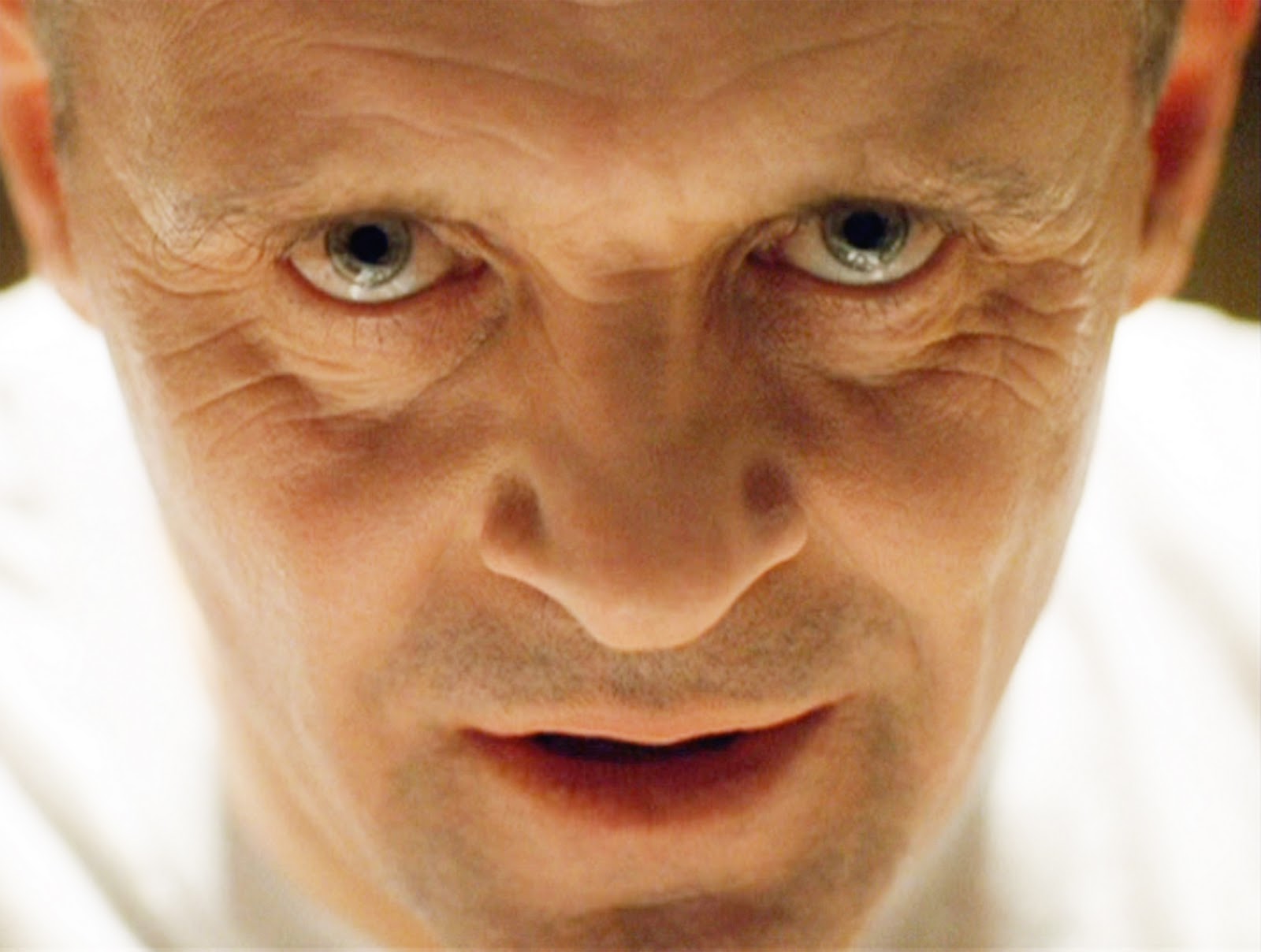
One such example – of a modern talismanic presence in fiction, I mean – is the figure of Hannibal Lecter. Originally a character in the bestselling Thomas Harris crime-horror trilogy of novels (Red Dragon, Silence of the Lambs and Hannibal), he has of course been elevated to the status of pop culture royalty thanks to his cinematic outing via Anthony Hopkins.
Anthony Hopkins as Hannibal Lecter in Silence of the Lambs (1991)
This was of course a career-defining performance, but it’s worth noting that the constituent elements making up Hannibal Lecter aren’t to be sniffed at. I wish I had a keener, more intuitive grasp of which literary factors, exactly, contributed directly to his creation. Perhaps it’ll serve as a research strand for another day, when I’m in a more industrious mood. Suffice to say that, whoever or whatever may have inspired Harris to breathe life into his archly horrific – and horrifyingly charming – figure, the fact remains that he has comfortably eclipsed them for quite some time, emerging as a trademark fictional character in his own right.
Hannibal Lecter is often citied as one of the great villains in the history of recent narrative. It’s not too hard to see why. He is an intriguing juxtaposition of opposites. Like most outré characters in fiction – the kind of characters whose composition in and of itself is exciting, beyond how they serve the story: think of Dickens – he is fascinating even in isolation. A respected psychiatrist who is also a cannibal. A highly cultivated – ‘cultured’, if you will – self-made man (there is something of an American projection of ‘European’ culture here) who is also in touch – and indulgent of – the most barbaric human impulses.
And now that he has made the jump into television – a medium undergoing its own steady renaissance – his domination has continued apace.
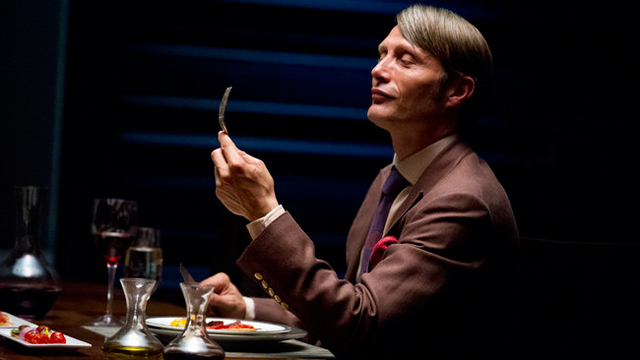
Man of wealth and taste: Mads Mikkelsen as Hannibal Lecter
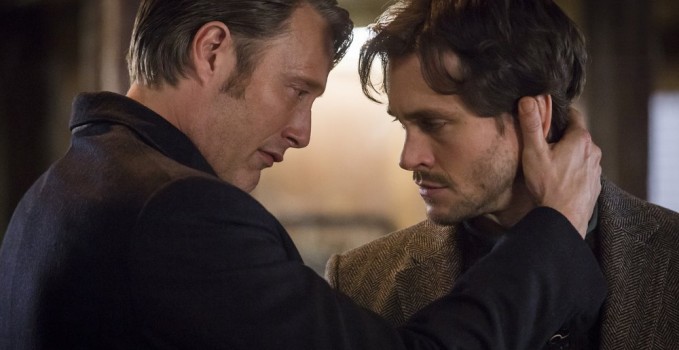
I am a proud evangelist for Bryan Fuller’s Hannibal, produced and aired by NBC, in which the eminently watchable, razor-sharp-cheekboned Danish actor Mads Mikkelsen takes on the titular role.
Though its first season was a workable enough affair – relying on the basic thrill of recognition of seeing Hannibal Lecter again to spruce up what was essentially an FBI murder-mystery procedural of the Criminal Minds/CSI ilk – come the second season the series reaches full bloom, allowing the ominous relationship between Hannibal and his ‘charge’ – in this case, a younger version of Red Dragon’s Will Graham – to be exploited for its “fucked-up” potential to the fullest.
Becoming: Mads Mikkelsen as Hannibal and Hugh Dancy as Will Graham
“Fucked-up” isn’t a cue for cheap titillation here. Being a prequel series to the trilogy we’re used to, the show by necessity has to ‘stretch’ Harris’ central conceit to fill up more story-time. Ordinarily, this would not augur well: stretching anything beyond its organic narrative confines usually results in stories that remain – to broadly apply the term – ‘unnecessary’; a limp extension of its mother-narrative, a decorative but hollow appendage.
No, “fucked-up” here extends the central taboo at the core of Harris’ stories – receiving useful investigative advice from a cannibalistic murderer, “fighting evil with evil” – to a mythic state.
Wrenched free from the three-act structure of novels and films, NBC’s Hannibal exploits the thrill of recognition to drive these characters to their logical narrative conclusion: away from mere innovative kinks, curios of the crime fiction genre, away from the exigencies of the ‘thriller’ plot structure, and further into the realm of the archetype… the realm of myth.
I’ve stopped giving much credence to birthdays over the past couple of years (I’m writing this on the eve of my 29th). Once the rites of passage in life become murkier – i.e., after you’re done with school and have no set ‘stages’ to go through any more – birthdays start to feel truly arbitrary.
But something strange, and just about wonderful is happening this year: right now I truly feel like there’s some kind of culmination of the recent experiences I’ve been through.
Part of all this is, of course, down to finally finishing and publishing the book, and I’m wary of how this feeling of relief mixed with euphoric uplift can be temporary and elusive.
But there’s other factors which have contributed to me feeling an increased sense of peace, and a receding of the persistent self-doubt which comes with – in a big way – from the very same arbitrariness that characterizes most of adult life.
It’s a hard-won sort of peace, though, and one which needs constant vigilance to be maintained.
I suppose the cost of growing up is, ultimately, the realization that bliss can no longer, at any point, come automatically.
*
Increased self-awareness also means an increased sensitivity to what is authentic about yourself – what you should keep and cultivate, and what you should discard because it’s no longer relevant to you: a dead-end road.
Authenticity was always a bit of a thorny subject for me; one the one hand yes, I work for a newspaper – which, at least ostensibly, trades in remaining authentic – while on the other, my primary obsessions are concerned with both the production and consumption of fiction.
A recent ‘catch up’ marathon for three films I’ve been wanting to watch – the ‘Before‘ films by Richard Linklater, starring Julie Delpy and Ethan Hawke (I know, I know) – put this in focus for me once again.
The trio’s breezy style clearly emerges as a result of consummate, carefully cultivated filmmaking, of course, but the way the films worry at concerns so delicate, intimate and – ultimately – relatable puts a number of cinematic attempts at the same themes to shame.
There is both a sensitivity and a kindness – as well as a dramatic dynamism, taking the shape of the best stage play’s effortless back-and-forth banter – to Linklater which made me think, first and foremost (and for whatever reason): Woody Allen is a fraud.
The comparison came to me just as automatically as that: finishing off either the second or the third ‘Before’ film, Woody Allen’s attempts at extrapolating home truths about sexual politics came to mind, and just didn’t ring true.
Where Linklater zooms in on an unfolding relationship between just two people – a thespian duo he clearly trusts – first by charming us with their idyllic romance but then boldly returning to his subject/s years later to shade that relationship, Allen props up his ping-ponging dialogue in the midst of cardboard cut-outs and facile plot developments.
*
My own reaction came as something of a surprise, because in recent years I’ve developed an increased fondness for artifice – a resistance to the ‘organic’ creation of art so vaunted by the Romantics, in favour of what we could, I suppose, at a stretch venture to call a more Decadent approach which places increased value on form and ornamentation.
In retrospect though, I think this may have something to do with the fact that over the past few years, I’ve made a conscious effort to write my own fiction, TO MAKE MORE STUFF, and so the – broadly defined – Romantic idea of ‘waiting for inspiration’ or of dedicating your attention solely to the perfect subject that is closest to your heart was not really helpful.
Focusing on just putting the thing together, on the other hand, helped me to move forward, and so the opposing milieu became more attractive.
*
Now that the novel is done, though, I have to confess that ultimately, its autobiographical elements are what kept me going – or, at least, that engine that whirred in the background, quietly fuelling me ahead as I scrambled to put the whole thing together.
Having a personal stake in something – anything – by its very nature adds urgency to a project, and one of the best things I’ve heard said about Two is that it made some readers – two of them, actually, as far as I know – “give me a hug”, because they recognized the emotional authenticity of the book.
Truth is a slippery thing; I will never understand it, not fully. People are constantly called out on begin ‘phony’ and ‘fake’; even a kind of manufactured authenticity seems to have pervaded our culture (see: Emma Stone, Jennifer Lawrence, and countless other celebrities presented as ‘just one of us’).
But I’ll be happy if I hit upon it, however fleetingly, when “it matters”.
*
Some more coverage for Two:
The Times of Malta – A measured, well-written review I’m quite happy about.
The Malta Independent – An interview by Colin Fitz, also delving into my work as a journalist. Some of the quotes come across as a bit pompous, and I’m fairly certain I was more self-deprecating during the conversation itself. But whatever.
If you – my fine, illustrious readers – insist on doing something for my birthday, might I suggest you pick up a copy of Two, either from “any good” brick-and-mortar store if you’re in Malta and Gozo, or through Merlin’s website if you’re seeing this from abroad? Shipping rates have been reduced to normal prices, thankfully, so you can order away without too much of a burden on your pockets. Ta!
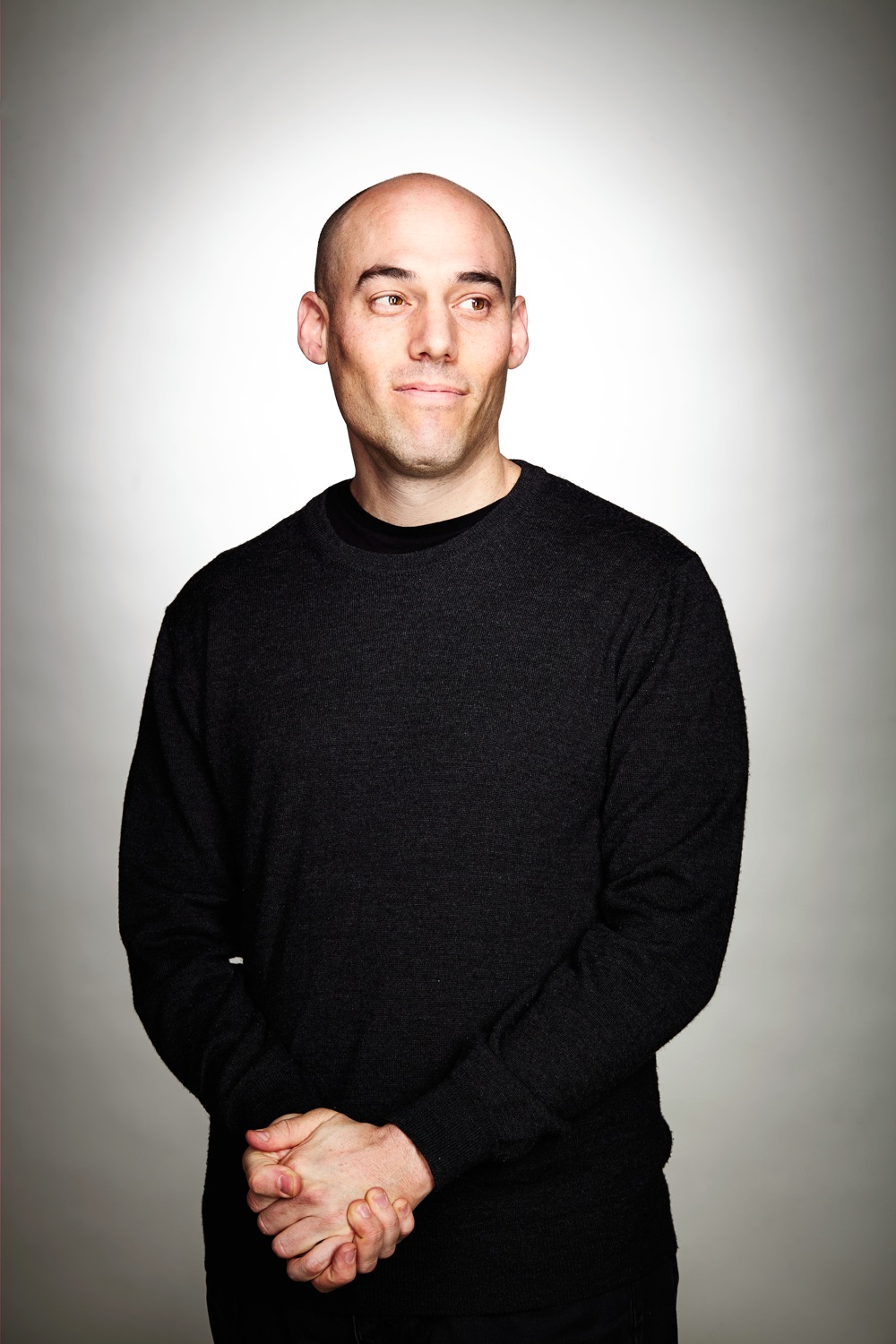
At the tail end of last year, as the film was screened in Malta, I had the privilege of interviewing Joshua Oppenheimer, one of the directors of the blistering, Oscar-nominated – and otherwise award-winning – documentary The Act of Killing. A print-friendly, compressed version of the interview can be read here, but with Mr Oppenheimer’s permission, I’m reproducing the full transcript of our interview below – hours before this year’s Academy Awards get underway. Enjoy.
First of all, congratulations for making it to the list of 15 documentaries at the forefront of the Oscar race. How does that feel?
It’s really great for film to come as far as it’s come, and to be in the company of such other wonderful films. But I think above all, even making it to the shortlist means that it made big headlines in Indonesia, where the downloads for the have increased by something like five-fold (the film is made available for free download in Indonesia). So any attention from the Academy is really constructive in Indonesia, so that’s what I’m the most pleased about.
Did you expect the film to have such an impact, as you were making it? Because surely you were aware of the fact that you were making something that could have a profoundly political, and even perhaps historical, impact. So I was wondering if maybe all of that was running through your mind as you were making it.
Well I think that the film itself… I guess you saw the 159-minute edit of the film, right?
Yes.
Yeah, in that cut of the film in particular the boundaries between the scenes that they’re making and our film, if you like, blur together, and our film becomes a kind of apocalyptic fever dream, an apocalyptic vision, and I think that to create a work that’s so unsettling and dark, of course on sme level you have to have a pretty bleak view, right?
On the other hand you could never sustain the energy to make such a work if at some level you weren’t also hopeful. The hope is that by forcing people or inviting people to look at the most painful aspects of who were are as human beings, that we would then somehow be able to confront our biggest problems. So there’s a kind of optimism that underpins the whole effort. Now I always had this hope, always had this sense, that my task was to create something that forces this confrontation with the truth.
But when you spend eight years making a film you have ample time for self-doubt, and you start to wonder if it’s gonna make a difference. And you know, when I started making the film Indonesians were barely using mobile phones, but by the time I was done they were on Blackberries and on Twitter and so on. So I said to myself: if Indonesia is moving on, why can’t I move on?
Maybe one of the reason for this change is that there’s a whole younger generation of Indonesian professors and academics coming into their careers now, who want to create an Indonesia which is genuinely democratic – they want to have control over their future, which should be case in any democratic society. Nor are they paralysed by fear of direct retribution. And they’re not invested in the status quo because they didn’t form part of the military regime – they’re too young for that.
So I think the film was also allowed to have the impact it’s had because this time has elapsed.
This is in fact what survivors and human rights groups suspected might happen when they saw the footage of the perpetrators boasting that I had originally filmed back in 2003. They told me to continue filming the perpetrators in particular – “you’re on to something terribly important”.
Behind-the-scenes shot of The Act of Killing, directed by Joshua Oppenheimer (far right). Pictured in car, left to right, Indonesian death squad members Safit Pardede, Anwar Congo and Adi Zulkadry.
They told me that every Indonesian who sees this will be forced to acknowledge first of all that they’re all afraid, why they’re afraid and what lies at the rotten heart of this whole regime.
“Make film about the perpetrators, document and analyse their boasting, and you’ll create something that comes to Indonesia like the child in The Emperor’s New Clothes: forcing everyone to confront the realities that they’ve hitherto found too painful to address.”
How much has actually changed in Indonesia since you started filming?
There was a significant political change in 1998, and it actually became possible to make such a film as ours in the first place. Before that, we would have been under a certain amount of surveillance which would have made it impossible for us to make it.
But I don’t think there has been anything like a kind of steady march towards increasing openness. On the contrary, in 1999 a new president tried to take a stance against corruption and tried to apologise for the genocide and for these things, he was thrown out by the military.
Now there’s another election coming up in next year and the likely winner is a man called Prabowo [Subianto]– an army general who has the dubious distinction of being the first person ever on a US State Department black list for masterminding torture and murder in 1998 against student activists, ethnic Chinese and East Timori citizens.
So all I can say is that while, partly thanks to The Act of Killing, there’s an openness to start a national conversation about the past, and the thuggery in the present, at the same time the regime is sliding backwards.
Every president since Soharto – except for the one who was thrown out in 1999 – would hold meetings with his high-ranking ‘preman’ (gangsters) to discuss skimming oil. Indonesia is an OPEC country, and here you have a gangster running the nation’s oil imports and exports. This guy skims around 10 to 15% of all the oil which goes through Indonesia – he steals it, then pays off the Indonesian president.
Every day in office there’s a meeting with the president to sign off a certain amount per barrel of oil. It used to cost one dollar and now it’s down to 60c – which still amounts to a total of $480 a day over a 10-year period. This is the beating heart of a military dictatorship which will never stop.
Although there’s been change on a superficial level – there’s talk of clamping down on gangsterism and corruption – until this high-level corruption stops, nothing will ever change. Pancasila is certainly not afraid of protest. Recently tens of thousands of people – among them sweatshop workers – were out striking out on the streets, and Pancasila was on the front lines hacking at the workers with machetes.
And they were all paid by a garment sweatshop that makes clothes… both for us, and Indonesians.
As you set out to make the film, were you at all apprehensive about the ‘heart of darkness’ you would by necessity have to confront? How did you prepare yourself, psychologically, for the experience?
It was difficult and painful. The very first perpetrator I filmed was from a plantation village where I started this journey. After I filmed him he showed me how he killed hundreds of plantation workers by beating them up until they were unconscious and drowning in mud. He demonstrated this in his living room in front of his wife and daughter. I was shocked, mostly because of the smiling, boastful tone with which he told the story. I walked across the road to this little village, back to the house I was staying in. About an hour later his wife shows up at the door with plate of fried bananas. And I felt profoundly afraid that she had come to my home… this woman I’ve just seen sitting next to her husband as he performed that horrific re-enactment.
And she came with a plate of fried bananas, and I accepted it, very politely, and got rid of her as quickly as I could, and I threw the bananas away. I felt that anything she made was tainted. And afterwards as I saw her granddaughter playing right in front of my house I started to think about that, and I began to regret having thrown the bananas away. I realised how easy it was for me to treat the whole family as radically ‘Other’ and tainted. And I decided I would never do that again, that I would try to empathise, to understand. Because I realised that the main reason I did that was to reassure myself that I was not like them. And while I hope that I would never make the same decision as Anwar made if I were growing up in the 50s, I know that I’m extremely lucky to never have to find out.
Ever since, I insisted that I would let myself become close to Anwar. Doing that meant the process was all the more difficult. I don’t know how to make an honest film about another human being without being close to them. And so I tried to become close, and as I became close it became harder and harder to conceal my feelings. For example you know the scene in which Anwar butchers the teddy bear? That scene was so horrific to film. When I was filming that I was only a metre away from him and to my alarm, I noticed that I was crying – it just caught up with me. Then at some point we had to stop to adjust a microphone or a light or something and Anwar noticed that I was crying and he asked, “Josh, are you okay?” and I said “yes” (though I wasn’t, really). And he said “let’s continue then”. And in my mind that was the start of eight months of very difficult nightmares…
Still from The Act of Killing. Photo by Carlos Arango de Montis.
It was painful. And when Anwar saw the finished film, he cried. Then he was silent for a while, and then he finally said, “the film shows what it’s like to be me”. And I was relieved. I’m relieved to finally have been able to show what these things have meant for me.
And he and I remain in touch – I wanted to make sure that there’s no physical reprisal against him after the film. And there hasn’t been – they’ve just blamed me. Which is fine, it just means I can’t go to Indonesia safely… but it’s good that they’re blaming me and not him. I think the other reason I remain in touch is to try and understand the situation beyond just the film. And I may never quite figure it out…
The scene with the teddy bear – which stands for a baby in that particular re-enactment – certainly shows a point of no return…
Yeah, it shows just how damaged Anwar is. The re-enactment becomes a kind of cinematic prism through which Anwar comes to recognise the meaning of what he did. But it’s not a linear journey to that point… it’s more like a pendulum that is swinging wildly, or a seismic vibration that grows greater and greater in amplitude.
For example, he goes into that scene as an act of despair – he moves from that re-enactment in which they’re burning down the village. He starts to feel remorse after that, and in response he despairingly turns to the worst parts of himself… as though to say, “yes it is still me and I did this and I can still live and be this”. And it hurts him, it’s painful, he hates playing that scene. We see him lying in bed with that wind-up chicken and singing the most self-pitying song… and through that self-pity he comes to play the victim. He doesn’t come to play the victim knowingly, but out of pure… simple… he’s just the victim. And then through playing the victim he experiences real trauma, and to wash the trauma away he proposes that ‘cleansing scene’ by the waterfall, this phony redemption… and I was so disappointed with him. Because I had hoped that maybe he’ll be waking up to something. And that happened again and again but instead he chose to run away – 180 degrees, completely the opposite direction. And I felt that the film had to faithfully show that. It might be easier to take if it was about a man who was coming to terms with himself… but rather, he’s zig-zagging – zig-zagging frantically.
To put it in a more concise way: the film bears witness to how the maintaining of the lies we tell ourselves leads to a moral vacuum. A downward spiral of evil and corruption. You now have to blame your victims – because that’s the excuse, they deserved it – and that allows you to oppress them, and you have to kill again. Because if the army tells you okay, for the same reason you killed the first group, now kill this second group… if you refuse the second time it’s equivalent to admitting it was wrong the first time. And so the reason you need to maintain the lie is not because you’re a sadistic monster, but because you’re human… and being human, you’re moral, and you know what’s right and wrong, and you don’t want to live with the tormenting effects of guilt.
You’ve mentioned previously that the film is about ‘a failure of the imagination’ – with particular reference to the way the West reacted to the massacre back in 1965. This may be a bit of a trivial comparison to make, but given how it’s more or less taken for granted that contemporary Hollywood is operating on a dearth of the imagination, would you say we are ‘at risk’ of this happening again?
Yeah, I think the film shows not the danger of violence in movies, but escapism, right? And our problems become more intractable as our crises deepen. We then become more eager to escape from our realities. And escapism, denial, is what inevitably leads us to a moral and cultural vacuum.
And I think… yes, I think as our crises – ecological, economic, demographic, political – deepen, the dangers of escapism become critical.
I mean, Anwar says that he got his methods of killing from movies, and while I believe that’s true to a degree, I don’t think it’s definitive – I mean I’m pretty sure he would have found ways of killing people bloodlessly without watching movies. What he does say… when he talks about coming out of Presley musicals, dancing across the streets, intoxicated by his experience of cinematic identification… and killing ‘happily’… Now, Elvis Presley musicals are not violent. They’re just dumb. But that’s the problem. So I think you’re right, I agree with you.
I suppose it’s more about the iconography of Hollywood, rather than anything to do with content. Which brings me to the more stylised moments in your film – particularly the central musical sequence, which appears to be primarily spearheaded by Herman Soto… speaking of wish-fulfillment and so on… was there any particular reason why Herman Soto insisted on being in drag during the re-enactments (I’m going to assume it was his decision…)?
Ah! Well the answer to that is rather prosaic. Herman was in a theatre troupe until 2003 – the paramilitary Pancasila had a theatre troupe, and being a military theatre troupe, all the roles were played by men – they would have men playing women’s roles, like Shakespeare’s Globe back in the day, or like Japanese Kabuki theatre – and Herman would often play the comedic storyteller role, and Anwar loved that, and thought it would be wonderful for the film.
So he cast him to play the role of the femme fatale, a communist’s daughter who takes revenge on Anwar in that jungle sequence – a scene inspired by Anwar’s on nightmares, where we see Herman ‘feeding’ Anwar his own liver or also in the studio, when he’s seen ‘cutting off’ Anwar’s head.
Then there were two musical numbers. We filmed one – ‘Born Free’ – which you see in its entirety, and which came in the production in the same order that it appears in the film. As I said earlier, I was deeply disappointed that, right after playing the victim, Anwar proposed this grotesque scene in which the victims thank him for sending them to heaven.
Still from The Act of Killing. Photo by Joshua Oppenheimer.
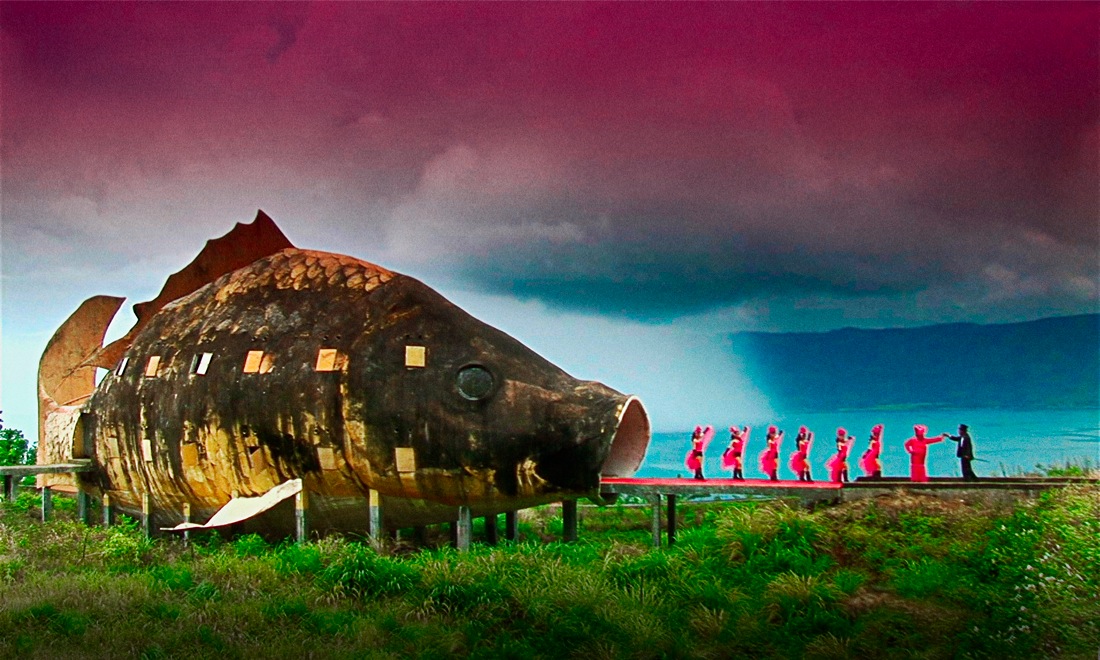
Then the second number, which was filmed on the set of the ‘giant goldfish’, was a staging of one of Anwar’s favourite songs – Peggy Lee’s ‘Is That All There Is?’, where he substituted the spoken verses from the song with spoken verses from his own life.
And it was a strange… mysterious…. the ‘giant fish’ had been a seafood restaurant until the mid-90s (it failed during the Asian economic crisis).
As we passed by it one day Anwar said: “It’s beautiful – it’s embodied all this hope but now it’s just sad, it’s all gone wrong, just like my life.” He said it was perfect for the Peggy Lee musical number. But being a ballad, it was very long, so we interspersed these strange, dream-like sequences throughout – like the scene in the storm where Herman sings about the movies, and directs the dancing girls, shouting “more hot, more hot!” I would say that these moments in fact embody the poetic core of what the movie is all about. About how we as human beings get lost in our fantasies, or our stories.
It was a case of either/or for me. I could either just use the musical numbers by themselves – which were surreal and funny, but a little thin – or I could use these moments, which would in fact be more representative of what the film was about. Then I realised that I had no choice – I had to use these poetic moments, and I decided I would employ them to mark chapters across the movie. And it changes in tone, from sunny and bright to increasingly dark and frightening throughout the course of the movie, reflecting the film’s emotional journey.
Something I also noticed was that Anwar appears to be very sensitive to the art of filmmaking, or at least storytelling. For example there’s that scene in which he’s explaining to Herman that you can’t make a film tense all the time – that you have to insert moments of humour and so on. Did just you stumble upon this intuitive quality that he had, as you were making the film?
I loved that, yeah I loved that. I was always so charmed by it! He was a sort of cinephile, or at least a cinephile of those low-end Hollywood products that made their way to the region in the 60s. He would present himself as the authority. And I love that everything he said about the film was true. And it was proven to be true by The Act of Killing. He said in the film you need a love interest – which of course we had, and I’m not just talking about the fictional relationship with Herman in drag and so on but also the dynamic between Anwar and Herman themselves – they were like a old bickering married couple, they were ‘married’ to each other in a way. I had actually filmed some funny scenes with Herman and his actual wife, in the part of the film where Herman is running for office. But it was imp for me not to use these scenes. Because within the logic of the story, Herman can’t have a wife… he’s ‘married’ to Anwar.
So everything Anwar said about the film is true to the film – you know, it can’t be tense all the time, needs comic relief, a love interest… and he also said that this film will attract so much attention because no other film has ever used the real killer to play himself… and that is, of course, why it has attracted attention.
And he makes this wonderfully poignant point, doesn’t he, when he says, “why do we watch films about the Nazis? To see power and sadism.” And yes, that’s exactly why we watch films about the Nazis. You cannot say it better.
One last question: I’ll understand if you don’t really want to talk about it for fear of spoiling its ‘magic’, but I was wondering if you could speak a little bit about that final, uninterrupted shot of Anwar coughing and dry heaving, which appears at the very end of the film…
Well I’ll tell you the story to that shot. Going back to the first time I met Anwar… he was actually the 41st perpetrator that I filmed. I spent around two years filming them. All of them showed me how they killed boastfully, and I handed over some of this material to the Human Rights Commission so they could use it as evidence.
The very first day I met Anwar was the day he took me to the roof and danced the Cha Cha Cha [a sequence appearing early on in The Act of Killing], and then I spent five years with him, dramatizing, in a sense, everything that went on in that office. And I never could get back to that office: and I tried, time and time again, to gain permission.
What I wanted was for him to walk me through that office and tell me, “this happened here”; “we did this and that here”… but when we filmed for the first time he was remembering things as we went along and it came out rather incoherently.
Then, six months later and at the tail-end of the shoot, we met with some of the highest-ranking political leaders of the country. I saved this to the end because I knew that they could question why I was there and stop me from making the rest of the film. It could have endangered us and our production. And during the final day of that final shoot, I’m walking down that street… and I knew a shop had opened up on the site just that day, and the owner of the shop was a Chinese-Indonesian – he knew exactly what had happened there and was happy to let us come in and film.
I asked Anwar to go back to that office, walk through it quietly and tell me what happened. I told the cameraman: “There’s only one rule – we’re going to stay against the wall, we’re not going to step into the roof terrace at all, because that space belongs to the dead.” Because the first time we were walking on the roof felt like we were dancing on the dead, just like Anwar did.
And so we walk in. Anwar is trying to slowly walk upstairs and tell me what happened on my roof. I’m keeping my distance – we’re not doing any zooms or close-ups – and maybe Anwar felt I was holding back, I don’t know… when suddenly he’s caught completely off-guard by this dry heaving.
I felt it was awful. He had no idea what was happening, I had no idea what was happening… I wanted to put down the camera, come up to him say, in that stupid way we Americans do sometimes, that it’s all ‘going to be okay’, but then I realised… oh no, this is what happens when it’s really, really not okay. And when someone realises that it will never be okay.
The final shot of him standing by stairs was the moment that I realised I can never film this man again. If it were up to me, I would want to just get out of there as soon as possible. Get out of there and go home.
Why doesn’t he go down the stairs? What’s he waiting for on the landing? He must know that will never be free of this.
China Mieville’s argument that Halloween is not an enemy to contemporary socialists – if ‘done well’ – bears the kernel of what I was complaining about. Allowing your kids to dress up as cowboys for Halloween means just succumbing to the capitalist machine; making them dress as ZOMBIE cowboys – thereby allowing the still-existent chthonic underbelly that Halloween hints at – is good, because it acknowledges the topsy-turvy disorder that Halloween (like Carnival) encourages – a temporary subversion of the status quo.
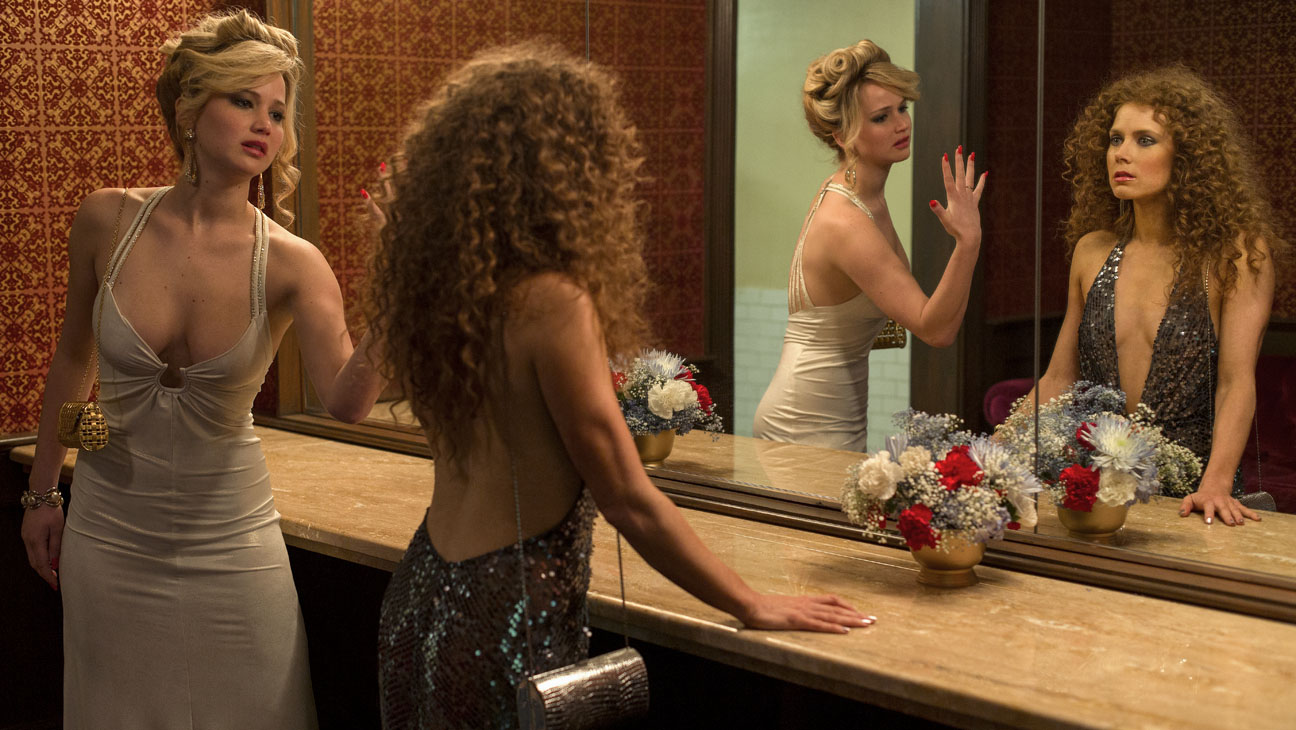
And films that are nominated or Oscars tend to be guilty of promoting this ‘vanilla’ view of culture. 12 Years a Slave appears to be searing, but it comes draped in the trappings of stereotypical period dramas – the worst of both worlds. American Hustle appears to be an edgy look at how the capitalist machine in America functions, but it’s too keen to please it viewers to allow for anything genuine to seep through.
This isn’t just limited to Oscar fare, either. The Robocop remake has been released to some negative press in the US and UK, and it appears to have fallen into a similar trap. It’s not a freakish creation like its original – a wonderful aberration by Paul Verhoven that doubles up as a satire of the Regan administration. As a wonderful article on The Guardian illustrates, Verhoven was successful – and this counts for his subsequent films Total Recall and Starship Troopers too – because he had a keen grasp of how the grotesque works.
His films walk like dumb action flicks, but talk like something far more playful.
It’s this commitment to your vision that I tend to admire, and that I want to champion here. Just like wearing non-supernatural, non-horror costumes in favour of something generic for Halloween is a disservice to the imagination and the subversive implications of the festival, so does making concessions to the audience and the established cultural order make for maimed storytelling.
*
I admire China Mieville for saying what basically amounts to “Sometimes a monster is just a monster.” By making monsters obvious ‘symbols’ for something, you divest them of their real power. Monsters will always mean something, of course, but they can stand for a rich variety of things – as opposed to some single, often hackneyed idea – if you just let them be.
Utopian vision: Let the work do its work. And don’t give awards to work that is more interested in glory and appeasing the status quo than in delivering good work.
Oscar season is upon us, and with it a vague understanding of what should constitute ‘quality’ in the world of popular entertainment. Perhaps I’m only echoing the sentiments of some kind of sneering elitist minority – if I do in fact ‘echo’ anyone’s sentiments other than my own – but this year’s crop of Academy Award nominees continues to promote an anemic form of storytelling that values telegraphed ‘messages’ and finely-wrought decorative flourishes over exciting, nuanced storytelling.
(Side-note: I like how the internet has made the Oscars into a fully-formed international spectacle. It always was, of course; the imperialist nature of American cinema has always been a part of its DNA. But now the boundaries of news and broadcasting that had in the past created at least an illusion of distance between us and the Oscars is completely gone… but here’s hoping that the running commentary that is the internet will at least give way to a more questioning attitude to the Academy’s choices – and I don’t just mean incessant complaints about how your favourite film was snubbed or short-changed.)
Out of the 2013/14 Oscar superstars I’ve seen – although we’re all privy to internet commentary about the films before/soon after they’re in US/UK cinema, Malta still gets plenty of films far too late – there has been only one that has genuinely touched me as a genuine piece of storytelling worthy of awards.
That film is Spike Jonze’s Her. It’s a joyous confluence of style and substance, working on an outlandish, sci-fi-lite concept that is executed with great sensitivity to the nature of relationships, a keen visual style – it’s a masterclass in worldbuilding through micro details – and genuinely affecting performances.
Martin Scorcese’s The Wolf of Wall Street was also not bad – though it’s relentless approach leaves no room for subtlety. But Scorcese at least allows himself – or, thanks to his now-vaunted and hard-earned reputation, is allowed – a vitality and brashness that is free of political correctness. Leonardo DiCaprio’s Jordan Belfort is a monster, but you may worry that some audience members will admire his voracious, unapologetic drive to shore up MORE MORE MORE and consume MORE MORE MORE. But then, why would you worry? That’s not your job. It shouldn’t be. Let the work do its work.
But the Oscars rarely cater for this kind of thing – art that really says what it needs to say with true creativity and verve. You’d think Steve McQueen’s 12 Years a Slave is a raw example of what I’m looking for… but watching the relentless churn of suffering unspool before you with apparently no unifying narrative force behind it, it just begins to look threadbare – a litany of abuse left to play out on autopilot.
American Hustle is similarly directionless. Each scene of David O. Russell’s story of cross and double-cross strains to give the audience some goodies (a line of zesty dialogue, sexual frisson, an ACTOR moment) but it never builds to a satisfying whole. It’s a Frankenstein’s monster made of derivative moments from both Scorcese and Paul Thomas Anderson’s back catalogue.
It’s like it was sent to the Academy in a marked envelope: ‘HERE’S WHAT I THOUGHT YOU MIGHT LIKE’.
*
These deadening things just make me think, “art is elsewhere”. Even, “fun is elsewhere”. In my next post – up tomorrow – I’ll entertain the idea that the grotesque is what could save us from this complacent rut.











 Soft Disturbances