Samwise Gamgee returns to the Shire, in the final scene of Return of the King (2003)
“There is no safe place from the injuries of history; home as a place or a time of innocence can only be an illusion. But the poet doesn’t recover the bitter past to serve present grudges – his acts of remembering, his quest for identity are grounded in generosity.
“And from this sense of loss and recovery, this mix and merging, this reckoning with the complexities of the past, present national identity and patterns of belonging can be fruitfully formed. The way Walcott has worked the material of his complicated memories and inheritance in the Caribbean represents an exemplary openness to making a new model of the homeland, which doesn’t exclude, but rather includes, which doesn’t justify, but seeks to understand. No home is an island; no homegrown culture can thrive in permanent quarantine. We’re all wayfarers and we make our destinations as we go.” – Marina Warner
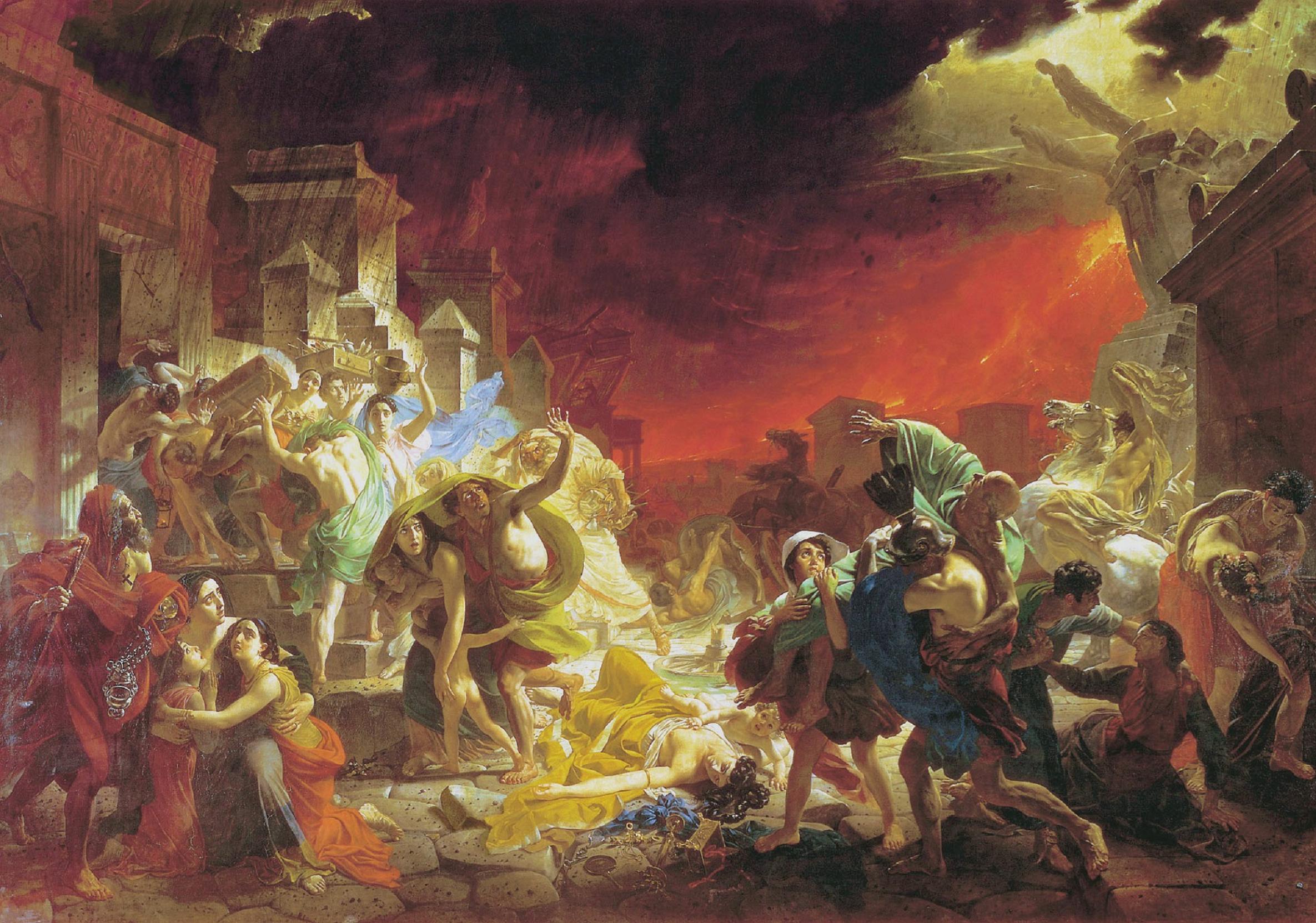
The Last Day of Pompeii by Karl Briullov (1830-33)
“When there’s a big explosion, it doesn’t really have a visceral impact on the audience if it’s just flinging people through the air. They know that’s just stunts. But if you fly people through the air and they then they hit something, it’s a lot better. And then if they hit something really hard — like, you know, a brick wall — it’s even better. And if they hit a kind of rough edge on that brick wall, then you’re getting to the good stuff. And then if what they hit breaks, then that’s the best.” – Paul W.S. Anderson
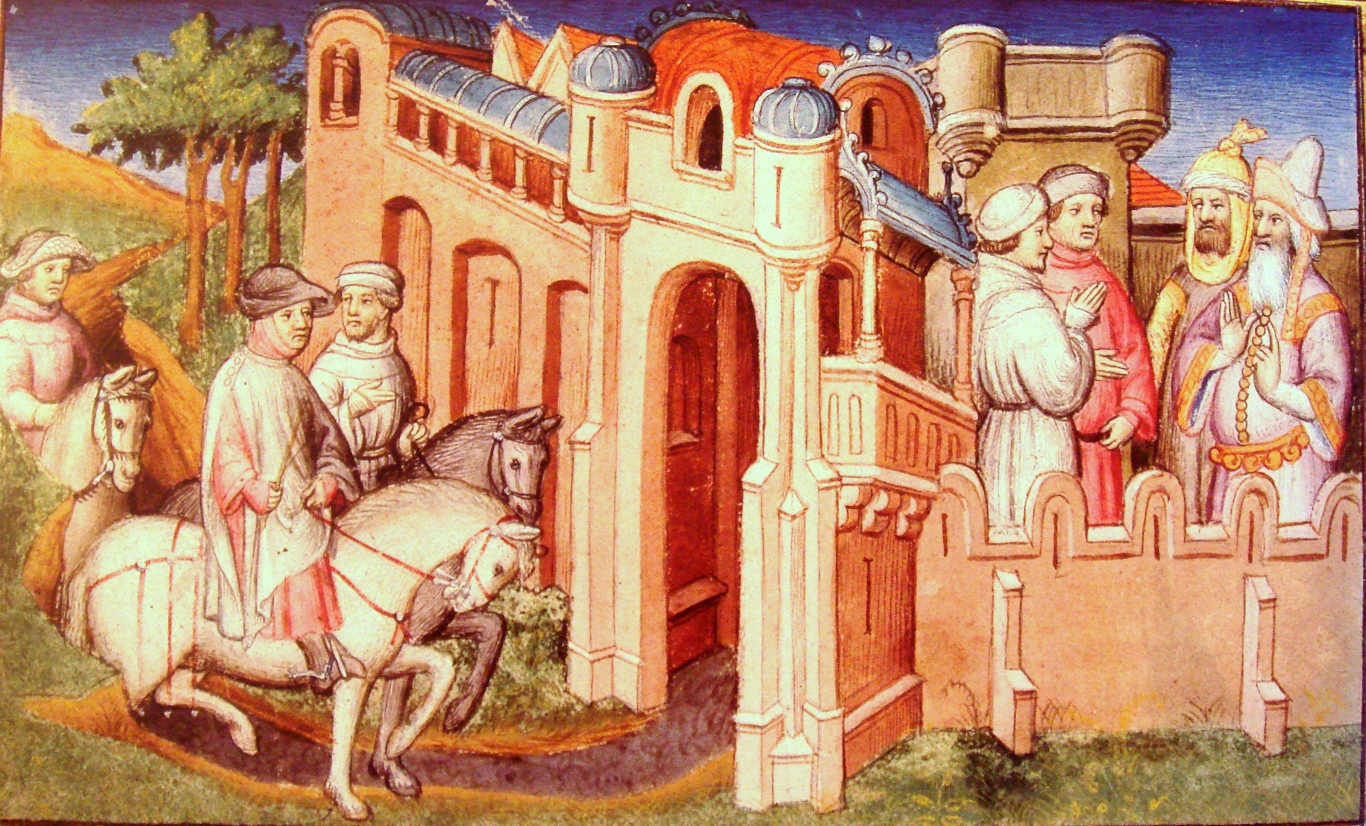
Niccolò and Maffeo in Bukhara, where they stayed for three years. They were invited by an envoy of Hulagu (right) to travel east to visit Kublai Khan. (Source: Wikipedia)
“Opium was the avenging daemon or alastor of Coleridge’s life, his dark or fallen angel, his experiential acquaintance with Milton’s Satan. Opium was for him what wandering and moral tale-telling became for the Mariner – the personal shape of repetition compulsion. The lust for paradise in ‘Kubla Khan,’ Geraldine’s lust for Christabel – these are manifestations of Coleridge’s revisionary daemonization of Milton, these are Coleridge’s countersublime. Poetic genius, the genial spirit itself, Coleridge must see as daemonic when it is his own rather than when it is Milton’s.” – Harold Bloom
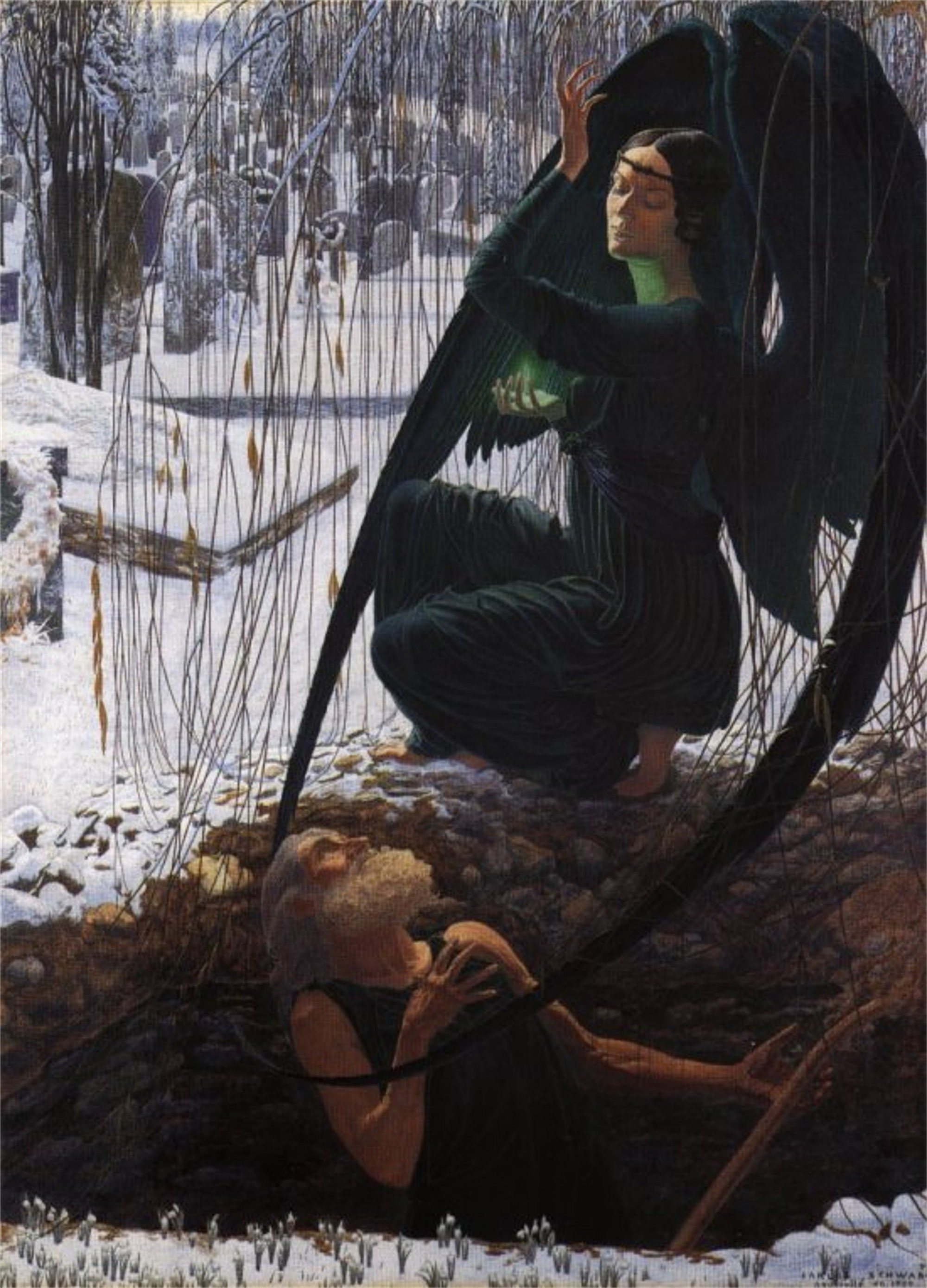
“In this day and age, we confuse hip smartness that does not fully endorse any idea with intelligence, and consider callousness the product of an experienced point of view of the world. Naturally, this attitude leads us to value artists who seem to know it all. But Schwabe and the rest of the symbolists were the exact opposite: They celebrated not knowing, the twilight of our knowledge. To them, the supernatural was absolutely real, and mystery was the supreme goal of art.” – Guillermo del Toro
Peter Stromare in Fargo (1996). The foot belongs to Steve Buscemi’s character
“The only jarring note [in Fargo] is the unnecessary pandering to the horror crowd – a remnant of the Evil Dead days – when Buscemi is being fed into the mechanical wood chipper, although we only see some of his leg sticking out of it. To illustrate how props in films can take on talismanic properties, the wood-chipper, owned by Milo Durben, a Delano farmer who acted as dolly grip on the film, had its own float in the 1996 Delano Fourth of July parade and was in the window of Dayton’s store in downtown Minneapolis as part of a movie display. Milo and his wife have continued to use the machine to chip wood on their farm, presumably now cleansed of bits of Buscemi.” – Ronald Bergan
Dizzee Rascal performs at the Isle of MTV 2014 concert at the Granaries, Floriana, Malta. Photo by Ray Attard/Mediatoday
“I’m attracted to the idea that trickster narratives appear where mythic thought seeks to mediate oppositions. Just as Raven eating carrion stands between herbivore and carnivore (or, in my own earlier version, just as Raven stealing bait stands between predator and prey), so there is a category of mythic narrative, a category of art, that occupies the field between polarities and by that articulates them, simultaneously marking and bridging their differences. It is the tale in which Coyote tries to retrieve his wife from the land of the dead but creates death as we know it, Coyote does go to the underworld and so overcomes the barrier between life and death, but at the same time his impulses overcome him and the barrier remains.” – Lewis Hyde
But East London rapper Dizzee Rascal was something of a refreshing presence in this year’s otherwise stale and repetitive churn of pre-prepared, mealy-mouthed sound-bites.
Asked (by the chipper, elfin-faced and Irish-inflected MTV VJ Laura Whitmore) about what he thinks of the Isle of MTV image as a production, he replied: “Well MTV’s got the money, innit?”
Asked (just like his Isle of MTV colleagues were) about how he’ll handle the oppressive heat on stage, he replied: “I mean it’s only a 20-minute set, really, we’ll be okay.”
Asked (by an equally chipper local radio journalist) whether performing at Glastonbury was the highlight of his career so far, he replied: “I don’t know… I actually think the proudest moment of my career so far is being able to buy my mum a house.”
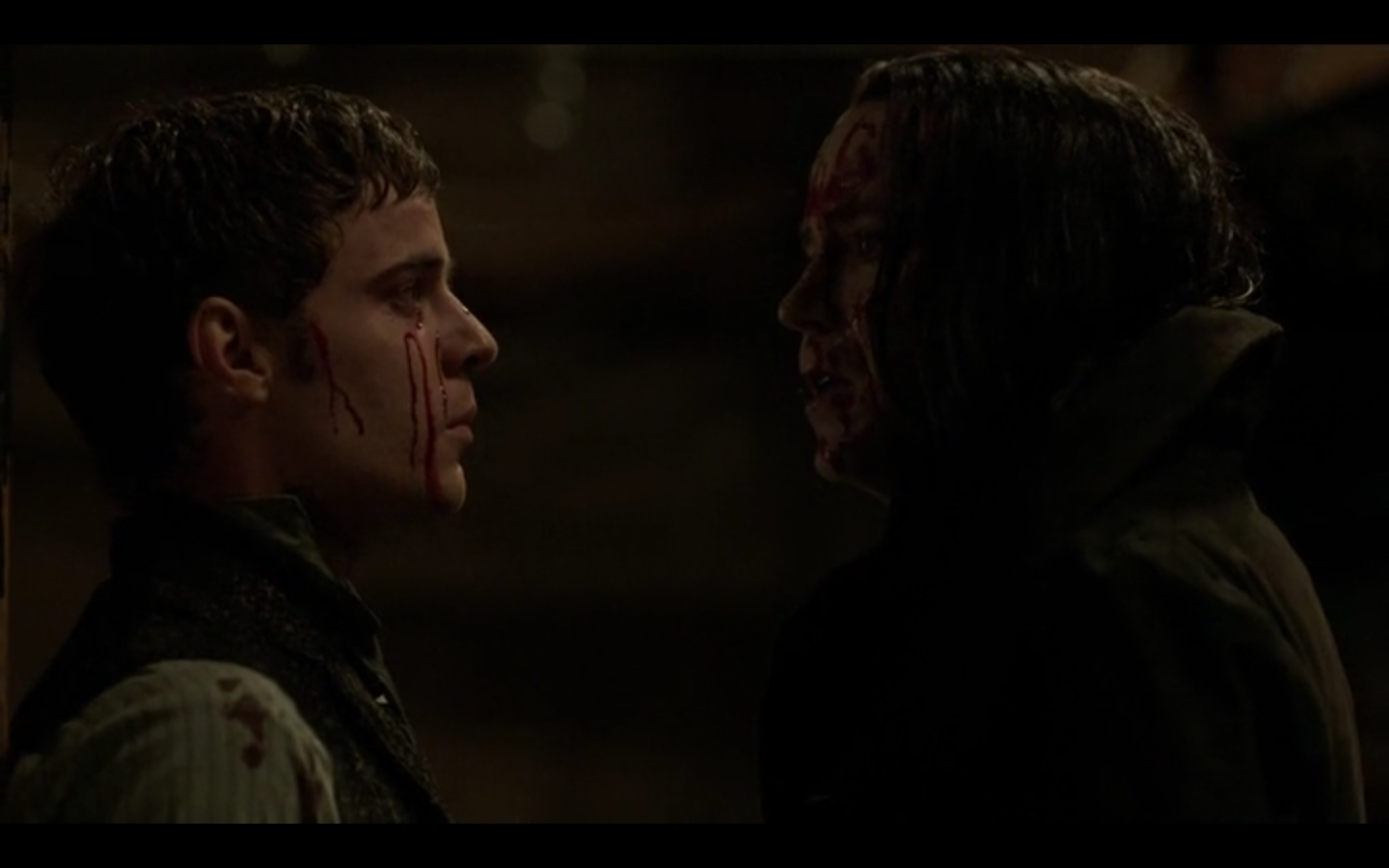
Victor Frankenstein (Harry Treadaway) and his Creature (Rory Kinnear) in Showtime’s Penny Dreadful (2014)
“By revealing that difference is arbitrary and potentially free-floating, mutable rather than essential, the monster threatens to destroy not just individual members of a society, but the very cultural apparatus through which individuality is constituted and allowed. Because it is a body across which difference has been repeatedly written, the monster (like Frankenstein’s creature, that combination of odd somatic pieces stitched together from a community of cadavers) seeks out its author to demand its raison d’être – and to bear witness to the fact that it could have been constructed Otherwise” – Jeffrey Jerome Cohen



 Soft Disturbances