Hard-Won Agency: Hot Milk (Deborah Levy, 2016; Rebecca Lenkienwicz, 2025)

We all begin from a place of idiocy when tackling family trauma.

This is largely because very few of us can hit the ‘pause’ button on life and explore our damage at our leisure, taking our time with our healing journey and tending to each scar with the requisite care and tenderness.

Like death, trauma is one of the few instances of the ungraspable numinous we still encounter at an alarmingly regular rate in our otherwise secularised existence; it’s slippery and hard to categorise, and you cannot pin it down and name it like Adam was instructed to do when first placed on earth.

And even though we’re popularly guided to apply a cause-and-effect template to trauma (‘I am like this because X happened to me when I was young’), the ghostly after-effects will still linger, and will not be sucked into ectoplasm boxes any time soon. So we can’t analyse. We can’t sit down to calmly pore over things. Still babes in the woods. Still dumb to what came before and what will come next.

Which is why I appreciated Deborah Levy’s Hot Milk: a wry, caustic treatment of trauma and how it seeps down into a mother-daughter relationship, zooming in particularly at a volatile time in both Rose (mother) and Sofia’s (daughter) lives, during which they arguably attempt to undertake what I’ve described above: hitting pause on life so that Rose – but only Rose – may finally heal her ailment (inability to walk) for good.

***

The mixed reception to both the novel – I get a feeling that most people viewed its Booker Prize shortlisting as a perfunctory gesture, riding on Levy’s reputation – and now Rebecca Lenkienwicz’s film adaptation is likely down to a number of factors.

Characters rendered in oblique psychological brush strokes – at times incomplete at best, insufferable at worst. A loaded narrative proposition which never tips into melodrama but offers us little by way of conventional catharsis either. The dangling promise of a queer sub-plot which in the end makes no attempt to say anything politically significant about such an arrangement…

And so on.

I do agree that the novel is somewhat slight, and that other writers would have perhaps filled out the story with a more generous well-spring of empathy towards our characters, particularly the leading female triumvirate that leads the show: Sofia, Rose and Ingrid – the enigmatic, bandana-sporting seamstress who, in the film, appears to Sofia like valkyric vision: astride a horse on the hot Spanish beach: unlikely, unpredictable and ultimately, affected to a fault and hardly the safety raft Sofia needs. But we should all learn to take work on its own terms, and the gaps that both Levy and Lenkienwicz leave out are spaces where discomfort and tension is allowed to grow.

It’s the same tension that grows mushroom-like out of the idiocy of our own thwarted attempts at understanding just what’s wrong with us.

***

Rose has been paraplegic for as long as her aspiring anthropologist daughter can remember, and when we meet them they have temporarily relocated to Almería from London to pursue a last-ditch attempt at treating this ailment for good: enlisting the costly and unconventional services of Dr Gomez, whose methods have more in common with a version of talk therapy than anything resembling a hard medical approach.

Sofia is her mother’s keeper, and has been for a long time. (Her Greek father Christos is out the picture – having flown the coop back to Athens years ago; he now has a baby daughter by his “child bride”). She is prematurely bitter as a result, and her training as an anthropologist only serves to widen the scope of her pain. Crucially, however, this default mode – the paralysing cycle of familial duty and a stalled approach to her academic development – leads to no breakthroughs.

It’s a recipe for an endlessly deferred existence; a purgatory made even more deeply manifest by their stay at the scorching Spanish seaside. Because Rose isn’t keen on solutions either – Lenkienwicz adds a ghost of trauma to keep the clock ticking there too – and finds comfort in endless deferral.

Which is where the matter of tackling trauma by employing agency gets particularly tricky.

***

The most significant coup of the film adaptation is arguably its casting. For all that Emma Mackey supposedly came in late in the day – our screening in Malta was happily accompanied by a surprise Q&A from the film’s co-producer, Christine Langan, who revealed as much – there is something inevitable to the Sex Education star flexing her dramatic muscles here: effectively, she builds on the easy charm of that show by depicting another sensitive and intellectually curious young woman in, however, a far more sombre and mercurial key.

Fiona Shaw makes for an equally obvious fit for Rose: the veteran actress knows her way around that toxic mix of haughty entitlement and whiny dependence and understands that it’s part and parcel of how she wields her power over her daughter.

And I’d be hard-pressed to imagine anyone other than the prolific and dependably luminous Vicky Krieps in the role of Ingrid. Sofia is swept along, and so are we. At least we are at first, until her accumulated deceptions – and the underbelly which animates them – chip away at the implication that she is here to create a welcome oasis of bliss for Sofia.

On this subject, I also have a bone to pick with some of the ripples emerging from the critical consensus on the film, both in mainstream publications and online commentary, namely that Ingrid is yet another example of a ‘manic pixie dream girl’ trope.

In many ways, she is. And that is precisely the point. Ingrid is clearly someone who has internalised, and weaponised, her status as something that could be construed as a real-life manic pixie. But as the story progresses, we see that crumble right before our eyes, and we follow Sofia closely on that journey of realisation.

Like Rose, Ingrid shapes her entire identity around her inability to cope with the defining traumatic incident of her life. She knows it happened and what it implies, but she’s either unable or unwilling to process it, so she gilds and embellishes a persona out of the elisions and deviations she takes to avoid confronting things head on (her being a seamstress feels apt, here).

In the middle of it all is Sofia – whose coping mechanism is neither aggressive self-pity (Rose) or promiscuous hedonism (Ingrid) but repression. In this way, she becomes the perfect bedrock on which both Rose and Ingrid can vent their fears, desires and complaints, assuming that Sofia will stick around to absorb it all.

In fact, Sofia’s troubled and troubling pursuit of agency is the true ticking clock of the narrative, and it’s a strand that resonates deeply, particularly with those among us who have been forced to become parents to their own from a young age.

***

You could say that my parents were a mix of both Rose and Ingrid. Charmingly bohemian and easy to love among the social circle they frequented, they were also inept at managing their own emotional landscapes and taking the temperature of their kids’ true needs. Ridiculously young immigrant parents going at it alone with only nominal support (and at a long distance) from the extended family, and relying on badly-managed improv and reheated cliches to ensure we somehow stayed alive.

It’s no wonder that they took any complaint as an affront. That keeping the peace was top priority. We all took pride in not shouting, even if a good row would’ve released energy that would remain suppressed, set to do poisonous damage many years down the line.

Following a stroke, my mother was left in a coma for ten years; the stroke occurred just a few months before my own father suffered his first, which he survived, only to suffer a fatal one a decade and a bit later… largely the result of unheeded medical advice and the same, Rose-adjacent refusal to comprehend that eternal passivity and dependence on others cannot be a permanent life goal.

As such, I very much identify with Sofia’s default setting: keeping the peace by keeping mum. I felt the ripples of damage her repression causes, and I sympathised with her falling for Ingrid: this is an image of who you want to be – a free spirit; ironically, in my case, the same projection of bohemian freedom modelled by my parents in life.

Watching Hot Milk in 2025, after the fallout of losing both my parents, I’m beginning to understand why I’ve always been drawn to coming-of-age stories, of which this is a finely wrought and arthouse ready reminder (none of the tropey, self-help-booky Hollywood takes on that sub-genre here). I found kindred spirits in these retreating protagonists, but also the hope of some kind of release when they finally gain the confidence to break out of the vicious cycle which defines them.

In a weird way, this is aspirational fiction for me. And Sofia’s small wins – working up the courage to steal a fish from the market; liberating a noisy neighbours’ dog from its cruel confinement atop a sun-baked rooftop – feel as they are presented: welcome irruptions of healthy transgression, the promise that you can change things around.

That agency is more than just a myth.

Perfunctory Epic: The Rings of Power, Season 2 (Amazon Prime)

DISCLAIMER: Here be spoilers.

Like most nerds of my generation – lapsed or otherwise and to varying degrees of commitment and intensity – I cling hard to the pure memories of my earliest viewings of Peter Jackson’s The Lord of the Rings trilogy.

While the books weren’t childhood favourites – I was knee-deep in Marvel comics up until my early teens – I did bone up on them while the films were still in the early stages of pre-production, goaded on by another close friend who would move back to Canada with his family before we would get a chance to see them in the Maltese cinemas together.

But there were other friends who would’ve filled the gap in the meantime, some of whom I was, by this point, playing Dungeons and Dragons with.

So in my mind, this period now forms a mash-up of time where a store of fantasy imagery was taking root in my ‘mind palace’, which would serve as a source of comfort and self-identification for years to come… in many ways it still serves that function to this very day, albeit in somewhat altered form.

I’m thinking about all of this after finally having caught up with the second season of The Rings of Power – Amazon Prime’s bid to secure their own Game of Thrones franchise by pre-committing to five seasons of the thing and even launching a reserve long-form adaptation in the form of The Wheel of Time should this one go bust.

Charlie Vickers as Sauron and Charles Edwards as Celebrimbor

This cynicism seeps through the operation and, unfortunately, I feel it’s particularly evident in this second season, which toggles in a perfunctory fashion from one of the many sub-plots to another, the only real connective tissue being the long-game machinations of Sauron (Charlie Vickers): here a svelte Machiavellian figure whose Season One disguise as sea-faring lone wolf ‘Halbrand’ pulled the wool under the eyes of none other than Galadriel (Morfydd Clark) herself.

(In Halbrand-mode, he could’ve easily fronted one of those neo-Britpop acts… there’s something disarming in the image of Galadriel bopping to Kasabian.)

The thing is, I was quite chill about The Rings of Power when it first appeared. Unlike many others, apparently, I was willing to give Season One a chance, with its slow burn and trickle of ‘new’ characters and fill-in-the-blanks exercises riffing on the sketches of lore the showrunners and their writers had to work with.

It felt, at the very least, the start of something that could grow into an organic story with its own heartbeat… and Galadriel-as-fundamentalist struck me as a bold-enough narrative choice which, I suspected, would yield some interesting detours further down the pike.

But, hand on heart, I can’t quite say that the second season is exactly rewarding my investment on this front. Where we previously had a gorgeously photographed and put together spark of potential, now we have that, only with the potential snuffed out in favour of a flattening and overstretched story that is really just a set of fan-fictiony vignettes ticking off boxes, all scattered across disparate geographical locations on Tolkien’s famously vast and detailed map of Middle Earth.

It’s yet another reminder of how the magic we associate with fantasy literature in particular – that thrill of immersion all too often written off as simply ‘escapist’ – has very little to do with by-the-numbers tropes and settings and everything to with an innate poetry that speaks to a wider yearning.

The yearning for a world which is more mysterious and more alive, where traveling means discovery, danger and difference and where transcendence can be mapped out and understood but never replicated in rote human terms.

But replication is so ingrained in pop culture now. In a sense, it is its only real faith. The belief that for something to work – for something to even be conceived – it needs to have worked before, and on a massive scale.

Rory Kinnear as Tom Bombadil

You can of course imagine that such an approach doesn’t do too well when attempting the kind of fay whimsy that is very much part of Tolkien’s fictional universe, no matter what the more macho strands of the fandom would have you believe.

It’s why the sequences with not-(yet)Gandalf and his duo of not-Hobbit buddies are the dullest in the show, and why Rory Kinnear’s Tom Bombadil, while certainly a welcome presence on screen after being infamously excised from the Jackson trilogy, feels just like another placeholder mentor figure – a wizard whose only USP is a higher quotient of chill than his counterparts – instead of a baffling and refreshingly unexplained spirit of sylvan inevitability.

Perhaps this is why The Rings of Power is at its best when zooming in on still-human-shaped Sauron and his horrifically ingenious acts of arts-and-crafts based gaslighting. Let’s face it, it’s the all-too-human cruelties on lurid display that helped Game of Thrones nab a healthy swathe of the non-nerd audience, because this is stuff that soap operas are made of and as long as we want power, sex and exist among people who desire the same, the electric charge of it will never cease to appeal.

So it’s clear that the showrunners are confident in their abilities to tighten the noose around poor Celebrimbor(Charles Edwards)’s neck, as Sauron – disguised as the outwardly benign jewellery savant Annatar – makes good on his moniker as the Great Deceiver, and how.

For all that the show is littered with instances of orcs, giant spiders and other gory creatures whose mere presence is meant to trigger our gag reflex, none of them can hold a candle to the gross yet precise – precisely so gross because it’s so precise – way in which Sauron ingratiates himself into Celebrimbor’s workshop (really, the seat of this craftsman-monarch’s very kingdom). I don’t remember feeling this disgusted by a TV character since the John Paul (aka ‘The Prick’) from the first season of Bad Sisters.

Leon Wadham as Kemen

This is just about the only instance of genuine emotional frisson we’re allowed to feel during the season, where we’re allowed to wince and hiss at displays of moral callousness because how else are we gonna react? Same goes Kemen (Leon Wadham), the PG-13 Joffrey of the show: nepo-baby son to the scheming aspirant to the Númenórean throne and the custodian of the most smoothly slappable faces this side of Westernesse. (Thankfully, it’s a face that *does* get slapped once or twice already, though we’re meant to understand that his true comeuppance is yet to come and given how padded out the show is, this’ll be a case of delayed gratification for the Ages).

But there’s an elevated flip-side to all this. Namely, that Celebrimbor’s rise and fall constitutes a decent stab at a Greek-style tragedy. But this is the kind of stuff we’ve internalised a long time ago and now keep regurgitating with ease… and arguably, the real lasting value of Tolkien’s work lies in how he decided to side-step the otherwise ubiquitous Hellenic legacy in favour of the knottier and gnarlier brambles of Beowulf and the Norse Sagas.

Of course, you can never go home. (This is true of the denizens of Eregion in more ways than one, after Sauron’s done with them). Nobody’s asking a new show to try and rekindle the same magic we felt when we first read The Lord of the Rings or watched the Peter Jackson adaptations. (And if they are, they really should reconsider what they expect from their pop culture artifacts.)

My suggestion? Pick up The King of Elfland’s Daughter by Lord Dunsany. It’s a good deal shorter than both The Lord of the Rings – slimmer than any of its three books, actually – and you’ll likely work through it even quicker than you would sitting through this latest season of That Second Age Show.

It’s the kind of book that Tom Bombadil would’ve written, because Bombadil understands the world and its denizens better than they understand themselves, and can sing a story that still remains a song.

A Vipers’ Pit | Press Coverage & Reviews

With A Vipers’ Pit (Is-Sriep Regghu Saru Velenuzi) enjoying a healthy run at Eden Cinemas, I thought I’d compile a little guide for prospective viewers before they take a chance on our political thriller-family drama-literary adaptation.

Response has been better than anything I had every hoped for: reviews ranges from ecstatic to ecstatically disappointed, but indifference was never the least bit part of the equation. For a low-budget debut based on a beloved book which attempts to treat national wounds, it’s just the kind of response you want.

So here’s a handily collated list of some previews, interviews and even reviews that the film has already amassed so far.

*

Interviews with director-producer Martin Bonnici

Martin Bonnici. Photo by James Bianchi/MaltaToday

Times of Malta

MaltaToday interview

Eden Cinemas Interviews: Part 1Part 2Part 3 (video)

*

Cast & Crew Interviews

8.97 Bay interview with actors Chris Galea Joseph Zammit, Gianni Selvaggi and Erica Muscat and myself.

Newsbook interview with actors Joseph Zammit and Gianni Selvaggi.

LovinDaily interview with Erica Muscat (video)

*

Chris Galea as Noel Sammut Petri

Reviews & Critical Essays

MaltaToday

Times of Malta

Ramona Depares

David Hudson

Virginia Monteforte (Italian / English)

Mark Vella (Maltese)

Ad Lib Talk (video)

Letterboxd

*

…aaand we’ve even made it to Malta’s ‘most serious’ news site.

The film is currently showing at Eden Cinemas. Book your tickets here.

Lifting the Lid on the Vipers’ Pit

Starting from this Friday (6 August), those of you based in Malta can watch a film I wrote at Eden Cinemas in St Julian’s.

This is the first feature film script of mine to be produced, and suffice it to say that I’m excited about how audiences are going to react to our adaptation of Is-Sriep Regghu Saru Velenuzi (literal translation: ‘The Snakes Are Venomous Again’; our translation, ‘A Vipers’ Pit’) by Alex Vella Gera, a novel whose trajectory I’ve followed from a very early stage back in 2012.

Director-producer Martin Bonnici called me up to ask if I’d be on board with adapting the novel back in late 2015, by which point the book had been established as a landmark of contemporary Maltese literature. This had partly to do with its thrilling core conceit – a group of ultra-Catholic nationalist insurgents plan the assassinaton of firebrand socialist prime minister of Malta, Dom Mintoff, in the 1980s – but also for more formal reasons.

Vella Gera’s novel is written in the bilingual register which reflects how a large part of the Maltese population speak; a linguistic schizophrenia that stands in for the binaries of social class on the island. The middle classes speak English, the working classes speak Maltese. At least, that’s the boilerplate belief, which has of course always been more nuanced on the ground than on paper. Middle-class born Noel Sammut Petri decides to break with that tradition after a move to Brussels, insisting on speaking Maltese in Maltese company.

It may seem like a small detail, but it speaks volumes. Where the English-speaking Maltese are either coded as elites or subject to gentle (and not-so-gentle) ridicule for the most part, Vella Gera chooses to depict this reality honestly, filtering some of this understandable distaste through the now liminal figure of Noel.

It’s one of the many ways in which the book resists an earnest, try-hard attempt to flaunt an idea of Malteseness that can be packaged and sold, and it’s probably the reason why it felt so refreshing to so many. Despite the attention-grabbing Mintoff plot, at its core the story is about the emotional landscape of the people trying to navigate the uncertain morass that is Malta: an infant Republic in its early segment set in the 1980s – following Noel’s father Richard as he’s pushed to serve as triggerman for the Mintoff assassination – and an EU member state at the cusp of regime change in 2012.

Vella Gera himself told me as much while we were conducting an email interview about the book prior to its publication in 20 October, 2012. Here’s a quote that didn’t make the final cut:

“I wanted to steer away from narratives dictated by the political parties. In a way, this book is a direct challenge to that bipolarism. Not that I’m propagating a “third way”, which is really conservatism by another name. However, like Noel, I too am aloof from the tug of war of local politics, so if my book were to be “unofficially boycotted” I think in a way it would be a success because it would underline that aloofness and continued lack of understanding of where I really come from

[…]

“Obviously, I have my political opinions, which to a certain extent continue to validate that aloofness, because I find very little in Maltese politics to rejoice over. I wonder who Noel would vote for. Probably [Green Party] AD, or perhaps he wouldn’t vote at all, or then again, he’d vote Labour just to spite [his property magnate friend] Roger. But I never get into these intricacies, because I find them very dull to deal with […] Personally I tried to steer away from getting too specific about anything except the gut feelings of people, which is what I’ve always felt is missing in most Maltese political fiction. That gut feeling that cannot be brushed aside or censored, or made more palatable with a joke or a witty aside, or some satirical tone.”

Despite its many changes to the source novel, I also sincerely hope that our film adaptation manages to convey a similar commitment to the complex emotional spaces the characters occupy, in favour of safely packaged assumptions, and jingoism by any other name.

Is-Sriep Regghu Saru Velenuzi (A Vipers’ Pit) will be screening at Eden Cinemas, St Julian’s, from 6 August. True to its bilingual source novel, the film will be in both Maltese and English, andcome with English subtitles. Book your tickets here.

Coronawriters: When Considering Script Notes, Do Not Be Haphazard

“Take no enterprise in hand at haphazard, or without regard to the principles governing its proper execution”

– Marcus Aurelius (Meditations, Book Four) 

Yes, I’ve been cracking open ye olde Meditations back up because some advice from the grandfather and grandmaster of Stoic philosophy would certainly not go amiss right now, when uncertainty is the order of the day and the mainstream world media — especially its malignant ‘social’ offshoot — is doing absolutely zero to counter the mood with some sense of sobriety or perspective.

But the above quote popped out for me, during my now once again regular re-read of the embattled Ancient Roman emperor’s diary to self, for reasons that have very little to do with the essential self-care we need all the more urgently at this moment in time.

No, the reminder to do nothing at ‘haphazard’ reached me on a more professional — or rather, vocational — level, as I felt it very much got to the heart of an important lesson I have learned about writing narrative stories — be they in prose or script format — over the past couple of years.

Screenshot 2020-03-26 at 15.18.56

Marcus Aurelius via Batman, or vice versa: Daily meditation with the Meditations, with journal entries jotted into the Bat-book

It’s not a glamorous fact of the writing life, and neither is it bound up to the ‘tortured artist’ archetype in any way. In fact, in a lot of ways what I’m about to talk about swerves directly into the opposite camp, and perhaps the times we are living in call for precisely the kind of habits that evoke a degree of control and agency over the traditionally — notoriously — chaotic process of making up stories from scratch.

I’m talking about finding the rationale that lies behind either your plot mechanism, or the choices your characters make, in the interest of improving them for the benefit of subsequent drafts.

Now ‘character’ and ‘plot’ are almost always inextricably bound together, or at least they should be. What should we call this? I’m struggling to think of a more bite-sized term for it right now. Is it as broad as ‘rewriting’ or ‘editing’? Is it just ‘tweaking’, or does that teensy word not quite do it? Maybe I’ll arrive to the correct term or neulogism, maybe not. The point is that the process I’m describing often takes on a similar trajectory: that of working away at issues, problems and unwanted lacunae through the process of writing itself.

For me, it’s important that this does not happen before a complete draft is well and truly finished. An imperfect draft, sure. But a complete one. That allows me to see the big picture — such as it is — and make a clear and rational assessment of what needs to be fixed.

That’s why the Marcus Aurelius quote resonated with me. Sending off that draft without having polished it up, or even stopping half-way through to tweak at something that I nervously, pre-emptively assume is gonna be a problem later on, would indeed by a haphazard way of going about it. A script, novel or short story often has a lot of stuff going on inside it. Even the most minimalist of stories and narrative situations need to be informed by subtext, by nested considerations that move things forward, that plant seeds in the reader/viewer’s mind before hopefully being taken to full term in the most felicitous way possible.

But beyond the disciplinarian ‘good sense’ of not rushing things and giving them their due before assuming they’re ready so that you can focus and/or indulge in something else, the Meditations quote also got at something I legitimately find pleasurable about this stage of the writing process.

Just like certain filmmakers live by the dictum that ‘directing is the price you pay for going into the editing room later’, I find the greatest pleasure in cutting underneath the draft I’ve just written (over and above the more obvious, superficial ‘cuts’ that are also inevitably made) and figuring out why something doesn’t work, and how it could work better.

I think the ‘fun’ of this process has a lot to do with a sense of regaining control over the work. Now that the draft’s done, there’s far less of that Dark Night of the Soul feeling descending, and the associated ‘staring at the blank page’ jitters that either accompany it or are triggered by it. I can finally bring the full extent of my rational and analytical mind to bear: the same mind that I’ve chiseled into a decent-enough shape through my academic training and working as a film reviewer for over 15 years.

So finally, a touch of the familiar, the graspable and the tangible appears through the haze of uncertainty that otherwise characterises the writing process. It’s an uncertainty that is conducive to both chaos and play, to be sure, so that it can be fun in its own way. But regaining a sense of control is also affirming and energising.

This brings me to the latter part of the Aurelius aphorism, the bit about ‘the principles governing its proper execution’. Because the process of making something better through this kind of reworking would be hollowed out if it didn’t consider the in-depth internal logic of whatever problem you’re facing.

My most immediate experience of this process had to do with responding to a script note that called for a pivotal event in the story to occur much, much earlier than it does in the script as-is. My producer and I both agreed that we should think of a way to take this criticism on board and implement it productively, without compromising the integrity of the script as a whole.

So I got to thinking about how this action would alter some of the characters’ actions throughout the script as-is. I went back to the quasi-literal drawing board, writing out the logical trajectory of these change in long-hand. The end goal of this was to have a clear, bullet-pointed battle plan for what needs to be done. The changes that need to be implemented so as to make this note work. And it did happen, eventually.

But before I could get there, I spent a few pages writing out the characters’ motivations for taking this particular action, in this particular order, to accommodate the changes in line with a new chronology. This also led me to reconsider some taken-for-granted aspects of the characters in question. I thought I knew them. Turns out I didn’t get a chance to know them all that well, before.

In working out a logic that would justify the alterations suggested by the note, new things clicked into place. No, that one character doesn’t have to be as passive as they appear. They do have a desire, it’s just submerged so deeply it’s barley visible. And we need to think of ways to make that pop out. And so on.

In short, the process got me thinking about the ‘principles governing the proper execution’ of this character, and a couple of others who orbit around them and are influenced by their actions. It felt both rational, and organic. Like a clear understanding of something that lives and breathes, and which may yet surprise you in positive ways if you lay down a good environment in which it can thrive.

Chaos is often the order of the day because we aren’t born with a map at birth and cannot see into the future, which is why good stories are built in a way that respects certain internal harmonies that promote coherence. Focusing on the elements of the craft in this way has helped me find a ballast in these times. There’s a baseline for who we are no matter what happens around us, and that internal coherence is crucial to maintain because of what’s coming at us all the time, pandemic or not.

PS: Keeping me sane and out of the maddening rigmarole of the frenzied news cycle are great reads such as this, and this, as well as the ‘Coronavirus Newsroom’ set up in the Members’ Area of the Rune Soup portal. 

Catching A Break… Or Not

We can’t manage to catch a break in Malta, can we? It’s been at least since last November that some kind of mental stability or continuity — the latter being a repeated slogan in the party leadership campaign that was to crown the November madness — was the norm in both public and private life.

I was actually on a break of sorts when that first crisis hit. High on the freshly released fumes of success generated by our being awarded the inaugural Malta Book Council feature film fund for our feature film adaptation of Alex Vella Gera’s Is-Sriep Regghu Saru Velenuzi, I decided to go for an early, modest version of a writerly fantasy and booked a ‘writing retreat’ at the sister island of Gozo in off-season.

It was a no-brainer, at least in theory. I chose to stay at the notoriously quiet village of Gharb, with a pipe-shaft view from my typing window and grossly over-pixelated landscape printouts hanging by the bed. So, no distractions there. The breakfasts were also nice and energising — full English, with a dollop of French sweets and Gozitan cheeselets on the side — and having paid in full for room and board meant that I was internally pressured to get cracking on the reams of research and story development that needed to be done.

Sriep Gozo Process

But the trip also coincided with the arrest of Yorgen Fenech, so I could forget all about isolation and silence, in the broadest sense of the word. How could I resist checking my phone when the political status quo of the island was being dismantled right before our eyes? Not least when the project itself hardly offered a neat cutoff point: my research dealt with political violence and corruption in 1980s Malta, and if anything was to be salvaged from the distraction it was that the resonances between then and now ensured that our film will be laced with an enduring, if unfortunate, relevance.

With the fallout came the protests, and an unprecedented political crisis culminating in the resignation of then prime minister Joseph Muscat and the election of Robert Abela in his stead, with a reshuffled cabinet following suit. As alluded to above, ‘continuity’ was the watchword, and Abela — to the cynical chuckles of many — quickly declared that ‘normality’ has been restored to the island.

The onset of the global covid-19 pandemic makes short work of precisely that kind of rhetoric. We have seen how it’s served to symbolically unseat the likes of Donald Trump, whose bluff and bluster collapses ‘like a flan in a cupboard’ when faced with a threat both invisible and undeniable. Though I would caution against declaring that ‘the Trump presidency is over‘ so categorically — the orange oaf has survived a record amount of scandals — watching him scramble for some political purchase while playing the same old xenophobic tunes is just farcical at this point.

But it’s not just limited to politicians. The sight of suddenly quarantined celebrity actors deciding to make use of their newly housebound condition to splice together a group singalong of John Lennon’s Imagine — “Imagine there’s no people” is hardly the thing you want to hear while a murderous pandemic continues to spread on a murderous rampage of the elderly and otherwise vulnerable — also points to the tone-deaf nature of another privileged class.

The cluelessness of the global rich is hardly news — Best Picture winner Parasite all but rendered it into an archetype, and these elites are actually nice — but a pandemic has away of making it all come out like a particularly eye-grabbing Lovecraftian bas relief.

So yes, we’re still very much not getting a break right now: not from the bone-headed stupidity of the global hegemony, not from the callousness and stupidity of those at the top. But we’re joined in this worldwide, and while the imposition to enforce ‘social distancing’ certainly lends fuel to the fire of certain xenophobic tendencies informed by the idea of the infectious and corrupting nature of otherness, we’re also getting to see limits of our status quo.

A status quo within which, as a self-employed freelance writer, I am likely doomed to remain on the fringes of, for better or worse.

(Here’s the bit where ask anyone who’s reading this to consider making use of my services as a journalist, content writer or scriptwriter during these trying times, as existing clients start to bail and any prospective ones suddenly be).

Perhaps some would call the largely worldwide self-quarantine a break of some sorts, though of course it’s not that, not by a long stretch. But it’s certainly a break in the aggressive sense, a rupture of the old routines we’re now scrambling to become accustomed to, with varying degrees of success, and each in their own way.

I’ll try to keep chasing the resonances. Even if they’re not all pleasant ones. Because in times like these, some kind of internal coherence is what we need more than anything else.


Camilla & Castillo | Engaging with Clare Azzopardi

To say that my adoptive home country is going through some turbulent stuff right now would be the understatement of an already-overstated century, but that doesn’t mean that wallowing in the chaotic morass is in any way productive or desirable… addictive as it may be.

Irreconcilable paradoxes and hastily grasped-at truths and half-truths are often the hallmark of great fiction, for the very reason that they tend to bug and scare us most of the time. This is where writers (and artists of every ilk) can actually step in to do some undeniable Good Work that affects Society at Large. By giving these ambiguities a thorough airing, they can allow us to point at our condition and feel truly ‘seen’.

Clare Azzopardi‘s latest novel Castillo is many things, but at its root is a desire to express the ever-relevant – and now, sadly, even topical – helplessness we feel when faced with endemic corruption and apparently sanctified violence. Amanda Barbara seeks out her estranged mother following the death of the father who raised her, only to learn that the matriarch was errant as well as absent: almost off-hand, she confesses to committing two murders a couple of decades ago and feels not a little bit of guilt about her actions.

Castillo by Clare Azzopardi

The real twist in the tale in many ways is the involvement of Cathy ‘K.’ Penza, also recently deceased and by all accounts the ‘cool aunt’ figure for Amanda… not least thanks to her side-career as the celebrated writer behind the ‘Castillo’ crime novels, extracts from which Azzopardi regales us with in interspersed chapters that deftly and joyfully display a masterful grasp of cross-genre pastiche.

It’s not just because of the novels-within-a-novel device – though this may be the most explicit manifestation of this strand of Azzopardi’s many talents – but with Castillo, Clare Azzopardi once again proves herself as one of the most engaging and full-rounded authors in the local sphere.

A novel about gender, motherhood, the reverberating and unresolved echoes of political violence past, Castillo always remains very much a detective novel through and through, albeit one with a ‘twist’, relegating the conventional cloak-and-dagger and noir trappings to the embedded fictional detective, but leaving plenty of work for Amanda to do.

This, to my mind, is the true strength of Azzopardi’s novel: never once does she drop the ball, never once does she forget to do the necessary TLC that ensures this aesthetic cohesion that makes the novel such a solidly held-together experience. The ‘Castillo’ chapters aren’t just a clever garnish, they are firmly rooted to it all. The spectre of violence made manifest. If journalism is the first draft of history, the detective is its first archaeologist, digging up bones marked with streaks of fresh flesh.

Here’s hoping Castillo is translated thick, wide and fast.

***

Some shameless self-promotion now, though not unrelated to the author under discussion. Last year, we’ve had the privilege of adapting a short story by Clare Azzopardi into a short film, and we brought in a landmark work by Joseph Sheridan Le Fanu to help along.

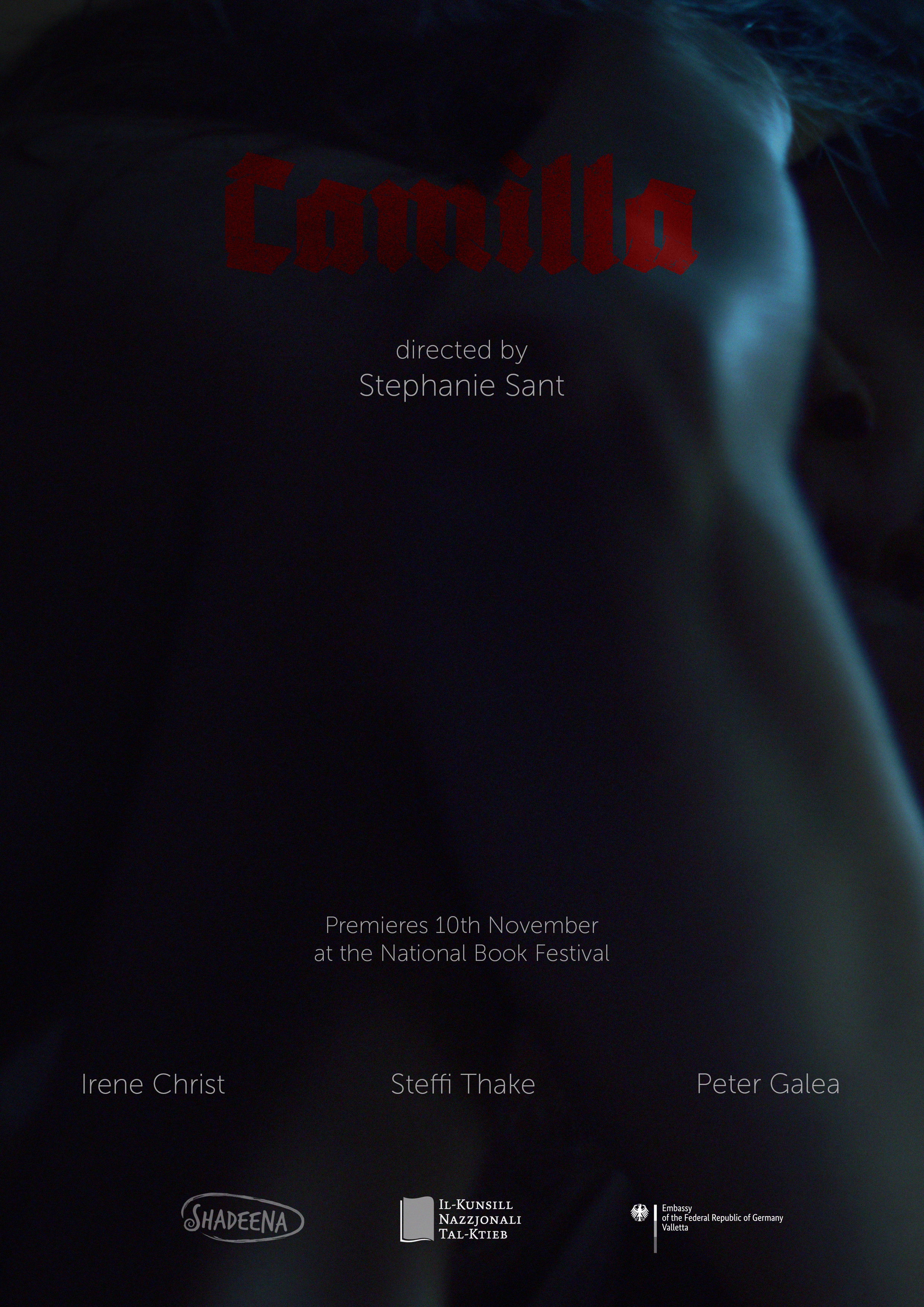
Camilla_Poster_004

Camilla‘ was co-written by its director Stephanie Sant and myself, produced by Martin Bonnici of Shadeena Entertainment and made possible thanks to the National Book Council (Malta), after it won its Short Film Contest in 2018. The source material is taken from Azzopardi’s award-winning, female-centered anthology Kulhadd Halla Isem Warajh, and in adapting the story I did a bit of archaeology of my own, calling up Laura from Le Fanu’s ‘Carmilla’ to serve as an audience stand-in and ultimately, protagonist, in the interest of keeping the enigma at the root of the titular character intact.

Both roles were played with sensitivity, grace and quiet potency by Steffi Thake and Irene Christ, and I couldn’t be happier with the end result.

‘Camilla’ is now free for all to see on YouTube, and I hope you enjoy it.

Talking Camilla & Two on Taħt il-Qoxra | Radio Interview (Maltese)

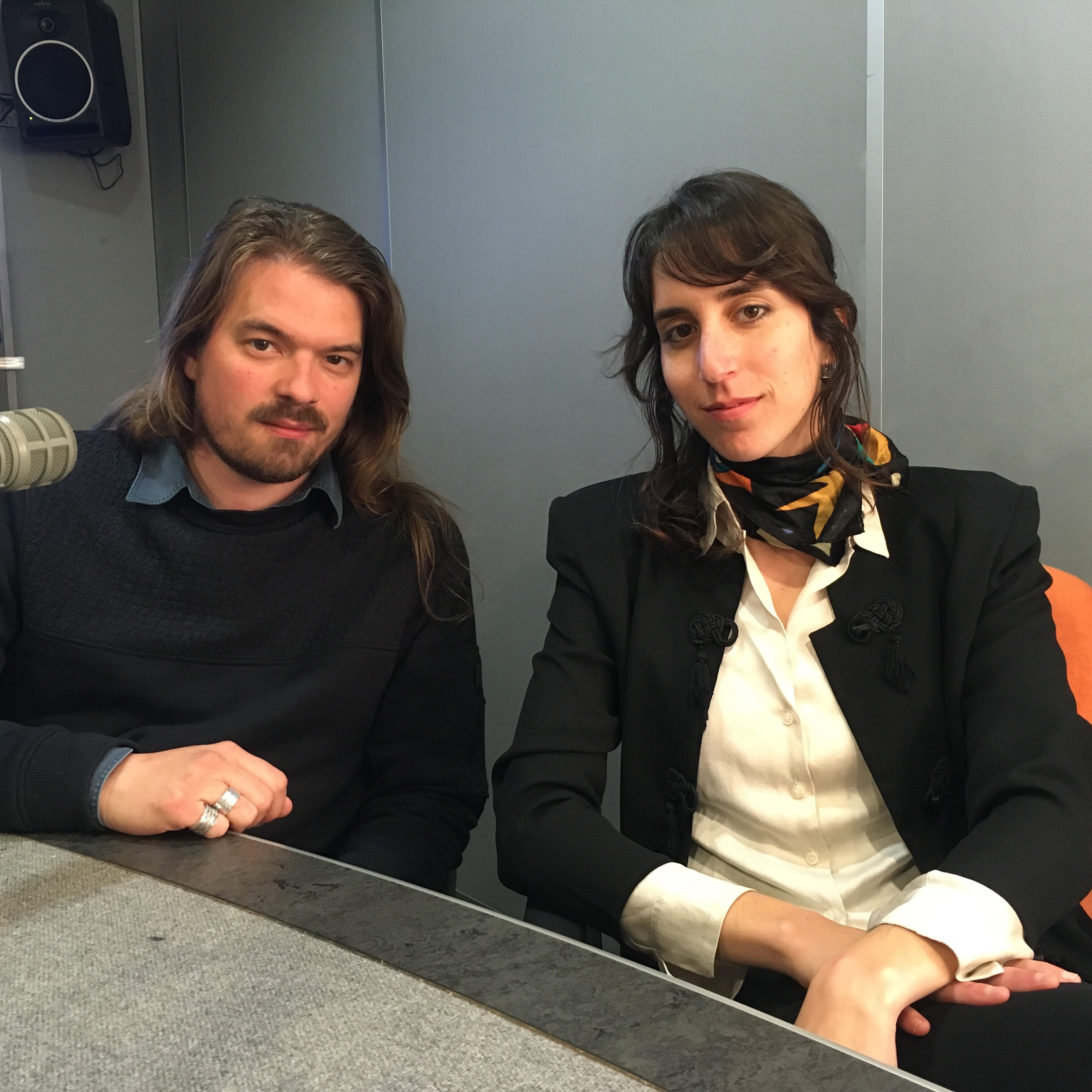
Though the bulk of this weekend was taken up by that annual and very much welcome celebration of rock, punk and metal in my very own adoptive hometown — Rock the South — I also got the chance to make a happy pit stop over at the national broadcasting studio to record an episode of literary radio show Taħt il-Qoxra (‘Under the Cover’), hosted by Rachelle Deguara and broadcast on Sunday on Radju Malta.

It is now online, and you can have a listen by clicking here.

taht il qoxra

Joined by my co-writer on ‘Camilla’, Stephanie Sant (also the short film’s director), we delved into how the short film came to be; from my seizing of that rare and frenzied jolt of inspiration that led me to combine Clare Azzopardi’s subtle-but-cutting short story with Joseph Sheridan Le Fanu’s ‘Carmilla‘ as I jotted down the treatment; to Stephanie lifting the lid — somewhat — on the historically intricate backstory that served as our ‘true north’ for two key characters.

IMG_20180806_132441

Asked about how the indigenous film industry can up both productivity and quality, we jumped on the chance to evangelise the importance of having a solid script, while lamenting the prioritisation of film servicing over production in the local sphere.

All of this is burying the lede somewhat for me though… since the interview had to be done in Maltese given the programme’s format, approach and target audience, I couldn’t exactly wing it. But a spot of rehearsal earlier on seems to have done the trick, and the ensuing interview flowed along quite nicely, I felt.

10174875_507381326038147_445416733_n

Towards the end, I also got a chance to talk a little bit about my debut novel Two — which is about Malta but is in fact written in English — just a few weeks shy of its fifth birthday. I’m glad that people are still keen to hear about its evolution and what it means to me, which is a great deal, even if projects like ‘Camilla’ are shinier and more exciting right about this point in time.

On that note, watch this space for news on future screenings of ‘Camilla’ — more info as soon as we have it, which will hopefully be pretty soon.

***

Watch the trailer for ‘Camilla’ here

Find out more about Two here


Easter Gothic | BILA, Camilla, Inheritance

Easter is approaching on this once-aggressively Catholic island, which is only marginally less so nowadays, as this snap I took a couple of days back gloriously, dramatically illustrates:

gudja

Easter of course also means spring in full swing, and the twisty turny weather that it brings with it has left me feeling a bit ‘off’ on a few days here and there, where drowsiness becomes the order of the day and where you feel abandoned to the mercy of the uncontrollable climate-gods and their whims — they are in you, controlling your moods and there’s not much you can do about it. Both humbling and annoying in equal measure, but I also know it’s nowhere near the deluge that is the summer-swelter juggernaut, for which I am subconsciously preparing with no small amount of trepidation.

But come rain on shine, my penchant for the cooling moods of Gothic melodrama will remain unquelled, and it’s not just the above photo that stands as proof of this. Recently, the punk-metal band BILA (no, they’re not all that sure about their genre-configuration either — I asked) got me on board to participate in the music video for their song ‘Belliegha’, in which I was tasked to play a folk monster by the video’s director, Franco Rizzo.

The no-budget, three-day shoot ended up blossoming into a glorious display of pulpy goodness, and it was about as fun to shoot as it is to look at, I reckon. You can check out the whole thing here. For those of you on the island and keen to hear more, BILA will be performing at Rock the South on April 14.

The Belliegha’s aesthetic certainly lies on the (deliberately) crummier side of what I’ve just been talking about, but we also had a chance to once again showcase our more elegant attempt at the Mediterranean Gothic during past couple of weeks, as the National Book Council invited co-writer/director, producer Martin Bonnici and myself to speak about our short film ‘Camilla’ at the Campus Book Festival.

camilla campus book fest

Flanked by Martin Bonnici (left) and Stephanie Sant (right) at the Campus Book Festival, University of Malta, March 29, 2019. Photo by Virginia Monteforte

The event was focused on adaptation, translation and subtitling, and to this end we were thankfully joined by Dr Giselle Spiteri Miggiani from the translation department, and someone with tangible experience of subtitling for television and cinema.

Despite having premiered back in November, it feels as though ‘Camilla’s journey into the world is only just beginning. Some encouraging feedback and an overall sense of enduring satisfaction with the work as a whole — bolstered by the memory of just how smooth a project it was to put together — leaves me with a decidedly un-Gothy optimism about its future.

But true to the spirit of fertility, resurrection and renewal that also characterises this season and its many associated festivals, there’s another bun in the oven that appears to be just about ready for consumption.

inheritance

After some five-odd years of rumination, regurgitation and tinkering, the fifth draft of a horror feature I’ve been working on under the auspices of the aforementioned Martin Bonnici appears to be production-ready.

Of course any number of things can happen in the run up to finally getting this thing filmed, but I can’t help but let out an extended sigh of relief at finally finishing a draft of ‘Inheritance’ that’s about as smooth as I’d like it to be — with the required suspension of disbelief being dialed down to a minimum, the dialogue as lived-in as it’s ever been, and the narrative beats aligned to both character motivation and the story’s thematic underbelly.

I’ll have to keep mum on details for the time being, not least because a jinx at this stage of the film’s evolution would be particularly heartbreaking. Suffice it to say that the project marks the fulfilment of a vow made back in 2014, on national media. A vow to make the Maltese cinematic space just that little bit punkier and weirder.

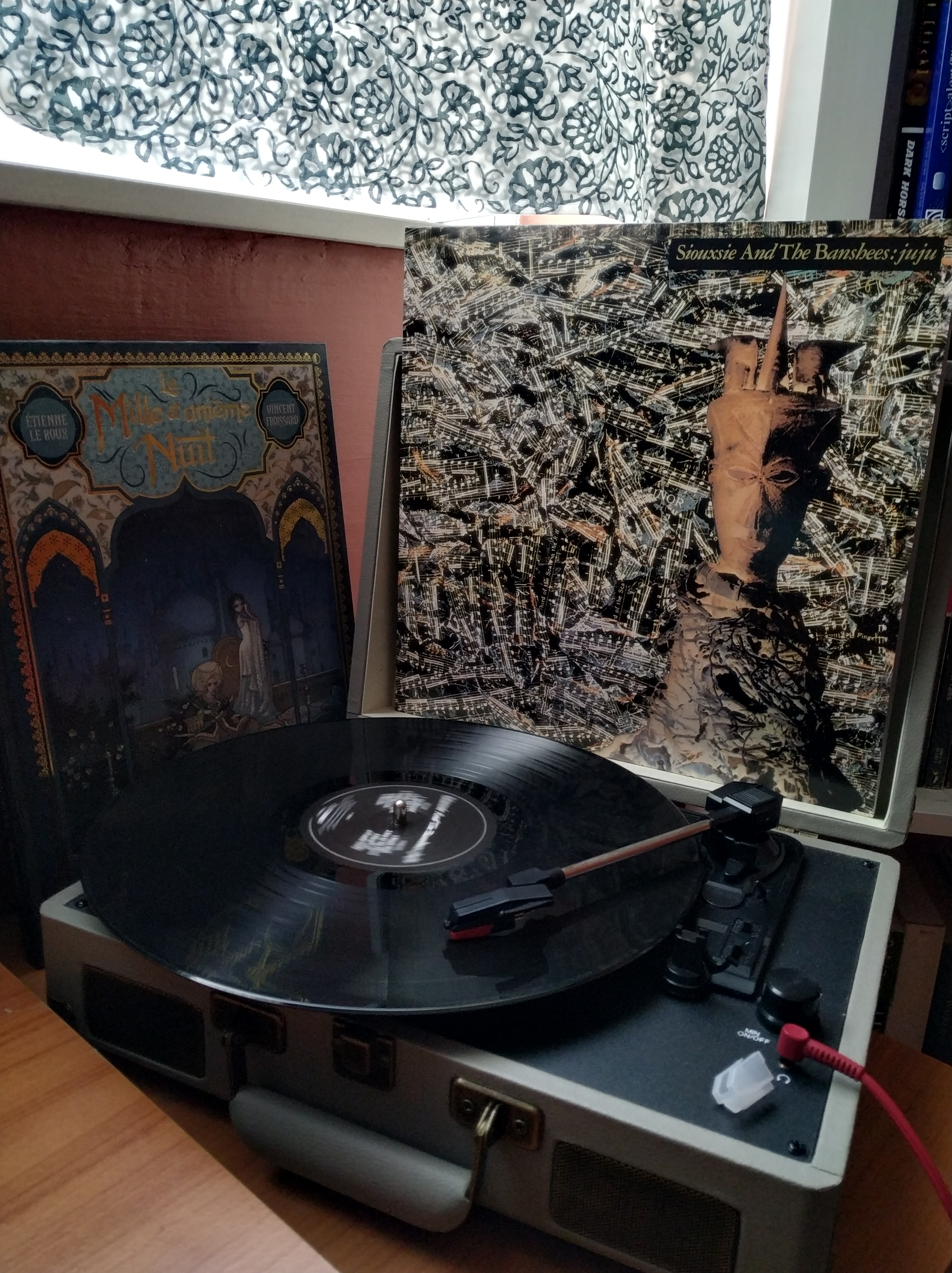
This all feels like good juju, since summer is approaching. And carving out a pretty alcove of darkness feels like just the thing. Take it away, Banshees…

banshees

[WATCH] Literature in the Diaspora & Interview with Nikola Petković

The National Book Council of Malta has uploaded two events that I was happy to be involved in during the National Book Festival, which this year took place — as ever — at the Mediterranean Conference Centre in Valletta between November 7 and 11.

First, there’s the recording of ‘Literature in the Diaspora’ — a conference on the subject that I chaired and which included an eclectic selection of speakers, among them Lou Drofenik (Malta/Australia), Nikola Petković (Croatia), Vera Duarte (Cape Verde) and Philip Ò Ceallaigh (Ireland). 

It is of course a huge subject to have to tackle, a fact that becomes even more challenging once you consider your time limit and the desire to accommodate the various viewpoints on offer. But the main take-away from it all, I think, is an embrace of the inherent variety that lies in the diaspora, and a need to resist cut-and-dried ideas of what narratives about nationality should be about, and how we should respond to them.

Next, I was happy to get a chance to ‘zoom in’ on one of the speakers at the conference — the Croatian author and academic Nikola Petković, during a chat about his novel ‘How to Tie Your Shoes’ — which was significantly translated into English by the author himself.

The dynamics of self-translation were one of the many subjects we touched upon, in a conversation which I’d like to think ran as wide a thematic gamut as the prickly, bitter and wrenching ‘confessional’ novel itself, which uses a heavily autobiographical story to touch upon the patriarchy, national identity and the fallout of the Yugoslav Wars.

When you’re done with those, do check out the remaining videos from this year’s edition of the Malta Book Festival, uploaded on the National Book Council’s YouTube channel — an interview with special guest Naomi Klein conducted by my colleague Matthew Vella being among them.

Of course, it’s hard to deny that the highlight of the festival for me, however, was the premiere of Camilla, the short film that I co-wrote with director Stephanie Sant and adapted from the short story of the same name by Clare Azzopardi, with a dash of Sheridan Le Fanu’s ‘Carmilla’ thrown in to help the shift from page to screen and indulge our vampiric tendencies further.

Brought to sumptuous life by producer Martin Bonnici and his team at Shadeena Entertainment — a process aided in no small part by the National Book Council’s funds — it was a pleasure to finally debut the film to an enthusiastic audience on November 10, and I look forward to the next stages of its distribution. Watch this space.

WhatsApp Image 2018-11-12 at 17.09.49

A representative sample of the team behind ‘Camilla’ (dir. Stephanie Sant, centre)