Keep your feasts and keep your famine

There’s something surreal about still being able to glut on a banquet of streaming material as the Hollywood strikes rage on in the background.

Add to that the ‘feast or famine’ vibe of my own personal summer vs autumn streaming experience: there was very little new stuff I wanted to watch over the summer, and then October came along and I’m once again spoilt for choice.

Not that this is a new mood for me. For all the economic chaos we’ve been labouring under in the Western world since 2007 or so, that doesn’t really seem to apply to cultural consumption. Audio-visual “content” is piped in at a regular pace through our obedient army* of trusted apps.

The “TBR” pile only grows and grows, and in my case, twists and morphs into Cronenbergian variants as I give up on one pile to forge another, confident in my prediction that this time, this will be the one that gets devoured.

Ready for them re-reads

This all stands in marked contrast to how I remember experiencing culture in the ’90s. As a geeky son of emigres who lived in Malta and spent summers back in native Serbia, but who was trained to desire the globalised products of the Anglophone sphere, I was often left blue-balled by my inability to grasp at all the stuff I wanted — nay needed — and required to consume. Consume, of course, on the basis of an imagined diet whose prescription was as vague as it was specific.

Getting comics in Malta was nigh impossible at the time, though there was a grassroots ‘comics club’ established by a pair of passionate — though often frustrated — friends who often treated its members as foundlings… which, in many ways, we were: orphaned in our need to latch onto story-products which would not otherwise have reached us were it not for their benediction.

The lack of a foundational cultural identity — or rather, a fragmented one that I wasn’t particularly keen to embrace or even poke at, given that Serbians were officially the aggressors in the nineties’ most significant conflict, rudely blotting the End of History with its own traumatic fallout — is perhaps what led me to latch onto various subcultures: comics were one, metal music was another.

Funnily enough, our trips to Serbia were particularly useful when it came to the latter. The mess of the post-Milosevic era meant that bootlegs could proliferate with impunity — public television channels even aired brand new cinema releases on their evening schedule — so we’d end up taking a bunch of CDs home and gain some degree of bragging rights with out metal head buddies.

Because for all that it was still struggling under the weight of a post-war depression, Belgrade in particular remained a European cities, and subcultures still functioned with an historic sense of purpose, and kindred spirits could be found if you knew where to look. Malta, for all its aspirations of being an up-and-coming place, still operated on a provincial logic.

This was also why the rapid rise and fall of Napster — whose fall was made largely redundant by the floodgates opening up to handily-available variants — was a balm to us in Malta. Suddenly, we could all be on the same page as our international counterparts. Metal Hammer and Kerrang were no longer dispatches from the future.

And yet, fast-forward to the present day, and what I look forward to most re-read season. This is how I’ve unofficially dubbed autumn, over and above its many reliefs and delights (ostensibly cooler weather at some point — climate change permitting — the excuse to binge on horror faves ‘cos Halloween, etc etc.).

It’s about acknowledging a split. On the one hand, there’s so much desirable stuff to consume. On the other, all of that noise is just so piercingly alienating. And caring for the self is all about remembering what makes you, you. The foundations built by all those things that left an impact, for some reason.

This runs counter to the prevailing cultural narrative, of course, which is probably why I always feel an internal pushback whenever I try to implement it. But the relief of re-reading a favourite book is immediate, and immense. It’s a relief akin to the best of drug-free hedonistic pursuits: sex, swimming and a volcanic eruption of laughter during a friends catch-up.

Consumption is what sold us the end of history. But we were nowhere near the end, of course. And regardless, there’s always been a ton of history to feast on in the meantime.

*though a master-slave dialectic may be the more appropriate metaphor here.
How Star Wars is like Christmas | Holiday nostalgia

Star-Wars-Force-Awakens

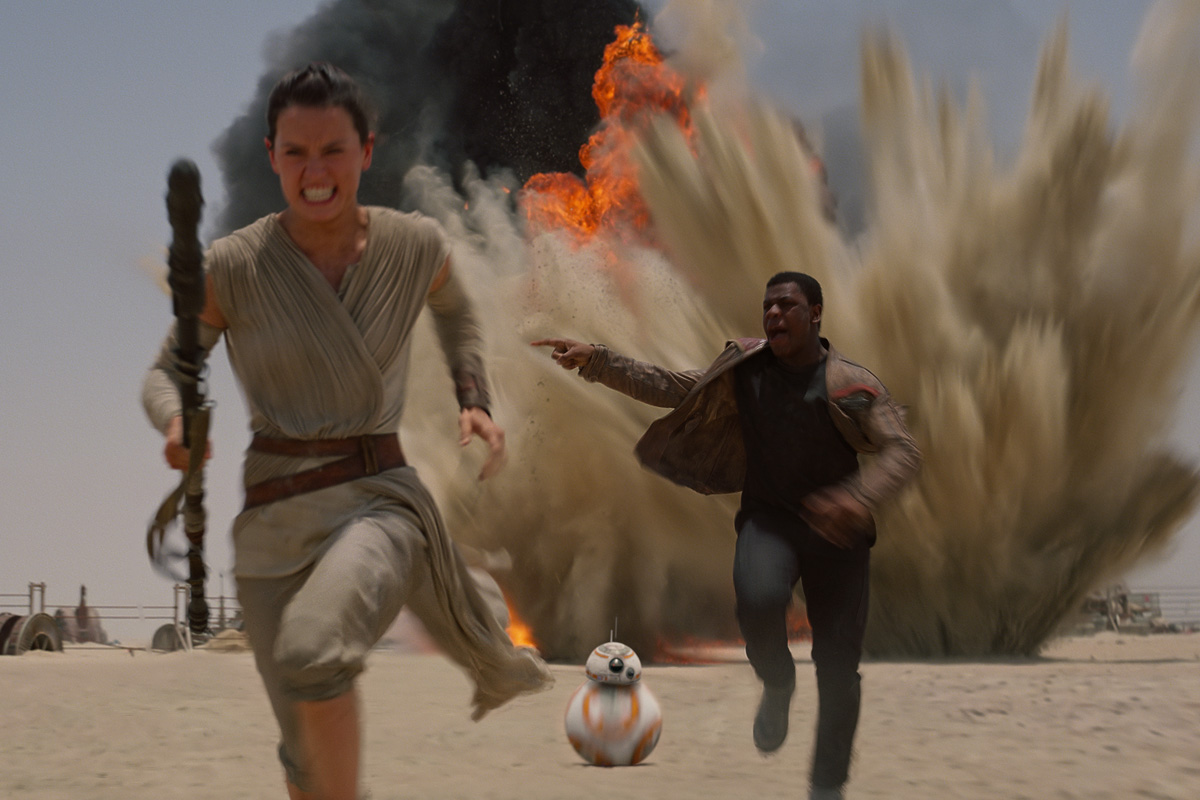
The force awakened come Christmas time. Coincidence? I think not.

My happy places are: Valletta in various moods and times; Sliema at twilight and for lone, spontaneous walks; Attard-Balzan-Rabat for indelible memories and undeniable, cosy beauty and, perhaps topping it all, the childhood fairyland that thankfully remains much the same, Banja Vrujci.

vrujci

Banja Vrujci

These places and others are what leave an impression – what reminds me of the raw matter that is true happiness and how it can continue to spread when “recollected in tranquility”.

And in many ways this is how the Christmas period functioned, for me. It’s not a family tradition and latterly it’s become little more than an annoyance for various reasons, but at least it gives me the perfect excuse to eschew all else – intellectual and otherwise – and my quiet little place amid everybody else’s celebratory din helps me to remember all the things that are important to me.

These often come in the form of memories, of course. What we cherry-pick from our past is a very important indicator of what remains important to us.

As I suspect is the case with most people, I’ve been placing quite a bit of stock on my ambitions of late. But such a relentless focus on them means fatigue sets in quick and fast.

So I’ve come to appreciate Christmas – most especially Christmas Day itself – as a kind of oasis.

Just as human beings have the misfortune of being animals saddled with the puzzling gift of self-consciousness – with all its problems – this also means that with enough self-awareness and emotional balance, we can fabricate things about ourselves, to ourselves, for our benefit.

*

Speaking of nostalgia, and variants of it… I really enjoyed the new Star Wars movie. Star Wars, too, is a lot like Christmas (or is it Christmas that’s a lot like Star Wars?).

Because just like Christmas, the franchise is a stark reminder of the pervasive power of capitalism – how it truly has the entire world in its grip, how it appropriates all stories and pieties into its gaping maw to further perpetuate a relentless desire for consumption.

The Christmas story is put aside in favour of “the gift economy” and our expectations for the holiday are calibrated to ‘spend and receive’ – in the same way as our beloved Star Wars characters are intrinsically wended to a film production and distribution model that views the movie and its merchandising as basically interchangeable.

But like Christmas, Star Wars still means a lot of things to a lot of people.
The saga – now in its seventh ‘episode’ – may be suspect in its method of delivery, but what it stimulates in people can’t be denied either.

It’s lovable alongside the cynical nature of its (internal or external?) dynamics, not despite of them.

Of course none of this is ‘natural’, and neither is it self-evident. Like the very act of writing an ‘essay’ – etymologically referring to the process of working things out – all of this is built out of opinions and perceptions chiseled out across time – and it’s entirely open to scrutiny.

But we can choose the fabrications that work the best for us – applying the usual caveat that this is a power we should try use for good and not ill.

But the decision to release The Force Awakens during Christmastime strikes me as a very shrewd fabrication indeed.

*

party1

Party at Chez Reljic

New Year’s Eve, in fact, carries more weight for me and my family. This is partly down to national habits – it’s the big blowout celebration of the season in Serbia, gift-giving and all – and family habits too: my sister and I now carry the baton of organising a party each year.

The day after, dazed if not hungover while munching on leftovers, often tends to be an emotionally woozy time.

In more recent years, revisiting the apartment we grew up in to host the party has come with an edge of melancholy. Gentrification means that it’ll soon be beyond my father’s price range (he still rents there) and all of our memories of the place will remain just that.

It’s another reminder of just how important it is to keep mindful of the things that matter. Memories will never be solid, but you should work hard to make them as solid as possible.

*

Have a great 2016, all.

Albert Camus

Albert Camus would have been 100 years old today. 

What I remember: Reading The Stranger at Sixth Form. Hating the sterile Everyman edition I found at the school library. Loving the equally austere but slightly more stylish silver-grey Penguin edition, with the footsteps in the sand.

He was a softer version of Nietzsche, to me. Nietzsche pummeled me. Camus let me in. I could see his philosophy working, somehow: absurdism felt both sexier and more managable than nihilism – or raging anti-nihlism… guess it depends who you ask. 

It’s his short stories that remain etched in my memory. I’ll never re-read The Myth of Sisyphus. I doubt I’ll ever re-read The Stranger or The Plague either. But The Exile and the Kingdom felt friendlier… more humane than anything I’d ever encountered from his oeuvre. The sweeping intellectual make-up of ‘Sisyphus’ and The Plague; the blunt, macho minimalism of The Stranger… there’s none of that in The Exile and the Kingdom. 

The fact that someone so intellectually flinty and sharp could allow themselves sentimentality to seep through; the fact that he showed himself to be artistic, to be open to occasional, experimental bouts of emotion in prose… 

It was to be the last time I engaged with Camus, but it felt like a good way to round off the relationship. (Of course I could still get into his writing again, of course I could dip into the books every now and then and still derive pleasure for them. But what I mean is that the ‘phase’, the fevered season of devouring them wholesale, was gone.)

Feeling the pull away from the core of his work, I moved on to Camus but took some of the absurd with me. I’d like to think it’s still with me, anyway. The scepticism of any definite moral or philosophical impositions. The framing of human endeavour against something ultimately unpredictable, but not necessarily malevolent or cold. Acknowledging our passion as something fiery and real and justified in every way, even if we’re not sure where it all comes from, and where it’s all going… 

This could all just be projecting. My memory of Camus’ work and its implications could be faulty (and, of course, it could be that I never quite grasped if fully in the first place). But that’s what I remember when I think back on it. 

A solitary figure – alone but not lonely. The world spinning on regardless, and you jumping on the carousel.