Carmy’s confession in the final episode of the fourth season of ‘The Bear’ is an existential wrecking ball, all the more so because by now, loyal viewers can easily – nay, with the glistening, wretched smoothness of tragic inevitability – chart the origin of that realisation.
A clenched man who has willed himself into a new persona that is all about end result, all about proving yourself at every turn… the embodiment of the truism that ‘you’re only as good as your last [project]’.
Of course you don’t know what you’re like, you dumb fuck – you never even considered that you could be you. That you could be *a* you to begin with.
In Carmy’s case, the the surface story-metaphor and plot engine is of course tied into him being a superstar chef – a career-rung he only managed to climb after accumulating a fresh barrage of abuse to complement the legacy-pain he suffered under the auspices of his volatile alcoholic mother.
But like any good metaphor, it is not there to exclude and close off but to include anyone willing and keen enough to pay good attention to what’s going on.
Showrunner Christopher Storer must have made Robert McKee proud, whether he knows it or not or whether he likes it or not. I’m referring to one of my favourite takeaways from McKee’s ‘Story’, in which McKee is actually channelling someone else – I forget who it is, and I actually think it’s one of those bona fide lines whose original utterer has long since been lost to memory, and it’s now become community property – and it’s this:
“If the scene’s about what it’s about, you’re in deep shit.”
Of course The Bear isn’t ‘just’ about cooking. Of course it’s not ‘just’ about the travails of running a catering establishment (or two) in downtown Chicago.
But Carmy’s mistake is assuming that life can in fact be just that. That if life becomes limited to ‘just’ that one thing, everything will be okay. After all, this is a form of self-annihilation that he can easily justify and perpetuate because it has the potential to create joy for others. Who doesn’t love good food? And the community feeling of a restaurant – HIS restaurant – clearly justifies him erasing everything else by that. He’s performing a service. Nay, he’s a martyr.
Until the cracks start to show. Until we realise about how his ego is running things to the ground. An addiction to excellence is just another addiction after all, and you chase the high in ever more elaborate ways. In Carmy’s case, this becomes manifested in him changing the menu every night to accommodate a twisted idea of greatness and abundance, draining both his staff and the restaurant’s already-on-thin ice resources.
That is the hypnotic fallacy that looms large over many a quest for ‘greatness’ in any given field, when it’s employed as a tool of evasion by damaged men (and let’s face it, it’s mostly men who are afflicted by this because it’s mostly men who get access to this arena – see Sydney’s journey in The Bear itself as a useful bit of contrast).
“If I break through an undeniable barrier of greatness all of my previous problems and traumas will become irrelevant because I will have ascended a higher plane, where I will be impermeable and indestructible, and the thought of my mother driving her car through the living room won’t ever bother me again, ever. It’s like that. Trust me, it’s like that. It will be like that. Believe, just believe.”
But Carmy doesn’t want to become a god. What he really wants – what he really needs – is to become a real boy. He’s a Pinocchio with no Gepetto and no fairy and no Jiminy Cricket. (The Whale is the Bear is the bear is the bear…).
And so much of Hollywood is ostensibly about this. So much of our mainstream storytelling pays lip service to an idea of what “just be yourself” means. ‘The Bear’ even risked having its version of the manic pixie dream girl in Molly Gordon’s Claire (she even had a cutesy nickname: Claire-Bear!) but luckily that trope was swerved into an opposite pathway and in so many ways, it could only ever be that way: who could possibly be more manic than the Berzatto’s anyway?
But Carmy is so divorced from an idea of a foundational self that even the mere idea feels ungraspable. Jeremy Allen White’s glassy, thousand-yard stare isn’t a placid, contemplative mode – he’s reaching deeper and deeper into a vast nothingness.
All of his motions are the repetitive striving of a crazed phantom. He has no access to generative movement, growth and interaction and so settles into what he knows and just runs in place.
If only his food production were a ritual. It is a ritual, or it could be. If only the running in place were the ecstatic dancing of an indigenous tribe calling forth rain, a good crop… anything that would serve the wider community.
But instead, it’s a stomping down to silence another tattoo. A beat whose sole aim is to stomp on the mere notion that you are a person at all.
Like most nerds of my generation – lapsed or otherwise and to varying degrees of commitment and intensity – I cling hard to the pure memories of my earliest viewings of Peter Jackson’s The Lord of the Rings trilogy.
While the books weren’t childhood favourites – I was knee-deep in Marvel comics up until my early teens – I did bone up on them while the films were still in the early stages of pre-production, goaded on by another close friend who would move back to Canada with his family before we would get a chance to see them in the Maltese cinemas together.
But there were other friends who would’ve filled the gap in the meantime, some of whom I was, by this point, playing Dungeons and Dragons with.
So in my mind, this period now forms a mash-up of time where a store of fantasy imagery was taking root in my ‘mind palace’, which would serve as a source of comfort and self-identification for years to come… in many ways it still serves that function to this very day, albeit in somewhat altered form.
I’m thinking about all of this after finally having caught up with the second season of The Rings of Power – Amazon Prime’s bid to secure their own Game of Thrones franchise by pre-committing to five seasons of the thing and even launching a reserve long-form adaptation in the form of The Wheel of Time should this one go bust.
Charlie Vickers as Sauron and Charles Edwards as Celebrimbor
This cynicism seeps through the operation and, unfortunately, I feel it’s particularly evident in this second season, which toggles in a perfunctory fashion from one of the many sub-plots to another, the only real connective tissue being the long-game machinations of Sauron (Charlie Vickers): here a svelte Machiavellian figure whose Season One disguise as sea-faring lone wolf ‘Halbrand’ pulled the wool under the eyes of none other than Galadriel (Morfydd Clark) herself.
(In Halbrand-mode, he could’ve easily fronted one of those neo-Britpop acts… there’s something disarming in the image of Galadriel bopping to Kasabian.)
The thing is, I was quite chill about The Rings of Power when it first appeared. Unlike many others, apparently, I was willing to give Season One a chance, with its slow burn and trickle of ‘new’ characters and fill-in-the-blanks exercises riffing on the sketches of lore the showrunners and their writers had to work with.
It felt, at the very least, the start of something that could grow into an organic story with its own heartbeat… and Galadriel-as-fundamentalist struck me as a bold-enough narrative choice which, I suspected, would yield some interesting detours further down the pike.
But, hand on heart, I can’t quite say that the second season is exactly rewarding my investment on this front. Where we previously had a gorgeously photographed and put together spark of potential, now we have that, only with the potential snuffed out in favour of a flattening and overstretched story that is really just a set of fan-fictiony vignettes ticking off boxes, all scattered across disparate geographical locations on Tolkien’s famously vast and detailed map of Middle Earth.
It’s yet another reminder of how the magic we associate with fantasy literature in particular – that thrill of immersion all too often written off as simply ‘escapist’ – has very little to do with by-the-numbers tropes and settings and everything to with an innate poetry that speaks to a wider yearning.
The yearning for a world which is more mysterious and more alive, where traveling means discovery, danger and difference and where transcendence can be mapped out and understood but never replicated in rote human terms.
But replication is so ingrained in pop culture now. In a sense, it is its only real faith. The belief that for something to work – for something to even be conceived – it needs to have worked before, and on a massive scale.
Rory Kinnear as Tom Bombadil
You can of course imagine that such an approach doesn’t do too well when attempting the kind of fay whimsy that is very much part of Tolkien’s fictional universe, no matter what the more macho strands of the fandom would have you believe.
It’s why the sequences with not-(yet)Gandalf and his duo of not-Hobbit buddies are the dullest in the show, and why Rory Kinnear’s Tom Bombadil, while certainly a welcome presence on screen after being infamously excised from the Jackson trilogy, feels just like another placeholder mentor figure – a wizard whose only USP is a higher quotient of chill than his counterparts – instead of a baffling and refreshingly unexplained spirit of sylvan inevitability.
Perhaps this is why The Rings of Power is at its best when zooming in on still-human-shaped Sauron and his horrifically ingenious acts of arts-and-crafts based gaslighting. Let’s face it, it’s the all-too-human cruelties on lurid display that helped Game of Thrones nab a healthy swathe of the non-nerd audience, because this is stuff that soap operas are made of and as long as we want power, sex and exist among people who desire the same, the electric charge of it will never cease to appeal.
So it’s clear that the showrunners are confident in their abilities to tighten the noose around poor Celebrimbor(Charles Edwards)’s neck, as Sauron – disguised as the outwardly benign jewellery savant Annatar – makes good on his moniker as the Great Deceiver, and how.
For all that the show is littered with instances of orcs, giant spiders and other gory creatures whose mere presence is meant to trigger our gag reflex, none of them can hold a candle to the gross yet precise – precisely so gross because it’s so precise – way in which Sauron ingratiates himself into Celebrimbor’s workshop (really, the seat of this craftsman-monarch’s very kingdom). I don’t remember feeling this disgusted by a TV character since the John Paul (aka ‘The Prick’) from the first season of Bad Sisters.
Leon Wadham as Kemen
This is just about the only instance of genuine emotional frisson we’re allowed to feel during the season, where we’re allowed to wince and hiss at displays of moral callousness because how else are we gonna react? Same goes Kemen (Leon Wadham), the PG-13 Joffrey of the show: nepo-baby son to the scheming aspirant to the Númenórean throne and the custodian of the most smoothly slappable faces this side of Westernesse. (Thankfully, it’s a face that *does* get slapped once or twice already, though we’re meant to understand that his true comeuppance is yet to come and given how padded out the show is, this’ll be a case of delayed gratification for the Ages).
But there’s an elevated flip-side to all this. Namely, that Celebrimbor’s rise and fall constitutes a decent stab at a Greek-style tragedy. But this is the kind of stuff we’ve internalised a long time ago and now keep regurgitating with ease… and arguably, the real lasting value of Tolkien’s work lies in how he decided to side-step the otherwise ubiquitous Hellenic legacy in favour of the knottier and gnarlier brambles of Beowulf and the Norse Sagas.
Of course, you can never go home. (This is true of the denizens of Eregion in more ways than one, after Sauron’s done with them). Nobody’s asking a new show to try and rekindle the same magic we felt when we first read The Lord of the Rings or watched the Peter Jackson adaptations. (And if they are, they really should reconsider what they expect from their pop culture artifacts.)
My suggestion? Pick up The King of Elfland’s Daughterby Lord Dunsany. It’s a good deal shorter than both The Lord of the Rings – slimmer than any of its three books, actually – and you’ll likely work through it even quicker than you would sitting through this latest season of That Second Age Show.
It’s the kind of book that Tom Bombadil would’ve written, because Bombadil understands the world and its denizens better than they understand themselves, and can sing a story that still remains a song.
Like the vast slew of hard-hitting, boundary-pushing streaming TV shows that manage to both hook you along for an escapist journey that also makes you think of the world you’re living in, RIGHT NOW, for all that you live on a tiny speck of island in the middle of the Mediterranean and said shows would be conceived and shot oceans away.
(Though the latter may not always be true — some would be filmed closer to home, in jurisdictions with comparatively weaker film unions, but that’s a story for another day. Or is it?)
Shows like Beef, Dead Ringers and The Bear: a powerful but eclectic bunch (I know I’m late on the last one) and an example of the kind of stuff we’ve learned to yes, take as a god(s)-given gift without questioning its provenance.
But the currently-ongoing writers’ strike puts what we take for granted into real perspective.
Funny Feud: Steven Yeun and Ali Wong in Beef (Netflix)
When I posted to my socials about how much I was enjoying BOTH Beef and Dead Ringers, the enthusiasm came thick and fast for the former: a zippy-snappy comedy-drama forged by the joint behemoths of Netflix and A24; a charged melange of commercially friendly adrenaline-hit episodes and an arthouse-boosted satirical, observational backbone (that one of its two main leads is a professional stand-up comedian by day surely helped channel some that energy).
But few seemed to be aware of Dead Ringers, despite its starring the quasi-generation hopping, quasi-household name of Rachel Weisz (multiplied by two, no less). Here’s a show that seems to be playing all its cards right: like FX’s Fargo, it is a legacy reboot of a cult classic film — in this case, David Cronenberg’s 1988 surgical fever dream opera, conducted by Jeremy Irons times-two — and, again, it stars an actress we’ve had a chance to fall in love with over and over again in projects which range from award-baiting costume dramas to prestige espionage thrillers and endlessly rewatchable action-adventure capers. And this is hardly about Weisz taking a swing to give a newbie a chance: the show is penned by Alice Birch, a regular scribe for a little show by the name of Succession.
Double Trouble: Rachel Weisz in Dead Ringers (Amazon Prime)
But just like Variety‘s article on the matter states, the gold rush for shows has led to a saturation point that’s created an absurd scenario, where even projects with the marquee-est of marquee actors struggle to find elbow room in this crowded space: “Do you remember the Julia Roberts series on Starz last year? What was it called? How about Samuel L. Jackson’s series on Apple TV+? And they were good shows.”
Dead Ringers is also a good show. Not as easy to watch as Beef, certainly — for all the moral wincing Beef pinches at, DR squeezes the corkscrew in far deeper while cackling at your pain — but to me, at least, it brought back memories of another favourite yet hard-done-by programme: NBC’s (or should we say most emphatically above all, Bryan Fuller’s) Hannibal, once again starring a couple of Hollywood primed behemoth thespians in roles of a lifetime.
Both DR and Hannibal are pointedly indulgent programmes, more in terms of tasteful production design than anything requiring a surfeit of digital effects (though I’m sure its painterly bouts of bodily violence did require some tinkering in that regard). It’s the kind of stuff that gets made when both literal and figurative stars are aligned.
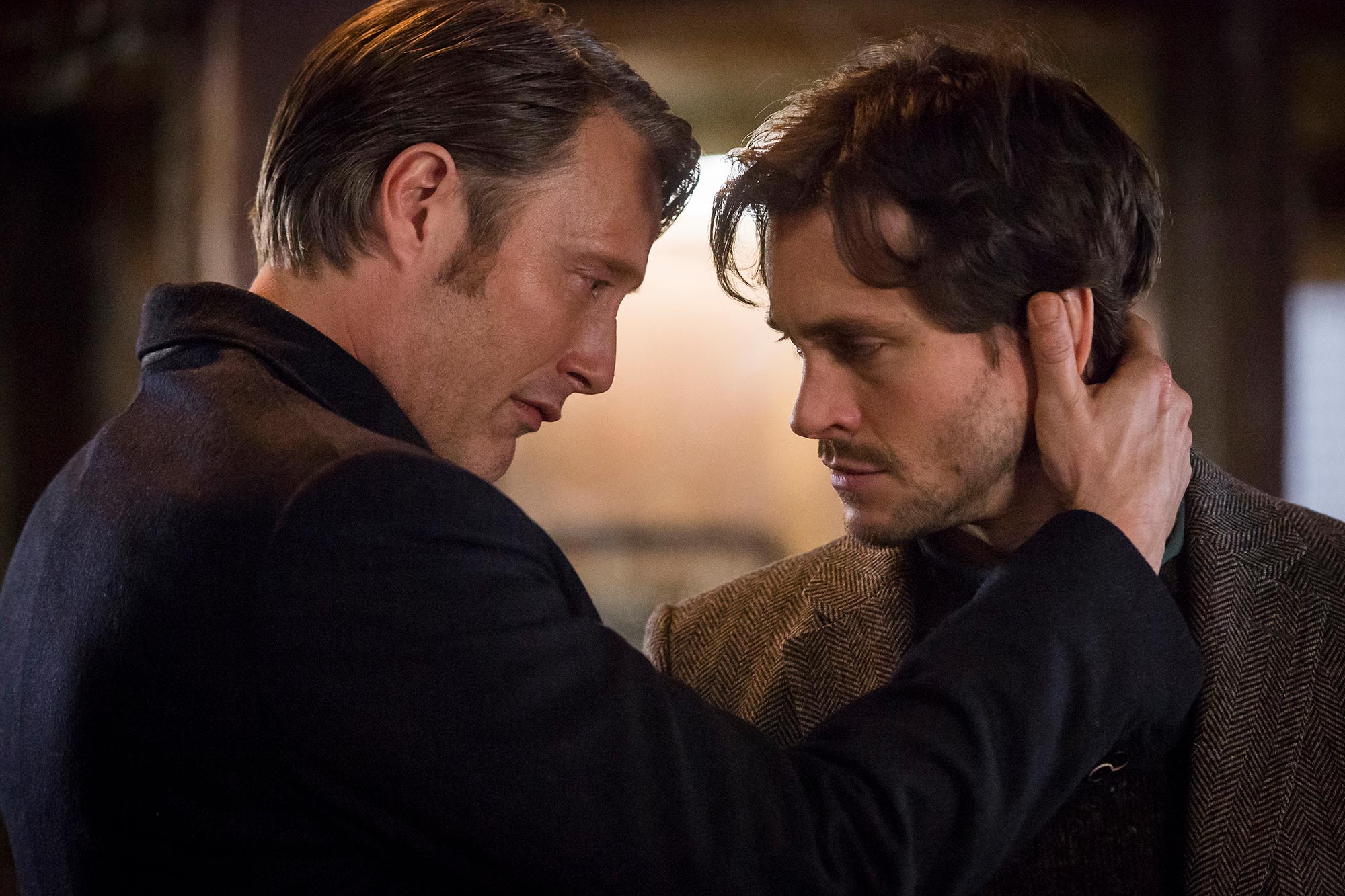
Love Crimes: Mads Mikkelsen and Hugh Dancy in Hannibal (NBC)
But they’re also the shows that risk getting buried under the avalanche of material that the streamers have insisted on churning out to appease the gods of growth. A malaise that has infiltrated many areas of our life, for sure, but that’s how it’s manifesting itself here, among the very shows that we settle down to watch after our own daily reckoning with what’s asked of us by late capitalism.
It may not be as baroquely pretty as DR or Hannibal, and neither does it attempt to chase the zeitgeist like Beef, but The Bear — whose characters traffic in literal beef! — may serve as the best compounded allegory for this mess.
Just like we tend to forget about the writers who toil away to conceive of the avalanche of shows we not only take for granted, but that we are actually spoilt for choice over, so would a (largely off-screen) clientele fail to consider the full extent of the sacrifices made by the chefs delivering up signature beef sandwiches in The Bear.
Pressure Cooker: Jeremy Allen White in The Bear (FX)
It’s not so much about stoking a dormant guilt in us. That would defeat the purpose, and even be counter-productive. It’s also not about some passive idea of ‘awareness’; of simply paying tribute and showing appreciation and then flipping back into default mode a second or two later.
But it may be about remembering that we watch these shows primarily because they explore the things that make us people… as stylistically exaggerated and/or excessively zoomed-in as they may be. And if the people making them are sidelined — either through dismal pay conditions or by defaulting to AI solutions — well, that deflates the whole point of watching these shows in the first place, don’t you think?
It’s been a bit of a strange month; something I’ll be delving into with cautionary coyness in a subsequent blog post. So much so that I’ve missed out on both writing some proper entries over here, and even simply putting up updates on cool stuff I’ve been involved in and invited to.
And one of these actually happened on exactly the day of the premiere of our last burlesque show — the latest thing I spoke about here in some detail before the hiatus. This was an interview for the television programme Wicc Imb Wicc (‘Face to Face’), put together by the National Book Council of Malta, recorded on the very morning of the premiere of Apocalesque. (In fact, beady-eyed viewers might just spot the remnants of hastily-removed cropse-paint eyeliner post-dress rehearsal the night before).
The interview is now up online for all of you to check out, should you be up for hearing an extract from my novel Two— read out by the show’s host, the actress Antonella Axisa — and/or hearing me be interviewed by the same Antonella about some of the key themes and plot dynamics of the book itself. That’s all before my favourite segment of the show kicks in, however: talking about some of my favourite and most energising books.
Among them are Mary Shelley’s Frankenstein, Judith Halberstam’s Skin Shows, Lord Dunsany’s The King of Elfland’s Daughter, Angela Carter’s The Infernal Desire Machines of Doctor Hoffmann, Mervyn Peake’s Titus Groan, and Moebius’ hallucinatory classic of a graphic novel, Arzach.
Find out more about Wiċċ imb Wiċċ here, and log on to the National Book Counci’s YouTube channel to watch previous episodes.
As I’ve mentioned in my last post, December took it upon itself to welcome me with a nasty sucker-punch of the flu: a freelancer’s nightmare in a season when all the clients want things done in bulk so that everyone can rest up during the holidays.
But one upside of it all is being able to soak in all the stuff I would have soaked in otherwise, but with an added single-mindedness… partly owing to the fact that I could do little else and so was justified in spending days on end just reading and watching things.
So here are some recent things I’ve consumed and enjoyed during that period… though some of them were either consumed or begun before the illness hit. Either way, feel free to allow them to double-up as gift ideas. Am sure the indie creators on the list would appreciate that especially.
Creatures of Will and Temper by Molly Tanzer (novel)
I was never too keen on the ‘& Zombies’ sub-genre of literature, if we can call it that. It just seems like such a one-trick-pony gimmick that to spread it out over an entire book — much less an entire unofficial series of them — just struck me as a bit redundant and silly.
Having said that, I did enjoy the Pride and Prejudice and Zombies film, in large part because director Burr Steers deftly shot all of it as a Jane Austen pastiche first and foremost, with the zombies having to blend in with the established ‘heritage film’ mise-en-scene, rather than overpowering everything into pulp madness once they do show up.
Rest assured that Tanzer’s novel — a meticulously put together gender-swapped take on Oscar Wilde’s The Picture of Dorian Gray — owes very little to the ‘& Zombies’ trend, save for perhaps this last element. When the supernatural element does rear its ugly head, it does so in world with firm period rules already established, and in a story about sibling angst that stands front-and-centre for the bulk of the running time.
The result is an experience that is both immersive and captivating; a Victorian pastiche and tribute to the legacy of Wilde that very much scratches those familiar itches, while also offering a fun, pulpy comeuppance in the end.
***
The Man Who Laughs by David Hine & Mark Stafford (graphic novel)
The last thing I did before getting sick was attend Malta Comic Con 2017, and a fun time that was indeed. Meeting old friends and new under the spell of our geeky obsessions is an experience that’s tough to beat. I also spent an inordinate amount of money on comics and artwork and no, I regret nothing.
Particularly when it concerns undeniable gems such as these — a work that once again draws on a literary classic, though one certainly not as universally lauded as The Picture of Dorian Gray.
As writer David Hine writes in an afterword to this adaptation of Victor Hugo’s L’ Homme qui rit — perhaps more famous for a silent film adaptation starring Conrad Veidt which in turn inspired look of Batman’s arch-nemesis The Joker — the original novel, a late-period Hugo miles away from the populist charm of a Les Miserables, is something of a convoluted, knotted beast whose socio-political digressions he’s had to cut down to ensure the story flows as well as it can.
Mark Stafford, ladies and gentlemen
Stripped down as such, and aided by tremendous illustration work from artist Mark Stafford, the volcanic melodrama at the centre of the story — and it is a melodrama, though perhaps in the best possible sense of the word — is allowed to come to the fore, and I practically tore through the pages as my heart raced, yearning to discover the fate of poor perma-rictus-infested Gwynplaine and his fragile adoptive family.
Stafford’s work really is tremendous, though. His grasp of the grotesque idiom works to highlight both the social horror and sublime tragedy that frames the whole story, and the chalk-like colouring technique adds that something special to the feel of each page.
The assured lines and deliberate exaggerations brought to mind the work of Lynd Ward, and in any case — here’s a story that definitely shares some genetic make-up with God’s Man, dealing as it does with the venal, compromising nature of the world.
***
Winnebago Graveyard by Steve Niles and Alison Sampson (comics)
Collecting all the single issues of the titular series, this is another gorgeous artefact I managed to pick up at Malta Comic Con, this time from its affable and keenly intelligent artist, Alison Sampson, who was kind enough to sign my copy over a chat about the comic’s intertextual DNA of ‘Satanic panic’ and folk horror.
It’s a lovely-to-the-touch, velvety volume that comes with generous backmatter expounding on the same DNA, but what’s in between isn’t half bad either.
A simple story about a family being shoved into a deeply unpleasant situation — i.e., an amusement park that dovetails into a Satanic human-sacrifice ritual — is elevated away from cliche by Sampson’s art, which flows from one panel to another — often letting rigid panel divisions hang in the process, actually — in a grimy-and-gooey symphony.
***
Thor: The God Of Thunder (Vols. 1 & 2) by Jason Aaron & Esad Ribic (comics)
More comics now, though this one only confirms that I’m as much of a lemming to the machinations of popular culture as anyone else. To wit: when Comixology announced a discount-deal on a bunch of Thor comics in the wake of the brilliant and hilarious Thor: Ragnarok, I bit like the hungriest fish of the Asgardian oceans.
I’m glad I succumbed to this obvious gimmick, though, because it gave me the chance to catch up with this gem of a story arc, which gives us three Thors for the price of one, all of them trying to stop not just their own Ragnarok but the ‘Ragnarok’ of all the gods of the known universe, as the vengeful Gorr vows to unleash genocide on every single divine creature out there.
The two storylines out of the run that I’ve read so far — ‘The God Butcher’ and ‘Godbomb’ — felt like such a perfect distillation of everything that makes superhero comics work. A grandiose, epic story of ludicrously huge stakes, sprinkled with a necessary indulgence in pulp craziness (Thor on a space-shark, anyone?) which is in turn deflated by the strategic deployment of self-deprecating humour (the sarcastic back-and-forth between the Thors is a pure delight).
Ribic’s art seals the deal though. His gods certainly look the part — they may as well have been carved out of marble — helped along by the clean, gleaming shimmer that is Dean White’s colouring work.
While I eagerly look forward to devouring the latter half of the series, this rounds off a great year in Norse-related literature for me, during which I’ve enjoyed Christine Morgan’s across-the-board excellent The Raven’s Tablefrom Word Horde, while I’m currently devouring Neil Gaiman’s Norse Mythology — a book that so far displays the popular myth-maker’s slinky and pleasant way with words, if nothing else.
***
The Punisher (TV)
Another Marvel product that needs no signal-boosting for me, but which I found gripping enough through its 13-episode run, for some obvious and less-obvious reasons. Yes, updated as it is to insert a too-easy critique of the American military-industrial complex (though really, only of its “bad apples”), Frank Castle’s adventures offer an easy cathartic kick.
But that wasn’t what stayed with me. What stayed with me was Frank’s very nature as a “revenant” — he’s even referred to as such by another character at one point — and how that’s hammered home by the fact that he’s made to operate from an underground lair as his true self, but that when he returns temporarily to the surface, it is as if he were alive again, but only when he wears his new disguise.
A mythic touch in a story that revels in its supposed grittiness, and a welcome one too.
We’re getting to see a lot of phenomenaunspool over the pop culture sphere in recent years, months, even perhaps days — their frequency is a direct consequence of the kind of internet-related chatter that I wanna discuss here — partly because we’re now quick to label things as all-out phenomena, or at least consider them as such privately, even subconsciously.
We can attribute at least some of this tendency to gush about things to stratospheric profusion to the ease with which geeky enthusiasm can spread online — encouraged by the producers and promoters of the ‘art’ in question, the rudiments of Web 2.0 (are we past even that now?) are weaponised to make sacred fetishes out of even, frankly, the flimsiest of materials.
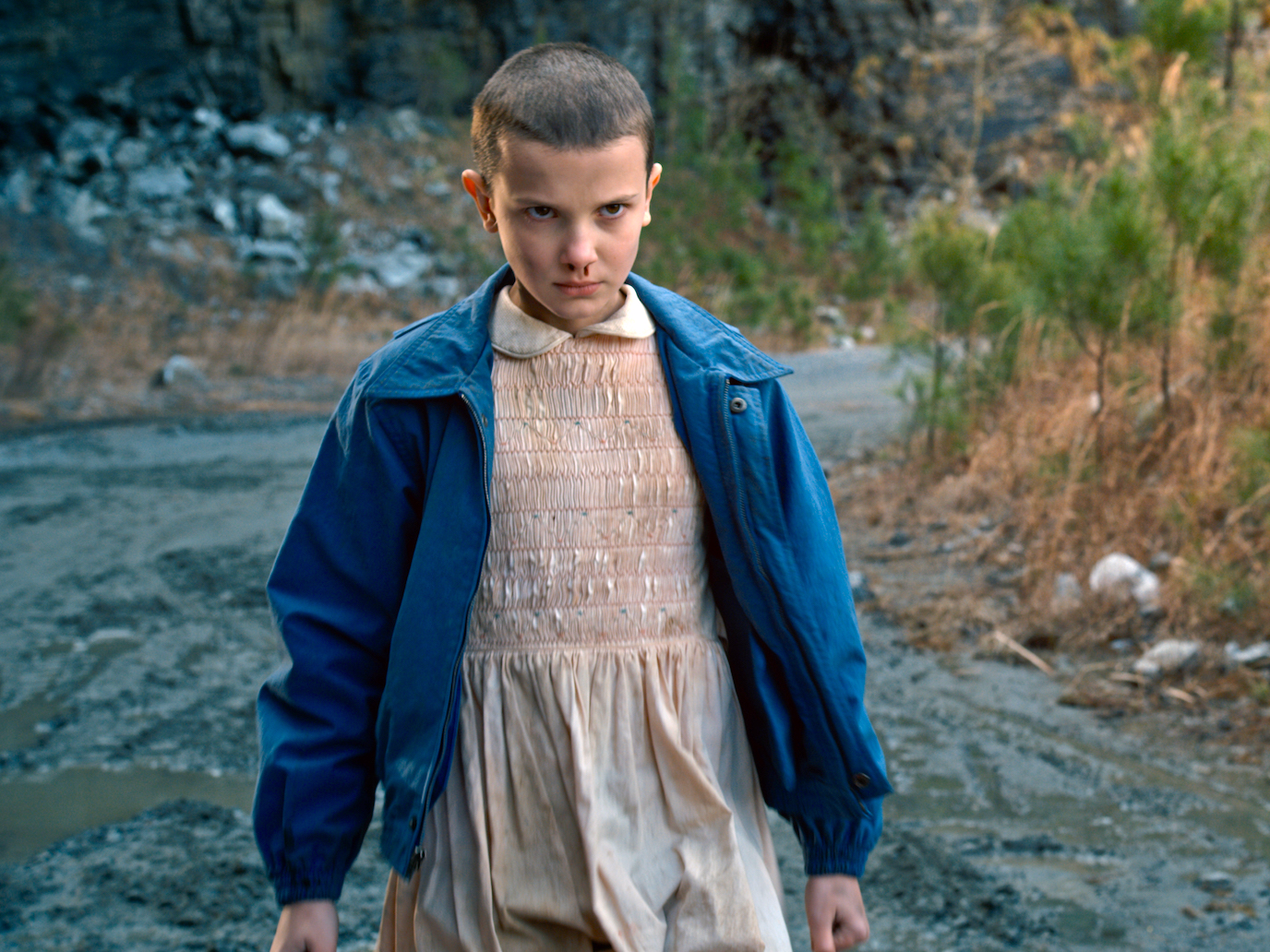
Phenomenon: Millie Bobbie Brown as ‘Eleven’ in Stranger Things (2016, Duffer Brothers)
But although a lot of this may have just a temporary effect — a film, TV show, book or comic book series could arrive in an explosive flurry of online enthusiasm which turns to mere embers just a couple of days later — it’s an effect that imminently repeatable and desirable for those at the top of the food chain the Meat Factory of Story that can still — despite our aggressively materialist times — churn out big business for those who play their cards right.
And one sure-fire way of making big business in a world where semiotic signifiers are an important stepping stone to success (read: where a healthy-enough accumulation of hashtags and social media shares can actually alchemise into cold, hard cash) is to tap into a rich stash of references.
There’s a fine line between the kind of recognition and familiarity that can result in something feeling boring, repetitive and ultimately unnecessary… and the kind that evokes feelings of comfort, kinship and a desire for connection. Pull the latter off, and you’ve tapped into that strong fount of subconscious desire called nostalgiawhich, as anyone alive would tell you, means seriously big bucks.
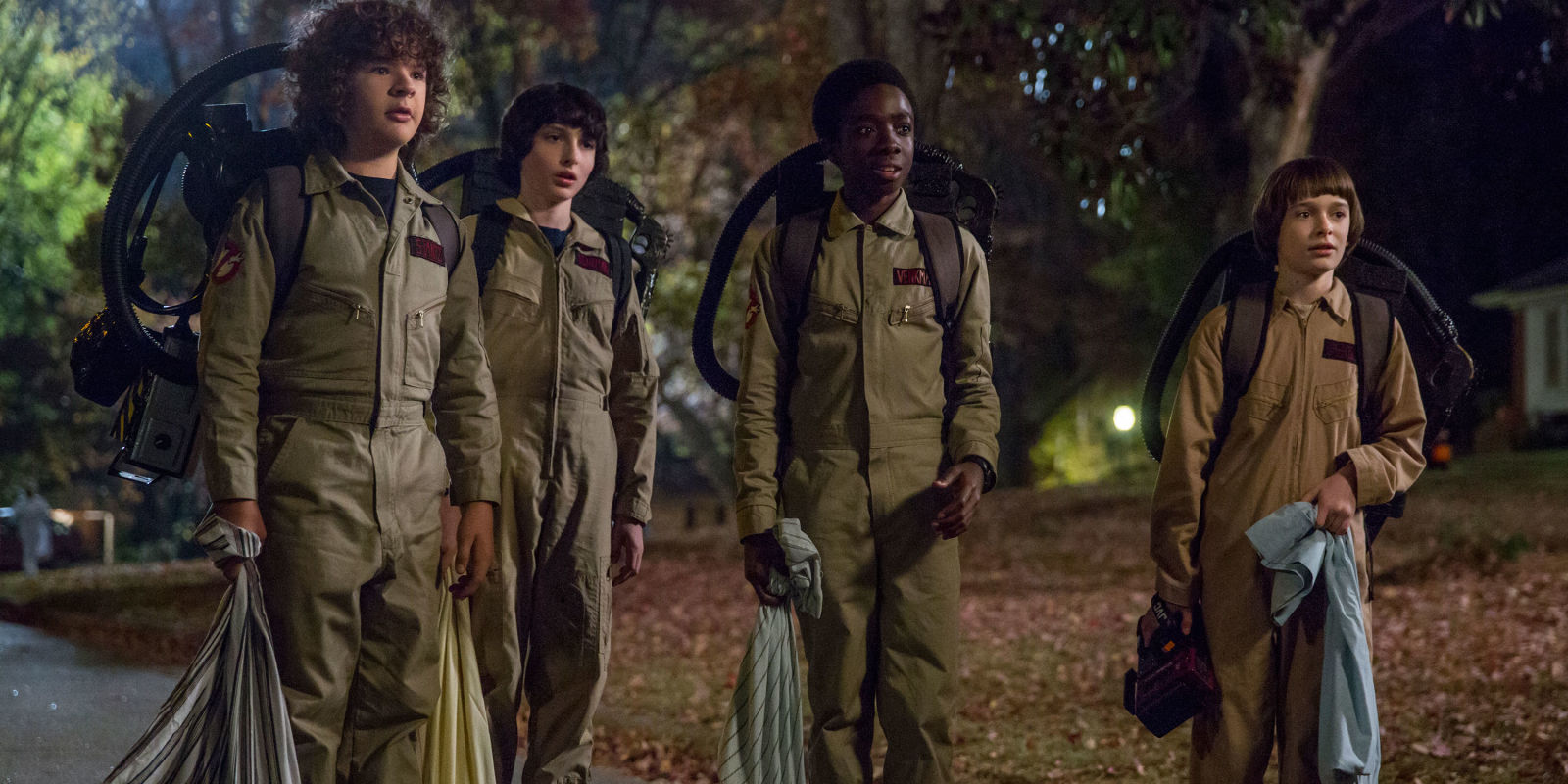
Who you gonna call? Nos-tal-gia! (Stranger Things 2, 2017, Duffer Brothers)
One phenomenon to tap into that same fount is the Duffer Brothers’ television series Stranger Things, first appearing on the Netflix streaming service last summer and definitively declaring itself as a bricolage of 1980s nostalgia for all of us to shamelessly enjoy. And enjoy it we did, en masse and with reckless abandon, even aided and abetted (for the most part) by an enthusiastic critical mass of professional reviewers that helped to validate our love for a show that pushes just the right nostalgia-buttons.
So brazen is its soup of references and Easter eggs — though the Duffers also make sure to craft a catchy-enough story and direct their child actors to perfection, to ensure that it does not just, in fact, become some detached postmodern experiment — that the show could almost be described in tones of pure ritual.
***
In the two seasons of it we’ve had so far, the running time has constantly dredged up one association after another, each of which — for those of a Certain Generation, at least — has recalled at least one touchstone from the movies of Steven Spielberg or the books-made-into-movies by Stephen King and an entire raft-load of others (though I would argue that, for all its busy panoply of references, ET and The Body/Stand by Me give us the strongest and most consistent associative threads here).
Yeah, we’ll be getting to this in a second. Promise.
With everything calibrated to create a perfect snap of recall in our minds, it becomes nothing short of a huge-scale communal exercise of shared mental experience across the hashtagosphere.
The show, whose seasons arrive to us in bulk — all the better to be binge-watched, all together — is a manifestation of Pure Archetype; but archetypes that are recent-enough to strike a real emotional chord, while also being just distant enough to feel as if they’re emanating from a subconscious place of buried, chthonic connections. (To wit: the 1980s is not Ancient Greece, even if Stranger Things’s Demogorgon evokes associations old-enough to pertain to the latter.)
This is certainly one layer of the ‘kids in ’80s getting into world-saving antics’ that a recent short novel emphatically does not partake in, even if it may embody the Stranger Things vibe in other aspects of its make-up.
I’m talking here about Starr Creekby Nathan Carson, a fun book written before Stranger Things was first aired, but which is also set in a rural American milieu during the 80s — specifically, a small town in Oregon in 1986 — and which also pits a band of kids against a supernatural threat that has chosen to make its nesting ground in their otherwise unremarkable suburban backyard.
Starr Creek Rd, Oregon. Real place.
But unlike the fictional town of Hawkins in Stranger Things — which fittingly joins a tradition also espoused by Stephen King himself with the fake ‘Derry’ in Maine — the eponymous road of Carson’s Starr Creek is a real place, around which Carson himself grew up.
And while the main trio of kids that make up Carson’s cast of characters — Kira, Allen and Bron — share the same predilection for Dungeons and Dragons as their Stranger Things counterparts, they’re not exactly the eminently plucky and largely squeaky-clean lite-weirdos of the Duffer Brothers. These kids trip on LSD to enhance their D&D games, though when they start chasing around extra-dimensional entities in the woods, that enhancement gains an edge of sublime horror.
And the trio soon comes head to head with another couple of outsiders looking for kicks — in this case, a shameless though understandable quest for nudie magazines — but who end up poking a particularly dangerous avatar of said extra-dimensional creatures, in a way that may just threaten the very fabric of existence if the kids don’t band together to do something about it.
That synopsis makes Carson’s book feel no different than just the kind of phenomena I was describing earlier but as ever, the devil is in the details. Drawing on lived-in experience rather than a desire to exploit the collective unconscious by cherry picking, and stringing together, nostalgic genre touchstones, Carson draws on convention to create a fun framing narrative, while stuffing the rest with memorable, hard-won texture.
The character of ‘Puppy’ who pushes us into the dark corners of this narrative from the word go quickly forces us to watch him eat dog food for money, and the kids’ interactions and overarching milieu is described with affection, yes, but never the kind of mawkish sentimentality that often threatens to tip Stranger Things over into something less than its potential demands. And the pop culture references that do feature in Carson’s book are made in-story, not meta-textually to score audience-engagement points… the kids lament the suddenly and unfairly jacked-up prices of comic books (75c!), they enthuse about The Last Starfighter and listen to Metallica…
While the likes of Stranger Things will continue to massage us into pleasant nostalgic oblivion — appreciating the more horror-tinged second season despite the mis-step that was Episode Seven, I’m certainly looking forward to Season 3 — Carson’s slim, weird and vicious little novella offers a more ‘genuine’ take on the same sub-genre (come on, this kind of thing has surely solidified into a sub-genre by now).
A howl of partly-autobiographical mad fun by a doom metal drummer (Carson is a member of Witch Mountain), Starr Creek takes one glance at the archetypal melting pot before going on to its own thing… grabbing you by the collar and stringing you along the eponymous road on a demon-haunted night.
Sense8 is probably most exciting show in the Netflix stable: flawed as it may be, it combines pulp with thematic ambition and gives the Wachowski sisters’ career a revitalising jolt.
The Netflix series Sense8 is not a perfect show. First of all, its ambitious — and doggedly international — scope exposes it to some infelicitous short-cuts. Perhaps the least problematic of these is a recourse to wooden, melodramatic dialogue. Of course, there’s little time for nuance when you have to cut to characters spanning various continents in any given episode, and when these same characters have to project their qualms and dramas as quickly and forcefully as possible before their allotted time is up.
With respect to one particular mini-universe in this ensemble of eight — that of the Mexican B-movie and telenovela hunk Lito (Miguel Ángel Silvestre) — this has the unintentionally amusing effect of blurring the lines between the deliberately corny dialogue Lito spouts on his day job (which we’re clearly meant to laugh at) and the dialogue of the show proper, which is quite often just as cringe-worthy in its earnestness.
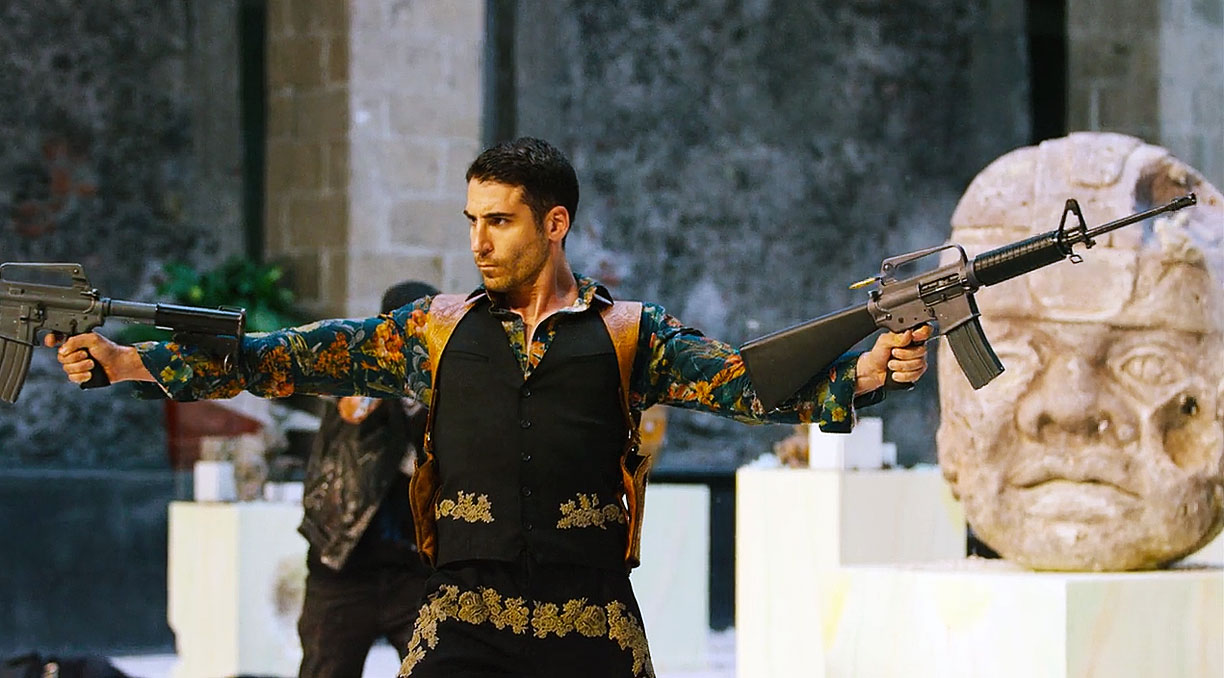
Make believe: Lito (Miguel Angel Silvestre)
But what’s more problematic is the show’s unquestioning approach to national stereotypes; again, something we can almost justify as a necessity due to time constrains but only up to a point, especially in light of the fact that a ‘right-on’ message of interconnectedness and empathy also appears to be the raison d’etre of the show.
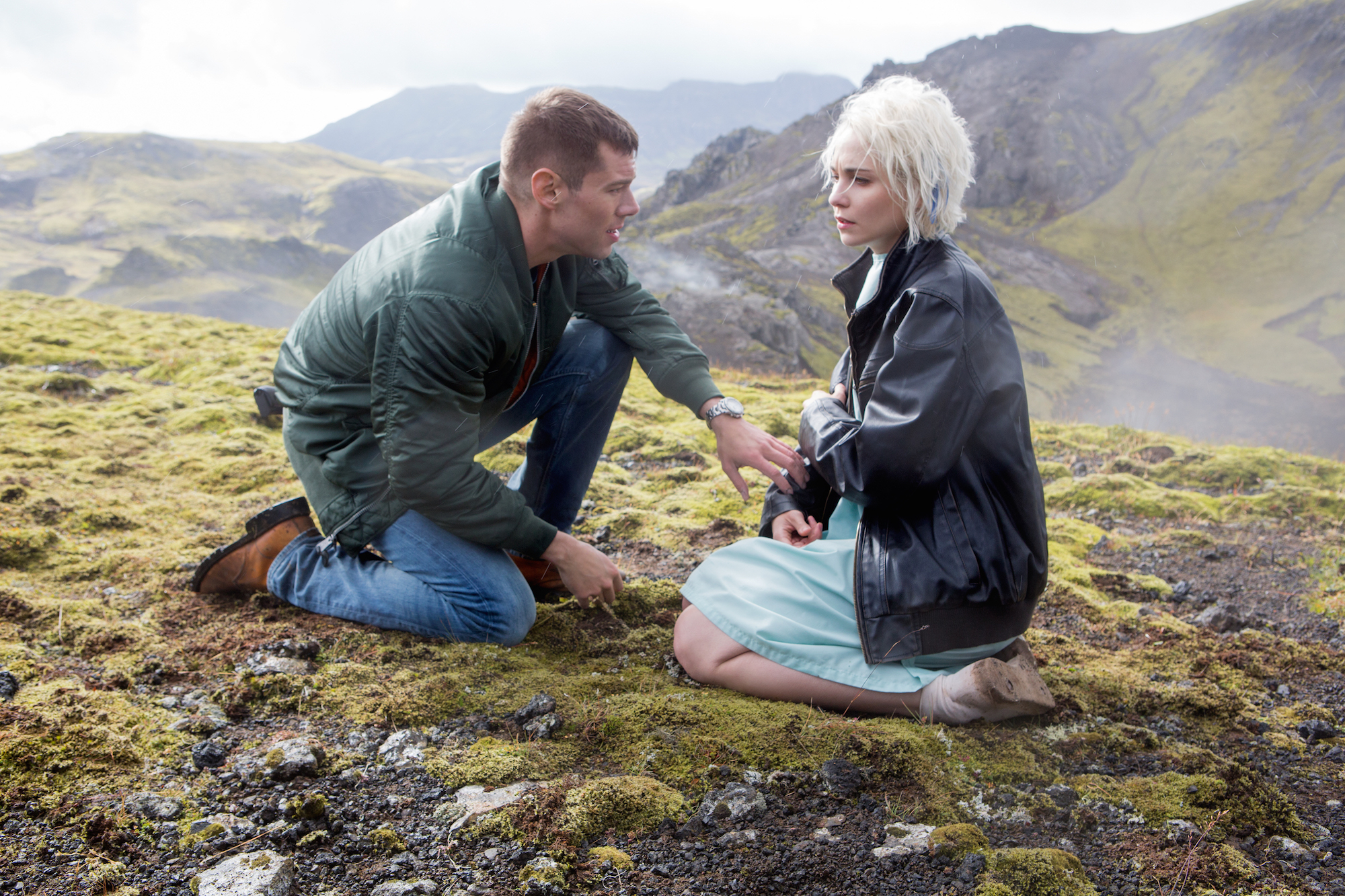
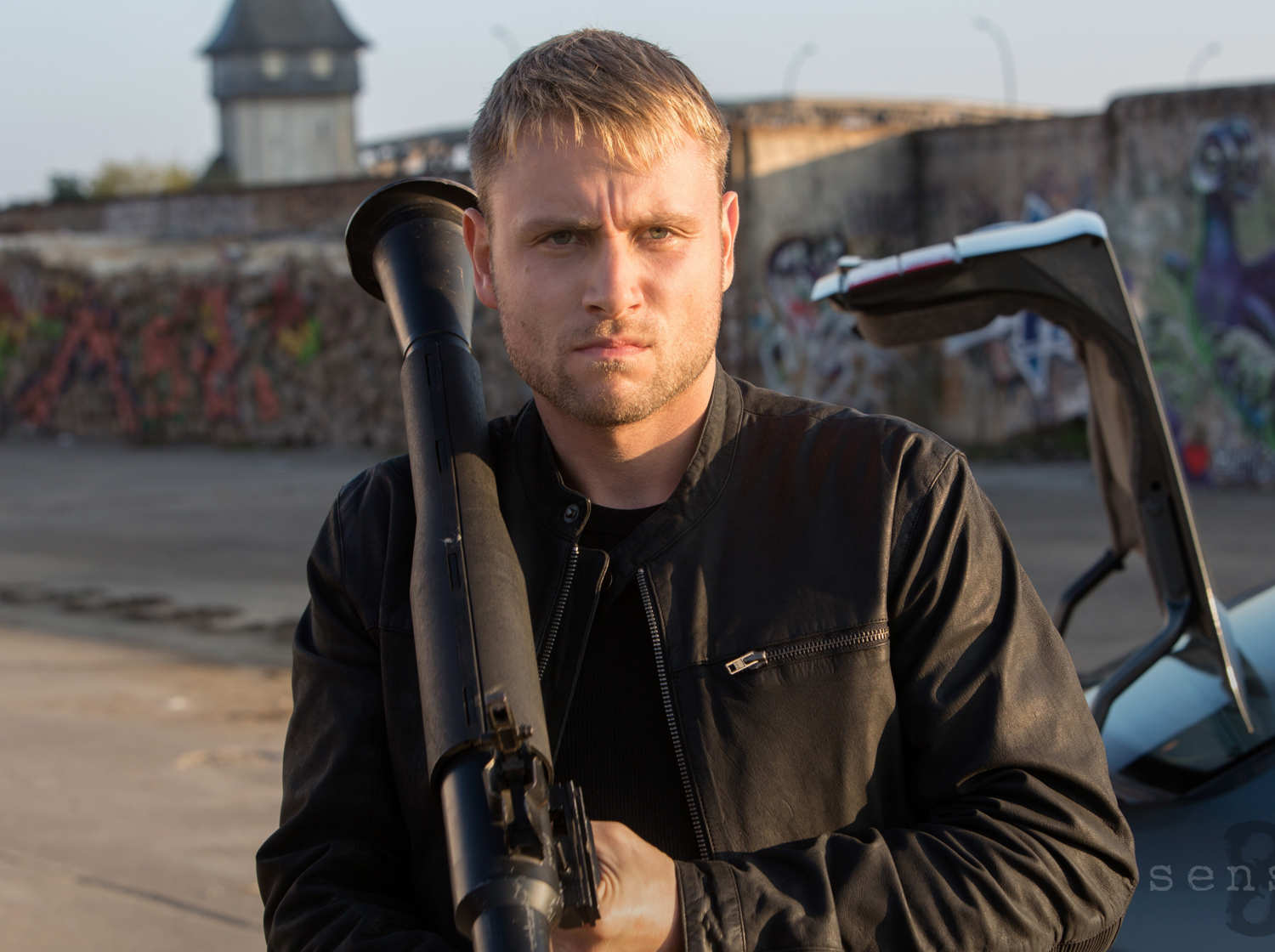
And so Wolfgang (Max Riemelt), the German sensate, reminds us that his folk are not as prudish about nudity as the rest of the world, the Icelandic Riley (Tuppence Middleton), not only has a fey look and predilection towards music (here’s to Bjork and Sigur Ros!), but also has a ‘hex’ hanging over her head — tapping into the Nordic ‘forest elf’ stereotype.
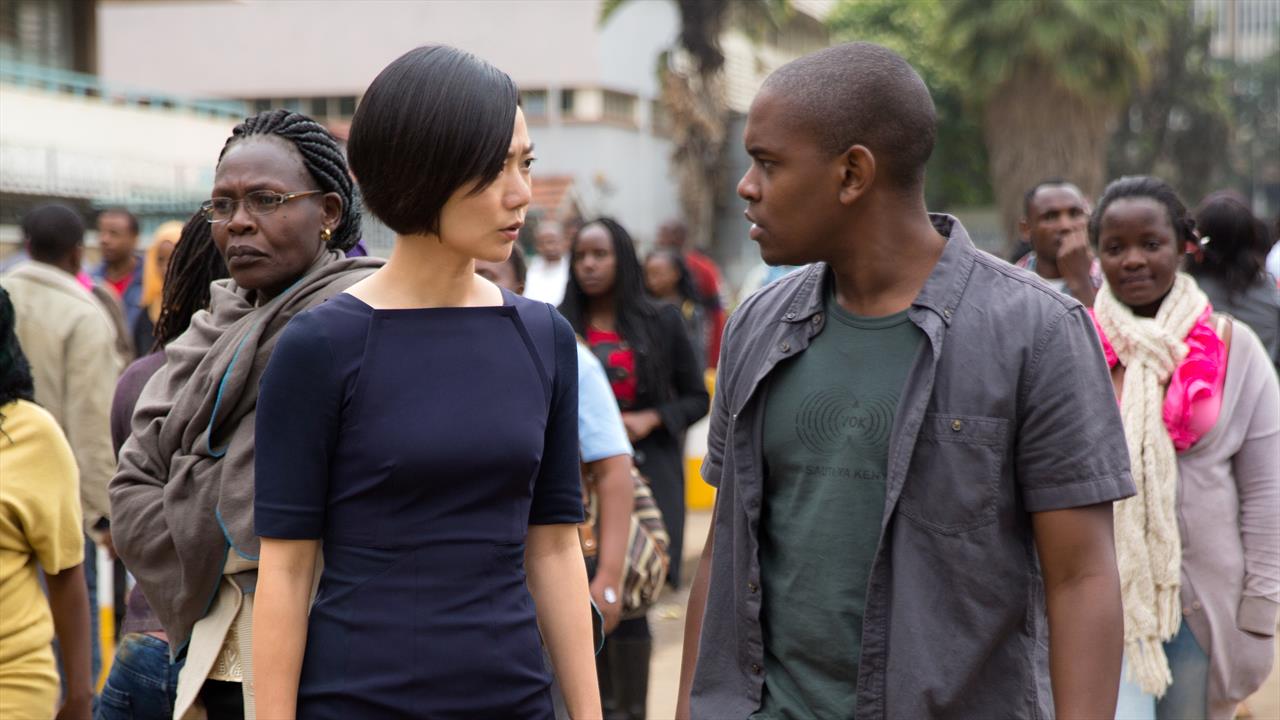
Worlds apart: Doona Bae and Aml Ameen
Meanwhile, the South Korean big business heiress Sun (Doona Bae) is an expert in martial arts, while the Nigerian van driver Capheus (Aml Ameen) has to remain plucky and resourceful in the wake of his mother’s AIDS diagnosis and the country’s incorrigible drive towards corruption and violent crime. And the Mumbai-based chemist Kala (Tina Desai) is inevitably rent apart between tradition and modernity, as her devout Hindu beliefs clash with the familial pedigree of (the undeniably charming and decent) man she’s about to marry, but whom she doesn’t love.
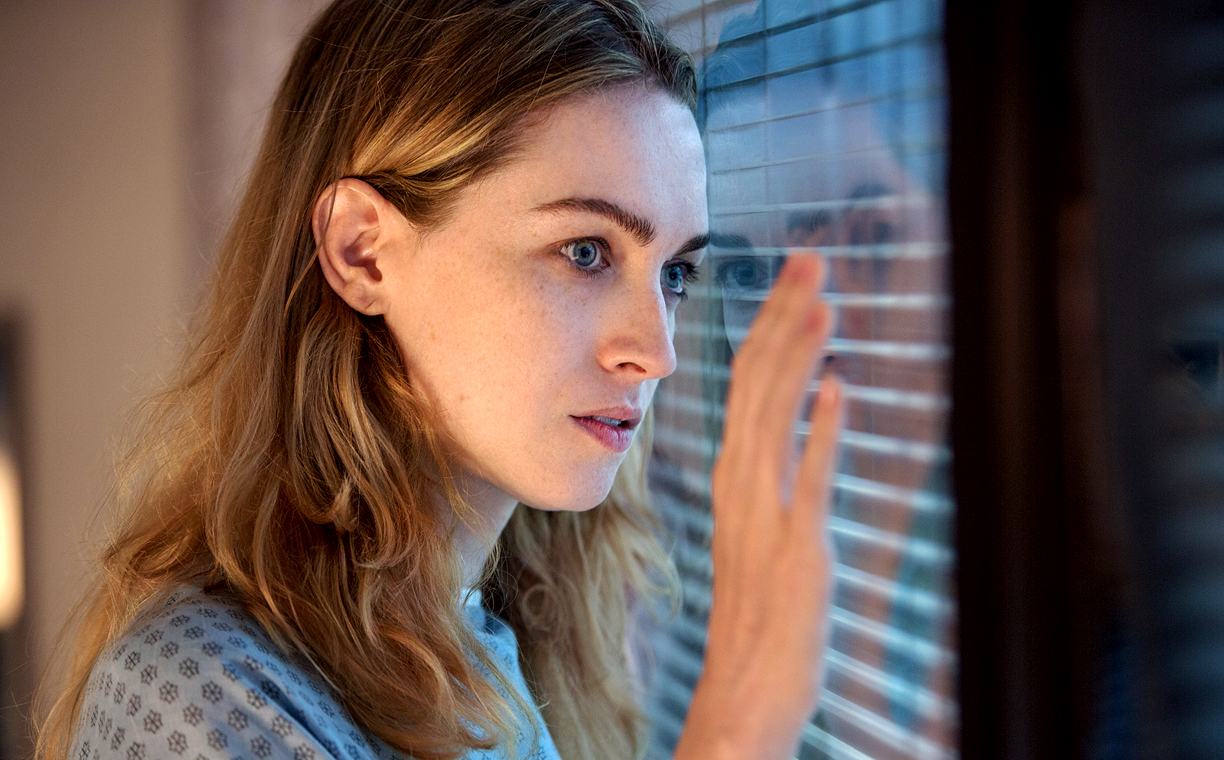
However, there’s two American characters — the ‘one per country’ quota doesn’t apply to them, it seems — and while Will (Brian J. Smith) doesn’t stray too far from an ingrained blue collar cop going the extra mile trope, Nomi (Jamie Clayton) is a transgender hacktivist who clearly gave space to the show’s co-creators — the Wachowski sisters — to explore themes dear to them.
Damsel (temporarily) in distress: Jamie Clayton as Nomi
Taken together, Will and Nomi represent a wide-enough spectrum of American society, at least when compared to the show’s otherwise piecemeal approach to depicting the social context of their globe-scattered cast. Will is the son of a cop in his twilight years, with a clearly working class pedigree which he’s chosen to carry through, while Nomi — formerly ‘Michael’ — comes from an upper middle class stock whose comforts, conventions and trappings she has had no choice but to abandon in pursuit of her own happiness.
But at the same time, it would be disingenuous to accuse the Wachowski sisters and their co-writer on the show, the veteran J. Michael Straczynski, of chauvinism. For flawed as it may be in parts, the length of its reach can only be admired, and its fitting together of disparate characters and emotional journeys shows off a masterful exploitation of the serialised storytelling idiom.
The Matrix has you, but it’s not what you think
For better or for worse, The Matrix trilogy remains the hallmark of the Wachowskis’ career. The Keanu Reeves-starring cyberpunk pastiche was one of those ‘once in a generation’ things: a pair of barely-tested filmmakers were given the chance to realise an ambitious (that word will keep popping up) project in a move that paid off handsomely, and in the Wachowskis’ case even resulted in the birth of a franchise.
That the Matrix sequels proved to be bloated and ultimately unsatisfying affairs has now become common knowledge, but the core of the Matrix lay in the Wachowskis’ successful harvesting of cyberpunk literature and culture in a way that renders it palatable to a new generation which — crucially — had just begun to experience the phenomenon that the genre itself prophesised: the Internet.
Will love tear us apart? Brian J. Smith and Tuppence Middleton
Fast-forward to 2015, and Sense8 refines that commentary further, by telepathically linking its global cast through a shared hallucination-cum-memory and forcing them to empathise in mind, body and soul with their fellow sensates. For us digital natives, the constant communication among the global cast does not feel at all alien: it’s no different than toggling from one browser tab to another (or better still, one chat window to another). To reinforce the point, Nomi’s partner Amanita (Freema Agyeman) actually describes the process as being like Facetime, only without any devices to facilitate it.
But the body wins
However, just like The Matrix showed us that what happens in the eponymous virtual reality has a real stake in the physical world, so Sense8 takes our for-granted approach to global communication that one step further by allowing its characters to physically inhabit and influence the world of other senseates. While this allows for other shortcuts and convenient ‘here comes the cavalry’ moments (more on that below), the Wachowskis are also clearly invested in exploring the power and impact of physicality for its own sake.
Nowhere is this made clearer than the infamous orgy scene from Episode 6, ‘Demons’. It was of course much talked-about on release for obvious reasons, and certainly makes for titillating television even on its superficial merits. But I would like to suggest that the decision to ‘bond’ the characters in this way is far from a random choice.
Sure, in a lot of ways it ticks some necessary promotional and narrative boxes — it gives the show a spike in viral visibility, and helps bring the disparate narratives together for a brief but memorable sequence — but the crescendo that it builds and the framing choices the Wachowskis employ in presenting it suggest that with this scene, the show is after more than just Game of Thrones-style clickbait-headline-grabbing.
Zoning in on the characters already engaged in some form of physical activity — the bulk of it being sex, of course, but Will gets in on the action simply by dint of spending some time at the gym, while the oft-nude Wolfgang ‘hosts’ the entire party at a sauna — the scene ramps up the passion not by focusing on pornographic money shots and a linear drive towards orgasm. Instead, it makes it a point to concentrate on the pleasure of all involved, and the Wachowskis are careful to give an identity and purpose to each of the participants.
To bring the point home that this is about the body first and foremost, and not about sex in particular, poor Will has to keep a straight face while lifting weights at the gym when he suddenly finds himself driven to orgasm by his newfound telekinetic brother-and-sisterhood.
Conflicted: Tina Desai
And the fact that not all the sensates participate in the scene is further evidence that this is not just a cheap attempt to get a rise out of the audience. Because at that point in the story, Riley, Sun and Kala aren’t in the right emotional place to partake in a joyous orgy.
The virginal Kala — crucially, she waves off sex ed advice from a fussy aunt by invoking the wisdom of “the Internet” — is fending off both an unwanted marriage and a sudden attraction to fellow sensate Wolfgang, so that participating in the orgy in which he’s present would make little sense in her arc. Sun, while certainly no stranger to physicality owing to her — subsequently quite handy — combat skills, is biding her time with monk-like patience after making a heartbreaking sacrifice for the sake of her corrupt brother.
Emotional centre: Tuppence Middleton
But while Riley’s harried state of mind — the narcotics-happy DJ has fallen on the wrong end of a drug deal gone wrong — also excludes her from the seratonin-spiking get-together, this doesn’t mean that the character, calibrated masterfully as the show’s emotional centre by a tender, raw and vivid performance from Middleton, has no claim on physicality.
But rather than sexual congress, it is childbirth that marks the most significant blot on her emotional journey, and another attention-grabbing scene depicting a live birth confirms the Wachowskis’ commitment to depicting how the physical nature of life will always trump arbitrary, remote connection.
In way, it’s almost a direct affront to a strong and consistent strand in one of the Wachowskis’ key influences for the Matrix trilogy: William Gibson’s landmark work of cyberpunk fiction, Neuromancer. In Gibson’s 1984 novel, hackers — or digital ‘cowboys’ — often derisively refer to our bodies as being simply “meat”. With Sense8, the Wachowskis appear to be determined to reinstate the value of what goes on inside our meat-containers while still operating in a genre that taps into the cyberpunk modus operandi.
Binge-watching towards empathy
But there’s another way in which the mechanism of Sense8 works to put the Wachowskis’ humanist message forward… though in this case, it’s probably Straczynski who can take the bulk of the credit for putting his vast experience of serialized writing into play.
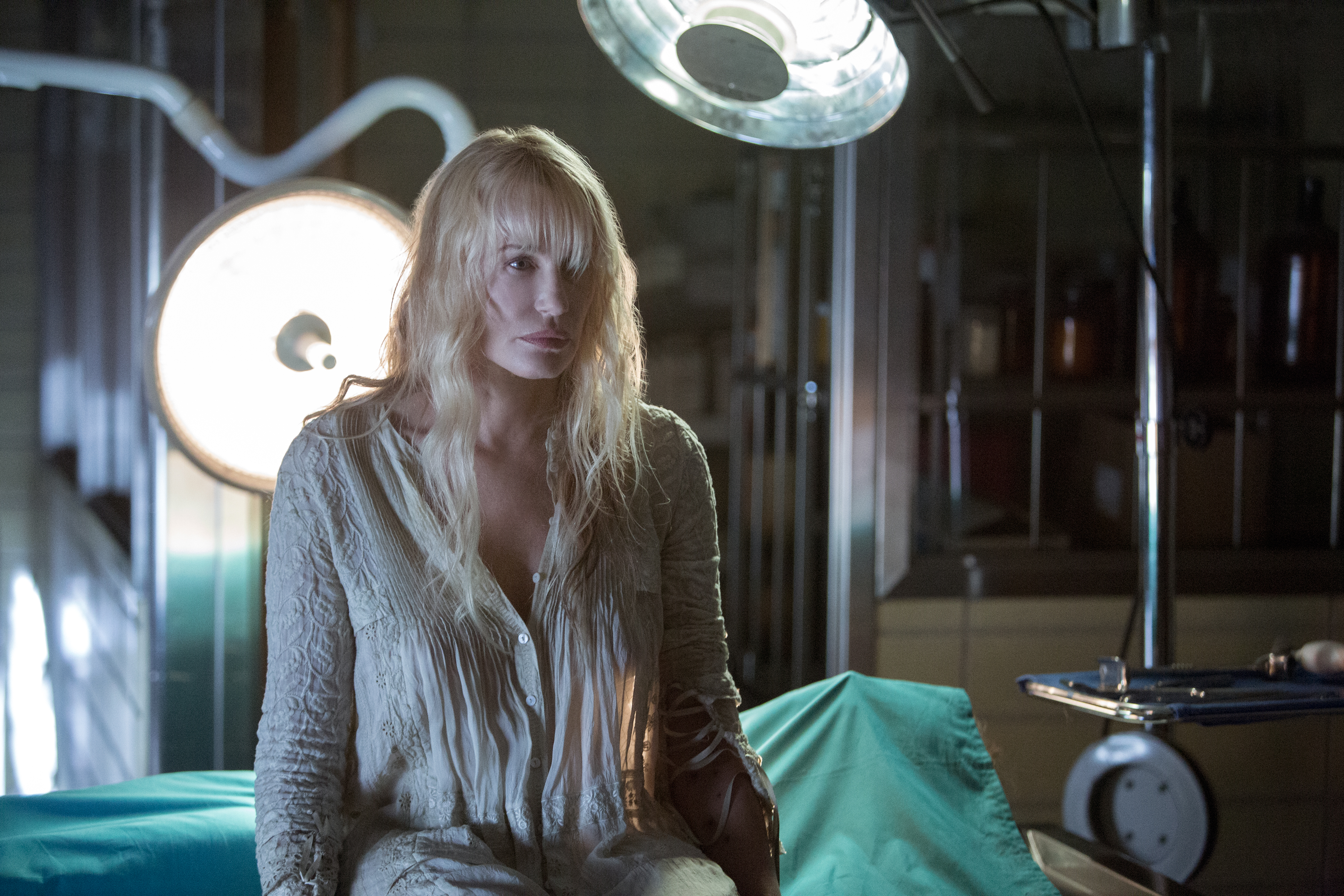
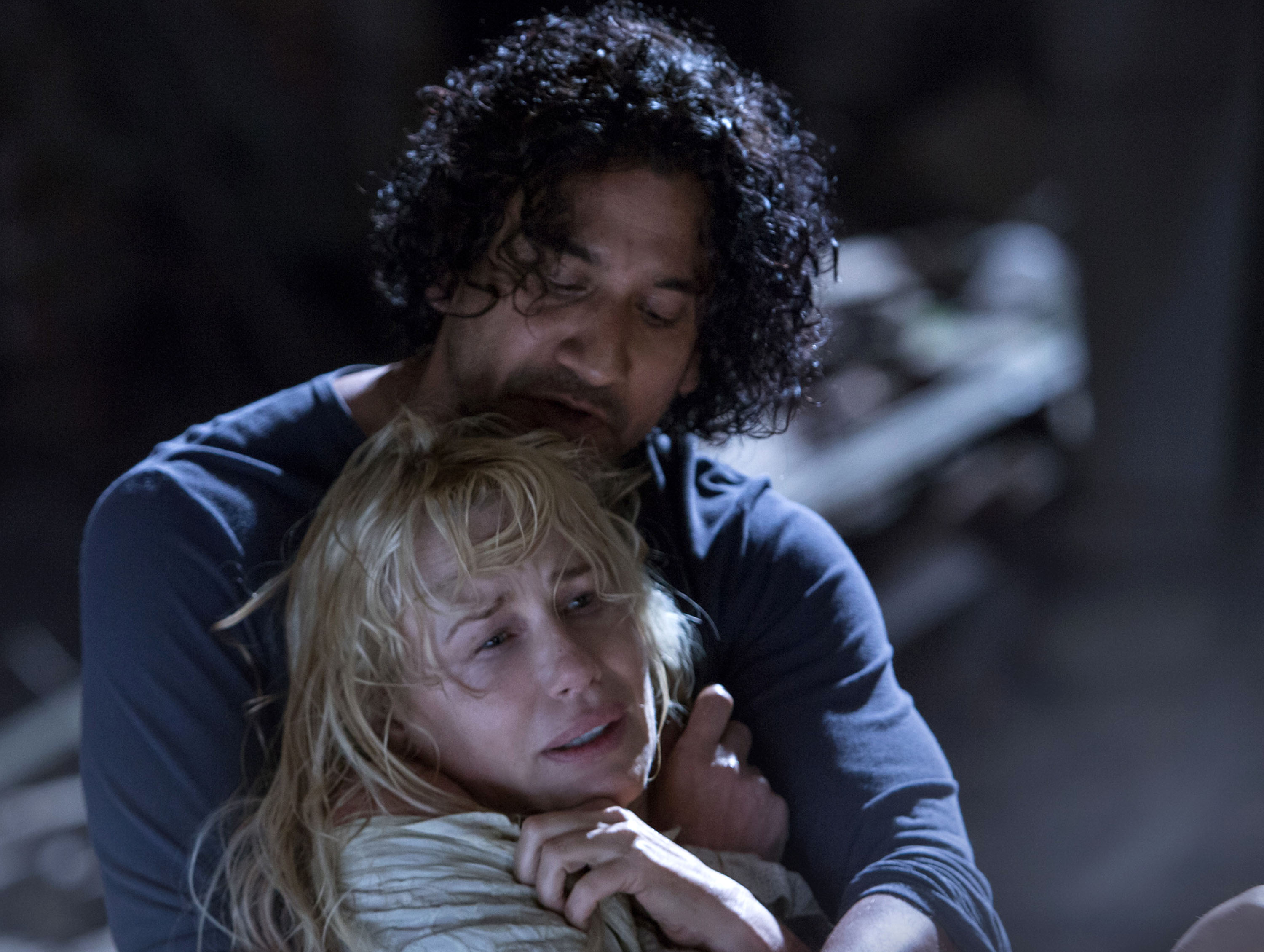
In a way that’s both counter-intuitive and shrewd, the creative team behind Sense8 tapped into the pop culture reservoir originally opened up by Marvel Comics’ X-Men and their various multi-media iterations, by uniting a group of ‘special’ individuals under the tutelage of two sage renegades — Angelica Turing (Daryl Hannah) and Jonas Malicki (Naveen Andrews) — partly as a warning shot that their ‘kind’ is in danger, and being pursued by an errant member of their erstwhile species, ‘Whispers’ (Terrence Mann).
But for the bulk of the series, this isn’t the main motor of the narrative; it’s more like a ghostly nudge that turns into a bona fide push as the first season accelerates towards its climax. What hooks us instead are the individual narratives of the various characters, and when they interlace it feels like an added bonus.
The Great Joiner: Daryl Hannah
An ancillary — but certainly not trivial — side-effect of this structural choice is that it places all of the various questions on an almost equal emotional footing; so that a romantic discord between Lito and his beloved Hernando (Alfonso Herrera) is placed side-by-side with the comparatively much harsher realities Capheus has to contend with.
Intentional or not, this has the wonderful effect of reminding us that, while the characters day-to-day situations and national, cultural and economic context vary greatly, we can come to understand their emotional priorities and respect them accordingly.
In a world where discourse is dominated by the — sometimes blinkered — drive to “out” who is more privileged than whom, and where empathy is limited to either dry facts or sensationalised sob stories, Sense8 reminds us that the way to understand someone is to first understand that, just like you, they have a day-to-day life in which they reckon with things wonderful and mundane, life-altering and life-threatening, at nearly every turn.
Say hello to my little friend: Max Riemelt
And while the Wachowskis have left details about the sensates‘ overall purpose and mission tantalizingly open to interpretation (read: ripe for exploration in subsequent seasons of the show), perhaps one thing we can assume about the reason why they exist, is simply to remind us that it is in fact possible to tap into something resembling a common wellspring of humanity… but that taking the importance of the flesh into account — as life-giving, pleasurable, deadly and prone to death and termination as it may be — is crucial to this process.
Just like you can’t hashtag your way into social justice — as recent developments all over the world have shown — so you can’t truly appreciate the value of other human beings without doing your damnedest to quite literally walk a mile in their shoes. Or, you know, temporarily possess their body to vanquish evil henchmen thanks to the martial arts skills you happen to have, and they don’t.
The rudiments of story win, too
Of course, there’s another reason why the conceit of interconnected body-hopping humans is handy for Straczynski and the Wachowskis. To wit, it’s a clever way of legitimising deus ex machina. They don’t always get away with it: there will be points when you’ll ask yourself why a sensate manages to interfere in certain instances, and not others.
But on the whole, it works in tandem with viewer expectations and makes for great moments of catharsis. This is particularly evident in the climactic episode, where the story slots into the kind of ‘chase’ sequence that you expect from X-Men-style narratives of marginalized super-powered beings fleeing from, the confronting, those persecuting them.
Inciting incident: Daryl Hannah and Naveen Andrews
In a lot of ways, Sense8 works despite its niggles because it meshes form and content in a way that other shows don’t. The very idea of the sensates suddenly forced to come together and reckon with each of their individual life stories, and feed on each others’ abilities, works perfectly with the serialised television format, where multiple character arcs are not only possible, but actively encouraged.
It’s also clearly in line with the Wachowskis’ own ambitions, which have often resulted in stillborn feature film productions, but are finally given space to flourish in a 12-episode format.
Sense8 is a heady, febrile tumble that does suffer a few bumps and scratches on its breakneck descent. But it’s also a positive flip-side to the Wachowskis’ narrative sincerity and ambition; where their cinematic output has all too often revealed how such an approach can backfire. How a second season fares is still up in the air, of course, but the fact that its course remains touch-and-go already makes it a more exciting prospect than your usual TV fare.
Please consider donating to the Patreon page for MIBDUL — the comic book series I’m currently working on with the artist Inez Kristina.
As outlined in an earlier post, in the coming weeks I will be dedicating an entry to each story in the upcoming anthology Swords v Cthulhu, edited by Molly Tanzer and Jesse Bullington and published by Stone Skin Press. My reviewing method will be peppered with the cultural associations that each of these stories inspire. These will be presented with no excuse, apology or editorial justification.
The Savage Angela in: The Beast in its Tunnels by John Langan
Langan’s story opens the collection, and in some ways it’s a no-brainer because it appears to have the swashbuckling swords-and-sorcery spirit of the works of Fritz Leiber (who comes highly recommended in Tanzer and Bullington’s backmatter).
But as befits my own introduction to Langan’s rich and satisfying short fiction his contribution here plays with the expected references to the beat of his own drum, getting mileage both from the immersive, ‘innocent’ elements of the genre while simultaneously playing a postmodern game with them.
Our protagonist, Angela, needs to slay a beast and she sets about doing so with the help of her talking sword — the significantly monikered Deus Ex Machina. With an archetypal-as-can be premise, it’s becomes clear from early on that Langan is more concerned with exploring just why the swords-and-sorcery genre continues to interest us, instead of simply replicating its tropes.
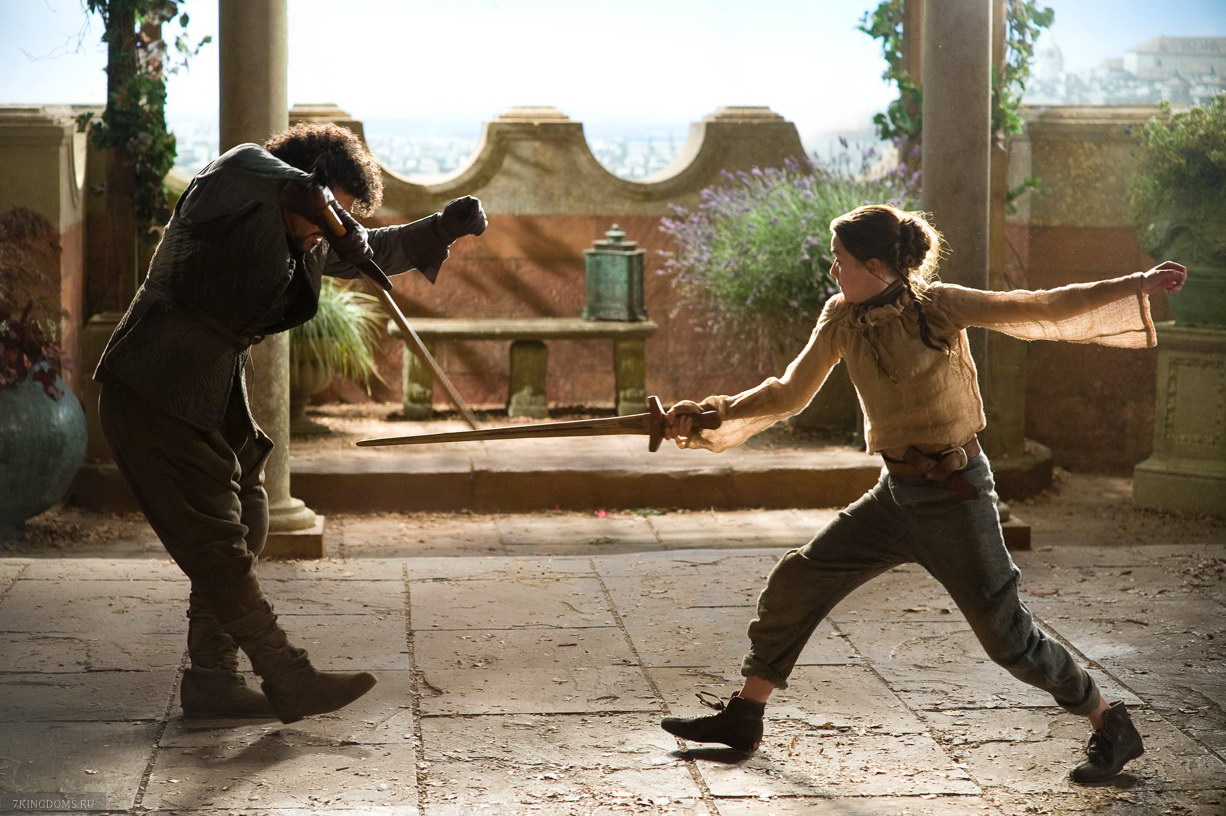
Like other stories in the collection, there’s a whiff of the coming-of-age narrative to Langan’s tale too, with Angela being a novice who’s only just learning to make the best use of her powerful weapon. A prevalent meme, to be sure.
Arya Stark and Syrio Forel — Game of Thrones, Season 1
But more importantly, the schematic set-up of the story — coupled with the fact that it’s all baldly archetypal: the monster serving the role of Minotaur — reminded me of how ‘mapped out’ fantasy narratives often are.
This is why Dungeons & Dragons is such an important touchstone for both fans and practitioners of the genre. In a similar way to writers who are conscious of the formal and historical make-up of fantastic literature in all its forms — here I’m thinking of the likes of Italo Calvino — Langan reminds us that the rules exist for a reason.
One reason being that we will always rationalise what we don’t understand, and that the mechanics of slaying/solving the monsters that emerge from the abyss of uncertainty will always make for compelling reading. Because we are hungry for answers, even those we know will never be forthcoming.
We celebrated the 75th anniversary of the Joker with a small conference dedicated to the Clown Prince of Crime’s ‘life and works’ last Saturday, and it served as a good reminder of how refreshing academic inquiry could be when placed actually outside an academic context.
Organised by Euro Media Forum and chaired by my good friend Krista Bonello Rutter Giappone – who also gave an lucid an insightful paper on the Joker and Batman as a comedy double-act – the event may not have been terribly well attended, but it did inspire an convivial atmosphere of open discussion and debate which wasn’t about intellectual one-upmanship but genuine passion for the subject matter, and a desire to get at it – him – from as many angles as possible.
Jack Nicholson at The Joker in Batman (1989)
Running the gamut from conversational ‘geeky’ presentations and more scholarly insights into the Joker as a key character of Batman lore across various media (comics, film, animation and video game), we heard presentations which delved into Joker’s design history, evil clowns in pop culture, and how the Jack Nicholson and Heath Ledger film-Jokers compare to each other; as well as the idea of the Joker as a demiurge, the Joker’s smile as a traumatic ‘wound’ (with all the symbolic weight that the image implies) and the socio-political imagery of both the Jack Nicholson and Heath Ledger Jokers (that would be me).
Heath Ledger as The Joker in The Dark Knight (2008)
It was an unabashedly geeky way to spend a Saturday, of course, but a part of me felt very proud of the fact that we got together to pay tribute to the Joker – one of my favourite characters in fiction – in such a concerted and dedicated way. The main take-away insight from it all – if we could reduce it to just one – is that the Joker’s familiar-but-amorphous nature is what makes him such an enduring – and enduringly scary – villain. He is equal parts prankster, psychopath, terrorist and trickster – sometimes embodying just one of those characteristics at a given time, other times (more often than not, it seems) amalgamating all of those things in garish and dangerous brew.
Illustration by Greg Capullo
In short, I think he’s secured himself the role of an archetype worth remembering, celebrating and returning to.
A version by Pete Yorn was heard in the original Hellboy (2004), also directed by Del Toro. Something of a logical choice given the subject matter, even if the connection is a shallow one (i.e., limited to the song’s title). Yorn’s jauntier version certainly strips the song of its atmospheric sense of foreboding. Which is just as well in this case, because even though Hellboy – and Del Toro’s films in general – may have its creepy gothic touches, it remains a quirky superhero romp at the end of the day.
PJ Harvey’s version, originally commissioned for another audio visual project – this time the British gangster TV series Peaky Blinders – feels right for gothic melodrama Crimson Peak, at least insofar as the trailer suggests. Harvey’s pained vocals offer a nice contrast to Cave’s hard, stark imagery.
It’s a dynamic that matches my expectations of Crimson Peak itself. It appears to be a ghost story of the Victorian variety and as such, one that would by definition rely on subtle scares, rather than the outre, primary-coloured flourishes Del Toro is known for, and which he doesn’t appear to be shying away from here. I anxiously await to see how the twain will meet – if it does at all – come October.




 Creatures of Will and Temper by Molly Tanzer (novel)
 The Man Who Laughs by David Hine & Mark Stafford (graphic novel)
 Winnebago Graveyard by Steve Niles and Alison Sampson (comics)
 Thor: The God Of Thunder (Vols. 1 & 2) by Jason Aaron & Esad Ribic (comics)









 Soft Disturbances