Late Summer Update | National Book Prize & Encore

A couple of updates while I hack away at yet more deadlines while trying to squeeze in creative work, as per this, earlier, mini-essay on the travails of cramming in too much work out of necessity, but against the interests of what we can very loosely call ‘the soul’.

While the summer continues its sweaty churn without wanting to give us any respite — though thankfully, our sojourn in Helsinki seems to have spared us the worst of it — a couple of happy developments have snuck their way into the pigeon-hole of life, much like the rare but welcome evening breeze that sometimes visits us during these meterologically trying times.

Here they are.

Awguri, Giovanni Bonello is up for the National Book Prize!

IMG_20170905_111443

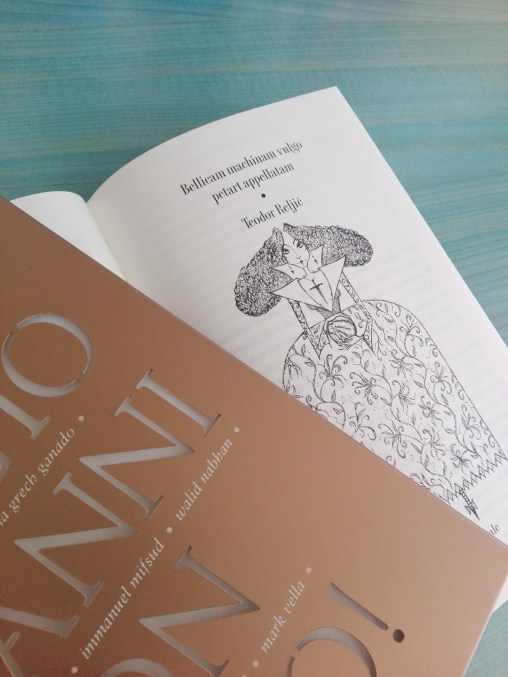
For all its deadline-based hardship, this past year has also come with a number of fun commissions. Perhaps chief of them was being asked to contribute to Awguri, Giovanni Bonello — a festschrift in honour of Judge Giovanni Bonello turning eighty, and which was made up of a collection of historical fiction inspired by Bonello’s own forays into micro-history.

It was a sandbox I got lucky with, as my corner turned out to be a delightfully sordid and sensational one. Caterina Vitale was my subject — an ‘industrial prostitute’ who took over her husband’s pharmaceutical business soon after his death, and who is said to have used her erotic advances as a way to extract handy information from well-placed Knights of the Order of St John.

So of course, I went to town with it and turned it into a vampire story. ‘Bellicam machinam vulgo petart appellatam’ — not the snappiest of titles, I must admit — was great fun to write, especially since the subject matter gave me license to employ a highfalutin’ literary style that apes the Gothic tradition in more ways than one.

Complemented by sharp-and-pretty illustrations from Marisa Attard, the bilingual collection is a solid representation of where Maltese writing is right now. The eclectic roll-call of writers, summoned to respond to intriguing prompts, also suggests that more of such anthologies may be a good way forward for the local publishing scene.

I think we just may have a shot at this prize.

Editing Encore Magazine!

Encore

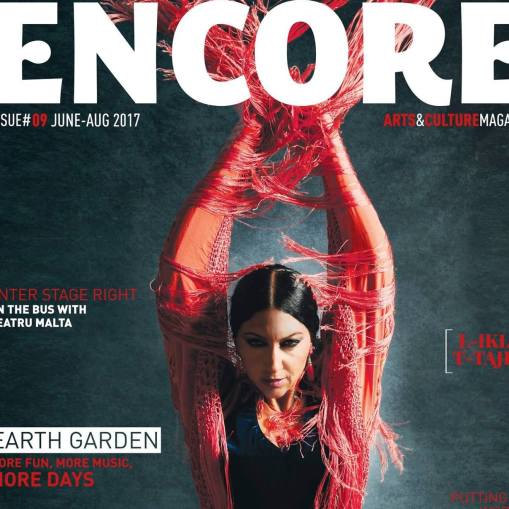
Another exciting development is the news that, as of its 11th issue, I will be serving as editor for Encore Magazine — a quarterly publication dealing with arts and culture on the Maltese Islands.

While having served as the Culture Editor for MaltaToday for some years now — a post that I will continue to occupy week-in, week-out, I hasted to add — I also look forward to building on what Encore’s previous editor — my dear friend Veronica Stivala — established with the previous ten issues of the beautifully designed and put together magazine.

One of the main things I’m looking forward to with this particular project is being able to get out of the weekly grind when planning and writing articles. I’ve already been contributing to Encore for a few months now, and already the one-month deadline to pen a piece which, partly by dint of its quarterly publishing schedule, does not require one to be limited by micro-topical happenings, was something of a relief.

Coupled with always maintaining an international perspective on things — while always using the Maltese scene as a starting point — I hope we can continue to give the local cultural scene a good dose of ‘slow journalism’.

Because acceleration is the last thing we need right now.


Two deadlines before lunch

With two deadlines before lunch, I shouldn’t be writing this. Instead, I should be tending to those deadlines — methodically scratching away at the tasks in a way that guarantees both efficiency and quality. I should be working at them — letting my fresh second coffee animate the things I not-so-emphatically call ‘work-work’ instead of this work — the work of expression, the work of release.

But what I’ve learned over these past few weeks — in which ‘busy’ has been the watchword in a way that I’m not at all happy about — is that carving out the time for that ‘extra’ task is what will, in the end, make you think and work better in the long run.

I do journalism and copy writing to earn a living now, and I’m coming on to nearly a year of freelancing with that particular set of skills handy. Other opportunities may be in the offing once the summer is through — and there are some potentially life-changing events set to happen along the way — and of course, the ‘passion projects‘ will always be there; beacons of hope and motivation, of more expression, and more release.

But what this work means above all is that the effort often ends up feeling ephemeral. The work is not solid in any way — it fades away as the article makes its point and does its rounds, or the piece of copy writing is absorbed by the client and put to its work of passing on business information or getting those clicks in. It would be silly to invoke the Marxist idea of feeling alienated from the means of production (it probably borders on offensive for those charged with necessary but underpaid and demeaning manual labour) but there is at least a smidgen of psychological truth to the comparison, I think.

Which is why doing this is important, in this moment, right now. Just like it’s important to read every day no matter how overwhelming things get, or to try and write — not out of some point-scoring principle, but to help tamp down those deadline-shot nerves and fractured perceptions.

Because that’s what the internet — that other crucial tool for my freelance arsenal — has done for us. It has energised, but it’s also fractured and fragmented us. So that the more we’re lost in its morass, the harder it is to get out. You end up working in nervous-mode the whole time, and every day starts to feel like one of Hercules’ labours (yes, the one involving snake heads).

So instead of slicing off snake heads in a futile and frustrating sport, I try to carve out this time instead. In the hopes that it will provide the necessary breathing room to focus my remaining energy in a way that’s free of distraction and despair.

Now, back to those deadlines.

“When force of circumstance upsets your equanimity, lose no time in recovering your self-control, and do not remain out of tune for longer than you can help. Habitual recurrence to the harmony will increase your mastery of it” – Marcus Aurelius, Meditations, Book Six


April Update | Censorship, Near Future SF & Campus Book Fest

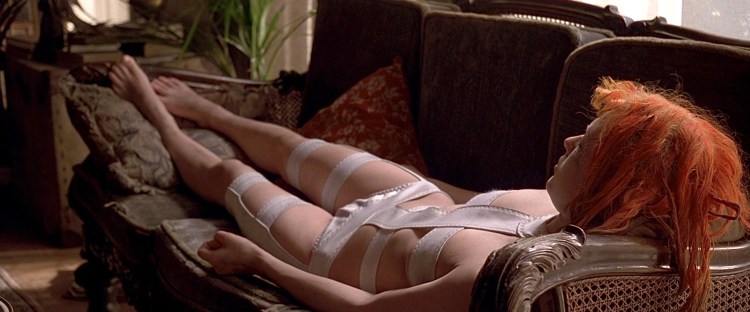
April got underway to a head-start as I finished up my soujourn at the Kinemastik Film Club by screening the both beloved and reviled cult classic The Fifth Element to what seemed to be a pretty nostalgic and misty-eyed audiences.

The film was certainly a lot of fun, but it also felt a bit patchier than a lot of us remembered; with a jokey mess of a plot and visuals that were — yes — stunning in parts but hardly had enough ‘wow’ set-piece moments to justify the cult status Besson’s space opera still enjoys (as bolstered by both the Moebius inspired settings and Jean Paul-Gaultier costumes).

milla

Milla Jovovich in The Fifth Element (1997), dir. Luc Besson

It was still somewhat heartening to see all that taking place on the big screen at the British Legion in Valletta, as I’m pottering away on my own piece of decidedly ambitious but also — one hopes, as a check on said ambition — silly and satirical slice of sci-fi. But soon after that, I was invited to participate to a project that teased at the more sober qualities of that same genre…

Archived Futures Harvest: Near-future SF writing in Rabat (sort of…)

Last week was in fact a pretty hectic one for this exact reason, but that doesn’t mean it wasn’t rewarding. While details remain under wraps until the first week of May when the exhibition is set to open, what I can in fact tell you is that my friend Glen Calleja of Studio Solipsis invited me to do some writing for him at his Rabat studio, and that it was a great — if rather exhausting — time.

A studio in Rabat is a great thing to have

A studio in Rabat is a great thing to have

The extended exercise took its cue from a workshop organised some months back, and focused on a collective imaginary of the future. The content I was creating channeled paranoia about surveillance and smart technology, and took the form of fabricated (not ‘fake’!) news articles, surveys and the interpretation of surreal prose texts — or are they coded messages by underground movements?

Even apart from the coolness of working in Rabat and Glen’s zen-like demeanour and keen intelligence — and, of course, the project’s own rich potential, which runs on the intriguing paradox of mixing futuristic speculations with the instruments of the archive — gave me ample opportunity to flex some storytelling muscles.

I’ve always been one to work to limits, but being told to write something creatively based on a fabricated news report, or culled from — also fabricated — surveys and coded messages, gave me a special kind of frisson. I will definitely be applying some of these devices to my own writing in the future.

The Archived Futures Harvest exhibition launches on May 5 and runs for two months

Talking in public: Campus Book Fest, ACM Lab

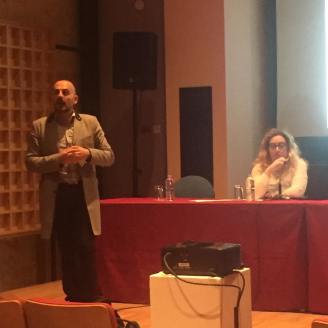
Speaking about writing at the Campus Book Festival, April 4. Photo by Rik Van Colen

Speaking about writing at the Campus Book Festival, April 4. Photo by Rik Van Colen

As it happens, Glen Calleja was a stall-mate of my dad’s at the Campus Book Festival which ran at the beginning of the month — book-binding is one of his many skills — and it was after he heard me speak at the event that he proposed we collaborate on the Archived Futures project.

The talk — which took place on the bright and sunny morning of April 4 — went reasonably well, I felt. The original idea was to do something about MIBDUL together with Inez, but she happened to be in London for a workshop at the time. So instead of a visually-enhanced guide of how we’re slowly putting the comic together, I decided to speak about how my first novel kicked my ass into submission and taught me that structure is a very important thing indeed — and not, as I had foolishly assumed, the provenance of those who lack verve and imagination.

Some audience interaction proved that I was not alone in these concerns, and it’s always nice to find real-life correlatives to conversations you would normally have online — which lend a disturbing patina of anonymity even to your closest friends.

Arts Council Malta Head of Strategy Toni Attard and intellectual property lawyer Jeanine Rizzo at the ACM Lab on censorship/self-censorship in Malta, April 21

Arts Council Malta Head of Strategy Toni Attard and lawyer Jeanine Rizzo at the ACM Lab on censorship/self-censorship in Malta, April 21

More recently, I was asked to participate to the latest edition of the ‘ACM Lab’, which are public talks organised by Arts Council Malta on various issues germane to Maltese culture. This time around it was all about censorship and/or censorship, with lawyer Dr Jeanine Rizzo breaking down the new laws pertaining to freedom of expression, which led to a debate with theatre-maker Adrian Buckle — who bore the brunt of the law as it previously stood — and Mario Azzopardi of the Film Classification board.

The discussion was polite enough, with all of us agreeing that transparency is key in age classification — citing the BBFC as an admirable benchmark — but that when it came to theatrical productions in particular — whose producers are now free to self-classify in Malta — an element of risk always remained.

ACM’s head of strategy Toni Attard asked me whether I think Malta’s artists were ready to take full advantage of the newly relaxed laws, and whether evidence of this can be found on the ground. As ever, I believe that the ‘slow’ approach is necessary to all of this; we should keep our eyes peeled on what’s happening, but also be patient enough to wait until enough evidence has accumulated before making our final analysis.

And in our spare time…

Beyond all that, it appears that science fiction is something of a running thread this month. I’m taking steps towards making a trip to WorldCon 75 at Helsinki possible right now — read: assessing the financial viability of it all — which has motivated me to pick up a couple of Hugo shorlistees.

too like lightning

I’ve started with Ada Palmer’s ambitious and, let’s be frank, pretty fucking dazzling Too Like Lightning, which I can only describe as far-future SF written by a member of the Enlightenment literati from the 18th century. I’m only about a quarter of the way through and I’m not sure I’m quite getting all the nuances of the labyrinthine world that Palmer — a 35-year-old professor of history from the University of Chicago — plunges us into, but I’m also hooked.

Easier on the intellect but no less engaging is The Expanse, which I’ve finally gotten to after stalling for a few months and following a slew of recommendations. It certainly doesn’t disappoint: the world-building (!) is tight, controlled and crisp, the characters are richly but clearly drawn and the political intrigue is on the right side of soap opera.

Sure, Fifth Element it ain’t. But I’m looking forward to burning through the rest of it.

By all means, paint yourself into that corner

‘Don’t paint yourself into a corner’ doesn’t make for great writing advice.

In my (admittedly limited) experience, painting oneself into a corner and then struggling to get out of it is often what keeps the piece from sliding into complacency.

If you paint yourself into a corner, it means you’ve taken a decision and committed to it. It also means that to get out of that corner will require you to execute a seemingly impossible feat of mental dexterity.

And don’t lucky escapes feature in countless of our favourite stories from antiquity to now?

Of course, one never aims to paint oneself into a corner. Corners are not fun places to be, generally. After all, they are a staple of stereotypical classroom punishment for a reason.

If you paint yourself into a corner, it means you’ve taken a decision and committed to it

But the work of writing is fluid and conducive to change. And sometimes, that change is a matter of necessity, not choice. But maybe, that change — maddening and plan-shattering as it may be at the start — could turn out to be the spark that you needed to get your story going in the first place.

It could be that the corner was inevitable. That you thought you were heading out into a green valley of plenty but that in reality, you were stuck in a one-bedroom apartment and bumping your head in the corner of the room made you realise the reality of your predicament and now, how will you solve it?

In the end, neither structure nor inspiration will save your piece. You can believe that inspiration will see you through, but ultimately all flashes of inspiration are just that: flashes. And you can map out your story based on the most rigorously researched schema this side of Joseph Campbell or Robert McKee, but rely too much on the mold and the creases will begin to show.

Some of the scariest and most satisfying moments in my own writing process for MIBDUL came when I realised I’ve locked down some narrative choices early on that will severely limit me later.

But once the initial panic wore off, possibilities cropped up. And the best thing about these new possibilities — which I won’t reveal for spoilery reasons, obviously — is that they did not crop up out of thin air, as new images and ideas rearing for a stillbirth and countless rehashing before being beaten into story-appropriate shape. They were reactions to already-existing plot points and character arcs, and so they came into a world with a shape and texture ready to receive them.

In the end, neither structure nor inspiration will save your piece

Instead of a domestic corner that you’re ‘painting’ yourself into, perhaps another variant of the metaphor would be more useful.

I prefer to think of it as the corner of a boxing ring. A place to regroup after being beaten down, and from where you can plan a fresh attack based on knowledge you’ve just gleaned about an opponent whose strength you may have underestimated…

Please support MIBDUL on Patreon

February Updates #2 | iBOy, RIMA, You Are What You Buy & the latest in Mibdul (again)

Some updates from my ‘day job’ desk-adventures. Happy to report that February is turning out to be quite the productive and creatively satisfying month. Click here to read the previous update. 

Questioning consumption | You Are What You Buy

31-tw-front-main-pix-1

It was interesting to hear what Kristina Borg had to say about her project You Are What You Buy, which takes an interdisciplinary approach to assessing the implications of shopping at the supermarket.

“One of the principal themes of this project is consumption – what and how we consume. This does not solely refer to food consumption; one can also consume movies, literature and more. However, in order to reach and engage with a wider audience I felt it was necessary to work in, with and around a place of consumption that is more universal and common for all. Let’s face it, whether it’s done weekly or monthly, whether we like it or not, the supermarket remains one of the places we visit the most because […] it caters for our concerns about sustenance and comfort.”

31-tw-front-inset-kristina-borg

Kristina Borg

“An interdisciplinary approach definitely brings together different perspectives and different experiences and […] it could be a way forward for the local art scene to show and prove its relevance to one’s wellbeing. I think it is useless to complain that the arts and culture are not given their due importance if as artists we are not ready to open up to dialogue, exchange and distance ourselves from the luxury that one might associate with the arts. Talking about experience instead of a product might be what the local art scene needs. 

Click here to read the full interview

Fixing the moment | Mohamed Keita and Mario Badagliacca 

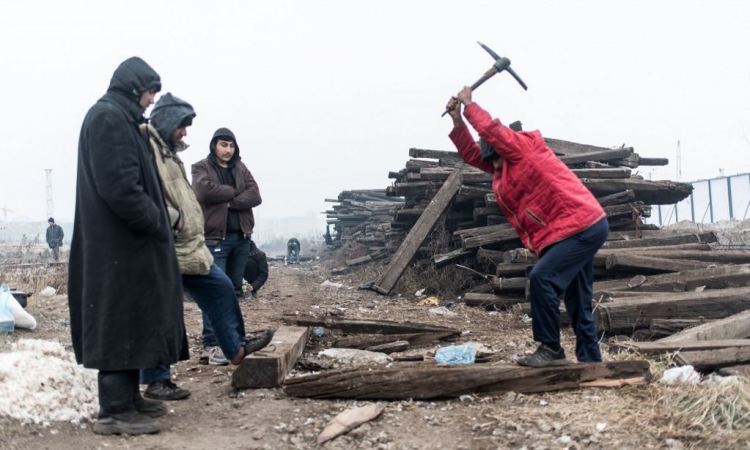
The migrants living at the Belgrade Waterfront are using the beams of abandoned tracks (or tires or rubbish) against the temperatures below zero degrees and to produce hot water. Photo by Mario Badagliacca

The migrants living at the Belgrade Waterfront are using the beams of abandoned tracks (or tires or rubbish) against the temperatures below zero degrees and to produce hot water. Photo by Mario Badagliacca

Ahead of their participation at the RIMA Photography Workshops, I got a chance to delve into the dynamics of migration — particularly the problematic way in which migratory flows are portrayed through mainstream political discourse and the media — with Sicilian photographer Mario Badagliacca, who tapped into his experience of documenting the realities of migration — most recently in my own native Belgrade — as well as Ivorian photographer Mohamed Keita, who took a self-taught route to photography after traversing Africa to reach Italy.

The power of photography is to fix the moment. Psychologically speaking, there’s a difference between perceiving a ‘fixed’ image and a ‘moving’ image (as in a video, for example). The ‘fixed’ image constrains us to reflect on it in a different way. In my case, I want the images to serve as a spur for further questions – to be curious about the stories I’m telling. I don’t want to give answers, but raise more questions. – Mario Badagliacca

Photography by Mohamed Keita

Photography by Mohamed Keita

Click here to read the full interview

Film Review | iBoy — Netflix takes the info wars to the gritty streets

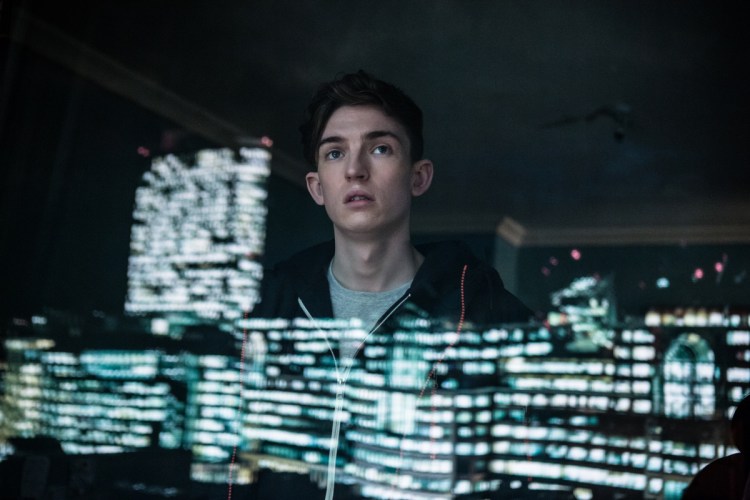
Screams of the city: Tom (Bill Milner) finds himself plugged into London’s mobile network after being attacked by thugs in this formulaic but serviceable offering from Netflix

Screams of the city: Tom (Bill Milner) finds himself plugged into London’s mobile network after being attacked by thugs in this formulaic but serviceable offering from Netflix

I had fun watching the ‘Netflix Original’ iBoy — not a groundbreaking movie by any means, but certainly a fun way to spend an evening in the company of Young Adult urban sci-fi that slots into formula with a satisfying click.

film-review-inset-pix

Love interest: Maisie Williams

“iBoy is yet another example of British cinema being able to strip down genre stories to their essentials and deliver up a product that, while hardly brimming with originality, still manages to create a satisfying piece of escapist entertainment. From Get Carter (1971) down to Kingsman (2014), the Brits sometimes manage to upend their Stateside counterparts by just cutting to the chase of what works without the need to inflate their budgets with unnecessary star power and special effects, while also toning down on any sentimentality and drama at script stage.”

Click here to read the full review

Patreon essay | MIBDUL & ‘that uncomfortable swerve’

MIBDUL & that uncomfortable swerve

Not exactly a ‘day job’ entry — though I wish it were — this month’s Patreon essay for our MIBDUL crowdfunding platform was all about me panicking over not having enough space to write out the story as I was planning it, and needing to make some drastic changes to accommodate this new reality.

“The thing about the detailed outlining of issues – and the rough thumbnailing of the pages in particular – is that, unlike the planning stage [in my journal], I approach them largely by instinct. This is the time when you have to feel your story in your gut, because you need to put yourself in the position of the reader, who will be feeling out the story in direct beats instead of painstakingly – and digressively – planned out notebook excursions. (To say nothing, of course, of the fact that the story needs to look good on the page – that the artwork needs the necessary room to breathe).”

Please consider donating to our Patreon page to access this essay and more

Do it for yourself | T.E. Grau | Interview

Horror writer T.E. Grau is slowly but surely carving a niche for himself as one of the most eclectic and artful practitioners of the genre in the American scene, as is borne out by his critically acclaimed debut collection The Nameless Dark — which we reviewed right here just a couple of days ago. Now the man himself steps into the Soft Disturbances interview lounge to give an expansive, generous and impassioned overview of what inspired him so far, and what we can expect from his upcoming novella, They Don’t Come Home Anymore… 

VIDA OCTOBER BOOK REVIEW BOX

T.E. Grau

When did you first realise that you wanted to start writing fiction, and did you act on this impulse immediately?

From as far back as I can remember, I had an interest in writing, and starting in my early teens, I fostered a nebulous, long-range plan for engaging in the serious authorship of fiction at some unspecified date. But instead of hunkering down and just doing that, I spent decades dancing around the edge of the well, writing everything else but fiction, including music journalism, review work, two different humor columns, tech writing, ghost writing, and dozens of intensely mediocre screenplays.

I think what held me back was I thought I needed to write a novel to be an author, and I didn’t have any ideas for a novel that were worth a damn, other than some bullshit pseudo-Hunter Thompson tale about an American drifting to China to document the last vestige of the American Dream on the opposite end of the world. It would have been awful.

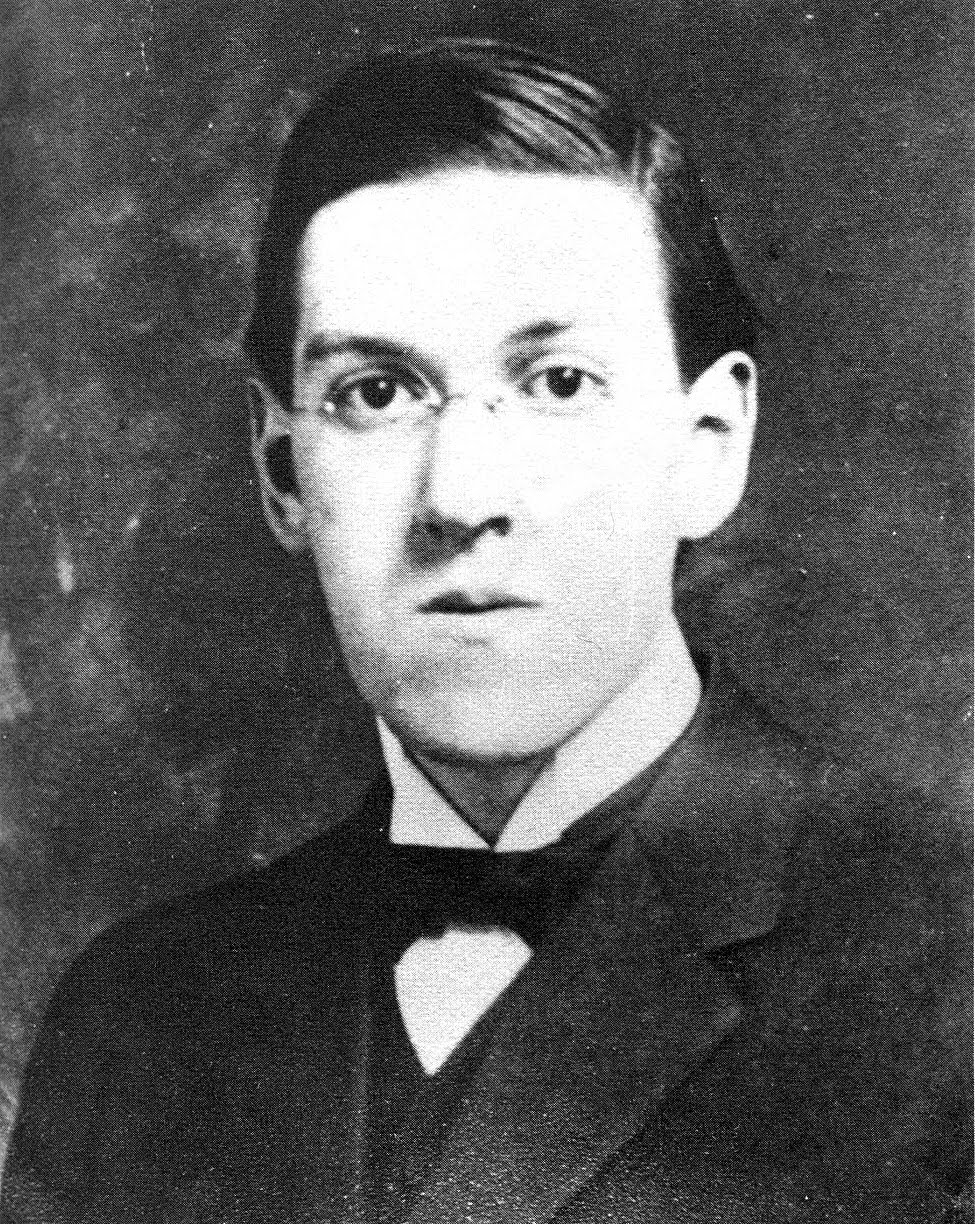
At the tail end of 2009, while I was writing one of those intensely mediocre screenplays – which just happened to be for a horror film for which I was brought in to “add in some Lovecraftian elements,” as I had read and greatly enjoyed HPL’s work back in college – my wife Ivy changed the course of my creative life forever. She’d read some of my scripts, and enjoyed some of the exposition (overly long as it was), but also saw that the medium wasn’t a good match on either end.
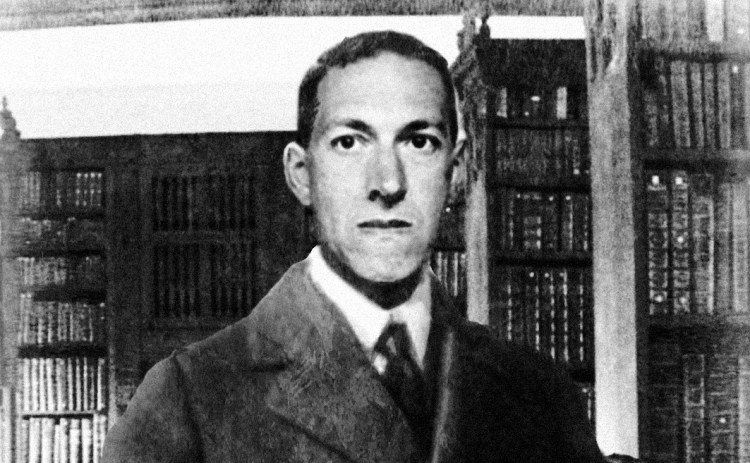
HP Lovecraft

HP Lovecraft

Finally, as I was complaining about yet another round of ridiculous producers’ notes and re-writes on a script that probably wasn’t going to get made anyway, she said, “Why don’t you just stop with this screenwriting and write fiction?” That was it. No one had ever asked me that question before. Not in the 11 years I’d written scripts, nor the decade before while I’d written everything else, futzing around for local arts magazines and live music journals. The simplicity of her question – which hit my ears as a statement – was astounding. That I could just walk away from a medium into which I’d invested over a decade of my creative life but also grown to loathe, and finally pursue something that I’d always dreamed of doing. I “quit” screenwriting that very day, and Hollywood somehow plodded onward without me.

While reading and researching Lovecraft’s work for the script I’d just been working on, I’d discovered that there was such a thing as “Lovecraftian fiction,” stories written as pastiche, inspired by, and/or set in the universe created by H.P. Lovecraft. I had no idea this was a thing. But poking around a bit more, I found out that there were anthologies looking for short stories of Lovecraftian fiction, and that an editor (and RPG icon) by the name of Kevin Ross was looking for stories for his antho Dead But Dreaming 2, to be published by Miskatonic River Press (Tom Lynch’s outfit).

I think I’m a better writer because my journey to prose took so long, during which time I wrote for very few readers in a wide range of styles

I saw that as my shot to break in. I didn’t need to write a novel to be a prose writer. I could write a short story, and ease my way into the fiction game. Find out if I have a knack for it, and then see what happens. I started writing ‘Transmission’, then started writing ‘Twinkle, Twinkle’ almost simultaneously. I pitched both to Kevin, and he vibed better with ‘Transmission’, so I finished the story and sent it to him, and he accepted it. My first completed, and purchased, piece of fiction. I held back ‘Twinkle, Twinkle’ for five years, and first published it in The Nameless Dark: A Collection, even though it was initially written in early 2010.

VIDA OCTOBER BOOK REVIEW

So, my journey to prose was a long time coming, but I think I’m a better writer because it took so long, during which time I wrote for very few readers in a wide range of styles, and mainly due to the constant rejection one faces as a screenwriter. In film (not television), the writers are on the very bottom rung, and receive no deference and very little respect for their integral contribution to the content-making process.

That was important for me to experience, if only to get over myself and realize my fingers don’t weave gold with every keystroke. Ivy working with me as my editor was the other important factor, allowing me to finally understand that the fine tuning is just as or more important than the initial burst of creativity. That not every sentence (or paragraph or page) is precious and sacred. Defensive writers aren’t great writers. Confident writers kill their babies, because they’ll always make more. She taught me that, and I owe her everything because of it.

Why is horror such an appealing genre for you, both as a reader and writer?

I think you’re either born a person who digs the darkness or you’re not. And I don’t necessarily mean people who play Halloween dress-up every day, favor goth fashion, live as wanna-be vampires, practice Satanism, or something similar.

That’s cool and all, if that floats your boat, but what I’m talking about is someone who has a genuine interest, fondness, and deep affection for things that reflect a melancholy, a gloom, a doom, a general decay and reflection of mortality or pessimism. Things that are just a bit askew from the norm. The incomprehensible or the unexplainable. Liminal places of abandonment and decay. Rain clouds and fog. Desolate fields. Ruined buildings and oddly constructed houses. The vastness of outer space. Magnolias draped in Spanish moss. Mausoleums. Subterranean places. Attics. Abandoned barns and industrial sites. Vast stretches of trees. Cheap carnivals. Ancient caves at the bottom of the sea. The beautifully grotesque and the (Big G) Gothic.
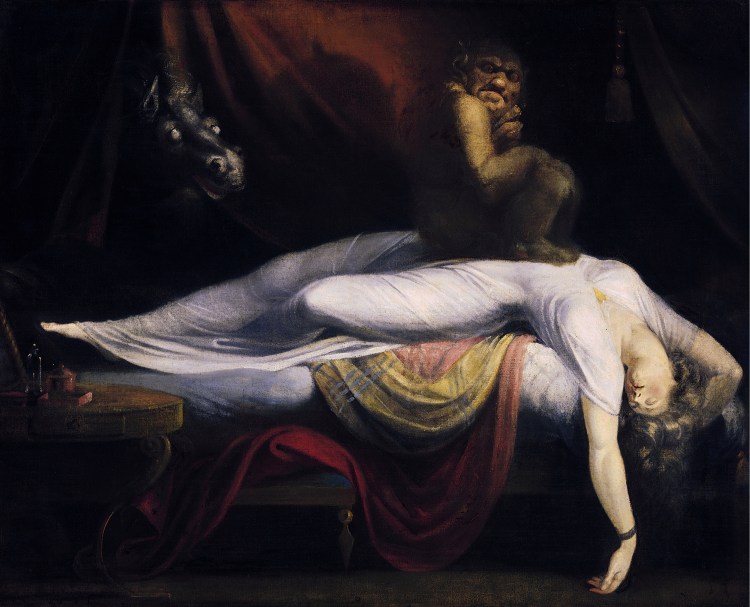
The Nightmare by Henry Fuseli

The Nightmare by Henry Fuseli

These are the essential salts, the foundation elements, of horror and fantastical fiction. It either appeals to a person or it doesn’t. You can’t force it, you can’t fake it (although some do try).

And while I’m a generally upbeat and affable person, my mind and curiosity and sense of wonder call out to those things, and when I encounter them, while most would be saddened or creeped-out or uncomfortable, they make me happy and content.

I feel at home. That’s what draws me to horror literature, and to those who can capture this sense of gloomy atmospherics, dread, and impending doom in the stories they write. There’s nothing quite like that. It’s a true power.

There are many definitions of the ‘weird fiction’ genre (which you’re also associated with). What’s yours?

I get uncomfortable with the various labels going around for what I like to call “dark fiction,” as I think people spend too much time trying to create then box-up subgenres of fiction for discussion or marketing purposes, or just for “team-ism,” which is rarely productive or positive. But I do like the term “weird fiction,” as it nods to the late 19th and early 20th century authors, including all of those amazing pulp writers, who added so much to fantastical fiction.

Weird fiction to me is also defined by a literary streak, a core of elegance and elevated prose, which usually brings with it a sense of restraint in terms of blood, gore, or even death

Weird fiction to me is work of writing that introduces the unexplained – and usually unexplainable – into our rational world. It can – and often is – laced with the scientific, the religious, the historic, and the cosmic, taking real world facts and beliefs and twisting them just a bit, then setting them back on the shelf to distract our eye, as something just doesn’t seem right about them anymore. It’s peeling back a common facade and finding something unexpected and unknown underneath. It’s the odd, the uncanny. The bizarre.

Also, and this is just a personal opinion, but weird fiction to me is also defined by a literary streak, a core of elegance and elevated prose, which usually brings with it a sense of restraint in terms of blood, gore, or even death. Weird fiction can be quite subtle, but no less impactful in terms of unsettling a reader.

Would you agree that Clive Barker and Nathan Ballingrud are among the most powerful influences on the stories collected in your debut collection, The Nameless Dark? If so, why?

Clive Barker certainly isn’t an influence, as I had never read any Barker until the stories for The Nameless Dark were either finished and published in other places, or already plotted out. I didn’t read Baker during his heyday in the 80s, as I was still geeking out over high fantasy and sword & sorcery. The closest I came to horror was Conan books.

Nathan’s work isn’t so much an influence either (as, similar to Barker, most of my stories for my collection were already either finished or plotted when I read his work for the first time in North American Lake Monsters), but his writing was and is very important to me in terms of what the genre of dark/horror/weird fiction is capable of in this new century.

No one writes with more honesty, and can inspire more discomfort, than Nathan Ballingrud

So, in many ways, he’s not an influence so much as an inspiration, as the fearless exploration of guilt, shame, embarrassment, and generally horrible behavior that lies at the heart of many of his stories hit me like discovering a new color. I was floored when I read his collection. Still am. No one writes with more honesty, and can inspire more discomfort, than Nathan Ballingrud. He’s also a genuinely scary writer, meaning he writes things that scare or disturb me. I rarely experience that reaction when reading anyone’s work.
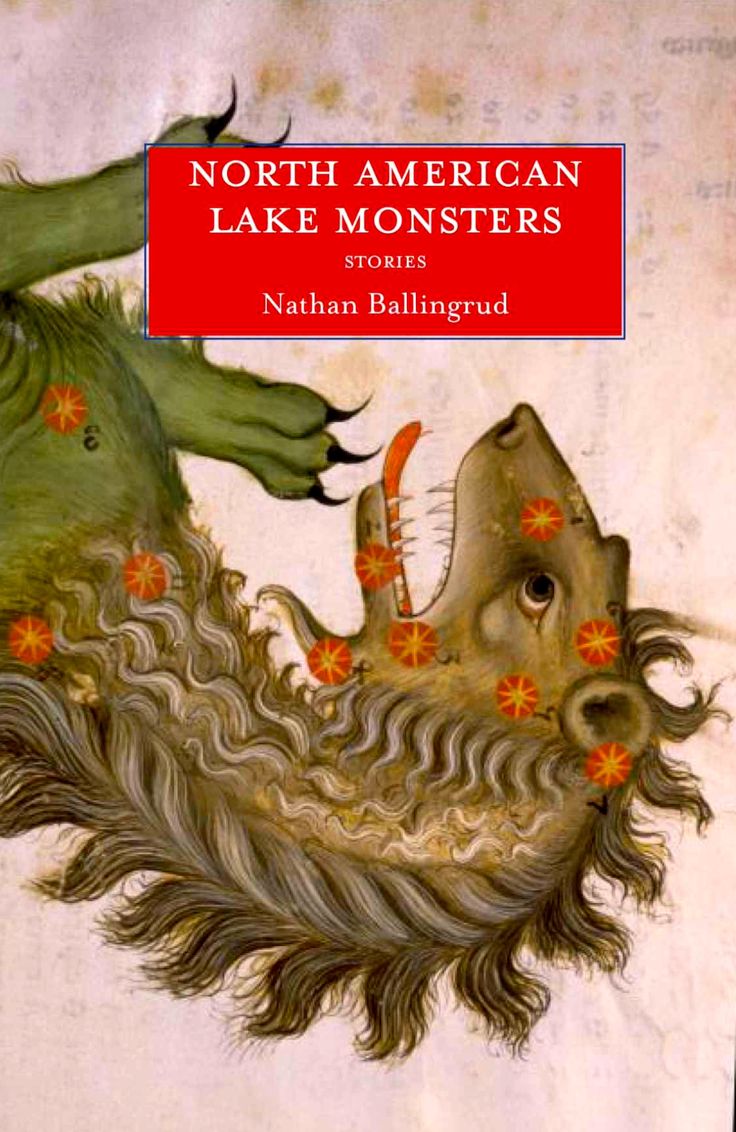
north-american-lake-monsters

Barker is great (particularly his shorter work, like ‘In the Hills, the Cities’), and his Hellraiser universe is a horror staple (co-opted by Hollywood), but in many ways, I think Ballingrud is a superior writer to Barker, although I understand it’s difficult to compare based on time periods and conventions of the respective eras.

Long term, and deep down into my marrow, I’m probably more influenced by Hunter S. Thompson, Vonnegut, and Beatnik writers than anyone in horror fiction, although Lovecraft certainly influenced several stories expressly written for Lovecraftian anthologies, some of which ended up in The Nameless Dark.

The figure of Lovecraft looms over many of the stories too. Does the fact that there are plenty of Lovecraftian ‘markets’ open at any given time play a part in that? Or have you always been attracted to the core of Lovecraft’s work?

I covered a bit of this above, as Lovecraftian fiction was my entry into prose writing, and horror writing in particular. Regardless of how I feel about him personally, his work got me into writing fiction, which literally changed my creative life, and I’m grateful that he drew from and coalesced many of his influences (Bierce, Poe, Dunsany, Chambers, etc.) into the multiverse and mythos he created.

Cthulhu in R'lyeh by jeinu

Cthulhu in R’lyeh by jeinu

What originally drew me into his work was his sense of cold cosmicism, and a universe that is far more vast and malevolent and uninterested in our existence than our puny, needy human intellect can comprehend. There is no devil, no angels, no bearded man pulling the strings. There are no strings. Just endless voids, with the occasional Outer God and Great Old One brushing against our reality just long enough to influence primal cultures, establish secretive and murderous cults, and burst minds by their very existence. I loved this. It was very dark and menacing, very secret history and cryptozoological.

Growing up in a staunch, Evangelical Christian home, the stuff I was fed in church always chaffed at the back of my lizard brain. Stumbling across Lovecraft’s outlook on the universe was a revelation, and a breath of fresh, clean, pessimistic air. I was hooked instantly.

My most recent, current, and upcoming work doesn’t and won’t contain nearly the level of Lovecraftian influence, but his work will always feature somewhere in my writing, especially in my Salt Creek stories, a novel for which I’m slowly putting together.

A satirical edge is also present in a number of the stories, mainly focused on certain aspects of American culture that seem to irk you. Were there axes you needed to grind before you set out writing some of these stories? 

Before writing fiction, I wrote comedy for years, in various mediums with varying levels of success. I’ve been doing it much longer than writing dark fiction, so humor or satire is going to naturally bleed into my writing where appropriate (and maybe where it’s not).

I do have a lot of frustration, and even some bitterness, about various aspects of American culture

I’ve never thought of my satirical viewpoints as grinding axes, per se, but I do have a lot of frustration, and even some bitterness, about various aspects of American culture, and humanity itself. Hyper-religiosity, racism, misogyny, stinginess, greed, bad parenting, predation, xenophobia, and just general shittiness to others gather at the top of a very long list of grievances against my species.

Okay on second though, I’m grinding several axes. I’d guess dozens of axes are being ground at any one given time, depending on how many stories I’m working on at the same time.

Could you tell us something about your upcoming novella, They Don’t Come Home Anymore? How would you say it builds on your previous work?

I always have a hard time summing up the novella without giving anything away, but here goes a weaksauce attempt: It’s a story about teenage obsession, conformity, parenting, class, and illness providing a backdrop for a somewhat jaundiced, slightly different take on the contemporary vampire tale.

I’m not sure how or if it does build on my previous work, although it is set from the POV of a teenage girl and follows her around in the world. In this way, it reminds me a bit of ‘Tubby’s Big Swim’, as it includes a bit of geographical wandering, which set the plot framework of ‘Tubby’.

they-dont-come-home-anymore-by-t-e-grau

I see it as something I’ve never done before (and probably won’t do again), marking my first and probably last vampire tale. Also, it’s my longest piece to date, which shows some building on my previous work.

And the cover – featuring artwork by Candice Tripp and cover design by Ives Hovanessian – is an absolutely stunner. I count myself incredibly fortunate to feature such a cover as the calling card for the novella. Candice is doing the artwork for my second collection, and we have another project in the works, as well. Crossing my fingers that I’ll be working with her for many years to come.

And finally… what advice would you give to writers keen to break into the weird fiction and/or horror scenes in particular?

First of all, write what you want to write. Truly. Honestly. Dig down deep, cast your gaze out as far as you can, and get it all out. Question everything, follow all leads. Don’t worry about genre or market or anything out of your control. Until you get paid for it as an employee with a parking pass, bathroom key, and benefits, don’t think of yourself as a “commercial writer.” Think of yourself as a writer, period, which means you write for you.

There are very few money-making fiction genres, and weird and horror fiction aren’t it

Make yourself happy and creatively satisfied, because if you’re writing weird fiction for money, a) you’ll fail in reaching your goal, because no one really makes any money, and b) your writing will come off as lackluster and passionless, which will make you even less money and lead to more failure. Don’t do that to yourself.

There are very few money-making fiction genres (and maybe one – romance/erotica, and I suppose whatever “literary fiction” is), and weird and horror fiction aren’t it. So, if you choose to write down here, crouched low in the shadows with the rest of us ghouls, do it for the right reasons. Do it for the love of the shade, the decay, the destitute and the forgotten. Do it to celebrate the beauty of the dark.

Then, get to work, and look for open markets. I’d hazard that with self publishing, online publications, and a recent proliferation of ‘zines and anthologies and fiction journals devoted to weird, horror, and dark fiction, it’s easier to place ones work these days than probably ever before in the history of written language. The markets are there. Write your best stuff and send it out.

And, in the end, if no one will publish you, publish yourself. Get your book on a shelf – YOUR shelf – and on Amazon, in indie bookstores and libraries, and build your legacy, if only for you and your loved ones. Gatekeepers are helpful, but they are not absolute. If you have the talent, the desire, and if you work your ass off, no one can hold you back from becoming a writer of whatever fiction you want to write, written however you want to write it. Very few of us are professionals, but a lot of us are writers. And there’s room for more.

Check out my own review of The Nameless Dark right here, and stay updated with all things Grau by visiting ‘The Cosmicomicon’

Read previous interview: Alistair Rennie

Featured image: ‘Swallowed by the Ocean’s Tide’ by Ola Larsson 
Loneliness relief: collaboration & writing

Having slogged three years to write a debut novel – that’s really a novella – I’m finding myself more and more drawn to collaboration as a default mode of planning for and engaging in future projects.

It’s partly to do with wanting a fresh start – Two was revelatory and educational to write, but also a fearful trudge with no apparent end in sight (personal matters which coloured the narrative itself, and others that didn’t, further cast a shadow on the experience).

But it’s also simply down to that alchemy of opportunity and the desire to experiment with different forms. As is the same with most of my generational colleagues – I suppose – experiencing fiction was always a multi-media experience for me: what with cartoons, comics, video games, cinema and literature usually existing side-by-side, and even more so now that ‘media convergence’ is such a blatant aspect of everyday life that even the term itself sounds redundant.

TWO_TeodorReljic

A comic book project of mine is currently on the rocks, but some TV/film based stuff might just take off. Either way, the process of creation for each of these things was markedly different to what I experienced with the novel.

Brewing largely in my head throughout its three-year conception period, Two was as obstinate and unwieldy a draft of novel that you can imagine – perhaps more true than ever in this case, with a parallel narrative structure defining its contours.

The new projects, on the other hand, are being put together in an atmosphere of constant dialogue – quite literally,  plot points and character beats are drafted in conversation (with a whiteboard and marker never too far behind).

I’m finding it to be a great way of busting out of the warrens of endless possibility on the one hand, crippling self-doubt on the other, which tend to characterise the pitfalls of writing prose fiction from scratch. Collaboration both gets you out of your own head to enjoy some fresh air, and forces you to ‘make your case’ to another person at every turn.

Discovering the joys of structure mechanisms for storytelling is also something of a revolution for me. Again, like most people I know – or know of – I was initially sceptical of applying any form of overt structure to any piece of fiction I write a priori. For the usual reasons, of course: takes the fun out of it, ruins spontaneity, etc. Breaking out of that prejudice and exploring these options is proving to be far more liberating that I’d previously thought. But that’s something I’d like to talk about further in a future blog.

Here’s hoping that you’ll also hear more about the aforementioned projects here soon. Meanwhile, click here for all you need to know about Two, including where to order it from.

There and back again | Trip to Serbia

Just returned to the island home after a long-overdue visit to the original homeland of Serbia, and apart from the dreaded-but-expected plunge back into the heat and a grudging return to the work routine, what sticks in the mind is that heady cocktail of nostalgia and sentimentality that such a trip inspires, and which, I think, even those most impervious to such irrational (but all-too-human) reactions would find difficult to short-circuit.

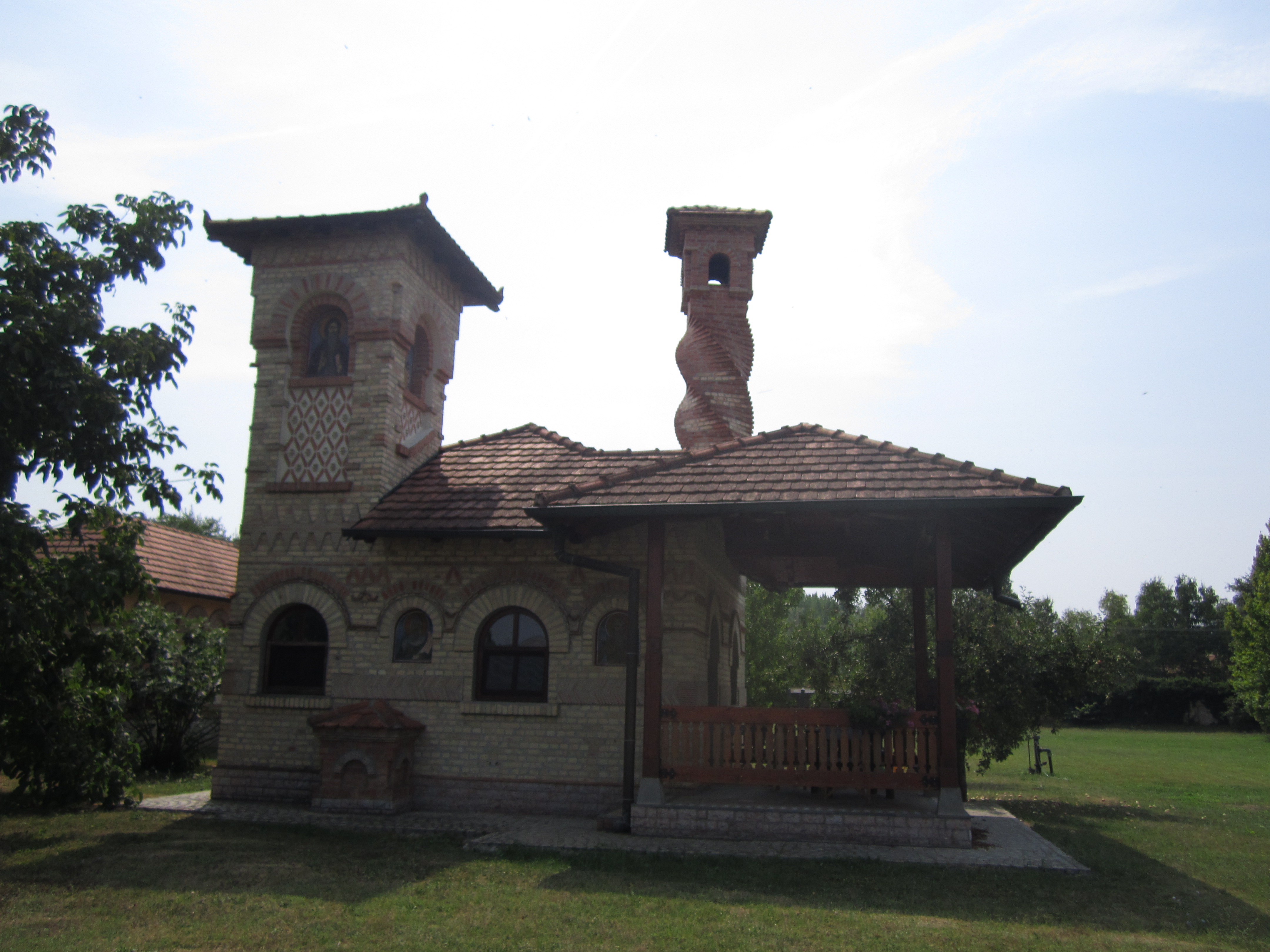
Kovilj: True Detective-worthy?

Kovilj: True Detective-worthy?

Apart from the usual visit to relatives – a nicely balanced town & country trip encompassing both Belgrade and the Vrujci Spa – this time I also joined a group of fellow Maltese on a tour to Kovilj, a village near the city of Novi Sad known for its rich stork population and which boasts a proximity to the Danube.

Some non-euclidian architecture courtesy of the Kovilj monks

Some non-euclidian architecture courtesy of the Kovilj monks

There’s obviously something bracing about visiting your native country after six years, not least because you’re bound to change your perspective substantially since the last time you were there.

One of the reasons for my absence was that I wanted to travel a bit more. Malta -> Serbia was pretty much the extent of my travel experience for the longest time – i.e., until I was granted Maltese (and therefore EU) citizenship a couple of years ago – and having now seen a bit more of the rest of Europe, I could view the home country with a bit of a tilted perspective.

Eclectic sight in Belgrade

Eclectic sight in Belgrade

Belgrade itself certainly reminded me of other places now – Rome, Berlin – and so I could appreciate its beauty better for placing it into some kind of context. Edinburgh was one of my favourite recent travel destinations; Belgrade doesn’t have all that much in common with it save perhaps the comfortably compressed size of its city centre – a coziness I find essential.

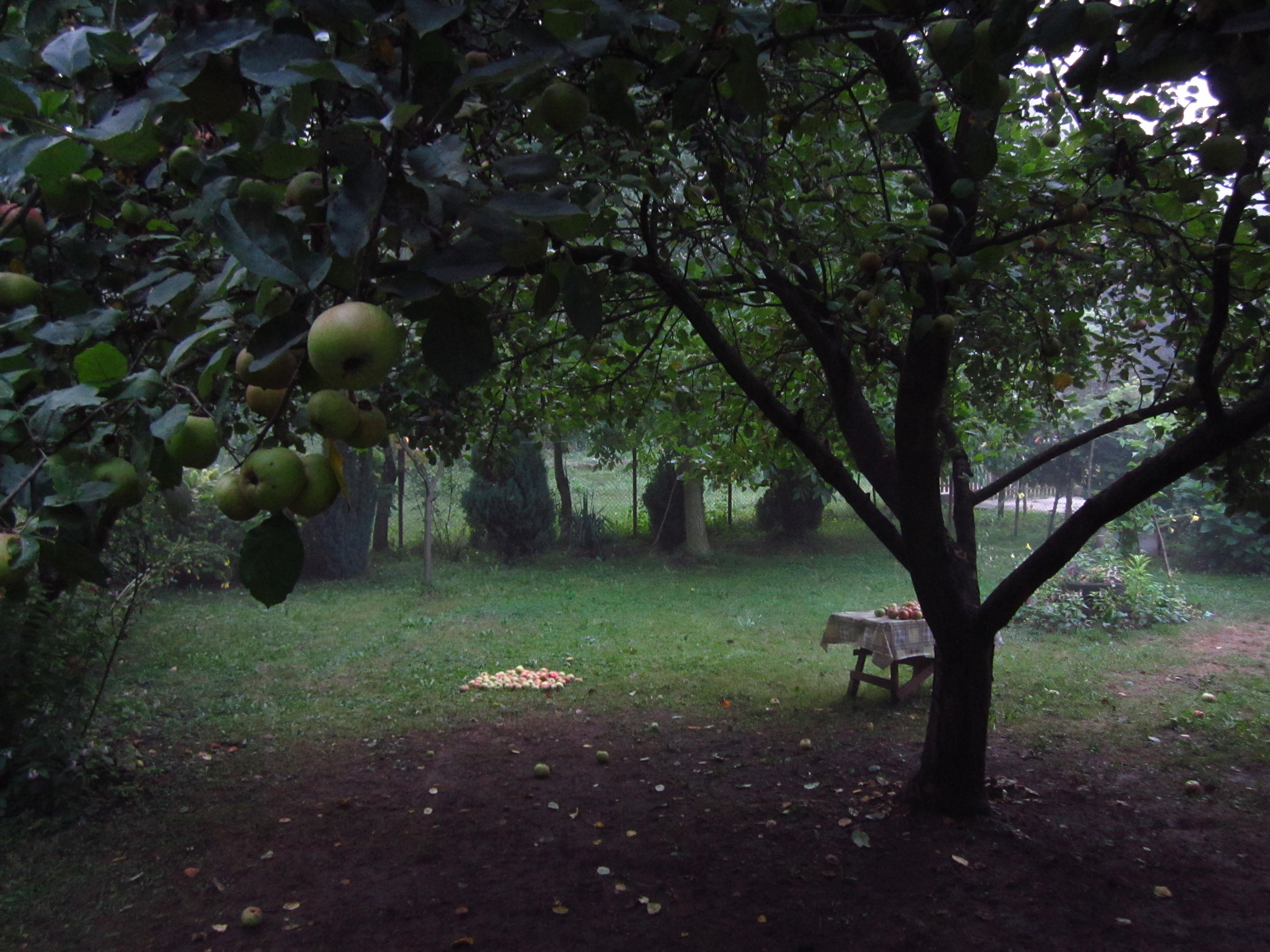
Malta is infamous for its lack of greenery, and an aggressively neo-liberal policy of its current government only spells further doom for the island in this regard. So the trip to Banja Vrujci – where my maternal grandparents have been keeping a summer house for 35 years, give or take – was welcome as ever, even if the overcast weather was something of a downer.

Our family plot at Banja Vrujci

Our family plot at Banja Vrujci

But the Kovilj tour took us to other green places too – some of them housing beautiful monasteries – and it was a reminder of how Serbia, for all its problems, retains a proud farming tradition in certain areas.

One thing I didn’t do much of in Serbia is write. Between the fact that we were moving around so much and simply being on ‘holiday mode’, I can’t really say I took full advantage of a change of setting and pace to give a fresh spin to the projects I’m currently working on.

On the Danube: Algernon Blackwood was on to something

On the Danube: Algernon Blackwood was on to something

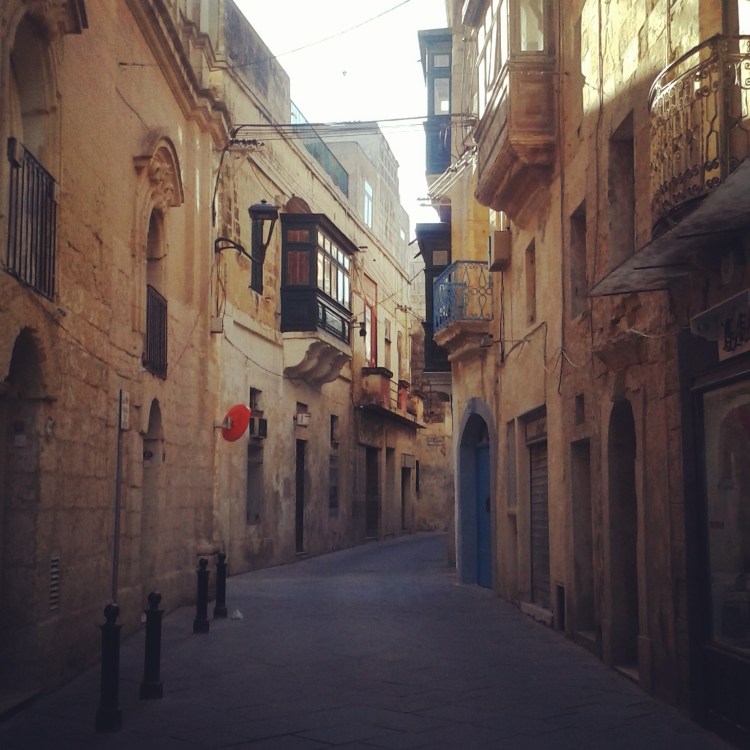
But the summer – and its attendant torpor – should be winding down soon enough. And Malta is inspiring too, in its own way. Obstinate yellow streets and buildings, flashes of beauty both random and stuffily curated, contradictions that can’t be explained and so make for great fodder. We’ll start at the Malta Mediterranean Literature Festival, then take it from there…

And amusingly enough, our Kovilj tour made it to the local online news portals… 

We Need to Talk About Genre | Individuality vs Community

Argument: We divide fiction up in genres because of our chronic fear of loneliness.

I’m invested in this question, which is evidenced by my foolhardy effort to write a parallel-narrative novella incorporating both the fairy tale idiom and the very ‘real’ world, as well as my attempt at getting at what that multi-faceted mongrel genre ‘the New Weird’ is all about for a Master’s dissertation.

But first, some (recent) observations on the matter from more articulate and well-versed people than myself.

*

  1. Ursula K. Le Guin’s speech at this year’s National Book Awards

“I rejoice at accepting [the award] for, and sharing it with, all the writers who were excluded from literature for so long, my fellow authors of fantasy and science fiction—writers of the imagination, who for the last 50 years watched the beautiful rewards go to the so-called realists.

“I think hard times are coming when we will be wanting the voices of writers who can see alternatives to how we live now and can see through our fear-stricken society and its obsessive technologies to other ways of being, and even imagine some real grounds for hope. We will need writers who can remember freedom. Poets, visionaries—the realists of a larger reality.”


  1.  ‘A Better Way to Think About Genre’ by Joshua Rothman (New Yorker)
Northrop Frye

Northrop Frye

“It’s tempting to think that we might do without these kinds of distinctions altogether. Why not just let books be books? The thing is that genre doesn’t have to be vexing. It can be illuminating. It can be useful for writers and readers to think in terms of groups and traditions. And a good genre system—a system that really fits reality—can help us see the traditions in which we’re already, unconsciously, immersed. As it happens, there is such a system: it was invented by the Canadian literary critic Northrop Frye, and laid out in his 1957 masterwork, Anatomy of Criticism.”

  1.  The Real Mr. Difficult, or Why Cthulhu Threatens to Destroy the Canon, Self-Interested Literary Essayists, and the Universe Itself. Finally. by Nick Mamatas (Los Angeles Review of Books)
A young HP Lovecraft

A young HP Lovecraft

“Lovecraft’s quality is obscured by his difficulty, and his difficulty is obscured by his popularity. If Lovecraft isn’t seen as a difficult writer, it is because of the pulp idiom in which he worked. [Jonathan] Franzen points to college as the place where people are made to read difficult books, but Lovecraft is an adolescent fascination. Lovecraft demands the careful attention that only a teen boy with little else to do – no high school romances, no sports practice – can muster. Lovecraft’s pulp provenance, and early spike by Edmund Wilson, kept Lovecraft’s work from being taken seriously. Only over the past twenty years, with reprint volumes via Penguin Classics and Library of America, with champions such as Michel Houellebecq and Reza Negarestani has Lovecraft earned a place in what we used to call the canon (while making quotation marks in the air with our fingers, notch).”

*

These are all problems that have been burning at my brain in some form of another for as long as I can remember (slight exaggeration, but it certainly feels that way). Because I take this very seriously for whatever reason – friends and family who know me intimately can feel free to psychoanalyze away – I’m driven to find an evolutionary root to our need to divide up literature into genres, and then argue about it endlessly.

Cards on the table: if I’m a follower of any critical school on this front at all, I’m a follower of Frye’s. His organic view of genre both suits my needs as a writer and provides me with an inclusive argument about genre that, ostensibly, short-circuits going-nowhere binary arguments on the issue. Also, there’s a pervasive paradox in the way I process this whole thing: I hate the idea of genre as segregation, but I don’t want us to do away with recognizing genres, because there’s an aesthetic pleasure in picking out what belongs to which tradition.

That Edgar Allan Poe influenced Lovecraft who in turn influenced Ridley Scott and Stuart Gordon and Caitlin R. Kiernan and Nick Mamatas and Cradle of Filth and countless others, and that the details stolen from Lovecraft by each of these artists are traceable to Lovecraft but still distinct, and that this intertextual richness evokes a kind of hopeful reminder of the prodigious human imagination, as it stretches across generations.

But on a more universal note, I will suggest that genre stems from a combined need for both INDIVIDUALITY and COMMUNITY. In this pantomime debate between the ‘literary mainstream’ and the ‘genre community’, the literary side is ‘clubby’ in the original sense of the word: the domain of an elite that gatekeeps itself into a privileged minority, with all the attendant ‘real world’ social implications of that.

While the ‘genre’ community, on the other hand, is seen as a regressive ‘cult’ circle that turns its back on the ‘real world’ in favour of a vacuum-sealed aesthetic that often favours the tried and tested over any attempts at current social commentary or formal innovation (perhaps the Pre-Raphaelite Brotherhood is an iconic example).

But this perception – the pantomime is very much a perception – is made doubly complicated by the fact that we’re discussing works of art here. Leaving aside value judgements of the individual works of art in question, the reason why the genre debate will never settle into a peaceful resolution is because we’re asking the works of individuals to answer to the needs of a community, however large and nebulous this community may be.

There will always be mavericks, trailblazers, and ‘exceptions to the rule’. But even declaring that the mavericks are all that you like places you in a double bind: each maverick will have their influences, and in each influence – much like Lovecraft’s fish-god mongrels from Innsmouth – lies a genetic code that can’t be denied, and which ties back to a tradition.

Traditions are what genre is built on, and tradition will be something not even the most opaque of ‘literary’ fiction would be able to deny… strain as it might for originality and freedom from market constraints and critical labels.

We all want to be ourselves, but none of us want to be lonely.

READ RELATED: Getting it Ass-Backwards: The Genre Binary at LonCon

‘Writing is too much fun’ | Jim Crace

Jim Crace at a press conference at the University of Malta earlier this month. Crace will be Writer in Residence there until December 19

Jim Crace at a press conference at the University of Malta earlier this month. Crace will be Writer in Residence there until December 19

My interview with novelist Jim Crace was picked up by the Man Booker Prize’s website this week. The acclaimed British author is currently holding court at the University of Malta – my alma mater – where he will be stationed as Writer in Residence and erstwhile mentor to local authors until December 19.

I’m very excited to form part of the intimate gathering of Malta-based writers who’ll be receiving advice and encouragement from Crace in the coming weeks. Initial meetings have certainly been morale-boosters. For a decorated novelist with a long and illustrious career behind him, Crace is as unassuming as they come, and it’s also refreshing to see him express a genuine interest in Malta, contrary to the tokenistic praise – delivered in press-friendly soundbites – by other celebrity visitors.

Here is what the Man Booker people had to say about all this:

Jim Crace, twice a Man Booker shortlistee, has been talking in Malta, where he is currently writer in residence at the university of Malta, about why he reversed his decision not to write another novel, and he credits, in part, the Man Booker itself. ‘I honestly wasn’t expecting to get shortlisted for the Man Booker again,’ he said about his 2013 shortlisting for Harvest. ‘Really, I thought that I was coming to the tail end of my career and just writing books for myself, essentially … but then along comes Harvest … and my career just bounced back again. Suddenly, what was gradually quieting down was even noisier than it ever was.’ This is good news for his legion of admirers. It is good to know that the prize can, while it can’t cure flu or the ageing process, nevertheless can have such a curative effect. Crace admitted another motivation too: ‘Ultimately the real reason why I returned to writing was simple: it’s just too much fun not to do it.’

Click here to read the full piece

Click here to read my interview with Jim Crace