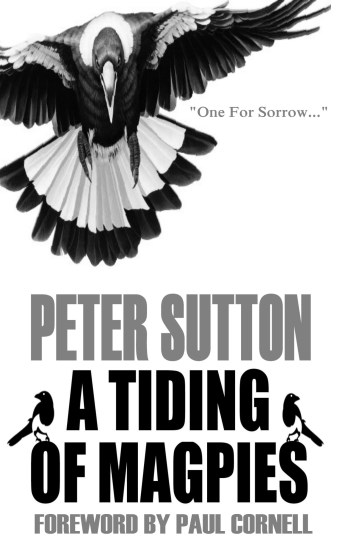
Frenzied box of stories | A Tiding of Magpies by Pete Sutton

a-tiding-of-magpies-e-book-new-master-with-foreword

Getting a glimpse on an author’s evolution is always an intriguing prospect. Particularly when this happens through the lens of a short story collection, where variety is almost a necessary part of the experience, allowing you to see how the author manipulates various themes and points of view — all in the space of one compact volume.

The debut collection by Bristol-based writer Pete Sutton, A Tiding of Magpies, is something of an extreme example of this exercise in action, being a collection of just-about themed stories jumbled together, of varying length and varying genre category.

Although the overall arrangement of the stories — the book is published by Kensington Gore — may come across as a tad messy and haphazard as the reader weaves his way through the byways of Sutton’s frenzied imagination, there’s a raw and direct way to Sutton’s storytelling that will always command the reader’s attention.

Opening with a supernatural chiller about a pair of brothers — one of whom appears to be harbouring a malevolent form of telekinesis — with ‘Roadkill’, Sutton establishes himself as a writer capable of both getting at emotional pressure-points straight away to hook the reader in, while operating with a clear and unpretentious style on sentence-level that ensures you’re sucked in without having to look back.

Working through the collection, I’ve often found myself in that rare but wonderful position — the best possible, I think, for a reader — where the lines just rolled their way over my eyes while my brain was busy making pictures.

Sutton’s capability and flexibility as a writer can never really be doubted as you sort through this frenzied box of stories

The downside of this mode of effortless writing — at least, in Sutton’s case — is that it can sometimes feel a tad too abrupt. Some of the stories in A Tiding of Magpies more or less fit into the ‘flash fiction’ mode, with a few of them being effective evocations of a particular mood or idea — ‘Dismantling’ and ‘Not Alone’ are excellent chillers that take full advantage of the constricted form — but the likes of ‘The Cat’s Got It’ feel like little more than doodles thrown into the collection for the hell of it.

Nevertheless, Sutton’s capability and flexibility as a writer can never really be doubted as you sort through this frenzied box of stories. There’s wacky humour (‘An Unexpected Return’), far-future sci-fi (‘The Soft Spiral of a Collapsing Orbit’), experimental mood pieces (‘Sailing Beneath the City’), metafictional escapades (‘Five for Silver’; ‘Christmas Steps’) along with a plethora of horror and plain (or not so plain) weirdness spun in a generous and freewheeling collection.

The final story in the collection, ‘Latitude’ stakes a very particular claim that is bound to reverberate in the reader’s mind’s eye — being something of an exercise is psychogeography for its author’s beloved Bristol, a mid-life crisis tale as well as a story of encroaching horror whose cockroach-infested undertones brought to mind Nathan Ballingrud’s The Visible Filth.

Though rough around the edges as an overall editorial product — perhaps a bit of pruning and re-arranging could have made the collection feel more powerful and cohesive — A Tiding of Magpies certainly announces Pete Sutton as a writer of talent and variety, and I certainly look forward to reading more from him… in whichever genre future work of his slots under. If any at all, that is.

Eternal Frankenstein read-a-thon | Table of Contents

Over the past couple of months, I’ve been reviewing the new Word Horde anthology Eternal Frankenstein, edited by Ross E. Lockhart. As was the case with my read-a-thon of Swords v Cthulhu, I tackled the anthology story by story, and my reviewing method was be peppered with the cultural associations that each of these stories inspire. These were presented with no excuse, apology or editorial justification. You can find the complete linkstorm to all of the reviews just below. Enjoy! 

eternal-frankenstein

Torso, Head, Heart by Amber Rose-Reed 

Baron von Werewolf Presents: Frankenstein Against the Phantom Planet by Orrin Grey

Thermidor by Siobhan Carroll

They Call Me Monster by Tiffany Scandal

Sugar, Spice and Everything Nice by Damien Angelica Walters

Sewn Into Her Fingers by Autumn Christian

Orchids by the Sea by Rios De La Luz

Frankenstein Triptych by Edward Morris

The Human Alchemy by Michael Griffin

Postpartum by Betty Rocksteady

The New Soviet Man by G.D. Falksen

The Un-Bride; Or No Gods and Marxists by Anya Martin

Living by Scott R. Jones

Wither On the Vine; Or Strickfaden’s Monster by Nathan Carson

The Beautiful Thing We Will Become by Kristi DeMeester

Mary Shelley’s Body by David Tempelton

Please consider donating to our Patreon to help us make Malta’s first serialised comic, MIBDUL. Thanks!

Eternal Frankenstein read-a-thon #14 | David Templeton

Over the past few weeks, I’ve been reviewing the new Word Horde anthology Eternal Frankenstein, edited by Ross E. Lockhart. As was the case with my read-a-thon of Swords v Cthulhu, I tackled the anthology story by story, and my reviewing method was be peppered with the cultural associations that each of these stories inspire. These were presented with no excuse, apology or editorial justification. Now, please enjoy the final review of the series.

eternal-frankenstein

Mary Shelley’s Body by David Templeton


And now, at the very end of Lockhart’s anthology, we get a focus on the body — the ultimate body as far as we’re concerned: that of Mary Shelley, the originator of all of the things we’ve been discussing so far, and one of the most fecund imaginations of the Romantic and/or Gothic high point of literature — an unexpected force to be reckoned with considering her young age when she composed her key work, and her compromised — some would say relentlessly tragic — private life.

David Templeton’s novella — it is in fact the longest piece in Eternal Frankenstein — makes for a fitting conclusion to this varied and comprehensive tribute to the legacy of Shelley’s most famous work, by forcing a fictionalised version of the beleaguered author to confront her many demons, seemingly as a final goodbye before parting the world for good.

In turn, the story also forces us, the readers, to come face-to-face with Frankenstein’s many themes and emotional implications; some of which weigh on the very real side of disturbing: not just in their Gothic power to enthrall and terrify by dint of grotesque detail and atmosphere, but also because of the tortured psychological place they come from, the biographical backbone of which Templeton makes it a point to unpeel, explore and embroider further to craft his novella.

Mary Shelley (1797-1851)

Mary Shelley (1797-1851)

The setting is as baldly Gothic as they come, though, with Shelley’s disembodied form rising from her Bournemouth grave to settle a score initially mysterious to her. What follows is something of a rambling confessional whose shape, like the Creature Shelley constantly makes reference to in various ways, could have used some trimming and re-arrangement.

While the concept is a worthwhile one — and, again, a perfect note to end the anthology on — that does come with a real emotional pay-off in the end, Templeton’s decision to go over some of the key moments of Shelley’s life, as well as key passages of Frankenstein, will come across as a tad tiresome to those of us familiar with the scenes and passages in question.

What’s even more problematic is that Templeton doesn’t really do all that much to upend expectations, either: the obvious connection between the death of Mary’s mother while giving birth to her is made yet again, while Mary waxes lyrical about her Creature while condemning Victor Frankenstein as a coward at best, a clueless, callous bastard at worst.

But the digressive nature of it all is part of the point — this is a kind of mental Groundhog Day for our poor Mary, and if nothing else, Templeton demonstrates a key understanding of what makes Shelley’s work tick. And neither would it be fair to say that he succumbs entirely to boilerplate interpretations of the text; Victor Frankenstein’s failure is eventually revealed to be Mary’s own, in connection with the death of her first unborn child.

Ultimately, here we have a story about bodies — the bodies we encounter and the body that we inhabit, and all of the complexity that that implies once we’re forced to stop taking them for granted. This complexity falls down on Frankenstein’s Creature like a ton of bricks since he is first brought into the world, and so it serves to offset our own lives at any given moment. And, finding a suitably tortured test subject in Mary Shelley, Templeton uses the opportunity to zone in on these moments at various points in time: from bodies freshly born and vulnerable, to those sickly and decaying… and everything in between.

The body is all we have. And at some point, we were all Frankenstein’s Creature. At some point, we will BE Frankenstein’s Creature yet again. This, above all, is why Shelley’s legacy endures, and why it’s likely to help create more anthologies like Eternal Frankenstein in the years to come.

Read previous: Kristi DeMeester

Stay tuned for an interview with Ross E. Lockhart, the editor of Eternal Frankenstein!

Eternal Frankenstein read-a-thon #13 | Kristi DeMeester

In the coming weeks, I will be reviewing the new Word Horde anthology Eternal Frankenstein, edited by Ross E. Lockhart. As was the case with my read-a-thon of Swords v Cthulhu, I will be tackling the anthology story by story, and my reviewing method will be peppered with the cultural associations that each of these stories inspire. These will be presented with no excuse, apology or editorial justification.

eternal-frankenstein

The Beautiful Thing We Will Become by Kristi DeMeester

There might be something to the niggling assumption that, Mary Shelley having penned Frankenstein when she was merely nineteen years old helps to lend the book with the urgent, neurotic charge that it the necessary flipside to the life-and-death energy that characterises youth.

The ‘outsider’ status of the creature is the biggest element in favour of that interpretation, but I would argue that there’s also something to Victor Frankenstein’s initially obsessive, but ultimately brittle commitment to his project that speaks to the young person’s unease of matching their dreams — and nightmares — to the cold slap of reality.

As we’ve already seen, Lockhart himself appears to be very sensitive to this, what with two back-to-back stories from Eternal Frankenstein capitalising on the legacy of Shelley’s original story by juxtaposing it to a high school context, with inspired results.

The strand is however also picked up by Kristi DeMeester, though her take is less about the social dynamics of the high school than it is about the harried bonds of love that develop among young friends at that delicate stage. More importantly, it’s about how just a small push into stranger territory can alter these young lives, seemingly for good.

teenage-frankenstein

Our Frankenstein’s Creature is one Katrina, and the narrator is a hanger-on best friend who grows curious about Katrina’s — initially slight — hints of bodily modification. But family history steps in to ensure this morphs into a full-on obsession: after her father abandons her mother in pursuit of a younger (and crucially, slimmer) woman, the narrator is thrown into a calorie-counting frenzy by a newly weight-conscious single mother.

This serves to give a keener edge to her attraction to Katrina, which is really an attraction towards the grisly experiments her kindly but eccentric father performs on his daughter.

DeMeester writes from the point of view of the narrator’s eerie emotional state, and as such the narrative voice isn’t judgmental, but fully immersed in a world that sees self-destruction as a form of salvation and horrific acts of bodily modification by a demented patriarchal figure as something to embrace. Needless to say, the effect is disturbing. But since we’re so close to the narrator all the way through, we achieve a strange sort of empathy with her journey.

DeMeester morphs disgust into madness and back into love, leaving us to observe the journey with nervous awe.

Read previous: Nathan Carson

Eternal Frankenstein read-a-thon #12 | Nathan Carson

In the coming weeks, I will be reviewing the new Word Horde anthology Eternal Frankenstein, edited by Ross E. Lockhart. As was the case with my read-a-thon of Swords v Cthulhu, I will be tackling the anthology story by story, and my reviewing method will be peppered with the cultural associations that each of these stories inspire. These will be presented with no excuse, apology or editorial justification.

eternal-frankenstein

Wither on the Vine; Or Strickfaden’s Monster by Nathan Carson

One of the fun things about the kind of spirited pastiche that tends to animate anthologies like Eternal Frankenstein is that the fun can easily be had from various sources, or at the expense of literary and historical figures that can plausibly be co-opted into the overall schema of the legacy left behind by Mary Shelley’s original text.

Nathan Carson’s tale certainly makes the most of this tendency, meshing not one, but two key historical characters — of, it must be said, varying degrees of prestige — into the overall mix of a Frankenstein-inspired story.

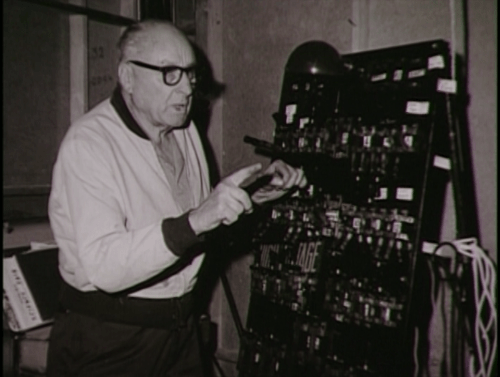
The titular character of Kenneth Strickfaden is inspired by the real-life figure who brought unforgettable Hollywood props from some classic Hollywood movies — most famously, as it happens, the lightning-powered device that brings the Creature to life in James Whale’s groundbreaking adaptation of Shelley’s text.

Kenneth Strickfaden (1896-1984)

Kenneth Strickfaden (1896-1984)

Because his car breaks down in a desert canyon near Utah, Strickfaden finds solace in the company of the enigmatic Mr Baldwin, who offers him lodging and car repairs in exchange for his help with some left-field science experiments he is conducting in his home; Strickfaden’s admittedly amateur reputation as a quirky tinkerer preceding him thanks to a one-off appearance in the pulp magazines of sci-fi pioneer Hugo Gernsback.

What follows is a decent into weird science as pushed into weirder extremes by particularly American religious convictions, with Strickfaden discovering more than he should about what Baldwin’s been up to — specifically, how his community aims to ‘treat’ some of its ailing women — before being given the opportunity to cross paths with one of his idols: the one and only Nikola Tesla.

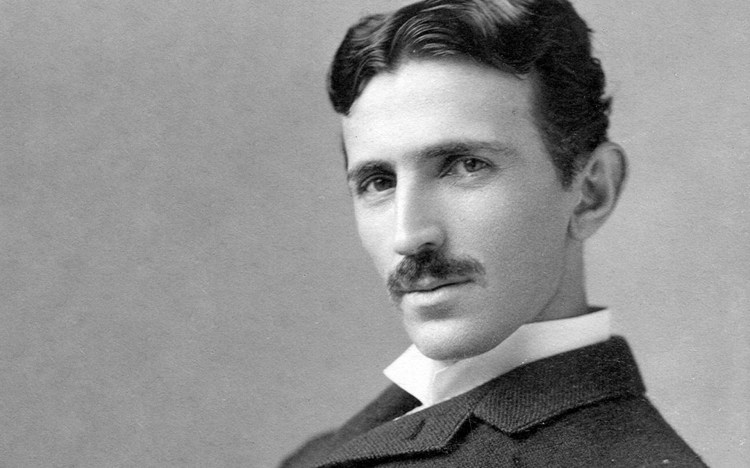
Tesla’s reputation as a real-life ‘mad scientist’ animated by Romantic ideals — and beaten down by the capitalist machine — renders him particularly vulnerable to appropriation by modern speculative fiction writers. But while the Tesla in Carson’s story still comes to us draped in the same legendary aura, his depiction is far less flattering — and certainly less heroic — than one has come to expect. Here, Tesla remains an eccentric genius who produces results, but he’s also as much in love with money as he is with his creations, and doesn’t seem particularly concerned with human life beyond its impact on his experiments.

Bright spark: Nikola Tesla

Bright spark: Nikola Tesla

In short, he is the true Victor Frankenstein of the story — we could say that Baldwin is initially placed as something of a red herring — but because Carson tells the story in a slow-burning, old-timey tone that exudes wry irony, Tesla is presented as a blackly comic figure rather than an out-and-out villain.

It’s clear that Carson is having fun creating a situation in which Strickfaden and Tesla get to meet: it’s a kind of ‘origin story’ for Strickfaden, actually. And in fact, Baldwin’s religious community is presented as little more than an easy-to-ridicule gathering of desperate, credulous people who get what they bargained for when they meddle with the natural order.

Which is ironic, because whereas the Victor Frankenstein of Shelley’s original text was always keenly aware of the fact that his work may be an affront to God, Baldwin and his followers have convinced themselves that what they’re doing runs in exact tandem with God’s wishes. Stuck in the middle is their sly enabler — Tesla — and Strickfaden, an accidental hanger-on who ends up helping both sides.

In short, it’s a story about that peculiarly American trait of improvising with newfangled phenomena — be they scientific innovations or religious sects — and then doing your best to profit from them, or at least survive with all your limbs intact when it all goes to shit.

Read previous: Scott R. Jones


Eternal Frankenstein read-a-thon #11 | Scott R. Jones

In the coming weeks, I will be reviewing the new Word Horde anthology Eternal Frankenstein, edited by Ross E. Lockhart. As was the case with my read-a-thon of Swords v Cthulhu, I will be tackling the anthology story by story, and my reviewing method will be peppered with the cultural associations that each of these stories inspire. These will be presented with no excuse, apology or editorial justification.

eternal-frankenstein

Living by Scott R. Jones

Since horror and fantasy are, broadly speaking, my favourite of the classic speculative fiction categories — while a wide berth is given to the Weird and any form of intermixing — my experience with literary sci-fi falls a bit on the lean side.

That said, the sci-fi favourites I do have, I cling to very dearly indeed, dipping in for regular re-reads. Mary Shelley’s Frankestein is actually one of them. The other is William Gibson’s pioneering work of cyberpunk fiction, Neuromancer. And despite the fact that both novels were written over a century apart from each other and that, apart from their central commitment to a science fictional set of ideas, situations and concepts, could not be further apart in tone, narrative rhythm and scope, I like to think of both of them as being complementary.

Shelley addresses the limits of bodily modification and reanimation, and problematises the notion of a creature created ex nihilo, but without the embracing context of family and community. The Creature in Shelley’s text grasps at the world outside of itself to give it meaning — it feeds on what we can widely describe as ‘culture’ to legitimise itself, but all the while its aberrant bodily shape snuffs out any chance of real belonging.

It is a tale of bodies and what they mean, and how we process or fail to process their realities: be it the Creature’s own failed — but understandable — attempts at making peace with its uniquely tormented predicament, or Victor Frankenstein’s refusal to take responsibility for his engineered progeny, largely on the basis of its physical appearance and its implications.

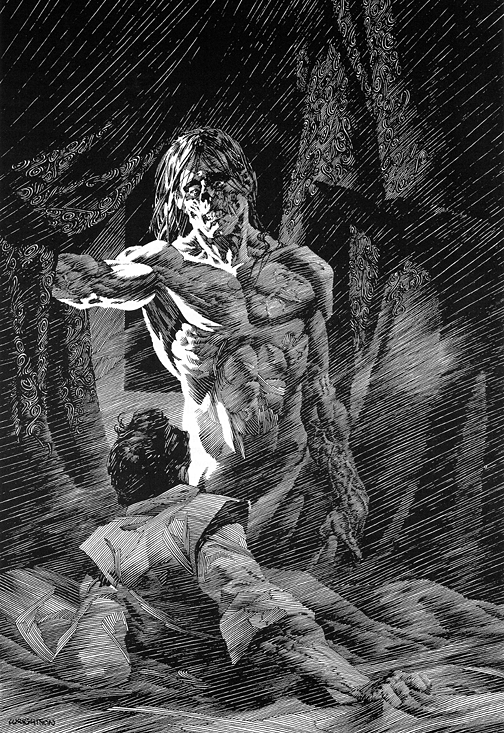
Frankenstein by Bernie Wrightson

Frankenstein by Bernie Wrightson

In the end, both characters are disappointed by the fact that their physical reality doesn’t match up with the abstract dreams they have: Victor’s Creature doesn’t conform to the aesthetic decorum he may have wished to achieve with his experiment — which further cements the fact that his work is an affront to God — while the Creature’s admirable self-taught attempts at becoming intellectually and emotionally sensitive are ultimately rendered moot by the limits of its body.

The innovation of Neuromancer, on the other hand, was to circumvent the body altogether in favour of an exploration of the cybernetic singularity which has since become rote not only in fiction, but in daily life too (you’re reading this online, aren’t you?). The open hostility that some of Gibson’s characters espouse for ‘meat’ (i.e., traditional biological bodily structures) are a testament to this, and seem to suggest that Frankenstein got the ball rolling, but that the future imagined in Gibson’s model is in some ways the logical conclusion of Victor Frankenstein’s experiment.

To wit, the trick to circumvent mortality is not through some messy and pathetic attempt at stitching together dead body parts and reanimating them… the trick is to embrace the possibility of downloading and replicating your consciousness in a virtual realm that edges closer and closer to our ‘real’ one.

In his contribution to Lockhart’s anthology, Scott R. Jones happily meshes together both of these key strands in sci-fi, but in a way that they don’t, in fact, cancel each other out. In the snow-capped setting that recalls both — of course — the bookending sections of Shelley’s novel, as well as pop culture artefacts like John Carpenter’s The Thing in its depiction of rugged outliers gazing suspiciously ahead at a mysterious and dangerous mission, Scott injects his version of the Creature with both anger and agency.

Frozen waste: The Thing (1982)

Frozen waste: The Thing (1982)

The story itself is largely composed of a monologue delivered by the same stand-in for the Creature; a military experiment gone awry and who is now on a vindictive mission to find and execute its creator, Aldo Tusk of ‘Eidolon’ — a corporation or military body of some kind which has apparently OK’d Tusk’s mission to stitch together a super-soldier.

As the ‘asset’ beings its narrative, we learn that it’s made up of various body parts made to fight in unison, and the voice of the monologue is laced with a sarcastic bitterness that the Romantically pained Creature from Shelley’s original novel would never have managed. Later on, Jones adds another twist of black humour by suggesting that the Creature’s programming includes orgasmic delight at an enemy kill. This guarantees that the story has the edge and attitude normally associated with cyberpunk, but more importantly, it also means that the Creature here is a fighter, and not a subject of pity as in Shelley’s text.

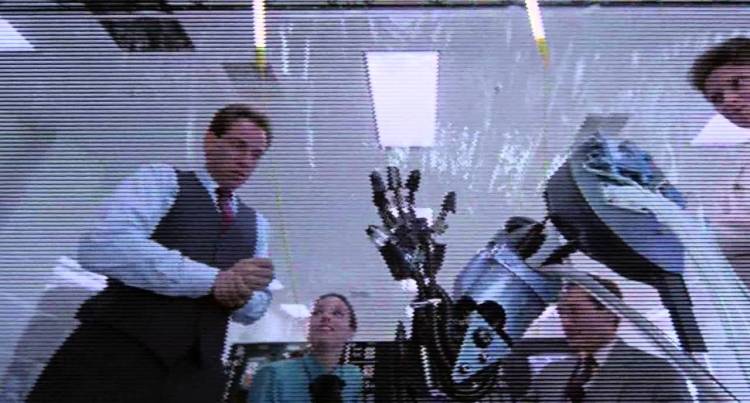
It's alive? The 'birth' scene from Paul Verhoeven's Robocop (1987)

It’s alive? The ‘birth’ scene from Paul Verhoeven’s Robocop (1987)

And in fact, it’s through cyberpunk ‘means’ that the hint of complete emancipation appears to suggest itself. While the beginnings of the asset’s career as a patchwork soldier are as abject as ever — they even recall Robocop‘s forced resurrection as a hybrid fighting for someone else’s agenda — the gleeful bite as she/it reveals just the programming has been circumvented is a joy to read.

A spirited and inspired mash-up of key strands of the sci-fi genre (at least from my admittedly limited POV) with a highly satisfying revenge kick to round things off.

Read previous: Martin, Falksen


Eternal Frankenstein read-a-thon #10 | Martin, Falksen

In the coming weeks, I will be reviewing the new Word Horde anthology Eternal Frankenstein, edited by Ross E. Lockhart. As was the case with my read-a-thon of Swords v Cthulhu, I will be tackling the anthology story by story, and my reviewing method will be peppered with the cultural associations that each of these stories inspire. These will be presented with no excuse, apology or editorial justification.

eternal-frankenstein

The Un-Bride; or No Gods and Marxists by Anya Martin

The New Soviet Man by G.D. Falksen

You’ll forgive the slowing down in pace between the last installment of the read-a-thon and this entry; I shifted country for a few weeks and had a bit of a break in between, only to return to the island homestead to the news of America’s surprising election result.

As luck would have it — or whatever variant of luck, chance or coincidence you want to call this, given the circumstances — there is not one, but two stories in Lockhart’s anthology that riff on the history and mores of what is supposedly the polar opposite of the current US president-elect’s ideological barometer: Socialism.

However, this being an American anthology dominated by the work of American writers itching for ways to respond to Mary Shelley’s text in a way that also scratches various pop culture itches, it’s hardly surprising to discover that the stories in question don’t seek to delve into the intricacies of Socialist and Communist ideology for penetrating insights.

For the most part, both Anya Martin and G.D. Falken’s contributions to Eternal Frankenstein play on American perception of the ‘Red Scare’, attacking this perennial barnacle of US popular culture from different angles.

Martin refines her angle of attack even further, placing us in the shoes of none other than Elsa Lanchester — the English-born American actress who brought none other than the Bride of Frankenstein to life in the iconic 1935 James Whale film. It’s also a story that contains the line, “Those crazy communists had saved the brain of the daughter of Karl Marx!”, which tells you all you need to know about where Martin is going with this.

bride-of-frankenstein-bride-screaming

Scream Queen: Elsa Lanchester in Bride of Frankenstein (1935)

An inspired piece of tongue-in-cheek pulp, the story juggles unlikely romance and less-likely forays into body-reanimation as enabled by Soviet double-agents. What distinguishes it in narrative clip and stylistic approach is Elsa’s distinctive voice. She’s a coquettish but intelligent guide that takes the story’s many spirited twists in stride, giving us a female protagonist in a man’s world who can more than handle herself — she does it while maintaining her wit and poise too (though it must be said, she’d hardly a match for her own — rather formidable — mother in that regard.

G.D. Falksen — also known as the guy whose picture you find when you Google ‘Steampunk’ — takes a flintier approach. The frankly assembled third-person story has our Frankenstein figure trying his damnedest to manufacture the titular New Soviet Man away from the watchful eyes of Stalin and while ensconced in the bowels of a freezing Kazakh steppe.

Our entry point into this world is Captain Sergeyev; an uncompromising apparatchik if there ever was one, and one whose well-being we’re emotionally primed not to care about too much, dour little customer that he is. Which is good, because while Falksen metes out what could be considered something  of a predictable denouement for him,  it’s falls on the rather pleasurable side when it does arrive.

Karel Roden in Frankenstein's Army (2013)

Karel Roden in Frankenstein’s Army (2013)

A central moment in the story — in which the Doctor suggests that going from Fascist to Communist fanatic is more or less as easy a flicking a switch, for him — reminded me of a similar quote in the otherwise gleefully pulpy Frankenstein’s Army (2013); which takes the more traditional route of having Frankenstein as Mengele (rather than a renegade Communist weird scientist).

If nothing else, both Martin and Falksen prove that war and its fallout is ripe pickings for Frankenstein stories, with many corpses vulnerable for desecration by the equally numerous ideological nut-jobs ready to tinker with them… while the still-living attempt their Creature’s shamble back into normal life with varying degrees of success.

James Whale himself certainly knew it.

Read previous: Betty Rocksteady

Eternal Frankenstein read-a-thon #9 | Betty Rocksteady

In the coming weeks, I will be reviewing the new Word Horde anthology Eternal Frankenstein, edited by Ross E. Lockhart. As was the case with my read-a-thon of Swords v Cthulhu, I will be tackling the anthology story by story, and my reviewing method will be peppered with the cultural associations that each of these stories inspire. These will be presented with no excuse, apology or editorial justification.

eternal-frankenstein

Postpartum by Betty Rocksteady

And so, Ross E. Lockhart impresses me with his sharp editorial skills once again. Just last review, I was speaking about how we in fact don’t speak about Frankenstein as a book about artistic creation all that often, spurred on by what seemed to be a subtle treatment of that very same strand in Michael Griffin’s novelette ‘The Human Alchemy’.

But turn the pages over to the next story on the TOC — Betty Rocksteady’s ‘Postpartum’ — and bang! there it is. Nothing subtle about  it: Rocksteady decides to not only place that metaphor at the front and centre, but to make it the main motivating engine of her contribution to Lockhart’s anthology.

However, the title also suggests a more pained and universal fact of human life, and one that will also remind us of another key element in the fabric of Mary Shelley’s original text. Rocksteady’s protagonist is a reluctant teenage mother who has lost her sweetheart soon after their baby — the poor, unfairly derided Timmy — is born, and her first-person narration does very little to endear us to her plight beyond the fundamental misery, and recent tragedy, that underlies her existence.

Still from Hannibal, 'Trou Normand' (Season 1, Episode 9)

Still from Hannibal, ‘Trou Normand’ (Season 1, Episode 9)

Rocksteady uses this to create suspense — the central artistic creation could easily be something out of NBC’s Hannibal — but the idea of a mother rejecting her child of course also recalls Victor Frankenstein’s heart-breaking (and instant) rejection of his own Creature.

But where Victor Frankenstein is all neurotic self-justification in his own version of events — really, it reaches Humbert Humbert like proportions at times — Rocksteady’s teenage narrator has no such qualms, coming across as bratty at best and downright spiteful at worst. This only increases the aforementioned suspense, because in that mental state, our otherwise powerless (psychically and economically) protagonist gains an unsettling degree of amoral freedom.

Rocksteady’s story is at its most affecting when the emotional satisfaction of creating art is being detailed: the only real relief that our narrator gets, and one that his sanctioned by her doting mother, who knows full well that art is her only real method of release. The trouble is that the raw matter used in the act of creation preclude the essential beauty of the idea, much like Victor Frankenstein’s ambitions to create life ex nihilo lose their luster when confronted with the groaning hodge-podge Creature springing into life and demanding to be recognised and loved.

A taboo-prodding tale with a shocking ending that’s fully earned.

Read previous: Michael Griffin

Eternal Frankenstein read-a-thon #8 | Michael Griffin

In the coming weeks, I will be reviewing the new Word Horde anthology Eternal Frankenstein, edited by Ross E. Lockhart. As was the case with my read-a-thon of Swords v Cthulhu, I will be tackling the anthology story by story, and my reviewing method will be peppered with the cultural associations that each of these stories inspire. These will be presented with no excuse, apology or editorial justification.

eternal-frankenstein

The Human Alchemy by Michael Griffin

We rarely speak of Mary Shelley’s Frankenstein as being about the angst related to artistic creation, and instead grasp at more solid metaphors. Understandably enough, received wisdom has it that this is first and foremost a parable warning against scientific hubris on the thematic level, and emotionally, it resonates with us thanks to the undeniable pathos we feel towards the creature: rejected by a father who only half wanted him, with no reference points in a world that wants nothing to do with him.

So I was glad to see that Michael Griffin’s creepy but complex tale of a successful pair of surgeons — with otherwise also picks up on the ‘standard’ intertextual cues stemming from Shelley’s original text — also pitches its Frankenstenian couple, Reysa and Magnus Berg, as frustrated creatives looking to satisfy their unconventional cravings in a world that has yet to — ethically as well as aesthetically — catch up with their tastes and ambitions.

In the case of Shelley’s novel, Frankenstein’s initial revulsion at the Creature he’s made could find a direct corollary in the way most young writers — or artists of any stripe — would view their juvenilia. “I expected to create something at least as beautiful as the work of the forebears in the field that I admire,” they think to themselves as they grimace at that first draft, or that hesitantly completed painting, “what the fuck is this shit?!”. And in it goes into the proverbial fire.

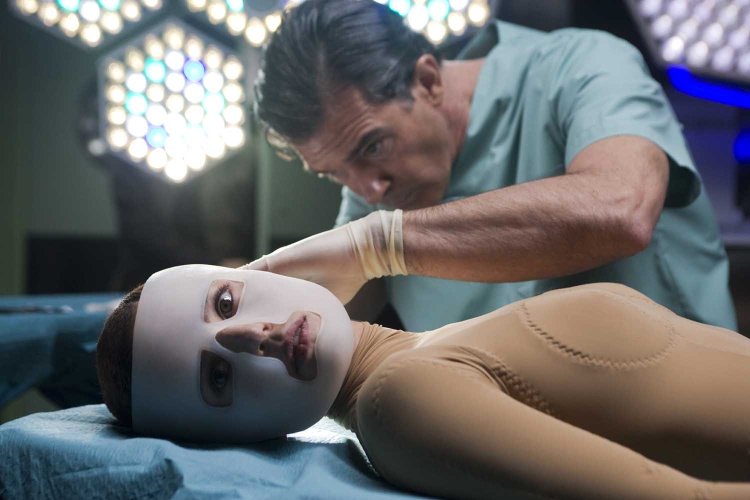
Pedro Almodovar's own take on Frankenstenian surgeons: The Skin I Live In (2011)

Pedro Almodovar’s own take on Frankenstenian surgeons: The Skin I Live In (2011)

But Reysa and Magnus are not young: Aurye is, and though their wine-soaked gathering at the rich couple’s mountaintop castle may suggest all the trappings of a cliche seduction into a three-way, this mundane idea is dispensed with fairly quickly. In fact, the couple reject all mundane ideas suggested or imposed by society, a dogma whose limits are tested by this increasingly disconcerting, but equally sensitive and intelligent, contribution to the anthology.

And the way Griffin manages to walk this tightrope is, in fact, by couching the couple’s past history and future dreams in the most precise, and even reasonable, discourse. As one example, let’s get back to the artistic creativity metaphor. Midway through the story, the couple start explaining — always to Aurye, as their increasingly eager acolyte — the challenges posed by their unconventional lifestyle.

In the meantime, the story’s unsettling vortex intensifies, and Griffin actually piles all of the cosmetic details you’d expect from a Frankenstein story

Without spoiling anything, the way Reysa describes it sounds exactly like the kind of set-up a freelancing couple of any profession would face; with partners alternately sacrificing time and comfort while the other aims for their dream job, or at least helping to create a mutually beneficial situation for both based on their relevant skills.

In the meantime, the story’s unsettling vortex intensifies, and Griffin actually piles all of the cosmetic details you’d expect from a Frankenstein story: the Gothic castle, the operating table, the thunder… and a monster. But on their own, these details are now blunt: Frankenstein’s Creature is indeed eternal, yes, but the moralistic discourse about scientific ambition needs fine-tuning and updating if it is to sustain its chilling menace into the modern day.

And this is precisely what Griffin does with his two surgeons. But arguably, he completes this effect with the help of the young Aurye most of all, whose role in the drama flouts expectations in more ways than one.

An urbane and superbly structured little chiller that is intellectually engaging more than it is viscerally scary, but that is all the more rewarding for it.

Read previous: Edward Morris


Eternal Frankenstein read-a-thon #7 | Edward Morris

In the coming weeks, I will be reviewing the new Word Horde anthology Eternal Frankenstein, edited by Ross E. Lockhart. As was the case with my read-a-thon of Swords v Cthulhu, I will be tackling the anthology story by story, and my reviewing method will be peppered with the cultural associations that each of these stories inspire. These will be presented with no excuse, apology or editorial justification.

eternal-frankenstein

Frankenstein Triptych by Edward Morris

One of the great things about intertexuality is that it is the literary-cultural equivalent of friends bonding over shared memories; only instead of real-world happenings you’re bonding over books, music, visual art or films.

Of course, an anthology like Eternal Frankenstein practically runs on this impulse: intertextuality is its engine, and in this case it’s a particularly well-oiled one because the authors comprising it have — as far as I can tell this deep into the read-a-thon — taken on the challenge posed by Lockhart’s anthology with a canny understanding that simple pastiche (perhaps one of the ‘lower’ forms of intertextuality in practice) will not be tolerated.

But there’s fun to be had in pastiche too, and this is not lost on Edward Morris, who deliberately presents three science fictional micro-tales as his contribution to the anthology. But the pastiches here are not direct piggybacks on Shelley’s original novel, and instead take an inspired swerve into varied, forking directions.

And in the case of the first segment of this mini-anthology, ‘Dolly’, we’re not really talking about pastiche at all so much a formally interesting take on the Artificial Intelligence sub-genre. In a thread that will continue throughout Morris’ entire piece, we’re thrown into a close-third-person focus giving us a window into an unconventional perspective; in fact, it’s not even that of a ‘person’ — a particularly sophisticated doll experiencing the pangs of an existential crisis in the first instance, a mecha-warrior of sorts (we think) in the second segment, GRUNT.

Unreal cities: Morris dedicates the final segment of his piece to HR Giger

Unreal cities: Morris dedicates the final segment of his piece to HR Giger

The link to Frankenstein is tangential in one sense, but very much on-point in another. In his maddened collage — which I imagine to have been a blast to write, really — Morris taps into Shelley’s essential idea of imagining what a Creature not conceived through natural means would think about, and even feel, as it tries to make sense of the world it’s been thrust into.

GRUNT is particularly inspired on this front, and the random perceptions evidenced by this poor military cog — as he/she/it witnesses the eradication of its comrades — appear confusing but in fact accumulate to paint a vivid piece that resembles poetry more than prose. It brought to mind the powerful and unique pen of Joe Pulver and, lo and behold, as the segment concludes I see that Morris in fact dedicates it to Pulver, among others.

The final segment, ‘Wir Atomkinder’ slots into more conventional formal shape but, being the confessional of a Nazi Mad Scientist that’s dedicated to the memory of HR Giger, ‘more conventional’ in this case certainly does not translate into ‘more mundane’.

Stitching together his flash fiction narratives, Morris reminds us that there’s more to the legacy of Frankenstein than scientific hubris and the dour reminder of humanity’s indifference. It’s also a story of creation — for better or for worse — and the confused by animating force on which it runs.

Read previous: Rios de la Luz