Keep your feasts and keep your famine

There’s something surreal about still being able to glut on a banquet of streaming material as the Hollywood strikes rage on in the background.

Add to that the ‘feast or famine’ vibe of my own personal summer vs autumn streaming experience: there was very little new stuff I wanted to watch over the summer, and then October came along and I’m once again spoilt for choice.

Not that this is a new mood for me. For all the economic chaos we’ve been labouring under in the Western world since 2007 or so, that doesn’t really seem to apply to cultural consumption. Audio-visual “content” is piped in at a regular pace through our obedient army* of trusted apps.

The “TBR” pile only grows and grows, and in my case, twists and morphs into Cronenbergian variants as I give up on one pile to forge another, confident in my prediction that this time, this will be the one that gets devoured.

Ready for them re-reads

This all stands in marked contrast to how I remember experiencing culture in the ’90s. As a geeky son of emigres who lived in Malta and spent summers back in native Serbia, but who was trained to desire the globalised products of the Anglophone sphere, I was often left blue-balled by my inability to grasp at all the stuff I wanted — nay needed — and required to consume. Consume, of course, on the basis of an imagined diet whose prescription was as vague as it was specific.

Getting comics in Malta was nigh impossible at the time, though there was a grassroots ‘comics club’ established by a pair of passionate — though often frustrated — friends who often treated its members as foundlings… which, in many ways, we were: orphaned in our need to latch onto story-products which would not otherwise have reached us were it not for their benediction.

The lack of a foundational cultural identity — or rather, a fragmented one that I wasn’t particularly keen to embrace or even poke at, given that Serbians were officially the aggressors in the nineties’ most significant conflict, rudely blotting the End of History with its own traumatic fallout — is perhaps what led me to latch onto various subcultures: comics were one, metal music was another.

Funnily enough, our trips to Serbia were particularly useful when it came to the latter. The mess of the post-Milosevic era meant that bootlegs could proliferate with impunity — public television channels even aired brand new cinema releases on their evening schedule — so we’d end up taking a bunch of CDs home and gain some degree of bragging rights with out metal head buddies.

Because for all that it was still struggling under the weight of a post-war depression, Belgrade in particular remained a European cities, and subcultures still functioned with an historic sense of purpose, and kindred spirits could be found if you knew where to look. Malta, for all its aspirations of being an up-and-coming place, still operated on a provincial logic.

This was also why the rapid rise and fall of Napster — whose fall was made largely redundant by the floodgates opening up to handily-available variants — was a balm to us in Malta. Suddenly, we could all be on the same page as our international counterparts. Metal Hammer and Kerrang were no longer dispatches from the future.

And yet, fast-forward to the present day, and what I look forward to most re-read season. This is how I’ve unofficially dubbed autumn, over and above its many reliefs and delights (ostensibly cooler weather at some point — climate change permitting — the excuse to binge on horror faves ‘cos Halloween, etc etc.).

It’s about acknowledging a split. On the one hand, there’s so much desirable stuff to consume. On the other, all of that noise is just so piercingly alienating. And caring for the self is all about remembering what makes you, you. The foundations built by all those things that left an impact, for some reason.

This runs counter to the prevailing cultural narrative, of course, which is probably why I always feel an internal pushback whenever I try to implement it. But the relief of re-reading a favourite book is immediate, and immense. It’s a relief akin to the best of drug-free hedonistic pursuits: sex, swimming and a volcanic eruption of laughter during a friends catch-up.

Consumption is what sold us the end of history. But we were nowhere near the end, of course. And regardless, there’s always been a ton of history to feast on in the meantime.

*though a master-slave dialectic may be the more appropriate metaphor here.

Mibdul reviewed… in German!

Our plucky comic book that could — MIBDUL — gets the Teutonic treatment over at Timo Berger (@comic.timo)’s review page on Instagram!

There’s something about this far-flung little book being discovered in equally spontaneous ways that warms the heart. Check out the original post here. (Non-German speakers like myself can avail themselves of Insta’s admittedly efficient automatic translator).

Timo joins the Serbian online publication Strip Blog in giving Mibdul its due. Be sure to read the first and second of an ongoing review series that is thorough and incisively written, courtesy of Strip Blog’s in-house reviewer Ivan Veljković.

MIBDUL ships internationally via the Merlin Publishers website. Inez, Chris, Emmanuel, Faye and myself — that is, the small-but-fierce team behind this six-issue mini-series — would be most delighted to hear what you think of it.

Indie comics thrive on word-of-mouth, and as a particularly ambitious project in that vein — stemming as it does from tiny Malta, engineered and engined with a pioneering streak — Mibdul is as indie as they come.

It’s time to take a trip to MIBDUL…

A young girl whose mother has committed suicide discovers she’s able to commune with ancient monsters, who have emerged from their slumber to wreak havoc on the over-developed, tiny planet of Mibdul.

‘Mibdul’ is a six-issue comic book mini-series written by myself, illustrated by Inez Kristina and published by Merlin Publishers. The first issue will be launched at Kixott on 14 April, and the party starts at 19:30. Said party will feature a signature cocktail, and early-comers will be rewarded by an open bar tab courtesy of our long-suffering but beloved publisher.

Now that the logistical stuff’s out of the way…

I’d like to point out that, much like the last few posts to appear on this sporadically updated page, Mibdul is a tribute to Marsascala. The place served as a hometown for both Inez and myself while we worked on the book, and the very idea for the comic came about after it was announced that the unspoilt patch of seaside land at Zonqor Point was given away to a Jordanian construction company.

The ‘American University’ project thankfully never panned out as per its worst threats, but at that point I needed a vent for the helpless rage that came over me and many others.

It is, sadly, a rage that continues to crop up every now and again, whenever the construction lobby which de facto rules the country proposes a fresh monstrosity.

We all protest in the ways we know best. At least, we should be allowed to. From each according to their ability. And my own tend towards a love of genre fiction. As such, Mibdul taps into the ‘space fantasy‘ popularised by Star Wars, with a dollop of cosmic horror and the freewheeling surrealism of Euro-comics.

Mibdul will be published as a monthly six-issue series, starting from April and running through to September. We hope to see you at the launch for Issue 1. But in the meantime, do avail yourselves of the pre-publication offer, to have each issue delivered to your door upon release, at a discounted price.

On The Tee-Vee | Two & Some Favourite Books | Wicc imb Wicc

It’s been a bit of a strange month; something I’ll be delving into with cautionary coyness in a subsequent blog post. So much so that I’ve missed out on both writing some proper entries over here, and even simply putting up updates on cool stuff I’ve been involved in and invited to.

And one of these actually happened on exactly the day of the premiere of our last burlesque show — the latest thing I spoke about here in some detail before the hiatus. This was an interview for the television programme Wicc Imb Wicc (‘Face to Face’), put together by the National Book Council of Malta, recorded on the very morning of the premiere of Apocalesque. (In fact, beady-eyed viewers might just spot the remnants of hastily-removed cropse-paint eyeliner post-dress rehearsal the night before).

wicc imb wiccThe interview is now up online for all of you to check out, should you be up for hearing an extract from my novel Two — read out by the show’s host, the actress Antonella Axisa — and/or hearing me be interviewed by the same Antonella about some of the key themes and plot dynamics of the book itself. That’s all before my favourite segment of the show kicks in, however: talking about some of my favourite and most energising books.

Among them are Mary Shelley’s Frankenstein, Judith Halberstam’s Skin Shows, Lord Dunsany’s The King of Elfland’s Daughter, Angela Carter’s The Infernal Desire Machines of Doctor Hoffmann, Mervyn Peake’s Titus Groan, and Moebius’ hallucinatory classic of a graphic novel, Arzach.

Find out more about Wiċċ imb Wiċċ here, and log on to the National Book Counci’s YouTube channel to watch previous episodes.


End of Year Favourite Things | Horror, Revisionism, Punishment and Thor(s)

As I’ve mentioned in my last post, December took it upon itself to welcome me with a nasty sucker-punch of the flu: a freelancer’s nightmare in a season when all the clients want things done in bulk so that everyone can rest up during the holidays.

But one upside of it all is being able to soak in all the stuff I would have soaked in otherwise, but with an added single-mindedness… partly owing to the fact that I could do little else and so was justified in spending days on end just reading and watching things.

So here are some recent things I’ve consumed and enjoyed during that period… though some of them were either consumed or begun before the illness hit. Either way, feel free to allow them to double-up as gift ideas. Am sure the indie creators on the list would appreciate that especially.

Tanzer_CREATURES_OF_WILL_AND_TEMPER_finalCreatures of Will and Temper by Molly Tanzer (novel)

I was never too keen on the ‘& Zombies’ sub-genre of literature, if we can call it that. It just seems like such a one-trick-pony gimmick that to spread it out over an entire book — much less an entire unofficial series of them — just struck me as a bit redundant and silly.

Having said that, I did enjoy the Pride and Prejudice and Zombies film, in large part because director Burr Steers deftly shot all of it as a Jane Austen pastiche first and foremost, with the zombies having to blend in with the established ‘heritage film’ mise-en-scene, rather than overpowering everything into pulp madness once they do show up.

Rest assured that Tanzer’s novel — a meticulously put together gender-swapped take on Oscar Wilde’s The Picture of Dorian Gray — owes very little to the ‘& Zombies’ trend, save for perhaps this last element. When the supernatural element does rear its ugly head, it does so in world with firm period rules already established, and in a story about sibling angst that stands front-and-centre for the bulk of the running time.

The result is an experience that is both immersive and captivating; a Victorian pastiche and tribute to the legacy of Wilde that very much scratches those familiar itches, while also offering a fun, pulpy comeuppance in the end.

***

The-Man-Who-Laughs-CoverThe Man Who Laughs by David Hine & Mark Stafford (graphic novel)

The last thing I did before getting sick was attend Malta Comic Con 2017, and a fun time that was indeed. Meeting old friends and new under the spell of our geeky obsessions is an experience that’s tough to beat. I also spent an inordinate amount of money on comics and artwork and no, I regret nothing.

Particularly when it concerns undeniable gems such as these — a work that once again draws on a literary classic, though one certainly not as universally lauded as The Picture of Dorian Gray.

As writer David Hine writes in an afterword to this adaptation of Victor Hugo’s L’ Homme qui rit — perhaps more famous for a silent film adaptation starring Conrad Veidt which in turn inspired look of Batman’s arch-nemesis The Joker — the original novel, a late-period Hugo miles away from the populist charm of a Les Miserables, is something of a convoluted, knotted beast whose socio-political digressions he’s had to cut down to ensure the story flows as well as it can.

The-Man-Who-Laughs_MEDIA_19

Mark Stafford, ladies and gentlemen

Stripped down as such, and aided by tremendous illustration work from artist Mark Stafford, the volcanic melodrama at the centre of the story — and it is a melodrama, though perhaps in the best possible sense of the word — is allowed to come to the fore, and I practically tore through the pages as my heart raced, yearning to discover the fate of poor perma-rictus-infested Gwynplaine and his fragile adoptive family.

Stafford’s work really is tremendous, though. His grasp of the grotesque idiom works to highlight both the social horror and sublime tragedy that frames the whole story, and the chalk-like colouring technique adds that something special to the feel of each page.

The assured lines and deliberate exaggerations brought to mind the work of Lynd Ward, and in any case — here’s a story that definitely shares some genetic make-up with God’s Man, dealing as it does with the venal, compromising nature of the world.

***

winnebagoWinnebago Graveyard by Steve Niles and Alison Sampson (comics)

Collecting all the single issues of the titular series, this is another gorgeous artefact I managed to pick up at Malta Comic Con, this time from its affable and keenly intelligent artist, Alison Sampson, who was kind enough to sign my copy over a chat about the comic’s intertextual DNA of ‘Satanic panic’ and folk horror.

It’s a lovely-to-the-touch, velvety volume that comes with generous backmatter expounding on the same DNA, but what’s in between isn’t half bad either.

A simple story about a family being shoved into a deeply unpleasant situation — i.e., an amusement park that dovetails into a Satanic human-sacrifice ritual — is elevated away from cliche by Sampson’s art, which flows from one panel to another — often letting rigid panel divisions hang in the process, actually — in a grimy-and-gooey symphony.

***

god butcherThor: The God Of Thunder (Vols. 1 & 2) by Jason Aaron & Esad Ribic (comics)

More comics now, though this one only confirms that I’m as much of a lemming to the machinations of popular culture as anyone else. To wit: when Comixology announced a discount-deal on a bunch of Thor comics in the wake of the brilliant and hilarious Thor: Ragnarok, I bit like the hungriest fish of the Asgardian oceans.

I’m glad I succumbed to this obvious gimmick, though, because it gave me the chance to catch up with this gem of a story arc, which gives us three Thors for the price of one, all of them trying to stop not just their own Ragnarok but the ‘Ragnarok’ of all the gods of the known universe, as the vengeful Gorr vows to unleash genocide on every single divine creature out there.

The two storylines out of the run that I’ve read so far — ‘The God Butcher’ and ‘Godbomb’ — felt like such a perfect distillation of everything that makes superhero comics work. A grandiose, epic story of ludicrously huge stakes, sprinkled with a necessary indulgence in pulp craziness (Thor on a space-shark, anyone?) which is in turn deflated by the strategic deployment of self-deprecating humour (the sarcastic back-and-forth between the Thors is a pure delight).

Ribic’s art seals the deal though. His gods certainly look the part — they may as well have been carved out of marble — helped along by the clean, gleaming shimmer that is Dean White’s colouring work.

While I eagerly look forward to devouring the latter half of the series, this rounds off a great year in Norse-related literature for me, during which I’ve enjoyed Christine Morgan’s across-the-board excellent The Raven’s Table from Word Horde, while I’m currently devouring Neil Gaiman’s Norse Mythology — a book that so far displays the popular myth-maker’s slinky and pleasant way with words, if nothing else.

shark

***

The Punisher (TV)

the punisher

Another Marvel product that needs no signal-boosting for me, but which I found gripping enough through its 13-episode run, for some obvious and less-obvious reasons. Yes, updated as it is to insert a too-easy critique of the American military-industrial complex (though really, only of its “bad apples”), Frank Castle’s adventures offer an easy cathartic kick.

As the title character of another show I love dearly — far, far more dearly than The Punisher or anything else for that matter — would have it, “Doing bad things to bad people makes us feel good“.

But that wasn’t what stayed with me. What stayed with me was Frank’s very nature as a “revenant” — he’s even referred to as such by another character at one point — and how that’s hammered home by the fact that he’s made to operate from an underground lair as his true self, but that when he returns temporarily to the surface, it is as if he were alive again, but only when he wears his new disguise.

A mythic touch in a story that revels in its supposed grittiness, and a welcome one too.

Happy holidays to all!

February Updates #2 | iBOy, RIMA, You Are What You Buy & the latest in Mibdul (again)

Some updates from my ‘day job’ desk-adventures. Happy to report that February is turning out to be quite the productive and creatively satisfying month. Click here to read the previous update. 

Questioning consumption | You Are What You Buy

31-tw-front-main-pix-1

It was interesting to hear what Kristina Borg had to say about her project You Are What You Buy, which takes an interdisciplinary approach to assessing the implications of shopping at the supermarket.

“One of the principal themes of this project is consumption – what and how we consume. This does not solely refer to food consumption; one can also consume movies, literature and more. However, in order to reach and engage with a wider audience I felt it was necessary to work in, with and around a place of consumption that is more universal and common for all. Let’s face it, whether it’s done weekly or monthly, whether we like it or not, the supermarket remains one of the places we visit the most because […] it caters for our concerns about sustenance and comfort.”

31-tw-front-inset-kristina-borg

Kristina Borg

“An interdisciplinary approach definitely brings together different perspectives and different experiences and […] it could be a way forward for the local art scene to show and prove its relevance to one’s wellbeing. I think it is useless to complain that the arts and culture are not given their due importance if as artists we are not ready to open up to dialogue, exchange and distance ourselves from the luxury that one might associate with the arts. Talking about experience instead of a product might be what the local art scene needs. 

Click here to read the full interview

Fixing the moment | Mohamed Keita and Mario Badagliacca 

The migrants living at the Belgrade Waterfront are using the beams of abandoned tracks (or tires or rubbish) against the temperatures below zero degrees and to produce hot water. Photo by Mario Badagliacca

The migrants living at the Belgrade Waterfront are using the beams of abandoned tracks (or tires or rubbish) against the temperatures below zero degrees and to produce hot water. Photo by Mario Badagliacca

Ahead of their participation at the RIMA Photography Workshops, I got a chance to delve into the dynamics of migration — particularly the problematic way in which migratory flows are portrayed through mainstream political discourse and the media — with Sicilian photographer Mario Badagliacca, who tapped into his experience of documenting the realities of migration — most recently in my own native Belgrade — as well as Ivorian photographer Mohamed Keita, who took a self-taught route to photography after traversing Africa to reach Italy.

The power of photography is to fix the moment. Psychologically speaking, there’s a difference between perceiving a ‘fixed’ image and a ‘moving’ image (as in a video, for example). The ‘fixed’ image constrains us to reflect on it in a different way. In my case, I want the images to serve as a spur for further questions – to be curious about the stories I’m telling. I don’t want to give answers, but raise more questions. – Mario Badagliacca

Photography by Mohamed Keita

Photography by Mohamed Keita

Click here to read the full interview

Film Review | iBoy — Netflix takes the info wars to the gritty streets

Screams of the city: Tom (Bill Milner) finds himself plugged into London’s mobile network after being attacked by thugs in this formulaic but serviceable offering from Netflix

Screams of the city: Tom (Bill Milner) finds himself plugged into London’s mobile network after being attacked by thugs in this formulaic but serviceable offering from Netflix

I had fun watching the ‘Netflix Original’ iBoy — not a groundbreaking movie by any means, but certainly a fun way to spend an evening in the company of Young Adult urban sci-fi that slots into formula with a satisfying click.

film-review-inset-pix

Love interest: Maisie Williams

“iBoy is yet another example of British cinema being able to strip down genre stories to their essentials and deliver up a product that, while hardly brimming with originality, still manages to create a satisfying piece of escapist entertainment. From Get Carter (1971) down to Kingsman (2014), the Brits sometimes manage to upend their Stateside counterparts by just cutting to the chase of what works without the need to inflate their budgets with unnecessary star power and special effects, while also toning down on any sentimentality and drama at script stage.”

Click here to read the full review

Patreon essay | MIBDUL & ‘that uncomfortable swerve’

MIBDUL & that uncomfortable swerve

Not exactly a ‘day job’ entry — though I wish it were — this month’s Patreon essay for our MIBDUL crowdfunding platform was all about me panicking over not having enough space to write out the story as I was planning it, and needing to make some drastic changes to accommodate this new reality.

“The thing about the detailed outlining of issues – and the rough thumbnailing of the pages in particular – is that, unlike the planning stage [in my journal], I approach them largely by instinct. This is the time when you have to feel your story in your gut, because you need to put yourself in the position of the reader, who will be feeling out the story in direct beats instead of painstakingly – and digressively – planned out notebook excursions. (To say nothing, of course, of the fact that the story needs to look good on the page – that the artwork needs the necessary room to breathe).”

Please consider donating to our Patreon page to access this essay and more

February Updates: Shakespeare, historical fiction & the latest in MIBDUL

It’s not February yet but it will be soon enough, and in these times of uncertainty and stress I figured it wouldn’t be so bad to start listing (and celebrating) some of things I’m excited about for the near future.

First up, though — something from the very recent past. 

MIBDUL: latest process video from Inez Kristina

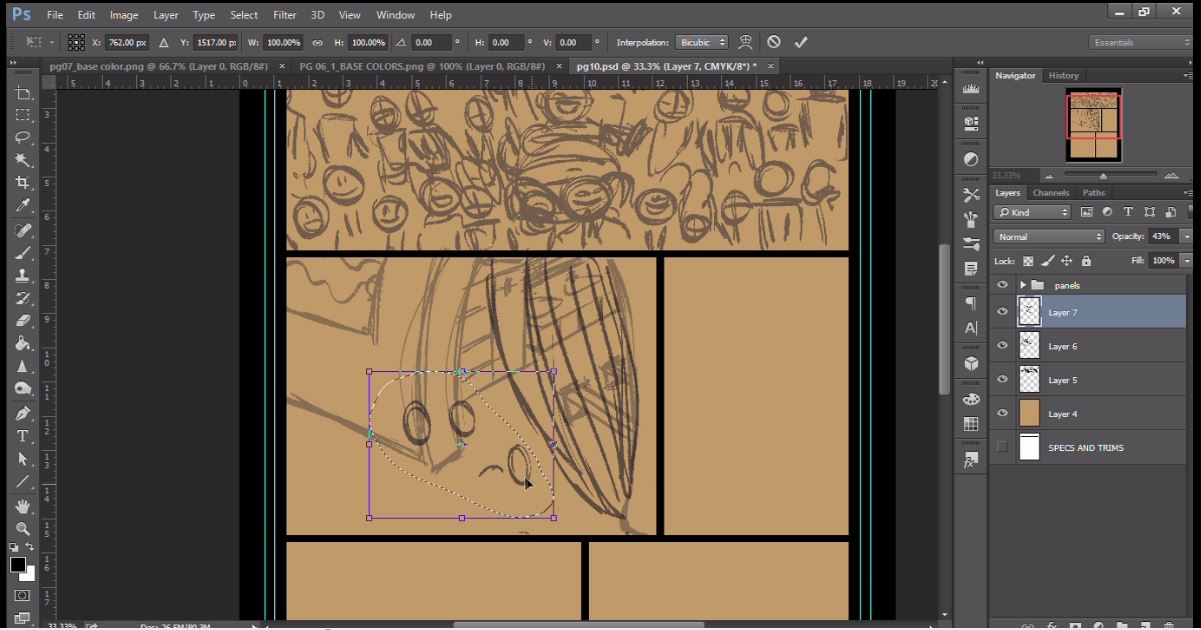
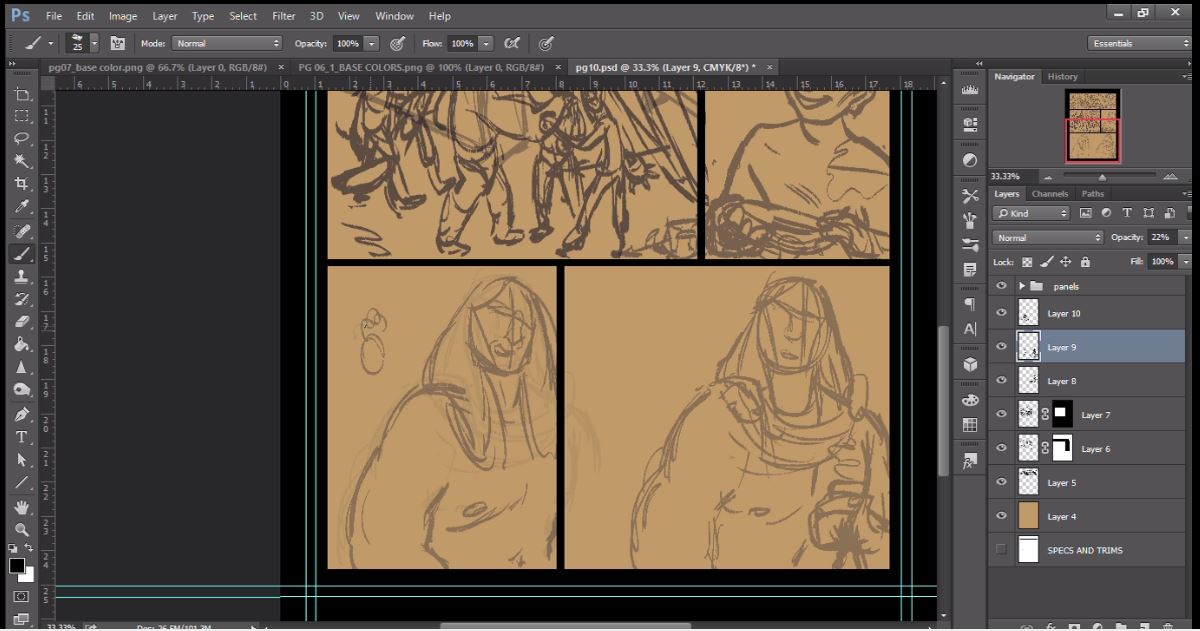
Done for our $10+ Patrons, I’m really loving this fully narrated process video from Inez, detailing how she goes about structuring a page in general, and page 10 of MIBDUL’s first issue in particular.

Of course it would be thrilling for me to see my words come to life as pictures at any stage, but seeing the page at such an early, raw stage has its own particular pleasures. For one thing, it’s good to see that, raw as the sketches are at this stage, Inez has a firm grip of both the geography of the spaces and the overall mood of the characters.

capture1

This certainly goes a long way to put me at ease as the writer of MIBDUL — knowing that the script will be rendered in a way that is both faithful and impressive in its own right — but it’s also heartening to discover that Inez understands the vibe of MIBDUL in a very intimate way. Successful communication is the key to all collaboration, and I think we’re riding a good wave here.

capture2

It’s also interesting to hear Inez speak about how her approach to the pages has changed of late; namely that instead of painstakingly rendering each page one by one, she’s decided to start sketching out several pages all at once, so as to get a better sense of how the storytelling should flow without getting bogged down by details and drained by the process too early.

capture3

Funnily enough, it mirrors my own turn with the writing of late: for similar reasons — to speed up the process in a way that matches the flow of the story — I’ve decided to go ‘Marvel method’ on the latter half of scriptwriting process; partly because dialogue is the most challenging part of it all for me, and partly because I think seeing the page laid out by Inez will inspire me to write dialogue that is both succinct and relevant to the flow of the story.

Please consider following our Patreon journey — it would mean a lot to us. Really. 

Awguri, Giovanni Bonello: Gothic pastiche for an illustrious judge

giovanni-bonello

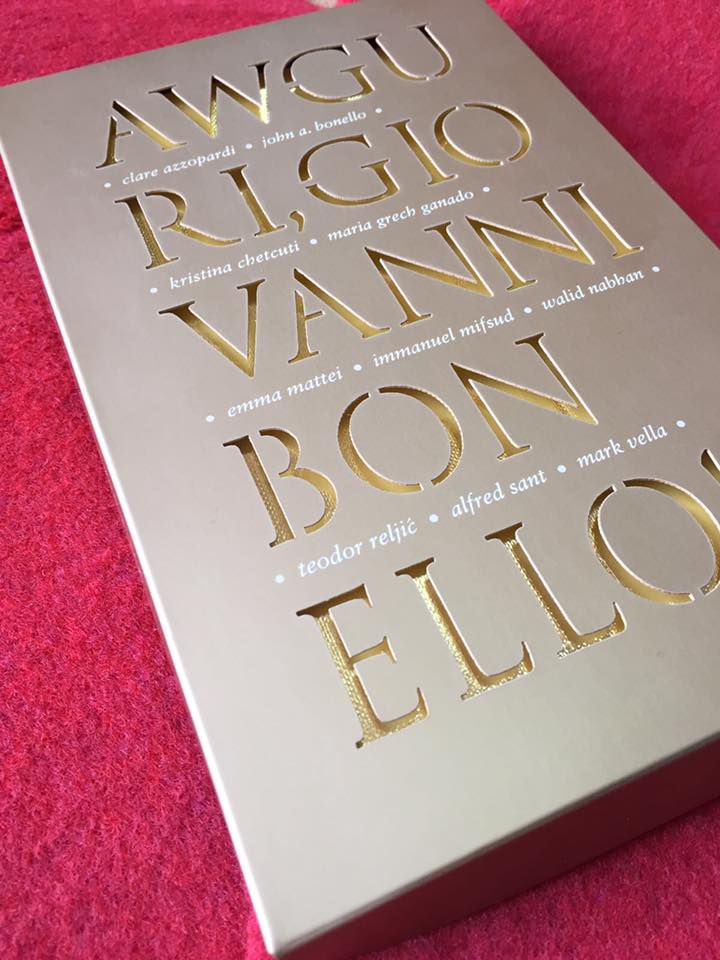
Like MIBDUL, my contribution to the bi-lingual historical fiction volume Awguri, Giovanni Bonello — to be launched at some point in February in honour of the same judge’s 80th birthday — is yet another collaboration with Merlin Publishers, who have been a pleasure to work with ever since they oversaw the publication of my debut novel, TWO.

To say that this was a fun commission would be a massive understatement. Basically, the judge being honoured by this volume — the poshest birthday present imaginable, am I right? — was also something of an historian, and the personages he wrote about were ‘assigned’ to each of us writers to spin a fictional yarn out of. And I will forever be grateful to Merlin’s head honcho Chris Gruppetta for giving me what is possibly the most sensational and salacious character of the lot: Caterina Vitale, a Renaissance-era “industrial prostitute”, torturer of slaves and — paradoxically — beloved patron of the Carmelite Order.

Of course, I went to town with this one. High on the then still-ongoing Penny Dreadful — and hammering out the short story to the haunting and dulcet tones of that show’s soundtrack by the inimitable Abel Korzeniowski — I liberally crafted something that is both a pastiche of Mary Shelley’s Frankenstein and Bram Stoker’s Dracula, all set against the backdrop of a Malta fresh from the Great Siege.

I’m looking forward to getting my mitts on this gorgeous-looking book — designed by Pierre Portelli with illustrations by Marisa Gatt — if only because I look forward to checking out how my fellow TOC-mates tackled the raw material of Bonello’s historical output.

The Bard at the Bar: Debating Shakespeare

debating-shakespere

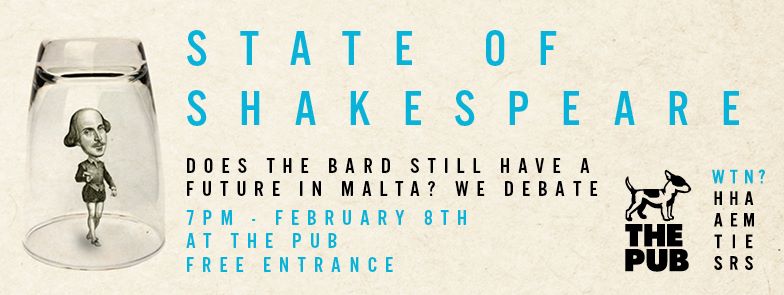
On February 8 at 19:00, I will be moderating a panel discussion on whether the works of William Shakespeare are relevant to the Maltese theatre scene — and Malta at large — and if so, how to make them feel more accessible and vital to the widest possible audiences.

The brainchild of actor, director and journalist Philip Leone-Ganado of WhatsTheirNames Theatre, the debate will, significantly, take place at The Pub in Archbishop Street, Valletta, aka the place where Oliver Reed keeled over and died after consuming an obscene amount of alcohol while on a break from filming Gladiator back in 1999.

More recently, the venue has accommodated the very first edition of ‘Shakespeare at the Pub’ — a production of the Two Gentlemen of Verona directed by Ganado himself last year — and another one is in the offing for 2017.

Two Gentlemen of Verona at The Pub, Valletta (WhatsTheirNames Theatre, March 2016). Photo by Jacob Sammut

Two Gentlemen of Verona at The Pub, Valletta (WhatsTheirNames Theatre, March 2016). Photo by Jacob Sammut

The lively, unpretentious and game production certainly felt to me like a step in the right direction as far as making Shakespeare more vibrant and relevant was concerned, so I think the Pub is as good a place as any to keep that inspired momentum going with a good discussion.

And it should certainly make for a satisfying debate, given that apart from Ganado himself, the panel will be composed by James Corby (Head of Department of English at the University of Malta and hence offering some academic weight to the proceedings), Polly March (director of the upcoming MADC Shakespeare summer production — the ritualised and established intake of Shakespeare for the island) and Sean Buhagiar, head of the newly-established Teatru Malta and someone deeply concerned with nudging the local theatrical scene out of its usual comfort zones.

So do come along to hear us talk. And feel free to shout your questions and comments over a pint, or ten. Just don’t crank it up to Oliver Reed levels, please.

MIBDUL | Free prints for Patreon backers

First off: I have returned! 

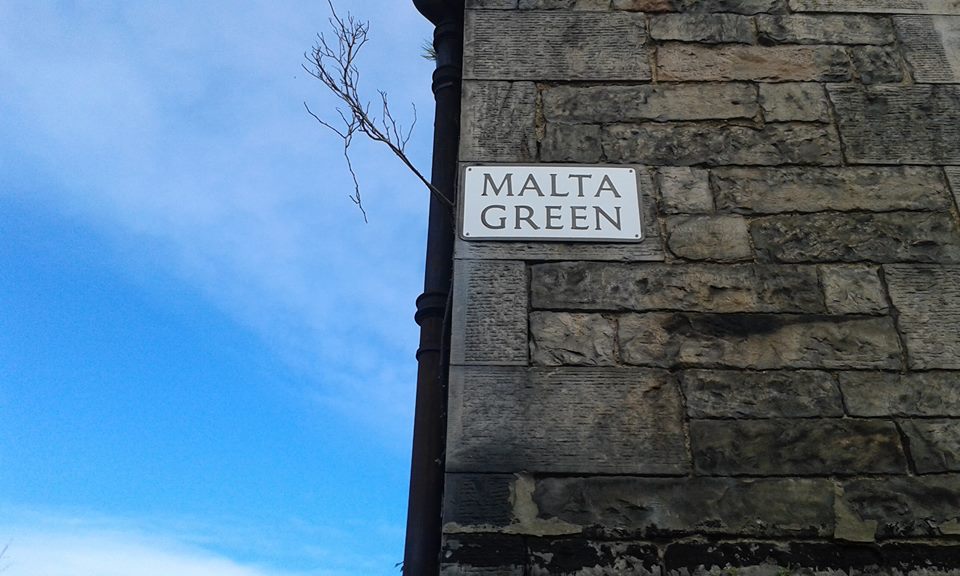
Evidence of serious Scottish humour in Edinburgh

Evidence of serious Scottish humour in Edinburgh

Yep, on the off chance anyone’s listening… I’ve just come back from a very inspiring trip to the UK which encompassed a stop to the ever-gorgeous Edinburgh, as well as the not-exactly-gorgeous Scarborough.

Scarborough, however, played host to Fantasy Con by the Sea — aka this year’s edition of the British Fantasy Society’s annual celebration of fantasy and horror literature, rounded off by the Society’s prestigious awards, the most notable of which were this year snatched up the likes of Naomi Novik, Catriona Ward and Ellen Datlow.

I’ll be blogging more about the trip in general (and the Con in particular) very soon, but first, I’d like to big up a more immediate creative concern.

*

fb-cover-image

So, we’re doing a six-issue comic book series called MIBDUL.

(‘We’ being myself and the awesome artist Inez Kristina)

We’ve got a Patreon page running.

And we’re offering free prints on it RIGHT NOW

You can follow this here link to find out all about the giveaway, and root around the very same Patreon page for more information on the comic itself, which will be Malta’s very first serialized comic, and should also be a hoot for fans of Star Wars, HP Lovecraft, Guillermo del Toro and all those concerned with the alarming facts of the Anthropocene Era (no, really).

You’ve got until Tuesday to avail yourself of the free prints offer, but I do so hope you will also support us in the long run.

Watch this space for more… of Mibdul, and other stuff too.

Loneliness relief: collaboration & writing

Having slogged three years to write a debut novel – that’s really a novella – I’m finding myself more and more drawn to collaboration as a default mode of planning for and engaging in future projects.

It’s partly to do with wanting a fresh start – Two was revelatory and educational to write, but also a fearful trudge with no apparent end in sight (personal matters which coloured the narrative itself, and others that didn’t, further cast a shadow on the experience).

But it’s also simply down to that alchemy of opportunity and the desire to experiment with different forms. As is the same with most of my generational colleagues – I suppose – experiencing fiction was always a multi-media experience for me: what with cartoons, comics, video games, cinema and literature usually existing side-by-side, and even more so now that ‘media convergence’ is such a blatant aspect of everyday life that even the term itself sounds redundant.

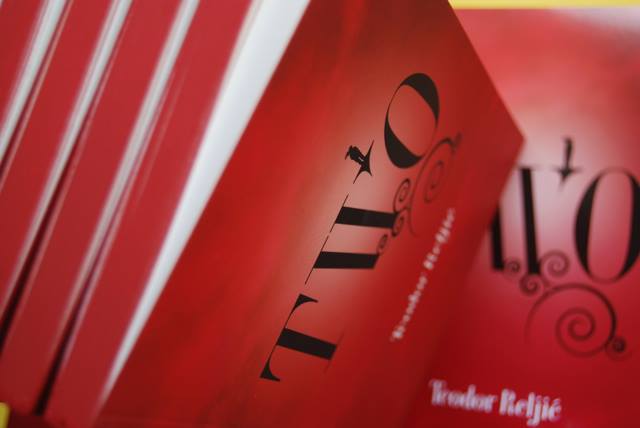
TWO_TeodorReljic

A comic book project of mine is currently on the rocks, but some TV/film based stuff might just take off. Either way, the process of creation for each of these things was markedly different to what I experienced with the novel.

Brewing largely in my head throughout its three-year conception period, Two was as obstinate and unwieldy a draft of novel that you can imagine – perhaps more true than ever in this case, with a parallel narrative structure defining its contours.

The new projects, on the other hand, are being put together in an atmosphere of constant dialogue – quite literally,  plot points and character beats are drafted in conversation (with a whiteboard and marker never too far behind).

I’m finding it to be a great way of busting out of the warrens of endless possibility on the one hand, crippling self-doubt on the other, which tend to characterise the pitfalls of writing prose fiction from scratch. Collaboration both gets you out of your own head to enjoy some fresh air, and forces you to ‘make your case’ to another person at every turn.

Discovering the joys of structure mechanisms for storytelling is also something of a revolution for me. Again, like most people I know – or know of – I was initially sceptical of applying any form of overt structure to any piece of fiction I write a priori. For the usual reasons, of course: takes the fun out of it, ruins spontaneity, etc. Breaking out of that prejudice and exploring these options is proving to be far more liberating that I’d previously thought. But that’s something I’d like to talk about further in a future blog.

Here’s hoping that you’ll also hear more about the aforementioned projects here soon. Meanwhile, click here for all you need to know about Two, including where to order it from.

The Joker Is Wild: Celebrating 75 Years of the Clown Prince of Crime

The Joker by Brian Bolland

The Joker by Brian Bolland

We celebrated the 75th anniversary of the Joker with a small conference dedicated to the Clown Prince of Crime’s ‘life and works’ last Saturday, and it served as a good reminder of how refreshing academic inquiry could be when placed actually outside an academic context.

Organised by Euro Media Forum and chaired by my good friend Krista Bonello Rutter Giappone  – who also gave an lucid an insightful paper on the Joker and Batman as a comedy double-act  – the event may not have been terribly well attended, but it did inspire an convivial atmosphere of open discussion and debate which wasn’t about intellectual one-upmanship but genuine passion for the subject matter, and a desire to get at it – him – from as many angles as possible.

 Jack Nicholson at The Joker in Batman (1989)

Jack Nicholson at The Joker in Batman (1989)

Running the gamut from conversational ‘geeky’ presentations and more scholarly insights into the Joker as a key character of Batman lore across various media (comics, film, animation and video game), we heard presentations which delved into Joker’s design history, evil clowns in pop culture, and how the Jack Nicholson and Heath Ledger film-Jokers compare to each other; as well as the idea of the Joker as a demiurge, the Joker’s smile as a traumatic ‘wound’ (with all the symbolic weight that the image implies) and the socio-political imagery of both the Jack Nicholson and Heath Ledger Jokers (that would be me).

Heath Ledger as The Joker in The Dark Knight (2008)

Heath Ledger as The Joker in The Dark Knight (2008)

It was an unabashedly geeky way to spend a Saturday, of course, but a part of me felt very proud of the fact that we got together to pay tribute to the Joker – one of my favourite characters in fiction – in such a concerted and dedicated way. The main take-away insight from it all – if we could reduce it to just one – is that the Joker’s familiar-but-amorphous nature is what makes him such an enduring – and enduringly scary – villain. He is equal parts prankster, psychopath, terrorist and trickster – sometimes embodying just one of those characteristics at a given time, other times (more often than not, it seems) amalgamating all of those things in garish and dangerous brew.

Illustration by Greg Capullo

Illustration by Greg Capullo

In short, I think he’s secured himself the role of an archetype worth remembering, celebrating and returning to.