End of Year Favourite Things | Horror, Revisionism, Punishment and Thor(s)

As I’ve mentioned in my last post, December took it upon itself to welcome me with a nasty sucker-punch of the flu: a freelancer’s nightmare in a season when all the clients want things done in bulk so that everyone can rest up during the holidays.

But one upside of it all is being able to soak in all the stuff I would have soaked in otherwise, but with an added single-mindedness… partly owing to the fact that I could do little else and so was justified in spending days on end just reading and watching things.

So here are some recent things I’ve consumed and enjoyed during that period… though some of them were either consumed or begun before the illness hit. Either way, feel free to allow them to double-up as gift ideas. Am sure the indie creators on the list would appreciate that especially.

Tanzer_CREATURES_OF_WILL_AND_TEMPER_finalCreatures of Will and Temper by Molly Tanzer (novel)

I was never too keen on the ‘& Zombies’ sub-genre of literature, if we can call it that. It just seems like such a one-trick-pony gimmick that to spread it out over an entire book — much less an entire unofficial series of them — just struck me as a bit redundant and silly.

Having said that, I did enjoy the Pride and Prejudice and Zombies film, in large part because director Burr Steers deftly shot all of it as a Jane Austen pastiche first and foremost, with the zombies having to blend in with the established ‘heritage film’ mise-en-scene, rather than overpowering everything into pulp madness once they do show up.

Rest assured that Tanzer’s novel — a meticulously put together gender-swapped take on Oscar Wilde’s The Picture of Dorian Gray — owes very little to the ‘& Zombies’ trend, save for perhaps this last element. When the supernatural element does rear its ugly head, it does so in world with firm period rules already established, and in a story about sibling angst that stands front-and-centre for the bulk of the running time.

The result is an experience that is both immersive and captivating; a Victorian pastiche and tribute to the legacy of Wilde that very much scratches those familiar itches, while also offering a fun, pulpy comeuppance in the end.

***

The-Man-Who-Laughs-CoverThe Man Who Laughs by David Hine & Mark Stafford (graphic novel)

The last thing I did before getting sick was attend Malta Comic Con 2017, and a fun time that was indeed. Meeting old friends and new under the spell of our geeky obsessions is an experience that’s tough to beat. I also spent an inordinate amount of money on comics and artwork and no, I regret nothing.

Particularly when it concerns undeniable gems such as these — a work that once again draws on a literary classic, though one certainly not as universally lauded as The Picture of Dorian Gray.

As writer David Hine writes in an afterword to this adaptation of Victor Hugo’s L’ Homme qui rit — perhaps more famous for a silent film adaptation starring Conrad Veidt which in turn inspired look of Batman’s arch-nemesis The Joker — the original novel, a late-period Hugo miles away from the populist charm of a Les Miserables, is something of a convoluted, knotted beast whose socio-political digressions he’s had to cut down to ensure the story flows as well as it can.

The-Man-Who-Laughs_MEDIA_19

Mark Stafford, ladies and gentlemen

Stripped down as such, and aided by tremendous illustration work from artist Mark Stafford, the volcanic melodrama at the centre of the story — and it is a melodrama, though perhaps in the best possible sense of the word — is allowed to come to the fore, and I practically tore through the pages as my heart raced, yearning to discover the fate of poor perma-rictus-infested Gwynplaine and his fragile adoptive family.

Stafford’s work really is tremendous, though. His grasp of the grotesque idiom works to highlight both the social horror and sublime tragedy that frames the whole story, and the chalk-like colouring technique adds that something special to the feel of each page.

The assured lines and deliberate exaggerations brought to mind the work of Lynd Ward, and in any case — here’s a story that definitely shares some genetic make-up with God’s Man, dealing as it does with the venal, compromising nature of the world.

***

winnebagoWinnebago Graveyard by Steve Niles and Alison Sampson (comics)

Collecting all the single issues of the titular series, this is another gorgeous artefact I managed to pick up at Malta Comic Con, this time from its affable and keenly intelligent artist, Alison Sampson, who was kind enough to sign my copy over a chat about the comic’s intertextual DNA of ‘Satanic panic’ and folk horror.

It’s a lovely-to-the-touch, velvety volume that comes with generous backmatter expounding on the same DNA, but what’s in between isn’t half bad either.

A simple story about a family being shoved into a deeply unpleasant situation — i.e., an amusement park that dovetails into a Satanic human-sacrifice ritual — is elevated away from cliche by Sampson’s art, which flows from one panel to another — often letting rigid panel divisions hang in the process, actually — in a grimy-and-gooey symphony.

***

god butcherThor: The God Of Thunder (Vols. 1 & 2) by Jason Aaron & Esad Ribic (comics)

More comics now, though this one only confirms that I’m as much of a lemming to the machinations of popular culture as anyone else. To wit: when Comixology announced a discount-deal on a bunch of Thor comics in the wake of the brilliant and hilarious Thor: Ragnarok, I bit like the hungriest fish of the Asgardian oceans.

I’m glad I succumbed to this obvious gimmick, though, because it gave me the chance to catch up with this gem of a story arc, which gives us three Thors for the price of one, all of them trying to stop not just their own Ragnarok but the ‘Ragnarok’ of all the gods of the known universe, as the vengeful Gorr vows to unleash genocide on every single divine creature out there.

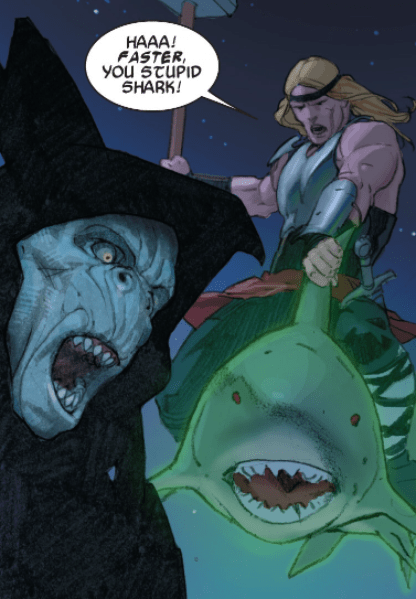
The two storylines out of the run that I’ve read so far — ‘The God Butcher’ and ‘Godbomb’ — felt like such a perfect distillation of everything that makes superhero comics work. A grandiose, epic story of ludicrously huge stakes, sprinkled with a necessary indulgence in pulp craziness (Thor on a space-shark, anyone?) which is in turn deflated by the strategic deployment of self-deprecating humour (the sarcastic back-and-forth between the Thors is a pure delight).

Ribic’s art seals the deal though. His gods certainly look the part — they may as well have been carved out of marble — helped along by the clean, gleaming shimmer that is Dean White’s colouring work.

While I eagerly look forward to devouring the latter half of the series, this rounds off a great year in Norse-related literature for me, during which I’ve enjoyed Christine Morgan’s across-the-board excellent The Raven’s Table from Word Horde, while I’m currently devouring Neil Gaiman’s Norse Mythology — a book that so far displays the popular myth-maker’s slinky and pleasant way with words, if nothing else.
shark

***

The Punisher (TV)

the punisher

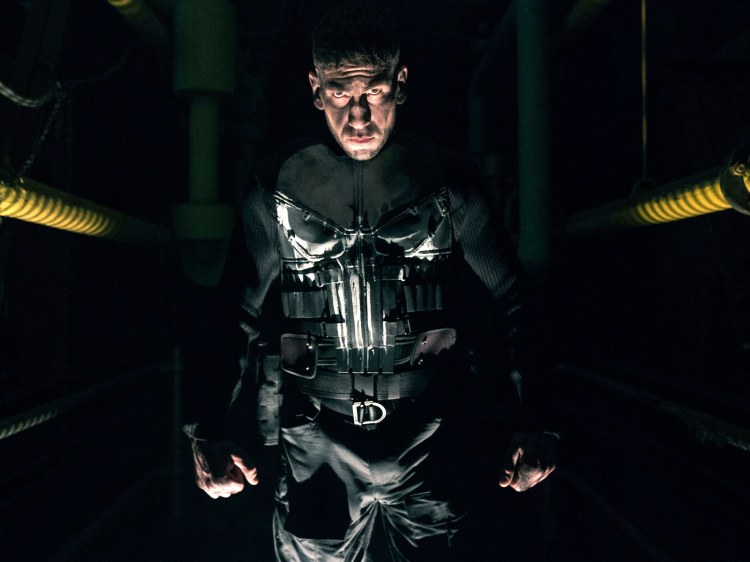
Another Marvel product that needs no signal-boosting for me, but which I found gripping enough through its 13-episode run, for some obvious and less-obvious reasons. Yes, updated as it is to insert a too-easy critique of the American military-industrial complex (though really, only of its “bad apples”), Frank Castle’s adventures offer an easy cathartic kick.

As the title character of another show I love dearly — far, far more dearly than The Punisher or anything else for that matter — would have it, “Doing bad things to bad people makes us feel good“.

But that wasn’t what stayed with me. What stayed with me was Frank’s very nature as a “revenant” — he’s even referred to as such by another character at one point — and how that’s hammered home by the fact that he’s made to operate from an underground lair as his true self, but that when he returns temporarily to the surface, it is as if he were alive again, but only when he wears his new disguise.

A mythic touch in a story that revels in its supposed grittiness, and a welcome one too.

Happy holidays to all!

The kids of the demon haunted night | Starr Creek by Nathan Carson

We’re getting to see a lot of phenomena unspool over the pop culture sphere in recent years, months, even perhaps days — their frequency is a direct consequence of the kind of internet-related chatter that I wanna discuss here — partly because we’re now quick to label things as all-out phenomena, or at least consider them as such privately, even subconsciously.

We can attribute at least some of this tendency to gush about things to stratospheric profusion to the ease with which geeky enthusiasm can spread online — encouraged by the producers and promoters of the ‘art’ in question, the rudiments of Web 2.0 (are we past even that now?) are weaponised to make sacred fetishes out of even, frankly, the flimsiest of materials.

Stranger Things Eleven

Phenomenon: Millie Bobbie Brown as ‘Eleven’ in Stranger Things (2016, Duffer Brothers)

But although a lot of this may have just a temporary effect — a film, TV show, book or comic book series could arrive in an explosive flurry of online enthusiasm which turns to mere embers just a couple of days later — it’s an effect that imminently repeatable and desirable for those at the top of the food chain the Meat Factory of Story that can still — despite our aggressively materialist times — churn out big business for those who play their cards right.

And one sure-fire way of making big business in a world where semiotic signifiers are an important stepping stone to success (read: where a healthy-enough accumulation of hashtags and social media shares can actually alchemise into cold, hard cash) is to tap into a rich stash of references.

There’s a fine line between the kind of recognition and familiarity that can result in something feeling boring, repetitive and ultimately unnecessary… and the kind that evokes feelings of comfort, kinship and a desire for connection. Pull the latter off, and you’ve tapped into that strong fount of subconscious desire called nostalgia which, as anyone alive would tell you, means seriously big bucks.

Stranger Things 2

Who you gonna call? Nos-tal-gia! (Stranger Things 2, 2017, Duffer Brothers)

One phenomenon to tap into that same fount is the Duffer Brothers’ television series Stranger Things, first appearing on the Netflix streaming service last summer and definitively declaring itself as a bricolage of 1980s nostalgia for all of us to shamelessly enjoy. And enjoy it we did, en masse and with reckless abandon, even aided and abetted (for the most part) by an enthusiastic critical mass of professional reviewers that helped to validate our love for a show that pushes just the right nostalgia-buttons.

So brazen is its soup of references and Easter eggs — though the Duffers also make sure to craft a catchy-enough story and direct their child actors to perfection, to ensure that it does not just, in fact, become some detached postmodern experiment — that the show could almost be described in tones of pure ritual.

***

In the two seasons of it we’ve had so far, the running time has constantly dredged up one association after another, each of which — for those of a Certain Generation, at least — has recalled at least one touchstone from the movies of Steven Spielberg or the books-made-into-movies by Stephen King and an entire raft-load of others (though I would argue that, for all its busy panoply of references, ET and The Body/Stand by Me give us the strongest and most consistent associative threads here).

Starr Creek Book Cover

Yeah, we’ll be getting to this in a second. Promise.

With everything calibrated to create a perfect snap of recall in our minds, it becomes nothing short of a huge-scale communal exercise of shared mental experience across the hashtagosphere.

The show, whose seasons arrive to us in bulk — all the better to be binge-watched, all together — is a manifestation of Pure Archetype; but archetypes that are recent-enough to strike a real emotional chord, while also being just distant enough to feel as if they’re emanating from a subconscious place of buried, chthonic connections. (To wit: the 1980s is not Ancient Greece, even if Stranger Things’s Demogorgon evokes associations old-enough to pertain to the latter.)

Stranger Things demogorgon

This is certainly one layer of the ‘kids in ’80s getting into world-saving antics’ that a recent short novel emphatically does not partake in, even if it may embody the Stranger Things vibe in other aspects of its make-up.

I’m talking here about Starr Creek by Nathan Carson, a fun book written before Stranger Things was first aired, but which is also set in a rural American milieu during the 80s — specifically, a small town in Oregon in 1986 — and which also pits a band of kids against a supernatural threat that has chosen to make its nesting ground in their otherwise unremarkable suburban backyard.

Starr Creek Map

Starr Creek Rd, Oregon. Real place.

But unlike the fictional town of Hawkins in Stranger Things — which fittingly joins a tradition also espoused by Stephen King himself with the fake ‘Derry’ in Maine — the eponymous road of Carson’s Starr Creek is a real place, around which Carson himself grew up.

And while the main trio of kids that make up Carson’s cast of characters — Kira, Allen and Bron — share the same predilection for Dungeons and Dragons as their Stranger Things counterparts, they’re not exactly the eminently plucky and largely squeaky-clean lite-weirdos of the Duffer Brothers. These kids trip on LSD to enhance their D&D games, though when they start chasing around extra-dimensional entities in the woods, that enhancement gains an edge of sublime horror.

And the trio soon comes head to head with another couple of outsiders looking for kicks — in this case, a shameless though understandable quest for nudie magazines — but who end up poking a particularly dangerous avatar of said extra-dimensional creatures, in a way that may just threaten the very fabric of existence if the kids don’t band together to do something about it.

That synopsis makes Carson’s book feel no different than just the kind of phenomena I was describing earlier but as ever, the devil is in the details. Drawing on lived-in experience rather than a desire to exploit the collective unconscious by cherry picking, and stringing together, nostalgic genre touchstones, Carson draws on convention to create a fun framing narrative, while stuffing the rest with memorable, hard-won texture.

***

Starr Creek Review Nathan Carson

Nathan Carson in the book trailer for Starr Creek

The character of ‘Puppy’ who pushes us into the dark corners of this narrative from the word go quickly forces us to watch him eat dog food for money, and the kids’ interactions and overarching milieu is described with affection, yes, but never the kind of mawkish sentimentality that often threatens to tip Stranger Things over into something less than its potential demands. And the pop culture references that do feature in Carson’s book are made in-story, not meta-textually to score audience-engagement points… the kids lament the suddenly and unfairly jacked-up prices of comic books (75c!), they enthuse about The Last Starfighter and listen to Metallica…

HP Lovecraft

HP Lovecraft

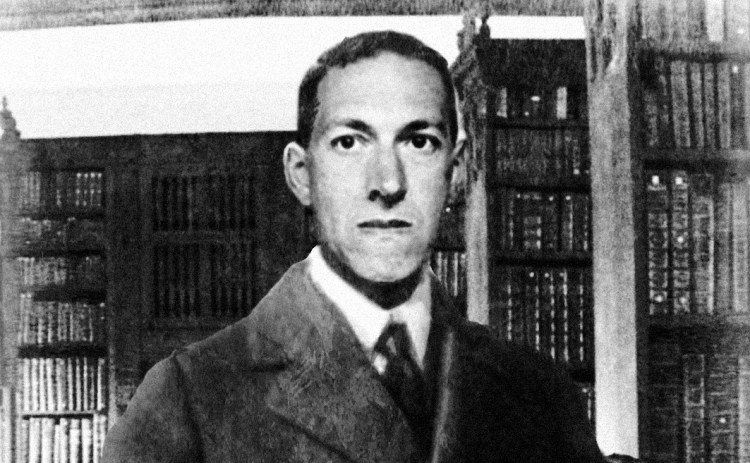
And when it comes to the crunch, the Elder Ones are invoked in earnest. While the Duffer Brothers paid lip service to the legacy of controversial Weird Fiction behemoth HP Lovecraft by claiming that the super-demogorgon features in the second season of the show is inspired by the author’s infamous reason-shattering tentacular beasts, Carson’s more sanguine approach throughout ensures that the nihilistic core of Lovecraft’s work is also paid tribute to… for better or worse.

While the likes of Stranger Things will continue to massage us into pleasant nostalgic oblivion — appreciating the more horror-tinged second season despite the mis-step that was Episode Seven, I’m certainly looking forward to Season 3 — Carson’s slim, weird and vicious little novella offers a more ‘genuine’ take on the same sub-genre (come on, this kind of thing has surely solidified into a sub-genre by now).

A howl of partly-autobiographical mad fun by a doom metal drummer (Carson is a member of Witch Mountain), Starr Creek takes one glance at the archetypal melting pot before going on to its own thing… grabbing you by the collar and stringing you along the eponymous road on a demon-haunted night.

Lullabies to Paralyse

I didn’t want there to be such a radio silence up here for such a long time. As October got underway, I hit upon the idea of leading up to Halloween with a fun little round-up of mini-reviews of season-appropriate stuff I’ve been reading – and to be fair, I did manage to roll out a first-and-only installment with my review of Kali Wallace’s deliciously autumnal sophomore effort, the Young-Adult-but-don’t-let-that-stop-you novel The Memory Trees.

But then, life happened, as it tends to. The freelancer cup did overrun this month, and I suppose I should be grateful for that; stress and lack of time to update one’s blog and continue pottering away at ‘passion projects’ notwithstanding. The good news is that I did manage to keep up with the reading schedule – I devoured John Langan’s The Fisherman, Paul Tremblay’s Disappearance at Devil’s Rock and Thomas Olde Heuvelt’s Hex, and enjoyed all of them – but apart from brief Facebook missives, that’s all there was to show for it.

(I also owe the great gents who are Neil Willamson and Nathan Carson some reviews for their juicy and memorable takes on various genres, and I promise that’s upcoming very soon). 

It could have simply been a matter of scheduling. But it could also have been down to that other thing. The thing that once again thrust Malta into the international spotlight. The thing that put a lot of the hyper-local controversies, paradoxes and scandals into far sharper relief, now.

Because the assassination of Daphne Caruana Galizia was one of those events you can’t run away from. You can’t shake them off from your mind and get back to your things with a business-as-usual attitude. Because, unlike the many petty grievances (that nonetheless still betray something of a rotten core) which I talked about in a previous blog post, a murder hits a far more direct note than the rote examples of corruption and complacency that gnaw away at us otherwise.

I was of course not alone in reacting to the numbing effect of such an event with, well, a pervasive, deep-seated sense of numbness. And after it had all just about started to subside, then came the reactions in earnest; some knee-jerk, some more considered and others, quite wide-ranging in scope, such as the rapid-fire succession of protest and ‘civil society’ actions, most of which were well-attended enough to possibly break local records, but all of which soon became mired in the kind of controversy that is unavoidable in a country where the partisan divide is so stark as to be almost physically tangible.

But neither am I too comfortable in suggesting that Daphne’s murder made me stop thinking and reading and writing – first of all, that would simply have been false because I have continued to read and write all the while, the only difference being that it’s been happening at a far slower pace than I’d hoped it would, now that the climate has cooled down and I could have, theoretically, begun to power through some work that would make me proud and remind me there’s tons left to do, and tons to live for.

No, I will not inject this event with an unsavoury jolt of facile, narcissistic tragic romance. And much as I strongly believe that the mythological idiom is an underused device in today’s age of bitty, rolling info-nuggets which more often than not, offer stimuli disguised as truth, I don’t think that mythologising Daphne or reducing her murder into some kind of commemorative meme would help to make the best out of a terrible situation.

The effect is disorienting. Before the murder, I had my issues with Malta, but I still felt as though I had the tool to process them and make something drinkable out of what are still essentially rancid lemons. Now, that suspect juice produces only poison, and I’m not sure what to do with it.

*

Of course, it all changes on a day-to-day basis. One mantra that I’m trying to maintain is one that’s similar to “Don’t let the terrorists win” – which is facile and shallow in its own way, but it can be the kind of ‘fake it till you make it’ device to get some coherence back up in your brain.

I intend to not let this lull continue, and will be back with a quick report of some of the stuff I’ve written for ‘day-job’ purposes, and some ideas I’ve had swirling around regarding books, authors, film and TV. Because what else can you do?

(Featured image: Ruth Borg in the upcoming, Malta-shot ‘Bahar Zmien’ — Of Land and Sea, directed by Peter Sant. Photo by Michael Galea)

Re-encountering the Weird: The Outer Dark & the continuing relevance of Weird Fiction

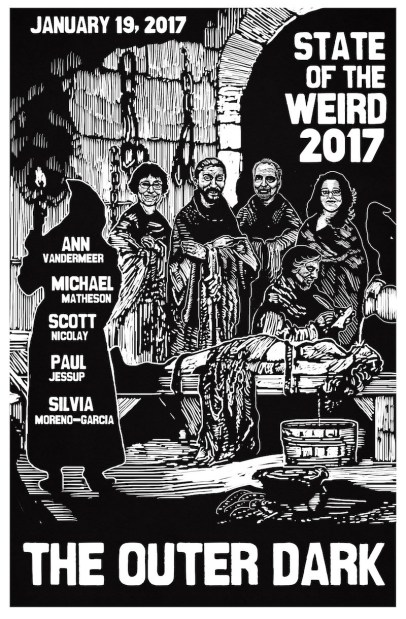
By now those interested in the literary form in question will have at least heard about the landmark episode of The Outer Dark podcast that came out not too long ago, where host and writer Scott Nicolay gathers together some highly significant players in the realm of weird fiction for a bumper-size — that is, two hour — discussion about what the ‘weird’ is and where it’s headed.

tod_008_state-of-the-weird-2017

For me, the conversation nudged a series of ideas and associations that I’ve allowed to become dormant for quite some time. Fact is — discovering weird fiction was an important landmark for me in many ways, but I’ve felt it wane from hungry obsession to doggedly pursued intellectual interest and now down to a fading interest of late, but the podcast in particular yielded some answers as to why that may have been the case.

Weird Fiction was the spur that led me to set up Schlock Magazine: a collective group exercise in creative writing for like-minded scribblers here in Malta that then blossomed into something of a bona-fide (though always ‘4dLuv’) online publication, and whose reins I’ve now handed over to my dear sister.

Around the same time, however, I also wrote my Master’s dissertation on ‘the New Weird’; by then already at least somewhat boxed away and shorn of any real new-ness, enabling me to study it as a bracing exercise in literary experimentation, if not an enduring literary tradition or even sub-genre in its own right.

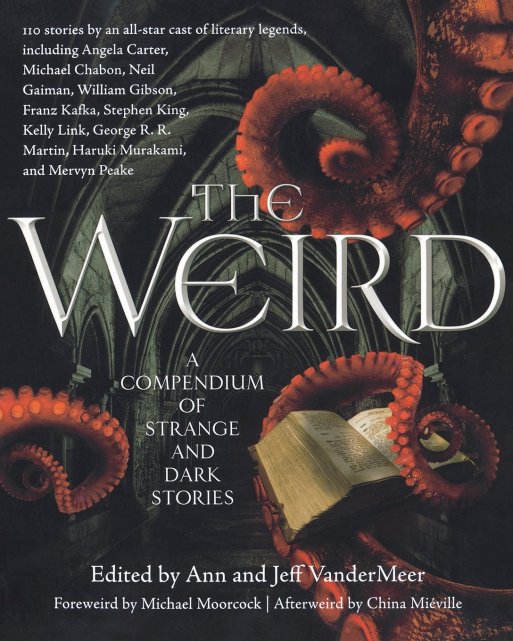
Slippery and just about impossible to define — the brilliant and imposing tome that is Ann and Jeff VanderMeer’s ‘The Weird’ anthology attests to that with girth and panache — the Weird is also, necessarily, alienating.

the-weird

And for the longest time, its deliberate alienation also signaled for me an invitation to fully embrace the uncanny and disturbing sides of our perception. It made the Weird a thing of endless, edgy possibility. Where other genres would skate towards tradition — or its degraded cousin, convention — the Weird would flourish in its unique fungus-growth of strangeness. And where the field of mainstream literature — so my reasoning went — would often spin compelling narratives in fine language, they would still not descend so deep into the rabbit hole of strangeness that the very best exemplars of the weird reveled in.

Of course, sweeping assumptions like these are largely borne out of laziness, which is why they don’t yield any critical rewards in the long run. But apart from the inaccuracy of such statements, the supposed undercurrent of the Weird — its commitment to evoke a sense of alienation in the reader without offering up any narrative explanation or even, really, any sense of catharsis — ceased to be engaging for me after a while.

Thing is, we’ve all been left bummed out, nervous and scrambling for answers these past couple of years and months. It’s safe to say that the world’s an uncertain place wherever you are right now, and even though an argument could be made for that always having been the case (again, depending where you are), we can all agree that we’ve reached something resembling Consensus Panic at this point, for reasons that I barely need to specify.

Coupled with my own natural tendency towards anxiety — which I tend to treat with a healthy and regular dose of Marcus Aurelius and journaling — it felt as though the Weird was becoming an indulgence too far. To wit: why would I want to actively pursue fiction whose primary and perhaps only priority is to jolt you out of any remaining peace of mind you may still be in possession of?

Partly because I wanted to give my own writing a keener sense of structure — in response to some very valid criticism I received for my debut novel, and because I’ve made it a point to try and craft MIBDUL to a more or less ‘classic’ framework — I’ve caught myself edging away from the Weird as I try to learn the rules first before breaking them, as it were.

But listening to the Outer Dark podcast reminded me not just of the variety that’s intrinsic to the weird — Han Kang’s blistering award-winner The Vegetarian was discussed as a truly Weird candidate, for one thing — but also that its main aim is not to disorient, but to cohere.

hankangveg

Responding to some of Nicolay’s prompts, Ann VanderMeer in particular seized upon a characterisation of the Weird that I’ve often neglected, but that I now feel should have been a point of focus all along. Namely, that the Weird stems from a primordial desire to confront the Unknown.

And it’s not just limited to the verbiage and racism of someone like HP Lovecraft, or the less politically problematic but no less arch work of someone like Algernon Blackwood. It is found in Kafka, it is found in Calvino and it is found in any number of international literary traditions who don’t shy away from letting the true strangeness at the core of human life run amok.

The Weird is many things, yes. And one of these things happens to be the ability to look at the unknown in the face and to acknowledge it as such. Not to deny it, or to repurpose it within a more rationalised framework. But to let it sit just as it is, and bleed its beautiful spool into the work.

There might be a sense of fear or at least trepidation in leaping into that kind of aesthetic program. But as this great edition of the Outer Dark reminds us, it’s one filled with as much strange fruit as it is with disquieting vistas into the black hole of the indifferent universe.

Designing the thrill ride | Editor and Publisher Ross E. Lockhart on Eternal Frankenstein

ross-e-lockhart

Ross E. Lockhart

A hard-working and eminently likeable presence in the field of speculative fiction small press, editor and publisher Ross E. Lockhart takes a seat at the Soft Disturbances lounge to chat about Eternal Frankenstein – a 16-story tribute to Mary Shelley’s groundbreaking science fiction and Gothic horror classic – which he edited this year for Word Horde. He also delves into what makes this increasingly essential genre fiction publishing house tick, before letting us in on the Frankenstein story of his dreams…

eternal-frankenstein


First off; why Frankenstein, and why now? Mary Shelley’s text has been a touchstone for quite some time, so what made you think that now is the right moment to put together an anthology like Eternal Frankenstein?

This summer was the bicentennial of ‘The Year Without a Summer’, wherein massive climate instability was caused by the 1815 eruption of Mt Tambora in the Dutch East Indies (now Indonesia), blanketing the Northern Hemisphere in miserable weather. A young English couple – Percy Shelley and Mary Godwin – decided to escape the apocalyptic rain and constant cold (and majorly dysfunctional families) by staying with a friend in Switzerland, Lord Byron.

Mary Shelley (1797-1851)

Mary Shelley (1797-1851)

Percy and Mary brought along Mary’s cousin Claire, and Byron was attended by his personal physician, John Polidori. One stormy night, as the five sat indoors, reading ghost stories by firelight, Byron proposed a ghost story competition. That night, Mary had a dream that would inspire her to write Frankenstein; or, The Modern Prometheus, which she would publish anonymously in 1818.

The book and its many adaptations fascinate me, and I believe the story is one of the most intricate and poignant myths of the modern era.

Beyond this anniversary, I’ve been a Frankenstein fan since I saw James Whale’s Universal films as a kid. The book and its many adaptations fascinate me, and I believe the story is one of the most intricate and poignant myths of the modern era. I also looked at things from a commercial standpoint, and I realized that (with the exception of Steve Berman’s Daughters of Frankenstein: Lesbian Mad Scientists) it had been a long time since anybody had published an all-original Frankenstein-themed anthology.

As with other Word Horde anthologies I’ve had the pleasure of reading in the not-too-distant past, Eternal Frankenstein is a finely crafted piece of editorial work, with stories clearly selected to intensify certain through-lines and motifs: teenage angst, anti-communist hysteria and the reanimated automaton as a cog in the military machine, to mention just a few. How did you set about identifying these themes? And to deepen a bit further: why do you think the legacy of Shelley’s text accommodates these themes and images in particular?

Editing an anthology is a lot like building Frankenstein’s monster. You start by digging through graveyards, finding pieces, and seeing how those pieces fit together. You take chances. You invite authors whose work you enjoy, and you say “show me what you’ve got”. You tweak and you fine-tune and you experiment and arrange, and eventually a creature takes form, comes to life, and shambles out into the countryside, demanding a mate.

I work with authors who are constantly striving to produce the best possible work, and I’m willing to push those authors to do better.

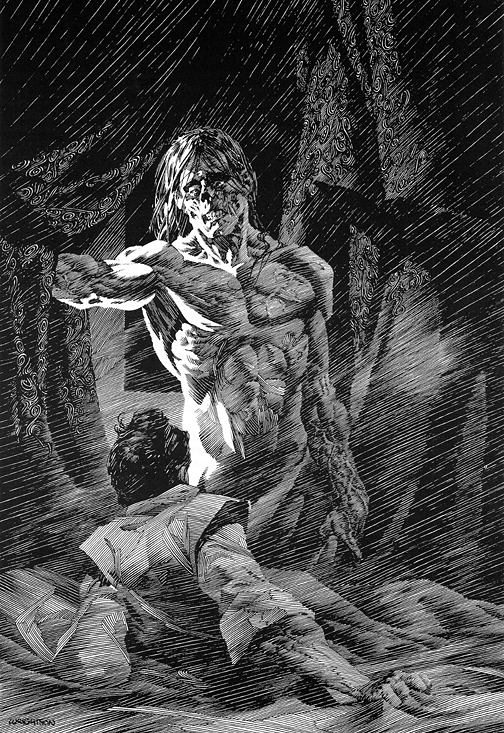
Frankenstein by Bernie Wrightson

Frankenstein by Bernie Wrightson

Given that Shelley’s novel continues to hold such an influential sway over our culture, was it actually easier to amass short fiction of adequate quality and variety for Eternal Frankenstein, when compared to other anthologies you’ve put together? Or did the process pan out in more or less the same way?

Eternal Frankenstein is my seventh anthology, and while these books are always challenging in their own way, and a lot of work, I’ve developed a system that keeps things on track in a more-or-less smooth way. I work with authors who are constantly striving to produce the best possible work, and I’m willing to push those authors to do better.

Frontispiece for the 1831 edition of Frankenstein by Mary Shelley. Illustrated by Theodore Von Holst (Steel engraving; 993 x 71mm)

Frontispiece for the 1831 edition of Frankenstein by Mary Shelley. Illustrated by Theodore Von Holst (Steel engraving; 993 x 71mm)

Ultimately, I want stories that are going to resonate with readers, stories readers will remember for the rest of their lives. One of the things that inspires me about Mary Shelley’s Frankenstein is that she was trying to write a story that would be as powerful and memorable as anything written by Percy or Byron. And I think she managed, with Frankenstein, to outshine both of them.

There is an analogy I frequently use when talking about anthologies: The Thrill Ride

And on that note, do you have any iron-clad principles you adhere to when putting together Word Horde anthologies?

That it be fun. There is an analogy I frequently use when talking about anthologies: The Thrill Ride. Like the designer of a roller coaster or carnival dark ride, the anthologist is directing a reader’s experience. You carefully arrange things, the climb, the fall, the sudden turn, the loop. You seed in shocks and scares. You direct the reader’s view. But you also have to keep things moving. Always moving. Sure, readers jump in, read stories out of their intended sequence – that’s a reader’s right. But one must never forget that a book is best read from cover to cover, each story in conversation with the ones before, each setting the stage for the next story to come.

Word Horde is certainly becoming something of a standard-bearer for the genre small press. How would you say it’s evolved to this point, and what are your future ambitions for it?

I’m really happy with the way that Word Horde has been received. I’m currently publishing five books a year, picking projects carefully, and getting work out there that has something to say and shakes up the complacency so common in by-the-numbers genre fiction. If you’ve enjoyed what I published in 2016, you’re going to love what’s coming in 2017. And Word Horde may be a small press but we’ve got big ideas, so stay tuned.

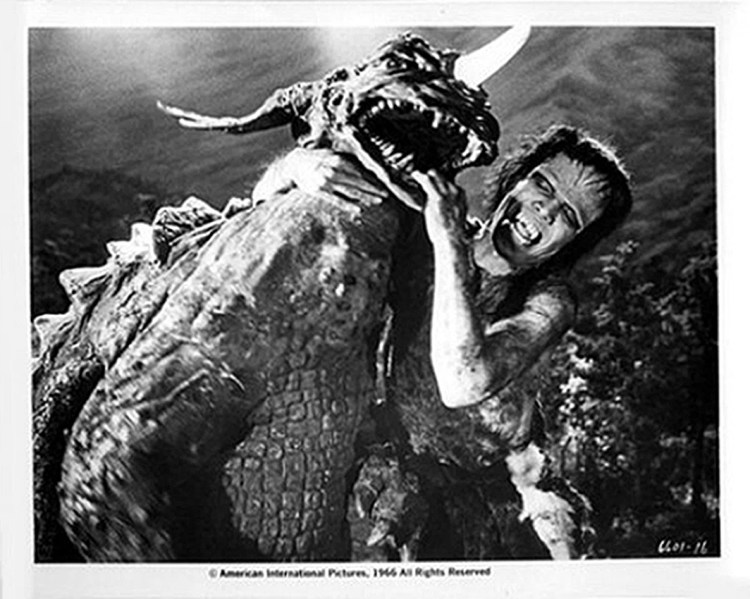
Still from Frankenstein Conquers The World (1965)

Still from Frankenstein Conquers The World (1965)

Finally… what would your own Frankenstein story look like?

Just off the top of my head, remember Monster Island from the Godzilla films? I’d like to tell the story of Frankenstein Island. All the various cinematic Frankenstein’s monsters – Charles Ogle, Boris Karloff, Glenn Strange, Koji Furuhata, Phil Hartman, Robert De Niro –building a civilization on a remote island. Though I’m not sure whether that society would be a utopia, dystopia, or something in between.

Check out my Eternal Frankenstein read-a-thon in all its entirety for reviews of each of the stories in the collection.

Please consider donating to the Patreon for MIBDUL – Malta’s very first serialized comic!

Eternal Frankenstein read-a-thon | Table of Contents

Over the past couple of months, I’ve been reviewing the new Word Horde anthology Eternal Frankenstein, edited by Ross E. Lockhart. As was the case with my read-a-thon of Swords v Cthulhu, I tackled the anthology story by story, and my reviewing method was be peppered with the cultural associations that each of these stories inspire. These were presented with no excuse, apology or editorial justification. You can find the complete linkstorm to all of the reviews just below. Enjoy! 

eternal-frankenstein

Torso, Head, Heart by Amber Rose-Reed 

Baron von Werewolf Presents: Frankenstein Against the Phantom Planet by Orrin Grey

Thermidor by Siobhan Carroll

They Call Me Monster by Tiffany Scandal

Sugar, Spice and Everything Nice by Damien Angelica Walters

Sewn Into Her Fingers by Autumn Christian

Orchids by the Sea by Rios De La Luz

Frankenstein Triptych by Edward Morris

The Human Alchemy by Michael Griffin

Postpartum by Betty Rocksteady

The New Soviet Man by G.D. Falksen

The Un-Bride; Or No Gods and Marxists by Anya Martin

Living by Scott R. Jones

Wither On the Vine; Or Strickfaden’s Monster by Nathan Carson

The Beautiful Thing We Will Become by Kristi DeMeester

Mary Shelley’s Body by David Tempelton

Please consider donating to our Patreon to help us make Malta’s first serialised comic, MIBDUL. Thanks!

Eternal Frankenstein read-a-thon #13 | Kristi DeMeester

In the coming weeks, I will be reviewing the new Word Horde anthology Eternal Frankenstein, edited by Ross E. Lockhart. As was the case with my read-a-thon of Swords v Cthulhu, I will be tackling the anthology story by story, and my reviewing method will be peppered with the cultural associations that each of these stories inspire. These will be presented with no excuse, apology or editorial justification.

eternal-frankenstein

The Beautiful Thing We Will Become by Kristi DeMeester

There might be something to the niggling assumption that, Mary Shelley having penned Frankenstein when she was merely nineteen years old helps to lend the book with the urgent, neurotic charge that it the necessary flipside to the life-and-death energy that characterises youth.

The ‘outsider’ status of the creature is the biggest element in favour of that interpretation, but I would argue that there’s also something to Victor Frankenstein’s initially obsessive, but ultimately brittle commitment to his project that speaks to the young person’s unease of matching their dreams — and nightmares — to the cold slap of reality.

As we’ve already seen, Lockhart himself appears to be very sensitive to this, what with two back-to-back stories from Eternal Frankenstein capitalising on the legacy of Shelley’s original story by juxtaposing it to a high school context, with inspired results.

The strand is however also picked up by Kristi DeMeester, though her take is less about the social dynamics of the high school than it is about the harried bonds of love that develop among young friends at that delicate stage. More importantly, it’s about how just a small push into stranger territory can alter these young lives, seemingly for good.

teenage-frankenstein

Our Frankenstein’s Creature is one Katrina, and the narrator is a hanger-on best friend who grows curious about Katrina’s — initially slight — hints of bodily modification. But family history steps in to ensure this morphs into a full-on obsession: after her father abandons her mother in pursuit of a younger (and crucially, slimmer) woman, the narrator is thrown into a calorie-counting frenzy by a newly weight-conscious single mother.

This serves to give a keener edge to her attraction to Katrina, which is really an attraction towards the grisly experiments her kindly but eccentric father performs on his daughter.

DeMeester writes from the point of view of the narrator’s eerie emotional state, and as such the narrative voice isn’t judgmental, but fully immersed in a world that sees self-destruction as a form of salvation and horrific acts of bodily modification by a demented patriarchal figure as something to embrace. Needless to say, the effect is disturbing. But since we’re so close to the narrator all the way through, we achieve a strange sort of empathy with her journey.

DeMeester morphs disgust into madness and back into love, leaving us to observe the journey with nervous awe.

Read previous: Nathan Carson

Eternal Frankenstein read-a-thon #12 | Nathan Carson

In the coming weeks, I will be reviewing the new Word Horde anthology Eternal Frankenstein, edited by Ross E. Lockhart. As was the case with my read-a-thon of Swords v Cthulhu, I will be tackling the anthology story by story, and my reviewing method will be peppered with the cultural associations that each of these stories inspire. These will be presented with no excuse, apology or editorial justification.

eternal-frankenstein

Wither on the Vine; Or Strickfaden’s Monster by Nathan Carson

One of the fun things about the kind of spirited pastiche that tends to animate anthologies like Eternal Frankenstein is that the fun can easily be had from various sources, or at the expense of literary and historical figures that can plausibly be co-opted into the overall schema of the legacy left behind by Mary Shelley’s original text.

Nathan Carson’s tale certainly makes the most of this tendency, meshing not one, but two key historical characters — of, it must be said, varying degrees of prestige — into the overall mix of a Frankenstein-inspired story.

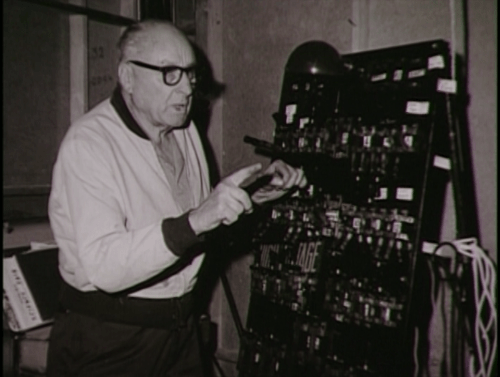
The titular character of Kenneth Strickfaden is inspired by the real-life figure who brought unforgettable Hollywood props from some classic Hollywood movies — most famously, as it happens, the lightning-powered device that brings the Creature to life in James Whale’s groundbreaking adaptation of Shelley’s text.

Kenneth Strickfaden (1896-1984)

Kenneth Strickfaden (1896-1984)

Because his car breaks down in a desert canyon near Utah, Strickfaden finds solace in the company of the enigmatic Mr Baldwin, who offers him lodging and car repairs in exchange for his help with some left-field science experiments he is conducting in his home; Strickfaden’s admittedly amateur reputation as a quirky tinkerer preceding him thanks to a one-off appearance in the pulp magazines of sci-fi pioneer Hugo Gernsback.

What follows is a decent into weird science as pushed into weirder extremes by particularly American religious convictions, with Strickfaden discovering more than he should about what Baldwin’s been up to — specifically, how his community aims to ‘treat’ some of its ailing women — before being given the opportunity to cross paths with one of his idols: the one and only Nikola Tesla.

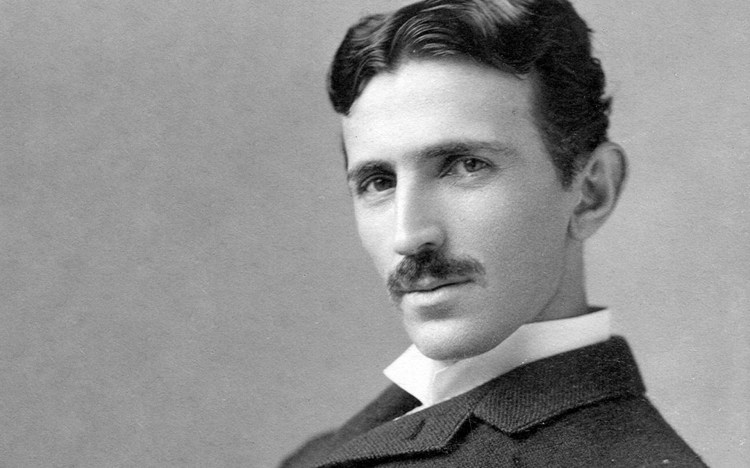
Tesla’s reputation as a real-life ‘mad scientist’ animated by Romantic ideals — and beaten down by the capitalist machine — renders him particularly vulnerable to appropriation by modern speculative fiction writers. But while the Tesla in Carson’s story still comes to us draped in the same legendary aura, his depiction is far less flattering — and certainly less heroic — than one has come to expect. Here, Tesla remains an eccentric genius who produces results, but he’s also as much in love with money as he is with his creations, and doesn’t seem particularly concerned with human life beyond its impact on his experiments.

Bright spark: Nikola Tesla

Bright spark: Nikola Tesla

In short, he is the true Victor Frankenstein of the story — we could say that Baldwin is initially placed as something of a red herring — but because Carson tells the story in a slow-burning, old-timey tone that exudes wry irony, Tesla is presented as a blackly comic figure rather than an out-and-out villain.

It’s clear that Carson is having fun creating a situation in which Strickfaden and Tesla get to meet: it’s a kind of ‘origin story’ for Strickfaden, actually. And in fact, Baldwin’s religious community is presented as little more than an easy-to-ridicule gathering of desperate, credulous people who get what they bargained for when they meddle with the natural order.

Which is ironic, because whereas the Victor Frankenstein of Shelley’s original text was always keenly aware of the fact that his work may be an affront to God, Baldwin and his followers have convinced themselves that what they’re doing runs in exact tandem with God’s wishes. Stuck in the middle is their sly enabler — Tesla — and Strickfaden, an accidental hanger-on who ends up helping both sides.

In short, it’s a story about that peculiarly American trait of improvising with newfangled phenomena — be they scientific innovations or religious sects — and then doing your best to profit from them, or at least survive with all your limbs intact when it all goes to shit.

Read previous: Scott R. Jones


Eternal Frankenstein read-a-thon #11 | Scott R. Jones

In the coming weeks, I will be reviewing the new Word Horde anthology Eternal Frankenstein, edited by Ross E. Lockhart. As was the case with my read-a-thon of Swords v Cthulhu, I will be tackling the anthology story by story, and my reviewing method will be peppered with the cultural associations that each of these stories inspire. These will be presented with no excuse, apology or editorial justification.

eternal-frankenstein

Living by Scott R. Jones

Since horror and fantasy are, broadly speaking, my favourite of the classic speculative fiction categories — while a wide berth is given to the Weird and any form of intermixing — my experience with literary sci-fi falls a bit on the lean side.

That said, the sci-fi favourites I do have, I cling to very dearly indeed, dipping in for regular re-reads. Mary Shelley’s Frankestein is actually one of them. The other is William Gibson’s pioneering work of cyberpunk fiction, Neuromancer. And despite the fact that both novels were written over a century apart from each other and that, apart from their central commitment to a science fictional set of ideas, situations and concepts, could not be further apart in tone, narrative rhythm and scope, I like to think of both of them as being complementary.

Shelley addresses the limits of bodily modification and reanimation, and problematises the notion of a creature created ex nihilo, but without the embracing context of family and community. The Creature in Shelley’s text grasps at the world outside of itself to give it meaning — it feeds on what we can widely describe as ‘culture’ to legitimise itself, but all the while its aberrant bodily shape snuffs out any chance of real belonging.

It is a tale of bodies and what they mean, and how we process or fail to process their realities: be it the Creature’s own failed — but understandable — attempts at making peace with its uniquely tormented predicament, or Victor Frankenstein’s refusal to take responsibility for his engineered progeny, largely on the basis of its physical appearance and its implications.

Frankenstein by Bernie Wrightson

Frankenstein by Bernie Wrightson

In the end, both characters are disappointed by the fact that their physical reality doesn’t match up with the abstract dreams they have: Victor’s Creature doesn’t conform to the aesthetic decorum he may have wished to achieve with his experiment — which further cements the fact that his work is an affront to God — while the Creature’s admirable self-taught attempts at becoming intellectually and emotionally sensitive are ultimately rendered moot by the limits of its body.

The innovation of Neuromancer, on the other hand, was to circumvent the body altogether in favour of an exploration of the cybernetic singularity which has since become rote not only in fiction, but in daily life too (you’re reading this online, aren’t you?). The open hostility that some of Gibson’s characters espouse for ‘meat’ (i.e., traditional biological bodily structures) are a testament to this, and seem to suggest that Frankenstein got the ball rolling, but that the future imagined in Gibson’s model is in some ways the logical conclusion of Victor Frankenstein’s experiment.

To wit, the trick to circumvent mortality is not through some messy and pathetic attempt at stitching together dead body parts and reanimating them… the trick is to embrace the possibility of downloading and replicating your consciousness in a virtual realm that edges closer and closer to our ‘real’ one.

In his contribution to Lockhart’s anthology, Scott R. Jones happily meshes together both of these key strands in sci-fi, but in a way that they don’t, in fact, cancel each other out. In the snow-capped setting that recalls both — of course — the bookending sections of Shelley’s novel, as well as pop culture artefacts like John Carpenter’s The Thing in its depiction of rugged outliers gazing suspiciously ahead at a mysterious and dangerous mission, Scott injects his version of the Creature with both anger and agency.

Frozen waste: The Thing (1982)

Frozen waste: The Thing (1982)

The story itself is largely composed of a monologue delivered by the same stand-in for the Creature; a military experiment gone awry and who is now on a vindictive mission to find and execute its creator, Aldo Tusk of ‘Eidolon’ — a corporation or military body of some kind which has apparently OK’d Tusk’s mission to stitch together a super-soldier.

As the ‘asset’ beings its narrative, we learn that it’s made up of various body parts made to fight in unison, and the voice of the monologue is laced with a sarcastic bitterness that the Romantically pained Creature from Shelley’s original novel would never have managed. Later on, Jones adds another twist of black humour by suggesting that the Creature’s programming includes orgasmic delight at an enemy kill. This guarantees that the story has the edge and attitude normally associated with cyberpunk, but more importantly, it also means that the Creature here is a fighter, and not a subject of pity as in Shelley’s text.

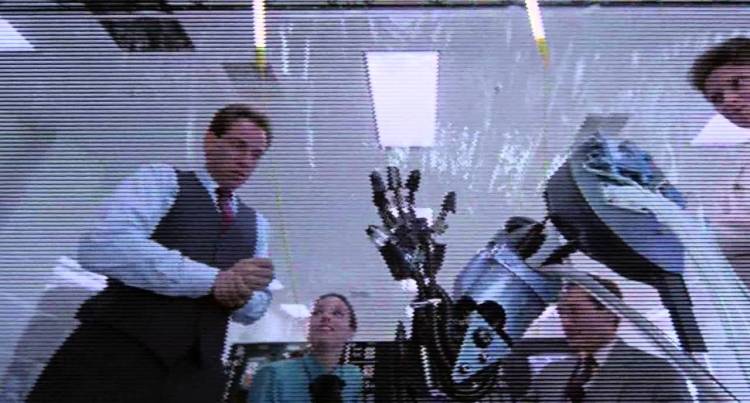
It's alive? The 'birth' scene from Paul Verhoeven's Robocop (1987)

It’s alive? The ‘birth’ scene from Paul Verhoeven’s Robocop (1987)

And in fact, it’s through cyberpunk ‘means’ that the hint of complete emancipation appears to suggest itself. While the beginnings of the asset’s career as a patchwork soldier are as abject as ever — they even recall Robocop‘s forced resurrection as a hybrid fighting for someone else’s agenda — the gleeful bite as she/it reveals just the programming has been circumvented is a joy to read.

A spirited and inspired mash-up of key strands of the sci-fi genre (at least from my admittedly limited POV) with a highly satisfying revenge kick to round things off.

Read previous: Martin, Falksen


Eternal Frankenstein read-a-thon #9 | Betty Rocksteady

In the coming weeks, I will be reviewing the new Word Horde anthology Eternal Frankenstein, edited by Ross E. Lockhart. As was the case with my read-a-thon of Swords v Cthulhu, I will be tackling the anthology story by story, and my reviewing method will be peppered with the cultural associations that each of these stories inspire. These will be presented with no excuse, apology or editorial justification.

eternal-frankenstein

Postpartum by Betty Rocksteady

And so, Ross E. Lockhart impresses me with his sharp editorial skills once again. Just last review, I was speaking about how we in fact don’t speak about Frankenstein as a book about artistic creation all that often, spurred on by what seemed to be a subtle treatment of that very same strand in Michael Griffin’s novelette ‘The Human Alchemy’.

But turn the pages over to the next story on the TOC — Betty Rocksteady’s ‘Postpartum’ — and bang! there it is. Nothing subtle about  it: Rocksteady decides to not only place that metaphor at the front and centre, but to make it the main motivating engine of her contribution to Lockhart’s anthology.

However, the title also suggests a more pained and universal fact of human life, and one that will also remind us of another key element in the fabric of Mary Shelley’s original text. Rocksteady’s protagonist is a reluctant teenage mother who has lost her sweetheart soon after their baby — the poor, unfairly derided Timmy — is born, and her first-person narration does very little to endear us to her plight beyond the fundamental misery, and recent tragedy, that underlies her existence.

Still from Hannibal, 'Trou Normand' (Season 1, Episode 9)

Still from Hannibal, ‘Trou Normand’ (Season 1, Episode 9)

Rocksteady uses this to create suspense — the central artistic creation could easily be something out of NBC’s Hannibal — but the idea of a mother rejecting her child of course also recalls Victor Frankenstein’s heart-breaking (and instant) rejection of his own Creature.

But where Victor Frankenstein is all neurotic self-justification in his own version of events — really, it reaches Humbert Humbert like proportions at times — Rocksteady’s teenage narrator has no such qualms, coming across as bratty at best and downright spiteful at worst. This only increases the aforementioned suspense, because in that mental state, our otherwise powerless (psychically and economically) protagonist gains an unsettling degree of amoral freedom.

Rocksteady’s story is at its most affecting when the emotional satisfaction of creating art is being detailed: the only real relief that our narrator gets, and one that his sanctioned by her doting mother, who knows full well that art is her only real method of release. The trouble is that the raw matter used in the act of creation preclude the essential beauty of the idea, much like Victor Frankenstein’s ambitions to create life ex nihilo lose their luster when confronted with the groaning hodge-podge Creature springing into life and demanding to be recognised and loved.

A taboo-prodding tale with a shocking ending that’s fully earned.

Read previous: Michael Griffin