Coming Home | The battles to be fought

We’re finally packing for our trip back down to Malta, which will cap off a hugely eventful summer that was stressful and ecstatic in equal measure, for reasons that should be more or less obvious to anyone who has graciously inhabited the orbit of Virginia and myself during this heady time.

Though many of my new friends and family — yes, that includes V. and my in-laws — will view Malta through their own subjective lens, the place remains a home for me.

A home, with some complications.

I grew up there, but I was not born there. There’s an “arm’s length” quality to both my own perceptions of Malta and also, perhaps, how its other, “more native” inhabitants — including those closest and dearest to me — view my positioning as a latter-day Maltese citizen.

It’s a place that’s defined by waves of foreigners. It’s a place defined by its ability to serve, to coddle, to indulge fantasies. These fantasies could be fey and harmless — the dreams of spending time on a sun-kissed, sea-rimmed and historically layered island are an appeal in and of themselves — and also quite literally concrete.


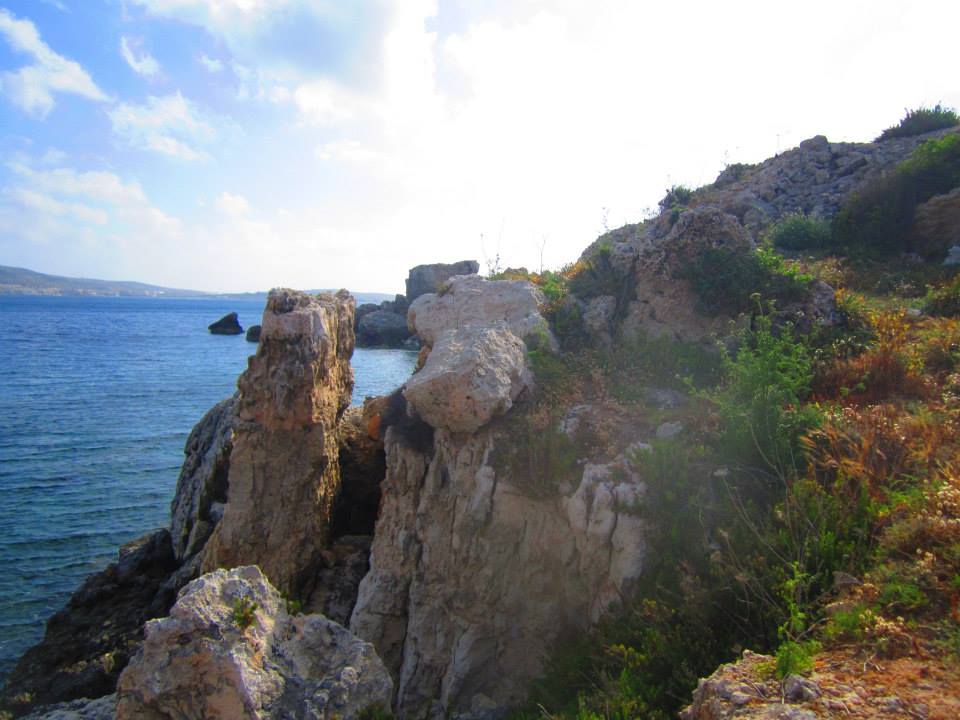
10481190_10154601192990019_3815372133040823538_n

It’s the latter that’s dirtying my impressions of the island like a splotch of expanding ink as I think about heading back after a month’s absence. And it’s come to a point when resisting the concertisation of the island by developers needs to become part and parcel of one’s daily routine if any change to the malignant status quo is going to occur. And even if such resistance leads to nothing in the long run, I still want to put myself out there in whatever way I can — as luck would have it, a mix of absurdism and stoicism has become my MO since my late teens, so I can just about stomach the thought of my actions leading to nothing much in the long game as long as I feel their conviction in the short term.
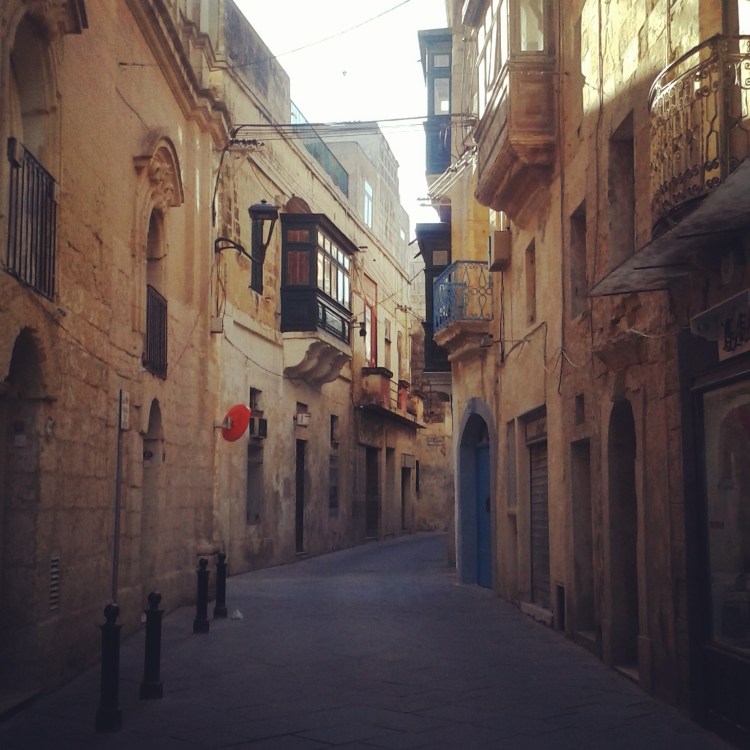
A studio in Rabat is a great thing to have

A studio in Rabat is a great thing to have

Because for better or worse, I am marked by this island, and being of a nostalgic disposition anyway, I feel the wedges of these marks press all the deeper once we’re abroad. It’s not an exaggeration to say that thinking about the streets of Valletta and Rabat, about my routine walks along the Sliema coastline, and even far less idyllic walks around this overdeveloped rock, are images that drop like lead in my heart and mind — that remind me of just how indelible my connection to this island is.

I’ve spent this summer around Rome and Helsinki — two cities whose beauty is far more varied, expansive, even more efficient if such an adjective is appropriate — but neither of them have the cruel power Malta has over me (at least, not yet). The environs of Rome are becoming like a second home to me — a ‘new family’ connection that I’m grateful for — and the rugged beauty of the city-proper and the (often verdant) variety of the surrounding parts are like a tonic to me, after the scrunched, yellow and small — and shrinking — stretch of Malta.

And in some ways, Helsinki, with its geometric lines, its traffic-free streets and its efficient public transport system felt almost like a parody of all that I thirst for in Malta: so refreshing was it to be in a place where you’re not gutted by heat and humidity, and where public spaces were just that. (V., in fact, describes it as utterly science-fictional).

But Malta is where the significant experiences of my life happened, and this is something that cannot be replicated even in the places that would otherwise fit far more comfortably with my ‘lifestyle’. Perhaps it was growing up in Malta as an immigrant that made me appreciate its contours even more — and I’ve detailed some of the psychological ins and outs of what having/not having a Maltese passport really means in an article last year — so that I’ve never taken my connection to Malta for granted.

Chernobyl Barbeque

And ironically, it’s the ability to travel more that has cemented this connection, not dampened it. Perhaps carelessly, when I was actually growing up in Malta I’d assumed that I would move away eventually. Applying the same crass-economic logic that many of those who actually settle into Malta operate under — the relative low cost of living, good climate, tax breaks, etc — I’d instinctively assumed that living in Malta would mean selling myself short, and that the real opportunities lay elsewhere.

In other words, I was letting the specifics of the island slip by in favour of abstract notions of what constitutes happiness: a larger place where you’re more likely to meet like-minded people and secure jobs and other opportunities that would not have been possible in Malta.

But as the years went by, and as life events continued to teach me to appreciate the granularity of life over any broad brush strokes, I began to cherish the specifics of Malta. I began to appreciate how all those streets I’ve walked up and down are actually inside of me, in a way that I couldn’t possibly say about any other country I’ve visited (even my native Serbia… but that’s a whole other blog post right there).

Now, I want to head back home to our flat in Marsaskala, release the cat from her carrier bag and take in the sea view. Maybe even go out for an ice-cream by the promenade (it won’t be as good as the one in Rome, but…). Now, I actually appreciate the memory of walking down from the utterly nondescript suburb of San Gwann to what is now my father’s apartment in Sliema after a long shift at the paper. Now, those dingy, potholed streets — which morph from industrial estate to government housing to beautiful 18th century follies in the blink of an eye — are no longer bitter images of fatigue and routine. They’re memories of a real life’s trajectory — valuable because, not despite of the fact that they’re routine.

The rock is cooler than you

The rock is cooler than you

Now, I look forward to visiting my father at the same Sliema apartment, sipping his trademark Turkish coffee (the one true family tradition whose baton I’ve grasped firmly with both hands) and chatting. To the noise of construction outside, no doubt. But also to the healthy bustle of the various photographers and other helpers that populate (and animate) his studio.

This is why I don’t want the specifics of Malta to be washed out by an overdevelopment drive. This is why I want us to be able to breathe in the little of the island that’s still left. Developers will always speak of doing their utmost to strike a ‘balance’ — as if this is already a concession, an act of charity on their part. But what they don’t understand is that things have been thrown off balance already, for a very long time. Building ‘sustainably’ is no longer possible. The island is too small, and too much of it has been eaten up.

It is with an always-complex cocktail of emotions swirling in my head that I will land back in Malta tonight; to the air that I’ve described as “milkshake thick” in TWO. What I know for certain is that I will make a concerted effort to meet the people I love more often than I have over the past few months. And that, hopefully, they will all join me in the fight to preserve what’s left… in whatever way each of us deems fit.

10255806_10154194279525019_6547924044003383833_n

Worldcon 75 (draft!) schedule

They keep insisting that it’s a DRAFT schedule and that it’s subject to cataclysmic upheavals at any given moment, but it gave me something of a pleasant rush to discover that a progamme for Worldcon 75 is now out.

I’ll be on two panels, which are the following:

programme

The ‘European myths’ one should be fun, while the latter is bound to be informative and somewhat cathartic (at least for me).

My own fractured European identity has provided me with plenty of subconscious fodder for fiction — the most significant of which is still forthcoming, I suspect — while my more direct use of Maltese folktales in Two is actually folded into the story in a way that obscures rather than illuminates the original work… which will be fun to reconsider, and potentially discuss with others.

With regards to ‘Coping Strategies’… I’m actually hoping to learn more from the others present, as I feel that the discussion has been somewhat exhausted in the Maltese sphere. Much like the geographical limits of the island, it tends to run in a churn of “Our audiences are small –> Translation options are limited –> As are international publishing networks –> Repeat.”

Having hovered over my co-panelist’s bios, it seems as though this year’s Worldcon is already living up to its promise to connect participants to a wide, international network of writers. Also, I must admit that sharing desk-space with the great Hal Duncan is something of a fanboy thrill.

Hope to see a lot of you there!

*

My visit to and participation in Worldcon 75 is supported by Arts Council Malta – Cultural Export Fund

Summer

I never look forward to the Maltese summer. It’s both a popular and unpopular statement, or stance to take — depending on the level of commitment and intensity involved. Many will jeer at me for being a party-pooper, for missing the wood for the trees and even — which is both fair and unfair — for being ungrateful: other countries don’t get to enjoy this much sunshine, and neither to they have our abundance of easily-accessible beaches to dive into when it all gets a bit much.

I’ve come to understand the other’s position a bit more now that I’ve recalibrated my life in a way that suits me better; i.e., now that I am a remote-working freelancer and am at least spared the morning (and equally punishing, evening) commute to work on crammed buses whose air-conditioning is either malfunctioning or too strong: strong enough to give your body a system shock that will doubtless lead to a nasty summer cold as soon as you step out of the vehicle.

Yes, summer is in many respects a beautiful time of year — a culmination of all that we look forward to in our leisure time here: the ability to go for a swim in the sea that is readily available and abundant for us, and the ability to enjoy balmy summer evenings with friends — be it at an open-air event of some kind, or a rooftop barbecue…

But in other ways, it’s a time of year that grinds everything down. Makes it soupy, ugly. Leisure-time in summer is great — or at least, lends the impression of being postcard-perfect great — but the daily routine still remains (we’re not in schooltime-Kansas anymore) and work is compromised by the stifling heat. The heat that signals to you that you should, above all, seek shelter and rest.

But of course, the system we all operate under does not allow for that. But it should. There is something beautiful in the notion of us meeting summer the way it demands to be met. For us to let the heat consume us and — to use a phrase beloved by self-help gurus/websites — to ‘listen to our bodies’ and do what it will.

In the way that it short-circuits human efficiency, summer is a reminder to us to remain humble, because we are at the mercy of the elements — the heat being the most predominant element in Malta. Where the milder climes allow themselves to be shoved aside to facilitate our attempts at economic survival, ingenuity and the comfortable pursuit of our ambitions at our own pace, summer forces all that to grind to a halt.

Summer demands worship. But we are continually barred from simply prostrating ourselves.

iGaming island

Malta is an iGaming island. Everyone works in iGaming, and those who don’t are the drifters on the wayside, the detritus that remains after the steel ship has ripped the land to little flakes and established itself as the new citadel from whence all the riches shall flow, henceforth.

They are affable though, these iGaming people. They pay well and treat their staff well. They give out menus to their new employees – even the Maltese ones. And the Scandinavians that run these companies – most of them will, inevitably, be Scandinavian – are not like the ‘bad’ foreigners that come here.

No, they’re not like the Africans who take our jobs, or the Eastern Europeans who cause trouble. No, they are affable and kind and – strikingly, unignorably – good-looking. The latter part is important. One of my (Maltese) friends said recently – half-mockingly, half-exasperatingly (for he was married) – that he is now working in an office with “five or six solid pieces of ass”.

They are trendy, too. The men with their hipster beards and the women as attractive as we’d just said. They are bohemians, but they’re clever bohemians. No slaving away in the shadows on obscure creative work for them.

Instead, they will funnel any impulse for creativity they have into promoting colourful, fun digital slot games. Games whose inspiration may come from any quarter of civilization. Hollywood or fairy tale. Myth, or history – inevitably, there’s a game about El Dorado, and the psychotic colonial leader Pizarro is interpreted as an endearing, bumbling cartoon fool.

The iGaming people know that they are engaging in an elaborate dance of money for all to see. Their hosts know it too. The euphemism of ‘gaming’ to say ‘gambling’ is the first trot, then come the colourful games – like we said – and then comes the increase in rent. Yes, the iGaming people can afford to come to Malta because it is their own El Dorado, and one with very little dangerous wildlife to machete through. Parking and traffic will be a problem, of course, but this is why we’ve created offices for them in the most sensitive, easily reachable places.

After the election – after nasty rumours spread by ‘traitors’ began to percolate – the Prime Minister himself paid a visit to the steel ship in the hopes of tamping down any fears about Malta’s uprightness and viability that the iGaming people may have had. The ramp from the steel ship descended, and the plump, ginger Prime Minister flashed a trademark smile that hid away and fear or hesitation. This was a man ready to do business, now as ever.

This was a man who could calm the choppiest of waters – or so his smile signaled. The hand that greeted him betrayed no such over affections and affectations, but what the people then saw was a photo opportunity that will warm their hearts and reassure them that, all will remain as it was. Normality will prevail. The rents will keep rising and construction will blot the land but apart from that, normality will prevail.

The picture showed the Prime Minister in the inner recess of the steel ship. This was a world onto its own. The citadel had, of course, its own trendy cafe. Brown walls and hanging lights and a bar whose white lick of paint appeared to be perpetually fresh, as if a crafty young employee – a marketing executive by profession, a carpenter by passion – would extricate himself from his desk every now and then and funnel his skills into ensuring the bar looks fresh and ‘genuine’ at every turn.

The Prime Minister is smiling, with a cup of tea or coffee in his right hand. He is looking to the left, not facing his interlocutor.

Not facing the leader of the iGaming people, into whose mothership he was just allowed. A man as young as our very own Prime Minister, but who – despite his Nordic provenance – does not have a ginger beard like our Prime Minister. The Prime Minister, who is not used to holding cups of tea or coffee with his fingers but who would prefer to clutch Styrofoam cups or large mugs and take long, generous glups.

But he’ll make an exception this once. As will we all.

Swords v Cthulhu read-a-thon #15 | Carlos Orsi

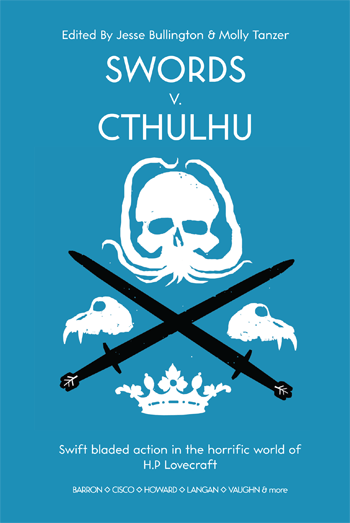
As outlined in an earlier post, in the coming weeks I will be dedicating an entry to each story in the new anthology Swords v Cthulhu, edited by Molly Tanzer and Jesse Bullington and published by Stone Skin Press. My reviewing method will be peppered with the cultural associations that each of these stories inspire. These will be presented with no excuse, apology or editorial justification.

Swords_v_Cthulhu_DRAFT_COVER_350

The Argonaut by Carlos Orsi

In their introduction to the anthology, Tanzer and Bulllington described Brazilian author Carlos Orsi’s contribution as ‘Errol Flynn Goes To Hell’, and it’s a tantalizingly accurate description of what goes on in this ghoulish swashbuckler of a tale.

But the real hook of the story for me was the fact that this takes place on a Maltese vessel in what we can assume is roughly the Golden Age of piracy — and given that the Order of the Knight of St John had no qualms about sponsoring corsairs during their soujourn on the island, Orsi’s choice of setting and conceit is as apt as they come.

Nevertheless, the naval politics of the 17th century and their corresponding geo-historical context only matter up to a (sword) point in this fast-moving tale, whose key qualities lie in its cinematic scope and pace. Orsi conjures up some great images, but more importantly, he makes sure that things are constantly in motion. Stylistically, this is the polar opposite of Lovecraft, whose trembling paranoia inspires gloriously knotted prose that slowly but surely unravels a terrified but richly imaginative mind.

Bill Nighy as Davy Jones in the Pirates of the Caribbean film franchise

Bill Nighy as Davy Jones in the Pirates of the Caribbean film franchise

One would be tempted to throw Pirates of the Caribbean as an easy reference point for this tale on an unfortunate seaman charged with rescuing the husband of a Christian virgin aboard the aformentioned Maltese ship — which is assailed by shoggoths (subordinate figures in Lovecraft’s bestiary). Davey Jones would be the obvious figure that comes to mind once the bewitched sailors turn monstrous.

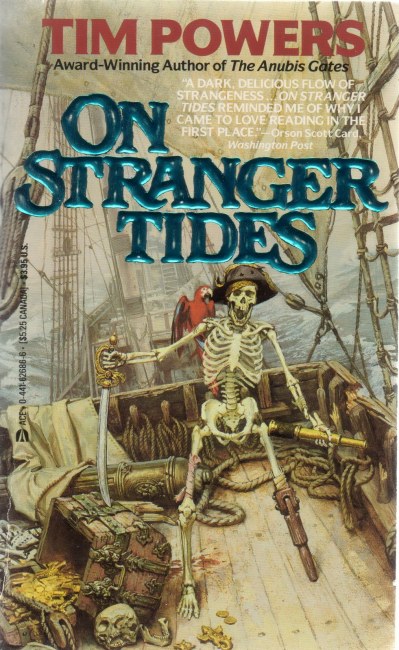
But Orsi’s prose — down to its rapid-fire style — actually recalls a more significant forebear: the work of Tim Powers. After all, On Stranger Tides was not just yet another (and ultimately disappointing) installment in the Pirates of the Caribbean saga. It was actually the book that started it all: inspiring not just the theme park ride that in turn gave way to PoC film franchise, but also that other piece of piratical pop culture lore — the Monkey Island video game series.

On-Stranger-Tides-by-Tim-Powers

And Orsi’s story, with its no-nonsense protagonist and equally no-nonsense approach to storytelling and style, channels Powers’s ability to grip the reader and keep them there. The supernatural is a by-the-by inconvenience here, but a real one nonetheless; much in the same way as Blackbeard’s meddling with the dark arts is a key obstacle for our protagonists in On Stranger Tides.

Whereas the other story in the anthology to channel pirates does so with added lyrical and surrealist gusto, Orsi’s tale provides some classic thrills.

Read previous: Natania Barron

Fleaing

birgubricabrac

Flea market, Birgu, Malta (2013)

“The flea market ethos, like many countercultural values, paid its respects to a modernist notion of prelapsarian authenticity. In an age of plastic, authentic material value could only be located in the “real” textures of the preindustrial past, along with traces of the “real” labor that once went into fashioning clothes and objects. By sporting a while range of peasant-identified, romantic proletarian, and exotic non-Western styles, students and other initiates of the counterculture were confronting the guardians (and the workaday prisoners) of commodity culture with the symbols of a spent historical mode of production, or else one that was  “Asiatic” and thus “underdeveloped.” By doing so, they singled their complete disaffiliation from the semiotic codes of contemporary cultural power. In donning gypsy and denim, however, they were also taunting the current aspirations of those social groups for whom such clothes called up a long history of poverty, oppression and social exclusion. And in their maverick Orientalism, they romanticized other cultures by plundering their stereotypes.” – Andrew Ross

*

Read previous: BODYING
Read related: Flea markets and hypogeums

From the day job: Bats vs Supes and Norse sagas now

Signal to nothing: Ben Affleck as Bruce Wayne/Batman in Zack Snyder's Batman v Superman: Dawn of Justice

Signal to nothing: Ben Affleck as Bruce Wayne/Batman in Zack Snyder’s Batman v Superman: Dawn of Justice

I had a couple of fun articles out in last Sunday’s edition of MaltaToday.

One of them is a review of that obscure indie film that’s garnering obscene amounts of critical attention, Batman v Superman: Dawn of Justice.

The other was actually satisfying to research and execute: an interview with Icelandic poet and fiction writer Gerður Kristný, who will be visiting our shores on the occasion of the Campus Book Festival, taking place at the alma mater this midweek.

batman-vs-superman-ew-pics-3

The fight of the century? Hardly. Loving Batfleck’s chunky digs though.

Batman v Superman: Dawn of Justice was, to my eyes, clumsy and misguidedly grandiloquent as its chunky title would suggest. And while there’s no love lost between me and Zack Snyder – much to his pained consternation, I’m sure – I didn’t go into the film as a hater, and wanted to enjoy it as, at least, the kind of omnishambles mess of the Jupiter Ascending ilk.

Alas, the film was a plethora of missed opportunities for fun and games because it was clearly all about setting up a future franchise to compete with Marvel’s already far-advanced “shared universe”, and while the film got a lot of flack for being joyless due to Snyder’s continued efforts to ape Christopher Nolan’s billions-raking reinvention of Batman, I think the real reason it felt bereft of the adrenaline jolt of pulpy fun was that it wasn’t in fact allowed to be pulp because it needed to do double-duty in setting up DC’s response to the Marvel behemoth, asap.

Gerður Kristný • Photo by Þórdís Ágústsdóttir

Gerður Kristný • Photo by Þórdís Ágústsdóttir

Gerður Kristný told me quite a few interesting things, but perhaps the most striking are the following:

“The original meaning of the word stupid (‘heimskur’) in Icelandic refers to the one that is always at home (‘heim’). People believed it would bring wisdom to leave your island and travel. We still believe so.”

“Coming from a country not many people know gives you opportunity to reinvent yourself, make up stories about yourself and your country.”

There was also some stuff about the Icelandic landscape and the island’s much vaunted literary culture – and what I loved is that no bubbles were burst in my conception of what looks to be a truly magical place, which I hope I’ll get to visit some day soon.

Popol Vuh and Malta

‘Krautrock’ band and frequent suppliers of soundscapes for Werner Herzog movies Popol Vuh are gradually becoming my ‘return to Malta’ soundtrack.

Since I often take two or three weeks off in August to skim off at least some of the time spent under the scorching heat we’re blessed with during summer, this means I return as it’s all just receding – that inevitable twilight hum that’s perfect for moody langour.

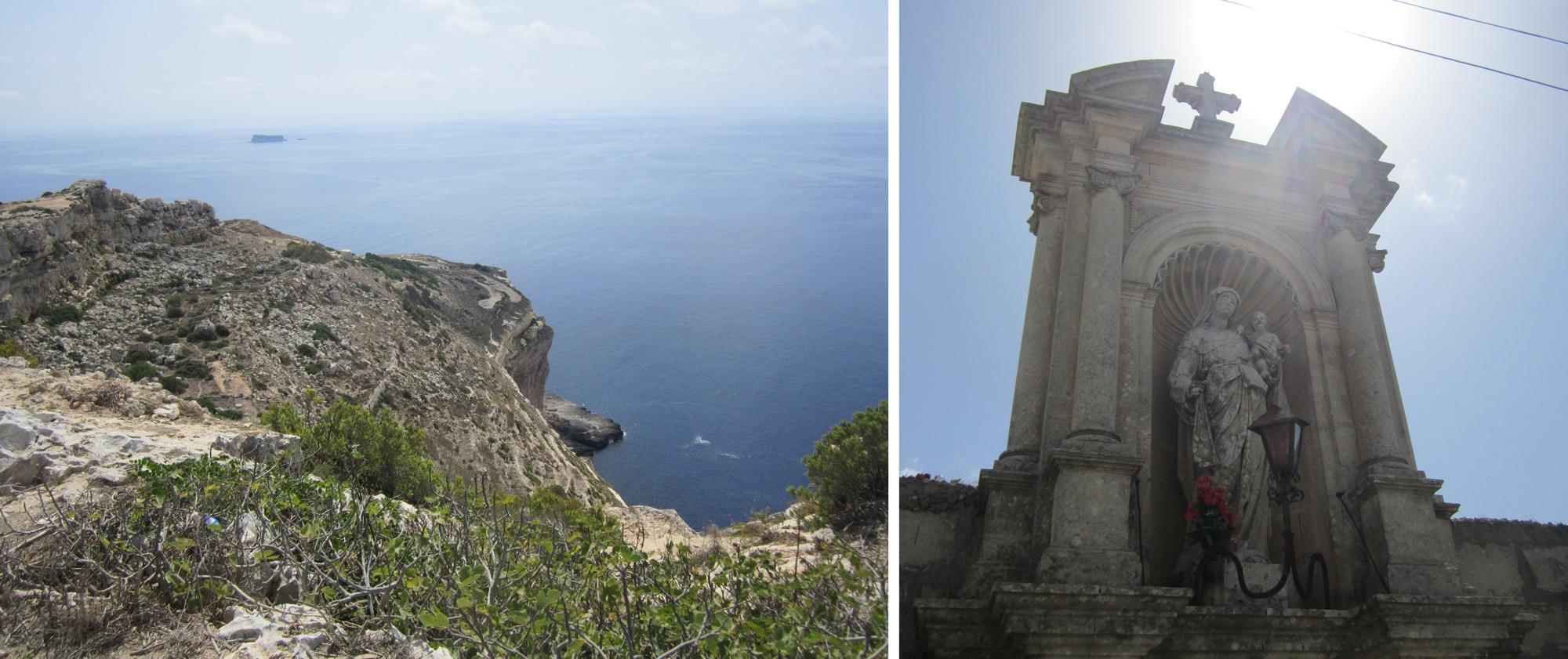
It all started with a crazy Dingli-Rabat hike in 2013

It all started with a crazy Dingli-Rabat hike in 2013

Nothing says moody langour like ’70s prog, of course, but I do find something in Popol Vuh’s sound that is particular to a Maltese landscape still stewing in summer’s juices.

Maybe it’s all about the temptation to take shelter from the sun, and in Malta said shelter would often come in the form of limestone blocks (trees would have a very practical application here, alas). And in Malta, limestone also means history, lots of it.

The rock is cooler than you

The rock is cooler than you

Shadows and barely-comprehensible ancient history – it’s no wonder that out of all of Popol Vuh’s albums, it’s their soundtrack to Herzog’s Nosferatu that I find most apt of all.

Ghar Lapsi

Zonqor

Chernobyl Barbeque

St Thomas Bay

Rabat blog6

There and back again | Trip to Serbia

Just returned to the island home after a long-overdue visit to the original homeland of Serbia, and apart from the dreaded-but-expected plunge back into the heat and a grudging return to the work routine, what sticks in the mind is that heady cocktail of nostalgia and sentimentality that such a trip inspires, and which, I think, even those most impervious to such irrational (but all-too-human) reactions would find difficult to short-circuit.

Kovilj: True Detective-worthy?

Kovilj: True Detective-worthy?

Apart from the usual visit to relatives – a nicely balanced town & country trip encompassing both Belgrade and the Vrujci Spa – this time I also joined a group of fellow Maltese on a tour to Kovilj, a village near the city of Novi Sad known for its rich stork population and which boasts a proximity to the Danube.

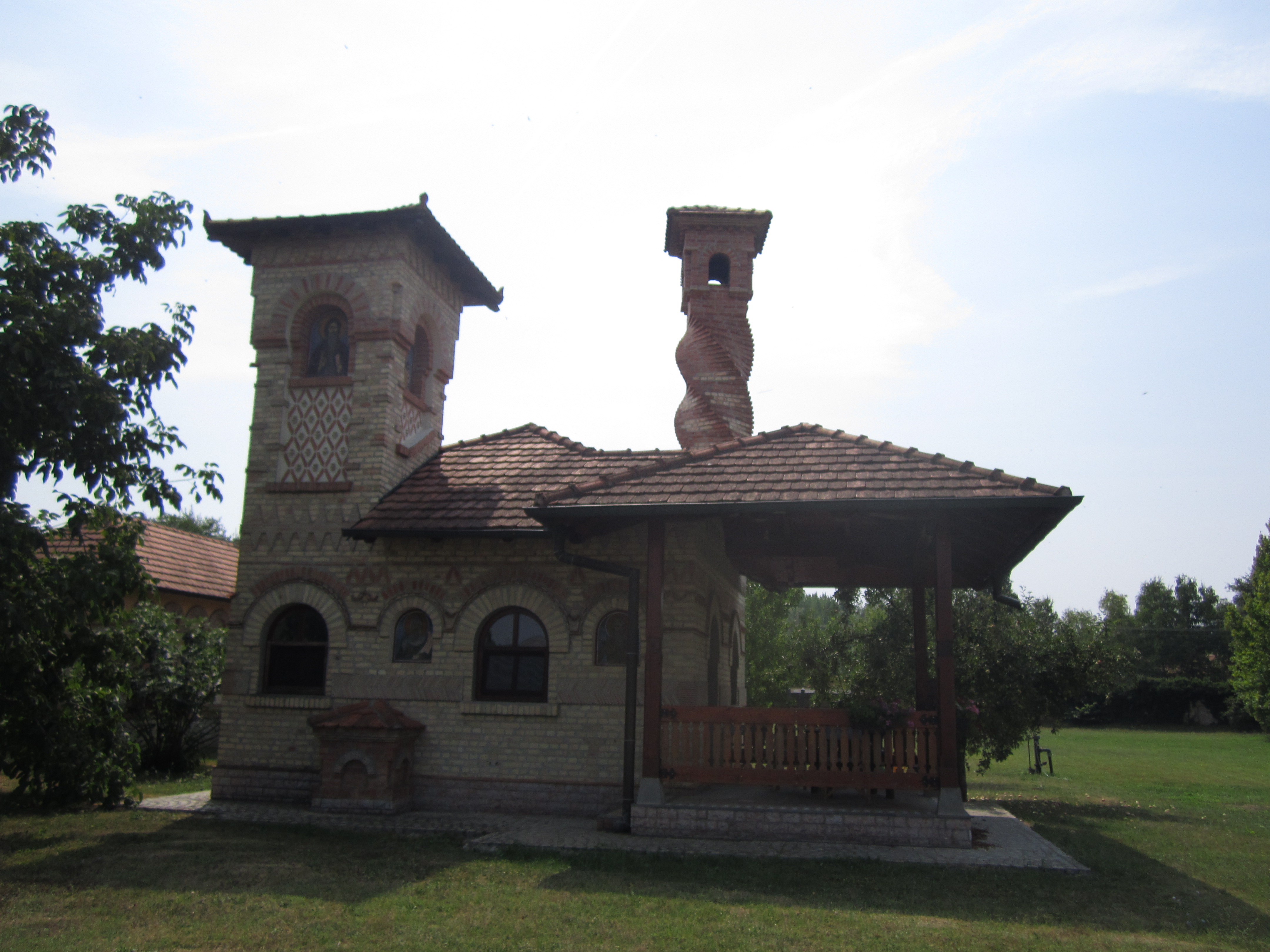
Some non-euclidian architecture courtesy of the Kovilj monks

Some non-euclidian architecture courtesy of the Kovilj monks

There’s obviously something bracing about visiting your native country after six years, not least because you’re bound to change your perspective substantially since the last time you were there.

One of the reasons for my absence was that I wanted to travel a bit more. Malta -> Serbia was pretty much the extent of my travel experience for the longest time – i.e., until I was granted Maltese (and therefore EU) citizenship a couple of years ago – and having now seen a bit more of the rest of Europe, I could view the home country with a bit of a tilted perspective.

Eclectic sight in Belgrade

Eclectic sight in Belgrade

Belgrade itself certainly reminded me of other places now – Rome, Berlin – and so I could appreciate its beauty better for placing it into some kind of context. Edinburgh was one of my favourite recent travel destinations; Belgrade doesn’t have all that much in common with it save perhaps the comfortably compressed size of its city centre – a coziness I find essential.

Malta is infamous for its lack of greenery, and an aggressively neo-liberal policy of its current government only spells further doom for the island in this regard. So the trip to Banja Vrujci – where my maternal grandparents have been keeping a summer house for 35 years, give or take – was welcome as ever, even if the overcast weather was something of a downer.

Our family plot at Banja Vrujci

Our family plot at Banja Vrujci

But the Kovilj tour took us to other green places too – some of them housing beautiful monasteries – and it was a reminder of how Serbia, for all its problems, retains a proud farming tradition in certain areas.

One thing I didn’t do much of in Serbia is write. Between the fact that we were moving around so much and simply being on ‘holiday mode’, I can’t really say I took full advantage of a change of setting and pace to give a fresh spin to the projects I’m currently working on.

On the Danube: Algernon Blackwood was on to something

On the Danube: Algernon Blackwood was on to something

But the summer – and its attendant torpor – should be winding down soon enough. And Malta is inspiring too, in its own way. Obstinate yellow streets and buildings, flashes of beauty both random and stuffily curated, contradictions that can’t be explained and so make for great fodder. We’ll start at the Malta Mediterranean Literature Festival, then take it from there…

And amusingly enough, our Kovilj tour made it to the local online news portals… 

Rapping

Dizzee Rascal performs at the Isle of MTV 2014 concert at the Granaries, Floriana, Malta. Photo by Ray Attard/Mediatoday

Dizzee Rascal performs at the Isle of MTV 2014 concert at the Granaries, Floriana, Malta. Photo by Ray Attard/Mediatoday

“I’m attracted to the idea that trickster narratives appear where mythic thought seeks to mediate oppositions. Just as Raven eating carrion stands between herbivore and carnivore (or, in my own earlier version, just as Raven stealing bait stands between predator and prey), so there is a category of mythic narrative, a category of art, that occupies the field between polarities and by that articulates them, simultaneously marking and bridging their differences. It is the tale in which Coyote tries to retrieve his wife from the land of the dead but creates death as we know it, Coyote does go to the underworld and so overcomes the barrier between life and death, but at the same time his impulses overcome him and the barrier remains.” – Lewis Hyde

*

Covering the annual Isle of MTV festival is one of the great, regular Calvaries of my existence as a journalist. Or rather, the pre-show press conference itself: you couldn’t pay me enough to attend the free-of-charge crush of sweaty (largely foreign) teenage bodies – the Granaries in Floriana rearing to crack under their weight – and all the while, the otherwise proud St Publius Church gazes on.

Being filed into the pool area of a five-star hotel: the international press primped, young and eager, at the ready with tabloid-friendly questions to fire off; the local media hot, bothered and blase, tired of hearing just how “beautiful, historical” Malta is, how “friendly” its locals are, and, apparently, how awesome the fish is.

But East London rapper Dizzee Rascal was something of a refreshing presence in this year’s otherwise stale and repetitive churn of pre-prepared, mealy-mouthed sound-bites.

Asked (by the chipper, elfin-faced and Irish-inflected MTV VJ Laura Whitmore) about what he thinks of the Isle of MTV image as a production, he replied: “Well MTV’s got the money, innit?”

Asked (just like his Isle of MTV colleagues were) about how he’ll handle the oppressive heat on stage, he replied: “I mean it’s only a 20-minute set, really, we’ll be okay.”

Asked (by an equally chipper local radio journalist) whether performing at Glastonbury was the highlight of his career so far, he replied: “I don’t know… I actually think the proudest moment of my career so far is being able to buy my mum a house.”

Cue applause.

*

Read previous: MONSTERING