Ecstasy of influence: Bowie via Manson

Marilyn Manson - Mechanical Animals (1998)

I first got to know about Elmore Leonard through Quentin Tarantino – on that note, Tarantino introduced me to a whole raft of pop culture curios – and I started digging into Norse mythology after Marvel Comics planted a seed in my brain thanks to their version of Thor.

Lovecraft swam into my purview during my teenage years – though I would delve into his stories much later, again – motivated by this initial, delayed spur – through the likes of Metallica and Cradle of Filth, and Lord Dunsany I read after finding out that actually, both Lovecraft and my former literary hero JRR Tolkien were influenced by him.

One of the joys of delving into the DNA of your favourite creative people is finding out, once you crack that shell, what lies beneath. Everyone is influenced by someone else, and this hall of mirrors is what arguably characterises our relentlessly postmodern age. (Should that be post-post-postmodern? I’m not an English undergrad anymore, which frankly means I’m past caring.)

In the case of the late David Bowie, it was Marilyn Manson who did it for me – specifically, the Marilyn Manson of the androgynous Mechanical Animals era.

Now of course, I had known who Bowie was long before my friend Herman loaned me a bootleg tape of the said Manson album (come to that, I of course knew who Manson was before that talismanic tape too). Family lore has it that my aunt and father went out to buy the latest Bowie LP to reach Serbia during a respite from the hospital as my mother was getting ready to give birth to me, even – and I’m sure that same record was spun in my presence after I eventually popped out into the world on that fateful May day in 1985.

But I think I first started to gain an understanding of what Bowie was “about” thanks to Manson’s very deliberate and openly acknowledged cribbing from Bowie during that comparatively brief chapter in “the God of Fuck’s” career.

I wouldn’t really be able to talk about the technical make-up of the songs in Mechanical Animals, so I doubt that I’d be able to construct much of a formal argument in favour of why these songs ‘worked’ on me the way they did.

But neither was it a case of being transfixed by the superficial aspects of Manson’s project, dazzling and sort-of* subversive as they may have been in the pop-culture mainstream at the time. And I say this at the risk of discounting just how mind-blowing it was to me to watch Manson’s performance of The Beautiful People – taken from Antichrist Superstar, the album previous to Mechanical Animals – at the MTV Video Music Awards back in 1997 (I was twelve). It still gives me a thrill of sadistic pleasure to remember the cut-aways to the likes of Sean Combs apparently scandalized by Manson’s bare-bottomed, fascist-attired attack on MTV glamour culture. The hypocrisy of someone like Combs taking apparent offense at Manson still strikes me as telling, in a “gotcha” kind of way.

But Mechanical Animals was certainly a ‘softer’ beast, and its immersive qualities are what seduced me. Beyond the obvious, catchy charms of The Dope Show and I Don’t Like the Drugs (But the Drugs Like Me), songs like The Last Day on Earth and my personal favourite, Coma White, transported me somewhere alien but strangely calming.

The electronic wash that characterises the album still gives me a sense of something cold but meditative, and it’s all helped along by the androgynous surrogate – ‘Omega’ – that Manson created for the purpose of the album. As I would later learn, creating an artistic persona, particularly an androgynous one of this kind, was cribbed from Bowie, who admittedly trumps Manson on this front – not only because he ‘got their first’ but also because he had a far clearer vision about when to adopt these personalities and when to drop them**.

But at the time, it introduced me to the concept of, well, the concept album. Not only that, but the concept album as propped up by an invented personality the performer deliberately took on. In short, the idea of music as storytelling, which has resonated with me ever since.

It’s this echo of Bowie that I’ve carried with me ever since. Of course I’ve listened to Bowie since that time too, though not, I must admit, with the kind of visceral fan-like fervour the teenage me bestowed upon Marilyn Manson.

That’s another thing about influences. You can be introduced to artists askance. Simply put, it wouldn’t have made much sense to me to force myself to listen to Bowie at the time. I was into hard rock and heavy metal, and Manson was a more palatable jumping point into the Bowie milieu for me at that point. This is, of course, the problem with recommending essential works to people with the kind of evangelical zeal we reserve for the very best. We tend to forget that everyone’s on their own journey, and telling them that you HAVE to read/watch/listen to this at that point in their life makes little sense.

If you’re meant to reach it, you’ll reach it. In the meantime you can follow the breadcrumbs you recognise.

*I think I opted for ‘sort-of’ partly because I know Bowie did all this before

**Manson’s dithering post-Holywood career is a testament to this… compare it to how Bowie, despite some flailing years of his own, remained so much in control that he even recorded a final album as a farewell
Soundtrack to a speculative action scene

1. Your job is to try not to think of Dredd, but think of something more fragile and immersive.

2. We’re going deeper and wider, and the horror is closing in.

3. Running, jumping. But no fancy parkour. Stylised flames (you have no idea where they came from) just about lick an army of weaponised motorbikes. You notice the giant octopus from the edge of your vision.

4. This is what passes for romance in this world – or at least at this point in time. You recognise the threat and, hands trembling and sweat pouring in FFWD streaks, you try to formulate a plan.

5. Is it a plan of escape, or attack?

6. The moment of hesitation. Death or glory? Whatever the case, this is the point at which we – the sadistic, baying audience – get to revel in the beautiful, dark maw of what’s chasing you. The Gothic, blissful evil that’s more powerful than you could ever have imagined.

7. You have a power, a weapon – whatever. It could be an army of tanks or an armada or a hive of mind-controlled killer bats. Whatever – you’re channelling it, and you’re winning.

8. But for how long?

9. What happened? What’s the outcome? Somebody’s calling, which means somebody is alive. Will they live to fight another day?

Uneven but good | Bone Tomahawk

BONE TOMAHAWK

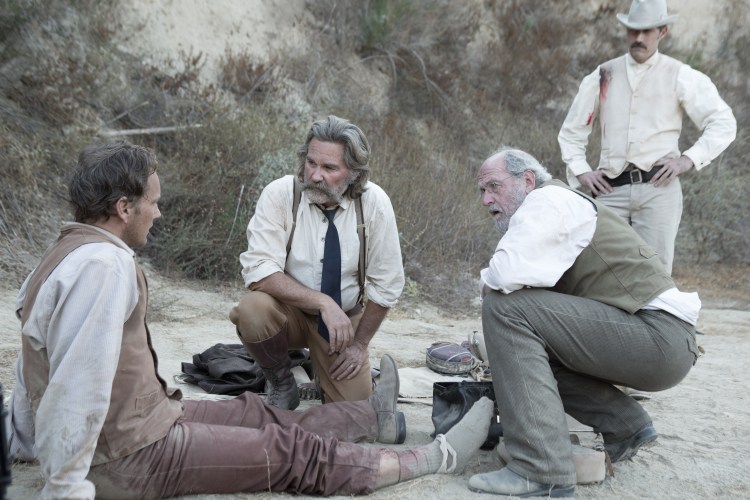
Broken: Patrick Wilson, Kurt Russell, Richard Jenkins and Matthew Fox

Bone Tomahawk is an odd film. But its strangeness sneaks up on you rather than announcing itself straight to your face.

Ostensibly a Western with a fairly straightforward rescue narrative, the fact that it’s something of a genre mash-up (the other ingredient being a sparse but disturbing sprinkling of body horror) is actually not its most significant feature.

Rather, this is down to how the characters – each of them grizzled veterans of some variety – are shaped.

Particularly in the case of the frail, elderly and bumbling deputy sheriff Chicory (Richard Jenkins), this often comes in tangential bits of dialogue. On this front, writer-director S. Craig Zahler, also a novelist, is like a more sincere, less showy Tarantino. This isn’t a showcase for actors to hypnotise you with acerbic, incantatory language – it’s a showcase for actors to depict the pained, distracted nature of a group of people who are in way over their heads.

trog

‘Troglodytes’: Things take a nasty turn when our heroes meet a pack of cannibals

In fact, another Western that also stars Kurt Russell – Bone Tomahawk’s hero figure – has been directed by Quentin Tarantino himself, and reached cinemas mere months after Bone Tomahawk appeared.

But I have a feeling that, for all its seemingly throwaway mini-monologues and its abrupt shifts in tone, Bone Tomahawk will be the one that sticks with me.

How Star Wars is like Christmas | Holiday nostalgia

Star-Wars-Force-Awakens

The force awakened come Christmas time. Coincidence? I think not.

My happy places are: Valletta in various moods and times; Sliema at twilight and for lone, spontaneous walks; Attard-Balzan-Rabat for indelible memories and undeniable, cosy beauty and, perhaps topping it all, the childhood fairyland that thankfully remains much the same, Banja Vrujci.

vrujci

Banja Vrujci

These places and others are what leave an impression – what reminds me of the raw matter that is true happiness and how it can continue to spread when “recollected in tranquility”.

And in many ways this is how the Christmas period functioned, for me. It’s not a family tradition and latterly it’s become little more than an annoyance for various reasons, but at least it gives me the perfect excuse to eschew all else – intellectual and otherwise – and my quiet little place amid everybody else’s celebratory din helps me to remember all the things that are important to me.

These often come in the form of memories, of course. What we cherry-pick from our past is a very important indicator of what remains important to us.

As I suspect is the case with most people, I’ve been placing quite a bit of stock on my ambitions of late. But such a relentless focus on them means fatigue sets in quick and fast.

So I’ve come to appreciate Christmas – most especially Christmas Day itself – as a kind of oasis.

Just as human beings have the misfortune of being animals saddled with the puzzling gift of self-consciousness – with all its problems – this also means that with enough self-awareness and emotional balance, we can fabricate things about ourselves, to ourselves, for our benefit.

*

Speaking of nostalgia, and variants of it… I really enjoyed the new Star Wars movie. Star Wars, too, is a lot like Christmas (or is it Christmas that’s a lot like Star Wars?).

Because just like Christmas, the franchise is a stark reminder of the pervasive power of capitalism – how it truly has the entire world in its grip, how it appropriates all stories and pieties into its gaping maw to further perpetuate a relentless desire for consumption.

The Christmas story is put aside in favour of “the gift economy” and our expectations for the holiday are calibrated to ‘spend and receive’ – in the same way as our beloved Star Wars characters are intrinsically wended to a film production and distribution model that views the movie and its merchandising as basically interchangeable.

But like Christmas, Star Wars still means a lot of things to a lot of people.
The saga – now in its seventh ‘episode’ – may be suspect in its method of delivery, but what it stimulates in people can’t be denied either.

It’s lovable alongside the cynical nature of its (internal or external?) dynamics, not despite of them.

Of course none of this is ‘natural’, and neither is it self-evident. Like the very act of writing an ‘essay’ – etymologically referring to the process of working things out – all of this is built out of opinions and perceptions chiseled out across time – and it’s entirely open to scrutiny.

But we can choose the fabrications that work the best for us – applying the usual caveat that this is a power we should try use for good and not ill.

But the decision to release The Force Awakens during Christmastime strikes me as a very shrewd fabrication indeed.

*

party1

Party at Chez Reljic

New Year’s Eve, in fact, carries more weight for me and my family. This is partly down to national habits – it’s the big blowout celebration of the season in Serbia, gift-giving and all – and family habits too: my sister and I now carry the baton of organising a party each year.

The day after, dazed if not hungover while munching on leftovers, often tends to be an emotionally woozy time.

In more recent years, revisiting the apartment we grew up in to host the party has come with an edge of melancholy. Gentrification means that it’ll soon be beyond my father’s price range (he still rents there) and all of our memories of the place will remain just that.

It’s another reminder of just how important it is to keep mindful of the things that matter. Memories will never be solid, but you should work hard to make them as solid as possible.

*

Have a great 2016, all.

Turning Malta into an airport

There is something morbidly fascinating about Coruscant - the seat of the Galactic Empire in the Star Wars movies. But do we really want something like this to overtake our 'real' world?

There is something morbidly fascinating about Coruscant – the seat of the Galactic Empire in the Star Wars movies. But do we really want something like this to overtake our ‘real’ world?

The decision to transfer the land at Zonqor Point to Sadeen further proves that Muscat’s government is intent on turning Malta into, essentially, one big airport.

The social and cultural wellbeing of local life – in all its forms – will become further and further sidelined, in the interest of turning Malta into little more than a platform, a jumping on and off point for financially powerful international players able to pump money, but little else, back into the island.

Obviously, Muscat’s aggressive neo-liberal philosophy is an easy ‘sell’ in every sense of the word.

It’s easy because capitalism is the primary motor of the world right now, and so many will either be swayed immediately, or convinced to look the other way, when there’s an immediate inrush of money to be made.

One meme that has circulated ever since the Zonqor/ODZ debacle first started raging, was the old chestnut about the environment being a ‘middle class’ concern – something that only the bourgeois presumably had the luxury to cry over when others would welcome any boost to their pockets.

But Malta isn’t a poor country. Those proposing some kind of stark division between the haves and have-nots, particularly on vague – read: false – ‘cultural’ grounds are misguided in every sense of the word. Malta ‘needs’ this project like it needs a bullet to its – limestone – head.

Also, saying that the previous government did exactly the same thing as some kind of excuse to make the current mistakes seem better in comparison, is also deceptive and false.

If anything, it is precisely BECAUSE the previous government operated on the same principles that the need to safeguard our environment is becoming all the more urgent.

Supporting the ‘American’ University makes you neither a champion of successful government hustling for cash, and it certainly doesn’t make you a champion of the supposedly impoverished underclass that stands to gain from this toxic land-grab.

All it makes you is a supporter of the status quo.

A status quo that would sooner have Malta as an extension of the Malta International Airport.

Paved to ‘perfection’, with artificial outlets providing transitory needs for transitory people.

Of course, right after Muscat and co. have demolished all that is unique and attractive about the Maltese islands, the supposed economic excitement this is meant to engender will gradually fade away.

But of course, who will care at that point? The locals will be dulled into submission by promises of more money, or will have moved away in disgust. And Muscat’s decisions will have insulated him from any further unpleasantness or hurt.

*

I’m writing this while I eagerly await a screening of Star Wars: The Force Awakens in a beautiful Parisian cinema. On the one hand, the impulse of looking forward to a cash-boosted blockbuster – the legacy of which is actually directly wended to the financial behemoth of the blockbuster as we know it – appears to be in direct opposition to the sentiment expressed above.

But as with all things, it’s down to how you process them individually.

Various thoughts and feelings jostle within us at any given time.

The influence of Star Wars on how I viewed storytelling will always have an influence on anything that I do. As will my indignation – and yes, sense of powerlessness – at something like the Zonqor tragedy.

I’m hoping that something productive comes out of this alchemy, very soon. And with the help of some truly inspired friends and collaborators.

Waring

François Hollande

French president François Hollande characterised the November 13 Paris attacks as an ‘act of war’

“The war is up there on the island, where we’re going to meet it, but there’s no war there, nor could there be. War is dreamlike, but war IS a dream… Where is the war? In the guns and helmets and uniforms? Is it in the rock from which the ore to make the gun was mined, the grass that fed the sheep whose wool went into the uniform, or the sun that lights the battlefield? Not impossible to escape but it tethers as unsubstantially, as lightly, as a dream, the odds binding me inside. I go on with it; I’m not bound like a prisoner, but like a sleeper. Two men meet, and one will give his life for the other, or they will each try to kill the other, while the day is still blandly unfolding around them. The violence I’ve already seen has been as random and abrupt as a dream, always ending in death that seems only to become more and more impossible. I always know that I’m no more than one sharp breath from waking. It’s a breath I can never manage.” – Michael Cisco

*


Read previous: CITYING

Citying

Belgrade, August 2015

Belgrade, August 2015

“Consider the nature of a city. It is a vast repository of time, the discarded times of all the men and women who have lived, dreamed and died in the streets, which grow like a wilfully organic thing, unfurl like the petals of a mired rose and yet lack evanescence so entirely that they preserve the past in haphazard layers, so this alley is old while the avenue that runs beside it is newly built, but nevertheless has been built over deep-down, dead-in-the-ground relics of older, perhaps the original, huddle of alleys which germinated the entire quarter.” – Angela Carter

*

Read previous: GREEKING

The lingua franca of yearning and inquiry | Marina Warner

Marina Warner in conversation with Gloria Lauri-Lucente, Valletta, 29 August 2015

Marina Warner in conversation with Gloria Lauri-Lucente, Valletta, 29 August 2015. Photo by Virginia Monteforte

One of my most eagerly anticipated events of the year is the Malta Mediterranean Literature Festival – a multilingual gathering of authors and poets set up by the Inizjamed literary NGO, which has been steadily growing in stature over the past few years, boasting an admirable array of foreign guests on its CV while allowing local authors to showcase their work on equal footing.

Thanks to the efforts of lecturer, poet and Inizjamed head honcho Adrian Grima and his many collaborators – not least the helping hand of various local institutions – the festival is a balm against parochialism in the local sphere, as it accommodates not only the (often self-crowed) local contingent, and neither is it limited to ‘special guests’ from the expected English-speaking regions. Rather, and true to its name, it’s a refreshing gathering of writerly talents from all over the Mediterranean.

But at the risk of being criminally reductive to this year’s line-up – which included among its ranks the Booker shortlisted Libyan novelist Hisham Matar and the rousing Palestinian Egyptian poet Tamim Barghouti – I have to confess that the main attraction for me was the participation of Marina Warner – author and mythographer extraordinaire, and a consistent intellectual inspiration for me over the past few years.

Warner’s presence certainly felt like the cherry on the Festival’s cake, and having a writer of this stature on board this time around was certainly apt, given that this year also marks its tenth anniversary.

But Warner would have been a good fit for the festival either way. Though ostensibly British, the former academic, fiction writer and myth-and-fairy tale authority boasts Italian family connections, and a childhood spent in Cairo. Her recent book Stranger Magic is a study of The Thousand and One Nights, and the author doesn’t shy away from addressing the cosmopolitan sweep of the snowballing, multifaceted and latterly controversial collection of folktales of the ‘Orient’.

And in her conversation with Deputy Dean of the Faculty of Arts, University of Malta Prof. Gloria Lauri Lucente – which capped off this year’s edition of the Festival – Warner’s sensitivity to the various cultural networks found within the Mediterranean was fully borne out. But more than anything else, it was a pleasure to witness these two great women discuss both the universal and the personal as it pertains to Warner’s work – from the enduring global appeal of fairy tales, to Warner’s upcoming short story collection Fly Away Home, which taps into her experience of growing up in Cairo.

Once again showcasing her organic, interdisciplinary grasp on cultural studies, when asked why fairy tales continue to fascinate us, Warner went for a musical metaphor.

“I like to think of fairy tales as a tune,” she told Lucente. “You know the tune, I know the tune – we remember it, we can play it – it isn’t confined.” Fairy tales, Warner went on to say, suggest a kind of “lingua franca” for yearning and inquiry. “And stories are vessels for very difficult inquiries.”

Just as Stranger Magic was a sensible and considered riposte to Edward Said’s monumental critical characterization of ‘Orientalism’ – an articulation of how exoticised Western projections of the ‘East’ and the ‘Orient’ serve to facilitate cultural dominance – so Warner encourages us to not dismiss the significance of fairy tales simply because the bulk of them offer seemingly pat endings whose function is to ‘console’.

For in offering alternatives and pathways for the imagination, fairy tales can be emancipatory. In terms of their phenomenological dimension – and while stressing that she doesn’t encourage total escapism and delusion and that she remains an adherent of the Enlightenment project – Warner reminds us that, “the mind’s eye that imagines a mermaid on the shore, and that simply witnesses, and then remembers, a fisherman catching dolphin fish, is the same place.”

(It’s not a dissimilar position to the one expressed by Ursula K. Le Guin in her National Book Awards address).

Marina Warner reads from 'Fly Away Home'. Valletta, 29 August 2015. Photo by Virginia Monteforte

Marina Warner reads from ‘Fly Away Home’. Valletta, 29 August 2015. Photo by Virginia Monteforte

A discussion on the rift between fiction and non-fiction was another topic – also poignantly tackled by Barghouti on the first night of the festival – which allowed Warner to point out how, far from serving as a distraction from social and political strife, fiction can provide an additional leeway for discourse, especially in countries where those freedoms are otherwise suppressed.

“People are now using novels to do all sorts of things. There is censorship in so many places in the world, that fiction offers some sort of shelter.” But fiction has yet another, more subtle advantage.

“With fiction, unlike in essays, you don’t have to ‘make up your own mind’. And I do find it much more satisfying.”

But as if to illustrate Hisham Matar’s point on the previous night – that while our freedom to reinvent our cultural, social and professional identities in the modern world is a great thing, we shouldn’t forget that we remain privy to historical currents beyond our control – Warner was candid about a key motivation for her wide-ranging work.

Unlike, say, Hisham Matar himself – whose father was abducted by the Libyan regime and whose ultimate fate remains a mystery to the author and his family – Warner’s upbringing remained relatively comfortable.

“I came from a background of petite bourgeois colonialists,” she told Lucente to disarming laughter. “So I always felt like I had to make some kind of reckoning. And this has been my spur.”

Popol Vuh and Malta

‘Krautrock’ band and frequent suppliers of soundscapes for Werner Herzog movies Popol Vuh are gradually becoming my ‘return to Malta’ soundtrack.

Since I often take two or three weeks off in August to skim off at least some of the time spent under the scorching heat we’re blessed with during summer, this means I return as it’s all just receding – that inevitable twilight hum that’s perfect for moody langour.

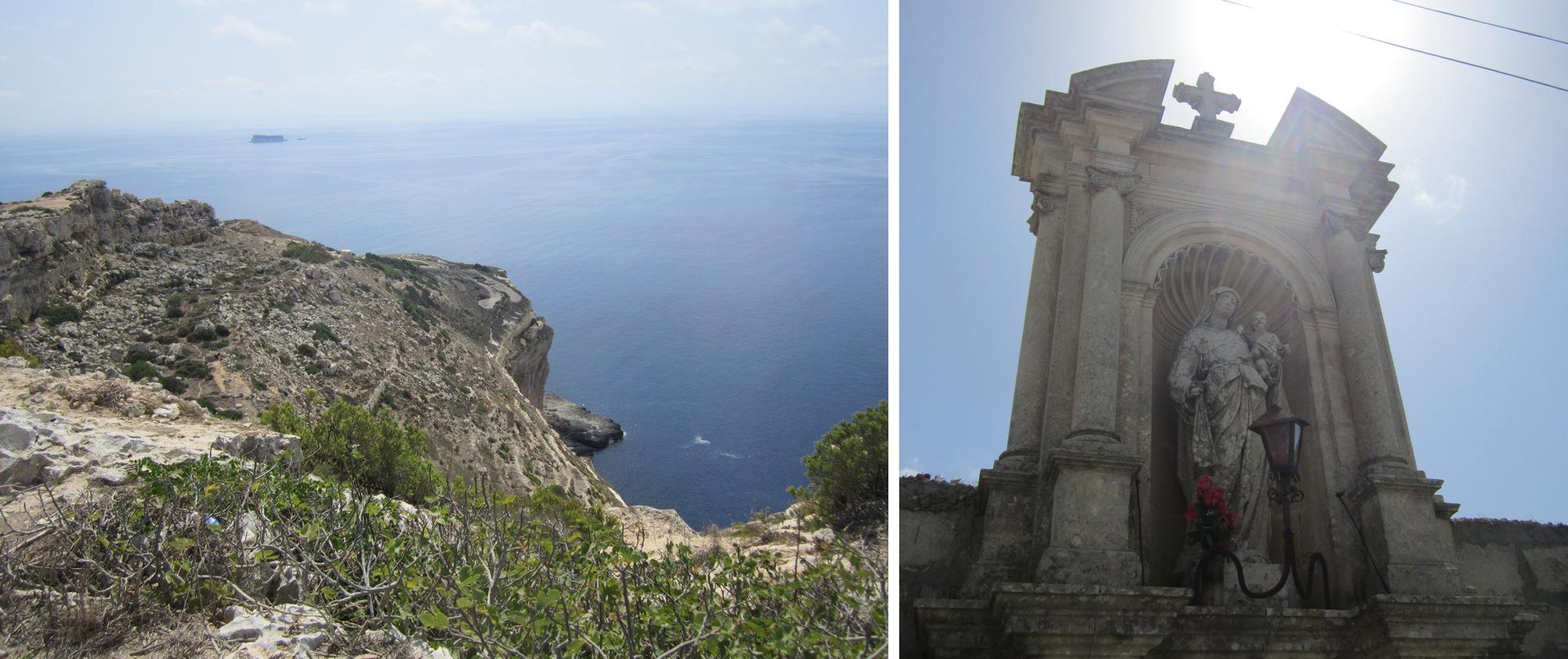
It all started with a crazy Dingli-Rabat hike in 2013

It all started with a crazy Dingli-Rabat hike in 2013

Nothing says moody langour like ’70s prog, of course, but I do find something in Popol Vuh’s sound that is particular to a Maltese landscape still stewing in summer’s juices.

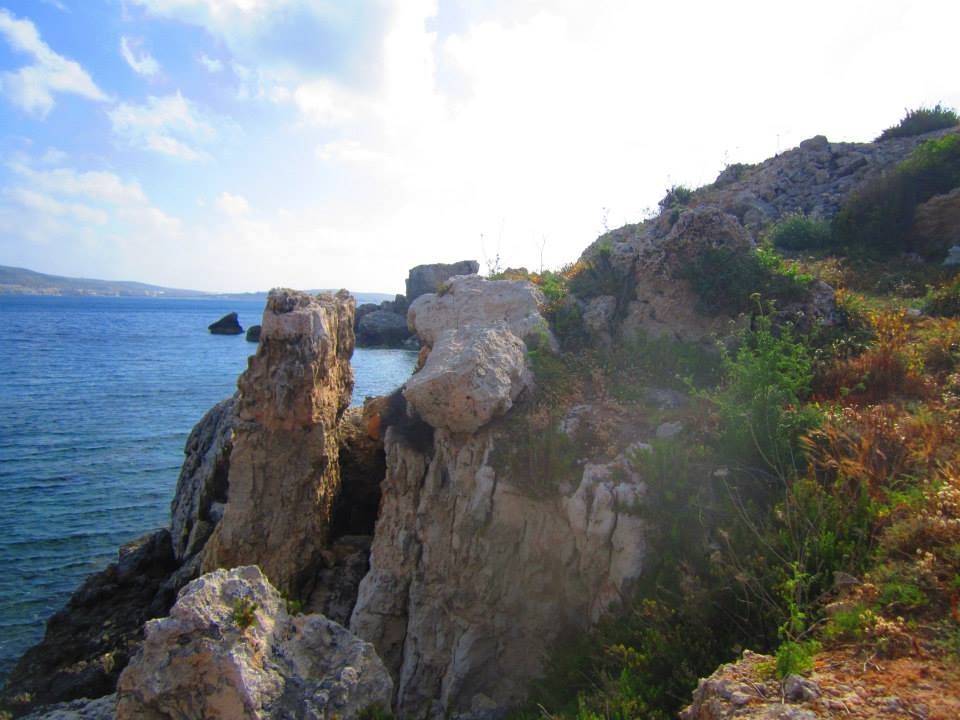
Maybe it’s all about the temptation to take shelter from the sun, and in Malta said shelter would often come in the form of limestone blocks (trees would have a very practical application here, alas). And in Malta, limestone also means history, lots of it.

The rock is cooler than you

The rock is cooler than you

Shadows and barely-comprehensible ancient history – it’s no wonder that out of all of Popol Vuh’s albums, it’s their soundtrack to Herzog’s Nosferatu that I find most apt of all.

Ghar Lapsi

Zonqor

Chernobyl Barbeque

St Thomas Bay

Rabat blog6

There and back again | Trip to Serbia

Just returned to the island home after a long-overdue visit to the original homeland of Serbia, and apart from the dreaded-but-expected plunge back into the heat and a grudging return to the work routine, what sticks in the mind is that heady cocktail of nostalgia and sentimentality that such a trip inspires, and which, I think, even those most impervious to such irrational (but all-too-human) reactions would find difficult to short-circuit.

Kovilj: True Detective-worthy?

Kovilj: True Detective-worthy?

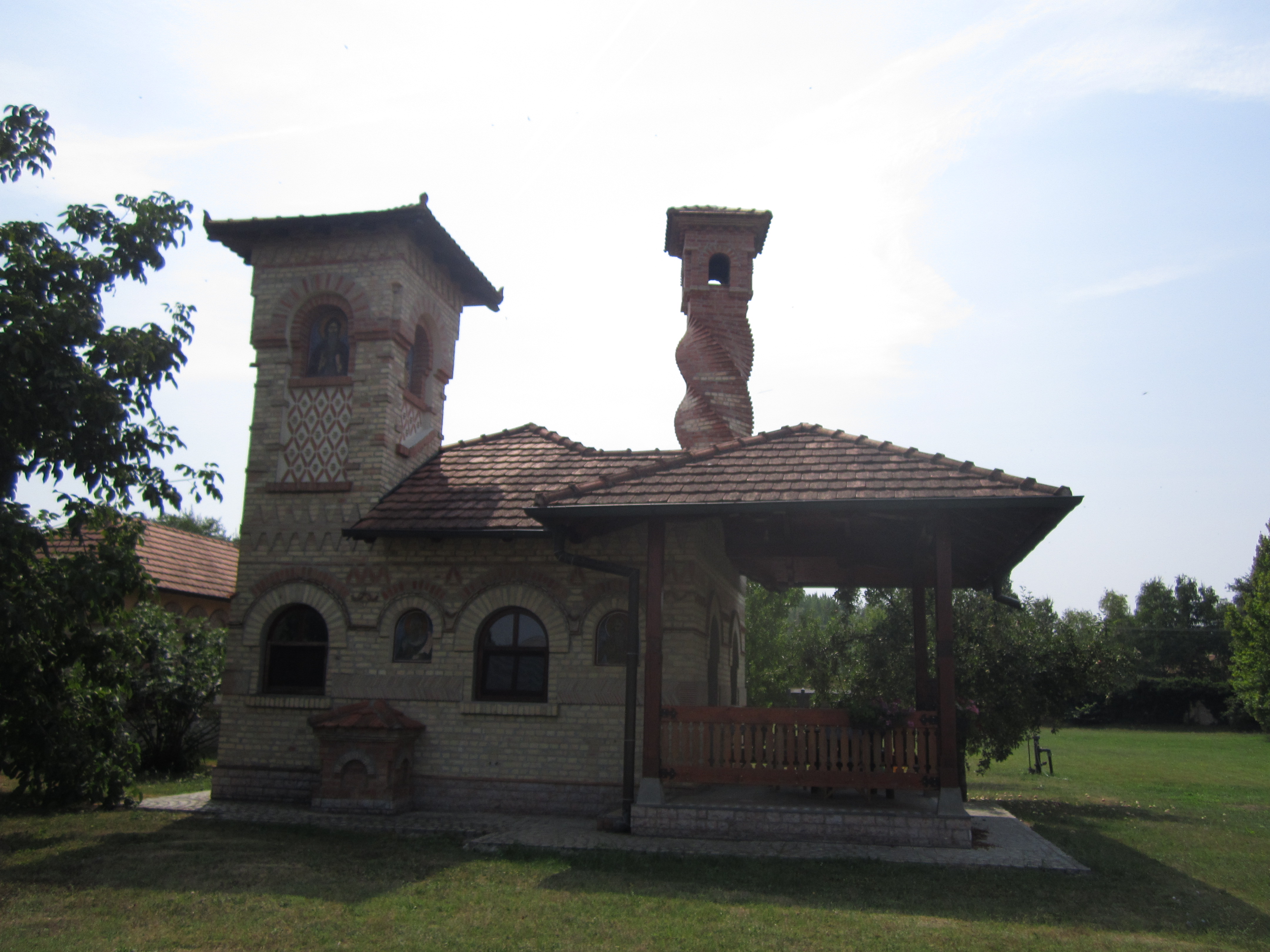
Apart from the usual visit to relatives – a nicely balanced town & country trip encompassing both Belgrade and the Vrujci Spa – this time I also joined a group of fellow Maltese on a tour to Kovilj, a village near the city of Novi Sad known for its rich stork population and which boasts a proximity to the Danube.

Some non-euclidian architecture courtesy of the Kovilj monks

Some non-euclidian architecture courtesy of the Kovilj monks

There’s obviously something bracing about visiting your native country after six years, not least because you’re bound to change your perspective substantially since the last time you were there.

One of the reasons for my absence was that I wanted to travel a bit more. Malta -> Serbia was pretty much the extent of my travel experience for the longest time – i.e., until I was granted Maltese (and therefore EU) citizenship a couple of years ago – and having now seen a bit more of the rest of Europe, I could view the home country with a bit of a tilted perspective.

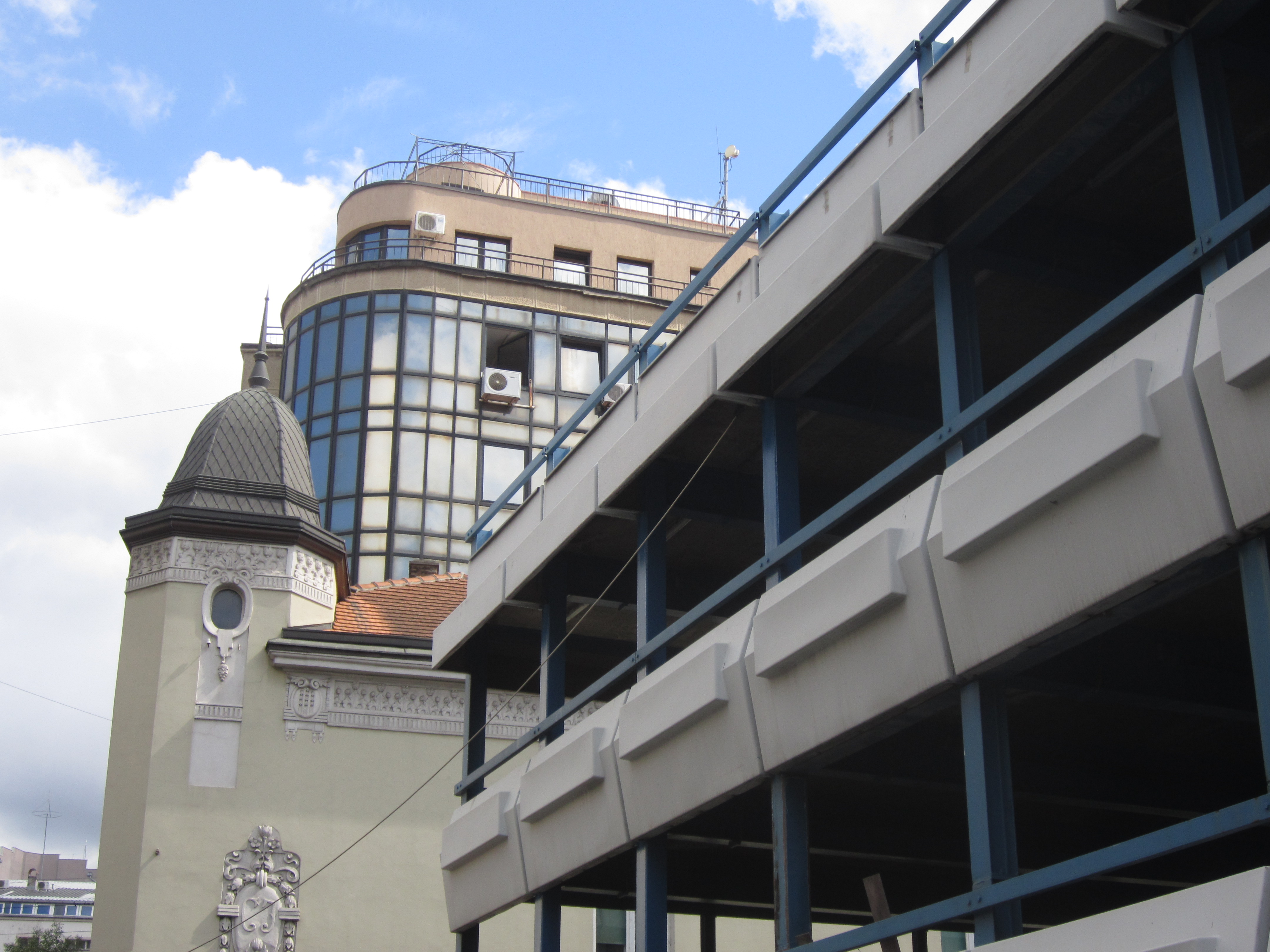
Eclectic sight in Belgrade

Eclectic sight in Belgrade

Belgrade itself certainly reminded me of other places now – Rome, Berlin – and so I could appreciate its beauty better for placing it into some kind of context. Edinburgh was one of my favourite recent travel destinations; Belgrade doesn’t have all that much in common with it save perhaps the comfortably compressed size of its city centre – a coziness I find essential.

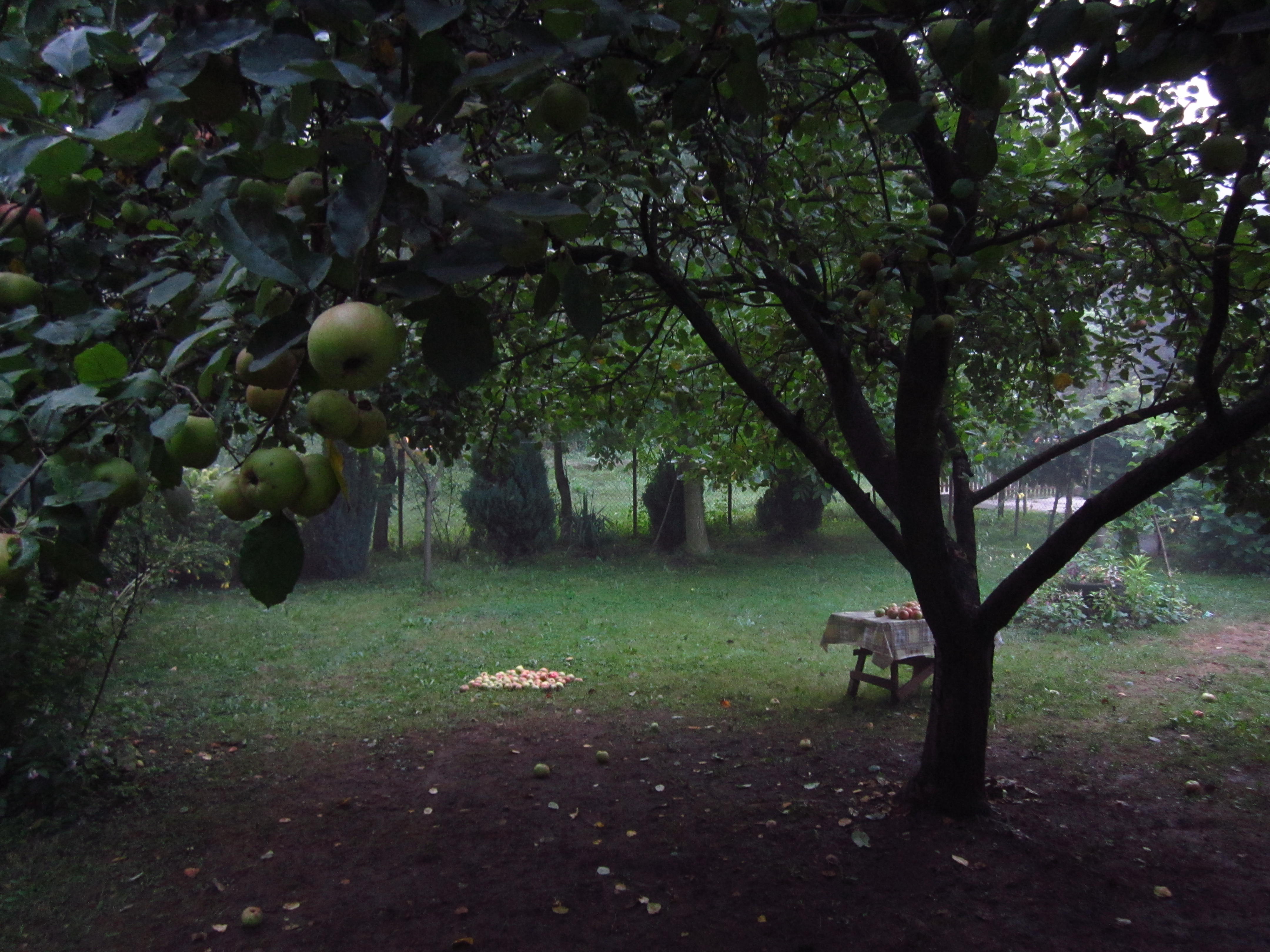
Malta is infamous for its lack of greenery, and an aggressively neo-liberal policy of its current government only spells further doom for the island in this regard. So the trip to Banja Vrujci – where my maternal grandparents have been keeping a summer house for 35 years, give or take – was welcome as ever, even if the overcast weather was something of a downer.

Our family plot at Banja Vrujci

Our family plot at Banja Vrujci

But the Kovilj tour took us to other green places too – some of them housing beautiful monasteries – and it was a reminder of how Serbia, for all its problems, retains a proud farming tradition in certain areas.

One thing I didn’t do much of in Serbia is write. Between the fact that we were moving around so much and simply being on ‘holiday mode’, I can’t really say I took full advantage of a change of setting and pace to give a fresh spin to the projects I’m currently working on.

On the Danube: Algernon Blackwood was on to something

On the Danube: Algernon Blackwood was on to something

But the summer – and its attendant torpor – should be winding down soon enough. And Malta is inspiring too, in its own way. Obstinate yellow streets and buildings, flashes of beauty both random and stuffily curated, contradictions that can’t be explained and so make for great fodder. We’ll start at the Malta Mediterranean Literature Festival, then take it from there…

And amusingly enough, our Kovilj tour made it to the local online news portals…