Perfunctory Epic: The Rings of Power, Season 2 (Amazon Prime)

DISCLAIMER: Here be spoilers.

Like most nerds of my generation – lapsed or otherwise and to varying degrees of commitment and intensity – I cling hard to the pure memories of my earliest viewings of Peter Jackson’s The Lord of the Rings trilogy.

While the books weren’t childhood favourites – I was knee-deep in Marvel comics up until my early teens – I did bone up on them while the films were still in the early stages of pre-production, goaded on by another close friend who would move back to Canada with his family before we would get a chance to see them in the Maltese cinemas together.

But there were other friends who would’ve filled the gap in the meantime, some of whom I was, by this point, playing Dungeons and Dragons with.

So in my mind, this period now forms a mash-up of time where a store of fantasy imagery was taking root in my ‘mind palace’, which would serve as a source of comfort and self-identification for years to come… in many ways it still serves that function to this very day, albeit in somewhat altered form.

I’m thinking about all of this after finally having caught up with the second season of The Rings of Power – Amazon Prime’s bid to secure their own Game of Thrones franchise by pre-committing to five seasons of the thing and even launching a reserve long-form adaptation in the form of The Wheel of Time should this one go bust.

Charlie Vickers as Sauron and Charles Edwards as Celebrimbor

This cynicism seeps through the operation and, unfortunately, I feel it’s particularly evident in this second season, which toggles in a perfunctory fashion from one of the many sub-plots to another, the only real connective tissue being the long-game machinations of Sauron (Charlie Vickers): here a svelte Machiavellian figure whose Season One disguise as sea-faring lone wolf ‘Halbrand’ pulled the wool under the eyes of none other than Galadriel (Morfydd Clark) herself.

(In Halbrand-mode, he could’ve easily fronted one of those neo-Britpop acts… there’s something disarming in the image of Galadriel bopping to Kasabian.)

The thing is, I was quite chill about The Rings of Power when it first appeared. Unlike many others, apparently, I was willing to give Season One a chance, with its slow burn and trickle of ‘new’ characters and fill-in-the-blanks exercises riffing on the sketches of lore the showrunners and their writers had to work with.

It felt, at the very least, the start of something that could grow into an organic story with its own heartbeat… and Galadriel-as-fundamentalist struck me as a bold-enough narrative choice which, I suspected, would yield some interesting detours further down the pike.

But, hand on heart, I can’t quite say that the second season is exactly rewarding my investment on this front. Where we previously had a gorgeously photographed and put together spark of potential, now we have that, only with the potential snuffed out in favour of a flattening and overstretched story that is really just a set of fan-fictiony vignettes ticking off boxes, all scattered across disparate geographical locations on Tolkien’s famously vast and detailed map of Middle Earth.

It’s yet another reminder of how the magic we associate with fantasy literature in particular – that thrill of immersion all too often written off as simply ‘escapist’ – has very little to do with by-the-numbers tropes and settings and everything to with an innate poetry that speaks to a wider yearning.

The yearning for a world which is more mysterious and more alive, where traveling means discovery, danger and difference and where transcendence can be mapped out and understood but never replicated in rote human terms.

But replication is so ingrained in pop culture now. In a sense, it is its only real faith. The belief that for something to work – for something to even be conceived – it needs to have worked before, and on a massive scale.

Rory Kinnear as Tom Bombadil

You can of course imagine that such an approach doesn’t do too well when attempting the kind of fay whimsy that is very much part of Tolkien’s fictional universe, no matter what the more macho strands of the fandom would have you believe.

It’s why the sequences with not-(yet)Gandalf and his duo of not-Hobbit buddies are the dullest in the show, and why Rory Kinnear’s Tom Bombadil, while certainly a welcome presence on screen after being infamously excised from the Jackson trilogy, feels just like another placeholder mentor figure – a wizard whose only USP is a higher quotient of chill than his counterparts – instead of a baffling and refreshingly unexplained spirit of sylvan inevitability.

Perhaps this is why The Rings of Power is at its best when zooming in on still-human-shaped Sauron and his horrifically ingenious acts of arts-and-crafts based gaslighting. Let’s face it, it’s the all-too-human cruelties on lurid display that helped Game of Thrones nab a healthy swathe of the non-nerd audience, because this is stuff that soap operas are made of and as long as we want power, sex and exist among people who desire the same, the electric charge of it will never cease to appeal.

So it’s clear that the showrunners are confident in their abilities to tighten the noose around poor Celebrimbor(Charles Edwards)’s neck, as Sauron – disguised as the outwardly benign jewellery savant Annatar – makes good on his moniker as the Great Deceiver, and how.

For all that the show is littered with instances of orcs, giant spiders and other gory creatures whose mere presence is meant to trigger our gag reflex, none of them can hold a candle to the gross yet precise – precisely so gross because it’s so precise – way in which Sauron ingratiates himself into Celebrimbor’s workshop (really, the seat of this craftsman-monarch’s very kingdom). I don’t remember feeling this disgusted by a TV character since the John Paul (aka ‘The Prick’) from the first season of Bad Sisters.

Leon Wadham as Kemen

This is just about the only instance of genuine emotional frisson we’re allowed to feel during the season, where we’re allowed to wince and hiss at displays of moral callousness because how else are we gonna react? Same goes Kemen (Leon Wadham), the PG-13 Joffrey of the show: nepo-baby son to the scheming aspirant to the Númenórean throne and the custodian of the most smoothly slappable faces this side of Westernesse. (Thankfully, it’s a face that *does* get slapped once or twice already, though we’re meant to understand that his true comeuppance is yet to come and given how padded out the show is, this’ll be a case of delayed gratification for the Ages).

But there’s an elevated flip-side to all this. Namely, that Celebrimbor’s rise and fall constitutes a decent stab at a Greek-style tragedy. But this is the kind of stuff we’ve internalised a long time ago and now keep regurgitating with ease… and arguably, the real lasting value of Tolkien’s work lies in how he decided to side-step the otherwise ubiquitous Hellenic legacy in favour of the knottier and gnarlier brambles of Beowulf and the Norse Sagas.

Of course, you can never go home. (This is true of the denizens of Eregion in more ways than one, after Sauron’s done with them). Nobody’s asking a new show to try and rekindle the same magic we felt when we first read The Lord of the Rings or watched the Peter Jackson adaptations. (And if they are, they really should reconsider what they expect from their pop culture artifacts.)

My suggestion? Pick up The King of Elfland’s Daughter by Lord Dunsany. It’s a good deal shorter than both The Lord of the Rings – slimmer than any of its three books, actually – and you’ll likely work through it even quicker than you would sitting through this latest season of That Second Age Show.

It’s the kind of book that Tom Bombadil would’ve written, because Bombadil understands the world and its denizens better than they understand themselves, and can sing a story that still remains a song.

Mibdul reviewed… in German!

Our plucky comic book that could — MIBDUL — gets the Teutonic treatment over at Timo Berger (@comic.timo)’s review page on Instagram!

There’s something about this far-flung little book being discovered in equally spontaneous ways that warms the heart. Check out the original post here. (Non-German speakers like myself can avail themselves of Insta’s admittedly efficient automatic translator).

Timo joins the Serbian online publication Strip Blog in giving Mibdul its due. Be sure to read the first and second of an ongoing review series that is thorough and incisively written, courtesy of Strip Blog’s in-house reviewer Ivan Veljković.

MIBDUL ships internationally via the Merlin Publishers website. Inez, Chris, Emmanuel, Faye and myself — that is, the small-but-fierce team behind this six-issue mini-series — would be most delighted to hear what you think of it.

Indie comics thrive on word-of-mouth, and as a particularly ambitious project in that vein — stemming as it does from tiny Malta, engineered and engined with a pioneering streak — Mibdul is as indie as they come.

Savouring the Action | Mission Impossible: Fallout

It’s been a while since a summer blockbuster has impressed me as much as Christopher McQuarrie’s Mission Impossible: Fallout has, and this speaks to both my own fatigue with the Hollywood mainstream as well as the very evident mechanics which foment that fatigue.

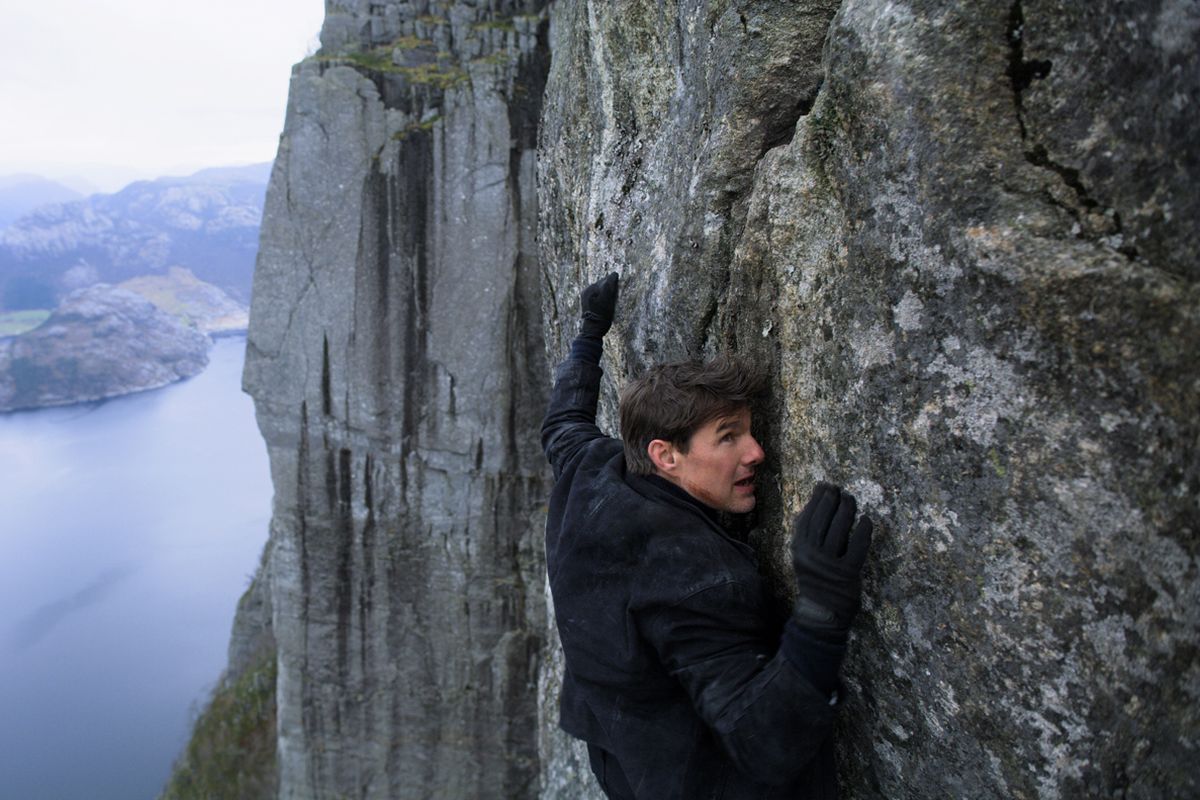
I’m writing this literally minutes after having also enjoyed Ant Man & The Wasp, but that enjoyment was tellingly less pronounced when compared to the exhilaration I felt during particularly the latter act of the Tom Cruise-starring superspy epic, the poster for which I was left to gaze on longingly during our intermission for the latest Marvel Studios installment — yes, intermissions are still a thing here — and wishing that I was back in there with Ethan Hunt.

mission impossible tom cruise

I’m tempted to assume that a heady confluence of factors led to the Mission Impossible franchise being the primary rallying point for action cinema this season. One of them is Tom Cruise’s sheer determination to cement his status as a still-viable action hero, as he sets out on a warpath to run, climb, punch and kick his way out of an uncomfortable whirlwind of tabloid-friendly personal eccentricity.

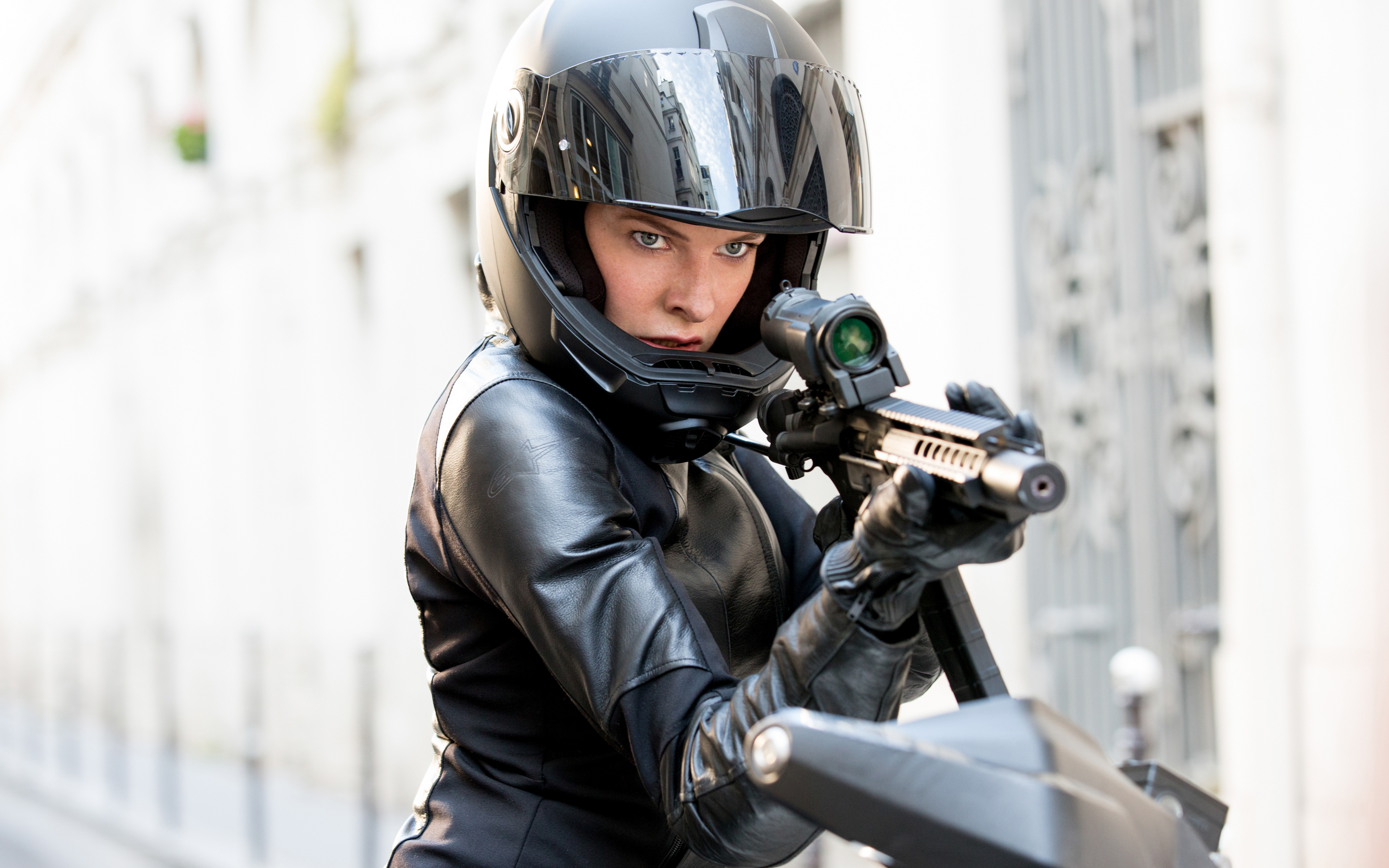
The other is the simple existence of the John Wick franchise, which reminded all and sundry — but most significantly, studio heads — that shaky cam should no longer be the way to make action movies, and that if you do it properly, all the money you spend on thorough choreography and lucid camerawork will be recouped by an appreciative audience.

rebecca-mission-impossible-fallout

It’s also a reminder that action is a balletic feature of any narrative, that should be taken in slowly and savoured. Unlike the Michael Bays of this world, McQuarrie seems to understand that action is not a condiment to be assaulted with. It should be an integral part of the meal — a showcase piece, to be sure, but not a murderously spicy dish that brings tears to your eyes before coming to life to punch you in the face, leaving you black-eyed and confused.

Another thing that also made Fallout so endearing is that it tapped into the vein of espionage-pulp that the Bond franchise has gone weird on, and that Bourne has reduced to a gritty sludge that nobody is biting on anymore. It comes down to a pact with the audience – an understanding that these are superhero stories where the heroes have no powers but do superheroics regardless, and where technology is effectively magic.

So yeah. Mission Impossible: Fallout. I liked it a bunch. Read my ‘official’ review of it on MaltaToday by clicking here


Eternal Frankenstein read-a-thon | Table of Contents

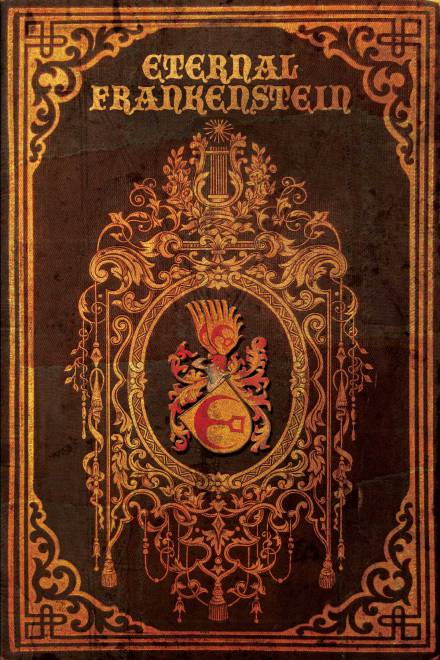
Over the past couple of months, I’ve been reviewing the new Word Horde anthology Eternal Frankenstein, edited by Ross E. Lockhart. As was the case with my read-a-thon of Swords v Cthulhu, I tackled the anthology story by story, and my reviewing method was be peppered with the cultural associations that each of these stories inspire. These were presented with no excuse, apology or editorial justification. You can find the complete linkstorm to all of the reviews just below. Enjoy! 

eternal-frankenstein

Torso, Head, Heart by Amber Rose-Reed 

Baron von Werewolf Presents: Frankenstein Against the Phantom Planet by Orrin Grey

Thermidor by Siobhan Carroll

They Call Me Monster by Tiffany Scandal

Sugar, Spice and Everything Nice by Damien Angelica Walters

Sewn Into Her Fingers by Autumn Christian

Orchids by the Sea by Rios De La Luz

Frankenstein Triptych by Edward Morris

The Human Alchemy by Michael Griffin

Postpartum by Betty Rocksteady

The New Soviet Man by G.D. Falksen

The Un-Bride; Or No Gods and Marxists by Anya Martin

Living by Scott R. Jones

Wither On the Vine; Or Strickfaden’s Monster by Nathan Carson

The Beautiful Thing We Will Become by Kristi DeMeester

Mary Shelley’s Body by David Tempelton

Please consider donating to our Patreon to help us make Malta’s first serialised comic, MIBDUL. Thanks!

From the day job: Bats vs Supes and Norse sagas now

Signal to nothing: Ben Affleck as Bruce Wayne/Batman in Zack Snyder's Batman v Superman: Dawn of Justice

Signal to nothing: Ben Affleck as Bruce Wayne/Batman in Zack Snyder’s Batman v Superman: Dawn of Justice

I had a couple of fun articles out in last Sunday’s edition of MaltaToday.

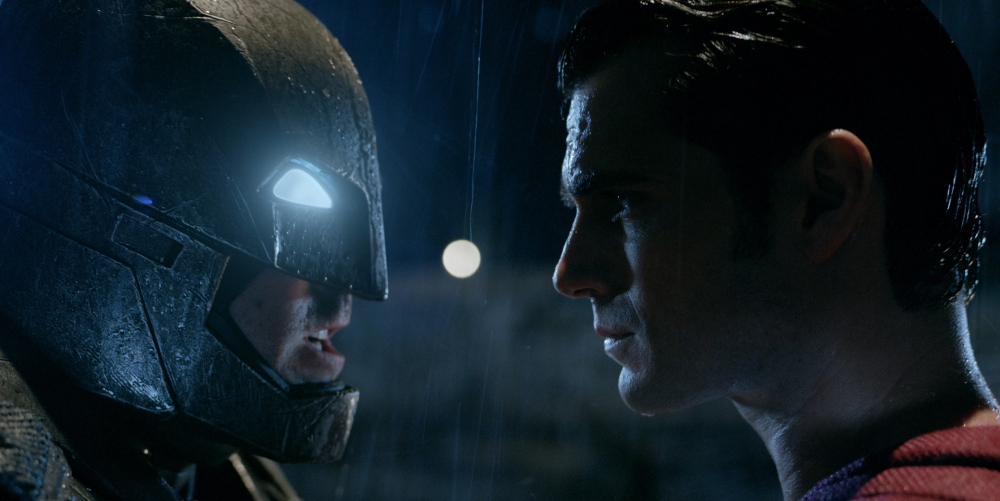
One of them is a review of that obscure indie film that’s garnering obscene amounts of critical attention, Batman v Superman: Dawn of Justice.

The other was actually satisfying to research and execute: an interview with Icelandic poet and fiction writer Gerður Kristný, who will be visiting our shores on the occasion of the Campus Book Festival, taking place at the alma mater this midweek.

batman-vs-superman-ew-pics-3

The fight of the century? Hardly. Loving Batfleck’s chunky digs though.

Batman v Superman: Dawn of Justice was, to my eyes, clumsy and misguidedly grandiloquent as its chunky title would suggest. And while there’s no love lost between me and Zack Snyder – much to his pained consternation, I’m sure – I didn’t go into the film as a hater, and wanted to enjoy it as, at least, the kind of omnishambles mess of the Jupiter Ascending ilk.

Alas, the film was a plethora of missed opportunities for fun and games because it was clearly all about setting up a future franchise to compete with Marvel’s already far-advanced “shared universe”, and while the film got a lot of flack for being joyless due to Snyder’s continued efforts to ape Christopher Nolan’s billions-raking reinvention of Batman, I think the real reason it felt bereft of the adrenaline jolt of pulpy fun was that it wasn’t in fact allowed to be pulp because it needed to do double-duty in setting up DC’s response to the Marvel behemoth, asap.

Gerður Kristný • Photo by Þórdís Ágústsdóttir

Gerður Kristný • Photo by Þórdís Ágústsdóttir

Gerður Kristný told me quite a few interesting things, but perhaps the most striking are the following:

“The original meaning of the word stupid (‘heimskur’) in Icelandic refers to the one that is always at home (‘heim’). People believed it would bring wisdom to leave your island and travel. We still believe so.”

“Coming from a country not many people know gives you opportunity to reinvent yourself, make up stories about yourself and your country.”

There was also some stuff about the Icelandic landscape and the island’s much vaunted literary culture – and what I loved is that no bubbles were burst in my conception of what looks to be a truly magical place, which I hope I’ll get to visit some day soon.

The World’s A Stage | Edinburgh Fringe 2014 Reviews – Part 3

Small Gods: Scandimania

Small Gods: Scandimania

Click here for Part 1

Click here for Part 2

AUGUST 4 – 13:10 – Scandimania: Gods of Ice and Fire

A hearteningly good student performance, this potted history of Norse myth felt neither bookish nor amateurish.

In what was thankfully a more straightforward homage to Norse mythology than Jethro Compton’s Loki, Sundial Theatre, the young troupe behind Scandimania succeeded in not only bringing the Norse sagas to life – impressively speeding through Creation to Ragnarok in nary an hour – but in delivering a finely polished performance using little more than their bodies and minimal props (read: a single, creatively applied ladder).

Dressed from head to toe in white, the team relied on traditional storytelling and crisply choreographed physical performances to present their take on the ever-popular epics. The minimal sets and equally sparse ‘costumes’ were a wise choice, as it allowed the story to unfold without any distractions.

It was also a good trick to keep any tackiness at bay and play into what we can assume was a modestly budgeted affair.

The company also deserve kudos for allowing their show to come to life despite the uninspiring venue – a hotel conference room is hardly an adequate arena for epic battles and cataclysmic events, but like the best storytellers, Sundial Theatre sucked you in.

This kind of event is precisely the sort of thing you hope to find at the Fringe – up-and-coming, but highly promising stuff.

AUGUST 5 – 23:50 – Comedy Sans Frontieres

From left: Francesco De Carlo, Igor Meerson, Eddie Izzard, Dylan Moran, Michael Mittermeier and Yacine Belhousse

From left: Francesco De Carlo, Igor Meerson, Eddie Izzard, Dylan Moran, Michael Mittermeier and Yacine Belhousse

Eddie Izzard and Dylan Moran bring a quartet of international comedians to a sold-out crowd, for a mixed-bag night of entertainment whose good intentions, however, are undeniably heartwarming.

Eddie Izzard. Dylan Moran. Names that doubtlessly enjoy top billing in the minds of many stand-up comedy fans… particularly those of us who like our comedy a little bit absurd and a little bit surreal (and a lot of bits British).

So when I heard that this particular duo was headlining a one-off show in the very city that I was planning on visiting, I booked my tickets immediately. Who cares what the event will be about, exactly, if that pair will be leading it, I thought?

But it turns out that this was exactly the kind of reaction Izzard – the erstwhile mastermind and compere of the event – was hoping for. Essentially, with this event Izzard and Moran were using their fame for a higher purpose: namely, to bring comedians from non-English-speaking countries to a mainstream English-speaking audience.

Though it was disappointingly male-centric for an event that placed much stock in promoting diversity (“You are the future,” Izzard told us as he thanked us for indulging his cosmopolitan comedy experiment), the gig was consistently entertaining.

Taking into account the fact that stand-up in a secondary language is bound to be a notoriously difficult thing to pull off, some acts ran more smoothly than others. Germany’s Michael Mittermeier emerged the strongest of the international bunch. Not only was he entirely at ease with the English language, his set had a polished pace and tempo that a couple of the others couldn’t exactly boast of.

Despite his otherwise diminutive height, he certainly stood head and shoulders above Russia’s Igor Meerson and Italy’s Francesco De Carlo, whose material was decent but whose delivery was less of a stand-up comedy show and more of a storytelling session down at the pub.

Meerson, however, offered up some interesting cross-cultural insights. Stand-up comedy would never work in Russia, he told us, because upon hearing someone complain about their life, Russians would likely just scramble up on stage and try to help with whatever problem the comedian may be struggling with.

Like the rest of his travelling comedy comrades, France’s Yacine Belhousse placed a lot of stock in cultural stereotypes, even basing one of his gags around a hypothetical Hollywood blockbuster – a superhero film that would embody every stereotype imaginable (“It would be the only way the French could get leading roles”), while also doing his bit to demystify the idea of Paris as an eternally romantic city.

Izzard and Moran (the latter an Edinburgh resident) were on relaxed and confident form, with Izzard in particular clearly proud of the cadre of international comics he had managed to round up for our delectation. Perhaps a more sinister underbelly to all this is Izzard’s previously declared interest in running for politics; “you are the future,” smacks of exactly the kind of feel-good-factor rhetoric you’d expect a politician to peddle in (in the context of Edinburgh, this has an added bitter edge: Izzard had previously done fundraising gigs for the ‘No’ camp ahead of the Scottish Independence referendum).

Moran shuffled on stage thankfully free of any such baggage, delivering a three-part monologue with his trademark brand of inventive, meandering wit. (During the preamble, Izzard said, “I tend to be surreal and bonkers. Dylan is surreal and poetic”).

By now a consummate professional – if not something of a stand-up comedy legend – the Irish actor-comedian assumed the role of a crazed Fringe participant (bemoaning the fact that nobody has yet some to see his broomstick-installation version of Macbeth), confessed his frustration with Edinburgh machismo (I like the festival, he said, at least it brings in smiling people) and as a side-splitting coup, regaled the audience with a few paragraphs from his Fifty Shades of Grey pastiche.

*

And so ends my round-up of Edinburgh Fringe highlights. Expect the blog to return to its regularly scheduled programme soon. Now that doesn’t mean I in fact know what this programme consists of, but there we are. 

Authenticity: Richard Linklater, Woody Allen, Romanticism, Decadence

I’ve stopped giving much credence to birthdays over the past couple of years (I’m writing this on the eve of my 29th). Once the rites of passage in life become murkier – i.e., after you’re done with school and have no set ‘stages’ to go through any more – birthdays start to feel truly arbitrary.

But something strange, and just about wonderful is happening this year: right now I truly feel like there’s some kind of culmination of the recent experiences I’ve been through.

Part of all this is, of course, down to finally finishing and publishing the book, and I’m wary of how this feeling of relief mixed with euphoric uplift can be temporary and elusive.

But there’s other factors which have contributed to me feeling an increased sense of peace, and a receding of the persistent self-doubt which comes with – in a big way – from the very same arbitrariness that characterizes most of adult life.

It’s a hard-won sort of peace, though, and one which needs constant vigilance to be maintained.
I suppose the cost of growing up is, ultimately, the realization that bliss can no longer, at any point, come automatically.

*

Increased self-awareness also means an increased sensitivity to what is authentic about yourself – what you should keep and cultivate, and what you should discard because it’s no longer relevant to you: a dead-end road.

Authenticity was always a bit of a thorny subject for me; one the one hand yes, I work for a newspaper – which, at least ostensibly, trades in remaining authentic – while on the other, my primary obsessions are concerned with both the production and consumption of fiction.

A recent ‘catch up’ marathon for three films I’ve been wanting to watch – the ‘Before‘ films by Richard Linklater, starring Julie Delpy and Ethan Hawke (I know, I know) – put this in focus for me once again.

The trio’s breezy style clearly emerges as a result of consummate, carefully cultivated filmmaking, of course, but the way the films worry at concerns so delicate, intimate and – ultimately – relatable puts a number of cinematic attempts at the same themes to shame.

There is both a sensitivity and a kindness – as well as a dramatic dynamism, taking the shape of the best stage play’s effortless back-and-forth banter – to Linklater which made me think, first and foremost (and for whatever reason): Woody Allen is a fraud.

The comparison came to me just as automatically as that: finishing off either the second or the third ‘Before’ film, Woody Allen’s attempts at extrapolating home truths about sexual politics came to mind, and just didn’t ring true.

Where Linklater zooms in on an unfolding relationship between just two people – a thespian duo he clearly trusts – first by charming us with their idyllic romance but then boldly returning to his subject/s years later to shade that relationship, Allen props up his ping-ponging dialogue in the midst of cardboard cut-outs and facile plot developments.

*

My own reaction came as something of a surprise, because in recent years I’ve developed an increased fondness for artifice – a resistance to the ‘organic’ creation of art so vaunted by the Romantics, in favour of what we could, I suppose, at a stretch venture to call a more Decadent approach which places increased value on form and ornamentation.

In retrospect though, I think this may have something to do with the fact that over the past few years, I’ve made a conscious effort to write my own fiction, TO MAKE MORE STUFF, and so the – broadly defined – Romantic idea of ‘waiting for inspiration’ or of dedicating your attention solely to the perfect subject that is closest to your heart was not really helpful.

Focusing on just putting the thing together, on the other hand, helped me to move forward, and so the opposing milieu became more attractive.

*

Now that the novel is done, though, I have to confess that ultimately, its autobiographical elements are what kept me going – or, at least, that engine that whirred in the background, quietly fuelling me ahead as I scrambled to put the whole thing together.

Having a personal stake in something – anything – by its very nature adds urgency to a project, and one of the best things I’ve heard said about Two is that it made some readers – two of them, actually, as far as I know – “give me a hug”, because they recognized the emotional authenticity of the book.

Truth is a slippery thing; I will never understand it, not fully. People are constantly called out on begin ‘phony’ and ‘fake’; even a kind of manufactured authenticity seems to have pervaded our culture (see: Emma Stone, Jennifer Lawrence, and countless other celebrities presented as ‘just one of us’).
But I’ll be happy if I hit upon it, however fleetingly, when “it matters”.

*

Some more coverage for Two:

The Times of Malta – A measured, well-written review I’m quite happy about.

The Malta Independent – An interview by Colin Fitz, also delving into my work as a journalist. Some of the quotes come across as a bit pompous, and I’m fairly certain I was more self-deprecating during the conversation itself. But whatever.

If you – my fine, illustrious readers – insist on doing something for my birthday, might I suggest you pick up a copy of Two, either from “any good” brick-and-mortar store if you’re in Malta and Gozo, or through Merlin’s website if you’re seeing this from abroad? Shipping rates have been reduced to normal prices, thankfully, so you can order away without too much of a burden on your pockets. Ta!

Post-book launch post | Managing clutter

Marsamxett reading spot

I’ve blogged about this spot before, and not too many posts ago. But a lot has happened since my last post (at least it feels as though it has) and I’ve found myself gravitating towards the place again.

It felt significant because my head was in a hectic, accelerated mess that day – peace seemed like a hardly achievable goal and then, I sat down in my favourite nook to read – for just under an hour – and the whirling clutter in my head decided to take a break.

I was glad to come across a particularly memorable passage, too.

*

“I knew him well enough to know that if you asked him the right way, at the right moment, he would do almost anything; and in the very act of turning away I knew he would have run after me and hopped in the car laughing if I’d asked one last time. But I didn’t. And, in truth, it was maybe better that I didn’t – I say that now, though it was something I regretted bitterly for a while. More than anything I was relieved that in my unfamiliar babbling-and-wanting-to-talk state I’d stopped myself from blurting the thing on the edge of my tongue, the thing I’d never said, even though it was something we both knew well enough without me saying it out loud to him in the street – which was, of course, ‘I love you’.” – Donna Tartt, The Goldfinch

*

It’s still early days, but I’m happy with the local reception of the novel so far. This being Malta it’s inevitable that your first (and possibly last?) readers be your friends and acquaintances, which complicates things somewhat as you’re never sure how honest they’re all being while dishing out praise. But luckily, some have qualified their praise quite convincingly, and I’m glad that others haven’t felt the need to sugar-coat what they didn’t like about it either.

I’m also glad that the review which came out in last Sunday’s edition of The Times of Malta was solid and balanced – neither a hatchet job nor an unmitigated torrent of praise that nobody would be convinced by.

But what makes me especially glad is that the reaction to the things I prioritised the most in the novel – atmosphere, ambiguity – is positive. I would hazard to say that this is the best a writer can ask for.

I’ll be keeping busy with collaborative projects in the meantime – the inherent loneliness of writing a novel doesn’t inspire me to dive into the process again so readily – but there is something about the process of long-haul writing that I do miss, at least at this relieved-that-it’s-over distance.

It becomes an organising principle; something to either dread or look forward to each passing day, week, month: regardless of whether you’re in a good place with it or not, it’s there, waiting. At its best, it keeps the relentless clutter at bay – it’s the space in your head that’s yours, and nobody else’s, and there is something thrilling about bringing a chunk of that shapeless aether out into the world.

So perhaps, despite my initial protestations, a second novel may be in the offing. Even if I write them in ten-year lapses like the aforequoted Donna Tartt…